
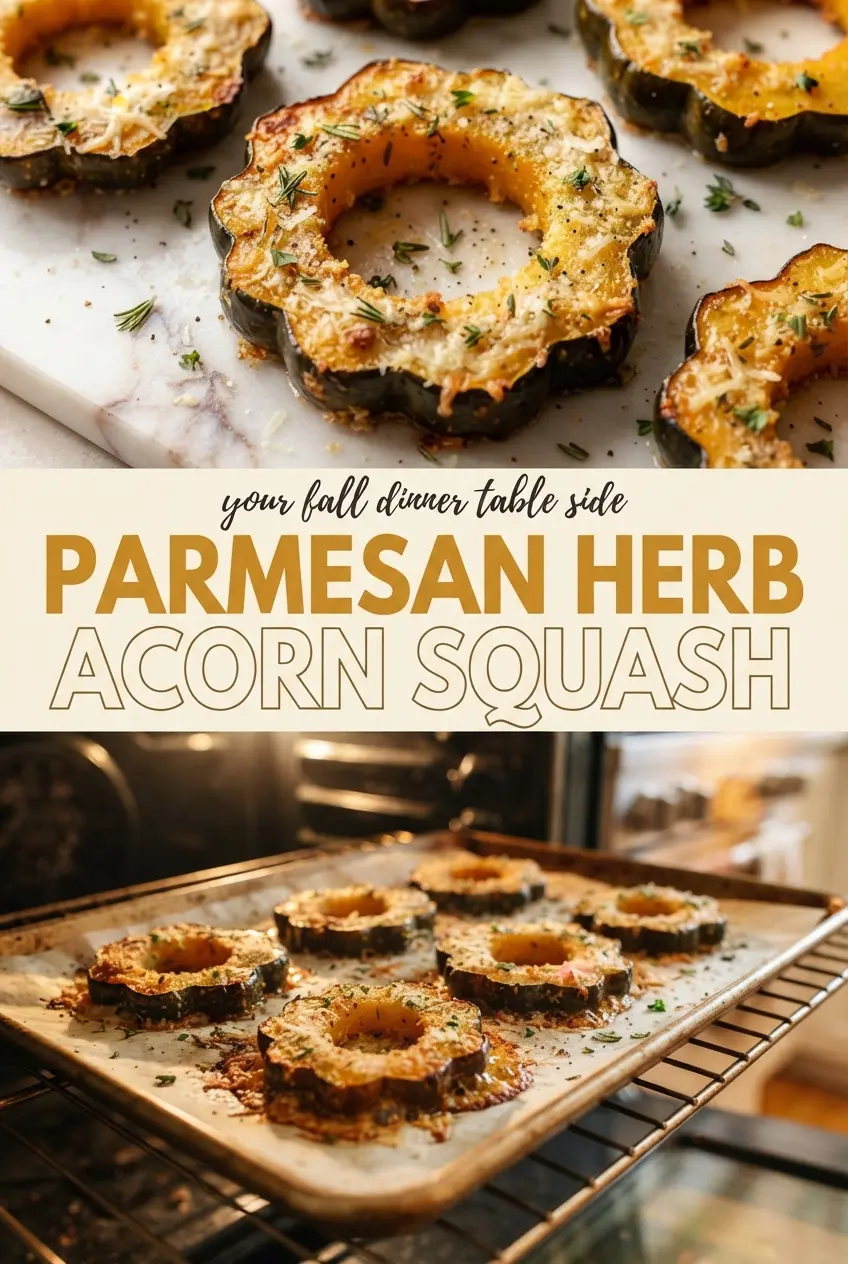
Parmesan herb roasted acorn squash comes out with the kind of contrast that keeps people reaching for another piece: tender, almost buttery flesh in the center and a golden, savory crust that crackles at the edges. The squash caramelizes as it roasts, and the Parmesan does more than add flavor — it helps create those crisp, browned spots that make the whole tray taste deeper and more satisfying than plain roasted squash ever does.
The trick is in the cut and the coating. Slicing the acorn squash into rings gives you more surface area for browning, and that matters here because the crispy cheese-herb layer is half the point. Pressing the Parmesan mixture onto the squash before it goes into the oven helps it cling instead of sliding off onto the pan, and roasting at a hot temperature lets the edges brown before the centers collapse into mush.
Below you’ll find the timing that gets the squash tender without turning it watery, plus a few smart swaps if you want to adjust the herbs or make the dish work with what you already have.
The Parmesan got crisp on top without burning, and the squash stayed tender instead of collapsing. I used the wire rack trick and the bottoms came out browned too, which never happens for me with squash.
Save this Parmesan herb roasted acorn squash for a side dish with crisp edges, caramelized squash, and a savory cheese crust that holds up beautifully in the oven.
The Cut That Gives You More Caramelized Edges
Acorn squash can roast beautifully, but it can also steam itself soft if the pieces are crowded or too thick. Rings solve both problems. They give you a wide flat surface on the pan, which means more direct contact with the heat and more of that deep amber browning you want around the edges.
The other thing that matters is thickness. Too thin and the squash will dry out before the cheese browns; too thick and the centers can stay firm while the tops finish too fast. Aim for even rings so they roast at the same pace. If your squash wobbles on the board, trim a thin slice from the bottom of each half first so the knife doesn’t skid.
- Acorn squash — This is the base that gives you the sweet, nutty flavor and the sturdy shape that holds up to roasting. Choose one with firm skin and no soft spots. If you need to cut the rings more neatly, microwave the whole squash for 30 to 45 seconds first to soften the skin just enough.
- Parmesan — Grated Parmesan is what builds the salty crust. Freshly grated cheese melts and browns better than the shelf-stable stuff, which can clump and go pasty. If you only have pre-grated Parmesan, use it, but expect a drier, less even coating.
- Olive oil — This helps the squash brown and keeps the spices from drying out in the oven. You don’t need the most expensive bottle here; use one you’d happily cook with. The goal is a light coating, not a slick layer that makes the cheese slide off.
- Dried thyme and rosemary — These herbs add a piney, savory note that stands up to the sweetness of the squash. Dried herbs work well because they disperse evenly through the cheese mixture. If you use fresh herbs, chop them very fine so they don’t burn before the squash finishes roasting.
- Garlic powder — This gives the topping a rounder savory edge than raw garlic would, and it won’t scorch in the hot oven. Garlic powder is one of those places where the pantry version is the right one. Fresh garlic can turn bitter before the squash is tender.
The 25 Minutes That Decide Whether the Topping Stays Put
Coating the Squash First
Toss the squash rings with olive oil, salt, and pepper until every surface has a thin sheen. That first coat helps the cheese mixture cling instead of sliding around on dry flesh. If the squash looks patchy or dusty, the topping won’t grab properly and you’ll lose half of it on the pan.
Mixing the Crust
Stir the Parmesan, thyme, rosemary, and garlic powder together before you add it to the squash. A dry mix spreads more evenly than sprinkling each ingredient separately, and it keeps the seasoning balanced in every bite. Press the mixture onto the top of each ring instead of just dusting it over; that pressure helps the cheese melt into a crust instead of blowing off in the oven.
Roasting for Browning, Not Steaming
Arrange the rings in a single layer on a baking sheet and roast them at 425°F. If they overlap, the trapped moisture softens the edges and the cheese won’t crisp. The squash is done when a knife slides in without resistance and the Parmesan on top is golden with some darker browned spots around the edges. If the cheese is browning before the squash feels tender, the pan is too high in the oven or the rings are cut too thin.
Letting the Crust Set
Give the squash a few minutes to rest before moving it. The cheese tightens as it cools, which helps the crust hold together when you lift the rings. If you try to transfer them straight from the oven, the topping can tear off while it’s still soft.
How to Adapt This for Different Tables and Different Pantries
Dairy-Free Version With a Savory Finish
Swap the Parmesan for a dairy-free Parmesan-style topping or a mixture of nutritional yeast, fine breadcrumbs, and extra salt. You won’t get the same exact melt, but you will get a toasty, savory layer that still browns well. Nutritional yeast brings the cheesy note; breadcrumbs add the crispness that dairy-free cheese often misses.
Gluten-Free as Written
This dish is naturally gluten-free as long as your Parmesan and spices are certified gluten-free. That’s one of the nice things about a simple roasted vegetable side: the texture comes from the squash and cheese, not from any flour or filler.
Swap the Herbs for What You Actually Have
If rosemary feels too strong, use sage or Italian seasoning instead. Sage gives the dish a warmer, woodsy flavor, while Italian seasoning softens the edges and makes the topping a little more familiar. The key is keeping the herbs dry and finely distributed so they don’t clump on the cheese.
How to Make the Bottoms Crisp Too
For more browning underneath, set the rings on a wire rack over the baking sheet. That lets hot air move around the squash instead of trapping moisture underneath. The texture is a little drier on the bottom, but if you want more even crispness, it’s worth it.
Storage and Reheating
- Refrigerator: Store leftovers in an airtight container for up to 4 days. The cheese topping softens as it sits, but the squash stays pleasantly tender.
- Freezer: You can freeze it, but the texture changes and the squash turns softer after thawing. If you do freeze it, lay the cooked rings on a tray until solid, then transfer them to a freezer bag so they don’t stick together.
- Reheating: Reheat on a baking sheet at 375°F until warmed through and the top crisps again, usually 10 to 12 minutes. The mistake is using the microwave, which makes the squash wet and the cheese rubbery.
Questions I Get Asked About This Recipe
Parmesan Herb Roasted Acorn Squash
Ingredients
Equipment
Method
- Preheat the oven to 425°F and place a sheet pan inside to warm for better browning.
- Toss the acorn squash rings with olive oil, salt, and pepper until evenly glossy.
- In a bowl, mix Parmesan cheese, dried thyme, dried rosemary, and garlic powder into an even herb coating.
- Sprinkle the Parmesan herb mixture generously over the squash rings, pressing it firmly onto the surfaces so it sticks.
- Arrange the coated squash rings in a single layer on the baking sheet, leaving space so they can caramelize.
- Roast at 425°F for 25-30 minutes until the edges turn deep amber and the Parmesan is golden and crispy, watching for crackly browning.