
Apple slab pie gives you everything people love about a homemade pie, just in a form that feeds a crowd without the fuss of crimping a round crust or hoping every slice comes out neat. The filling bakes into a thick layer of soft apples and cinnamon-scented syrup, and the top crust turns deep golden before the glaze goes on in thin, glossy ribbons. What you end up with is sturdy enough to cut into clean squares, but still buttery and flaky where it matters.
The part that makes this version work is the balance between the filling and the crust. A little flour tossed with the apples helps catch the juices, so the bottom stays sliceable instead of turning soupy. Using a mix of tart and sweet apples gives the filling better flavor and keeps it from tasting flat. The egg wash matters too: it’s what gives the top crust that bronzed, bakery-style finish before the glaze softens it just enough.
Below, I’ll walk you through the one timing detail that keeps the crust crisp, plus a few useful swaps if you need to work with what’s already in your kitchen.
The filling stayed thick and the bottom crust didn’t go soggy, which never happens for me with fruit pie. I also loved that the glaze set up just enough to keep the squares from getting sticky.
Save this apple slab pie for the kind of bake that feeds a crowd and cuts into neat, flaky squares.
The reason slab pie stays crisp when round pie turns soggy
Apple pie usually fails in two places: the bottom crust steams before it bakes, and the filling leaks enough juice to turn the whole thing soft. A slab pie gives you more surface area and a shallower filling, which means the apples cook through without sitting in a deep pool of liquid. That alone helps a lot.
The real trick is coating the apples with flour before they go into the pan. That flour thickens the juices as they bake, so the filling sets into slices instead of running across the pan when you cut it. The top crust also helps trap steam in a controlled way, which softens the apples without turning the base gummy.
- Rimmed baking sheet — You need the sides to hold the filling in place. A flat sheet pan won’t catch the juices if they bubble over.
- Pie dough — Store-bought dough works fine here as long as it’s cold when you roll it out. If it gets warm and stretchy, it shrinks in the oven.
- Apples — A mix of tart and sweet apples gives the best flavor and texture. Softer apples break down fast; firmer ones hold their shape and keep the filling from turning to applesauce.
- Flour — This is what turns the apple juices into a light syrup instead of a loose puddle. Cornstarch works too, but flour gives a more old-fashioned pie filling and doesn’t go quite as glossy.
What the apples, spice, and glaze are each doing here
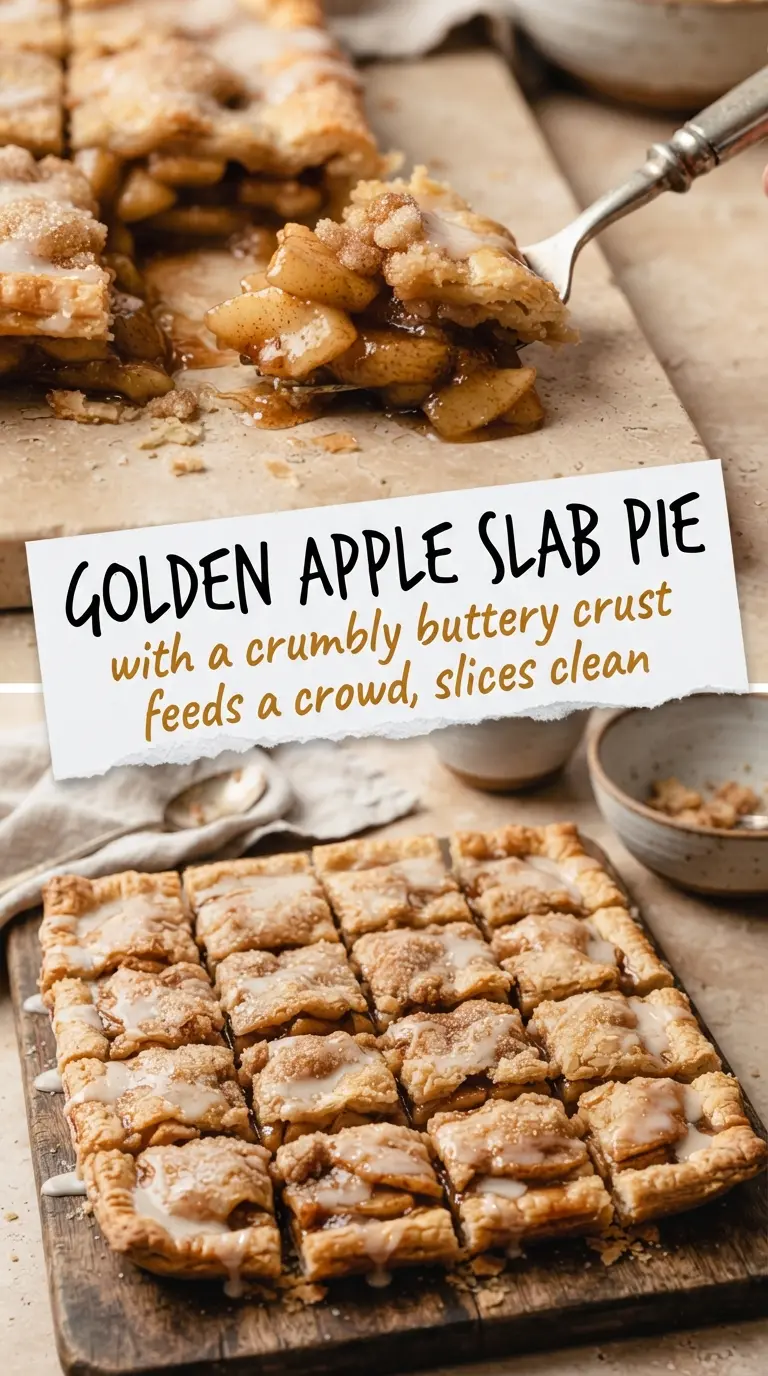
The apples do more than fill the pan; they carry the whole pie. Slice them evenly so they bake at the same rate, and don’t cut them paper-thin or they’ll collapse before the crust is done. A mix of tart and sweet apples gives you a filling that tastes like apple pie instead of just sugar and spice.
The cinnamon and nutmeg are there for warmth, not to bury the fruit. The pie should still taste like apples first. The glaze is optional in theory, but in practice it finishes the pie the way a dusting of sugar finishes a good doughnut: it adds a little shine, a little sweetness, and a soft set on top once it cools.
- Apples — Use firm baking apples if you can. If all you have are softer apples, reduce the bake time slightly and expect a looser filling.
- Granulated sugar — This pulls juice out of the apples and sweetens the filling. If your apples are very sweet, you can trim it back a little, but don’t cut too much or the filling will taste flat.
- Cinnamon and nutmeg — Cinnamon gives the familiar pie note; nutmeg adds depth. Freshly grated nutmeg is stronger, so use a light hand if yours is freshly ground.
- Egg wash — This is what gives the top crust its deep color. Skip it and the pie will bake up pale even if the crust is fully cooked.
- Powdered sugar glaze — It’s a simple finish that sets quickly. Add the milk slowly so it drizzles instead of turning watery.
The part that matters most: keeping the bottom crust from turning doughy
Building the bottom shell
Roll the first sheet of dough large enough to cover the rimmed baking sheet with a little overhang, then press it into the corners without stretching it. Stretching is what makes pastry shrink back and pull away from the edges later. If the dough is getting soft while you work, chill it for a few minutes before you add the filling.
Mixing the apples with enough thickener
Toss the sliced apples with sugar, flour, cinnamon, and nutmeg until every piece looks lightly coated. You want the dry ingredients clinging to the fruit, not sitting in a dusty pile at the bottom of the bowl. If the apples look wet after tossing, that’s normal; the flour will catch those juices in the oven.
Sealing the top and baking until deeply browned
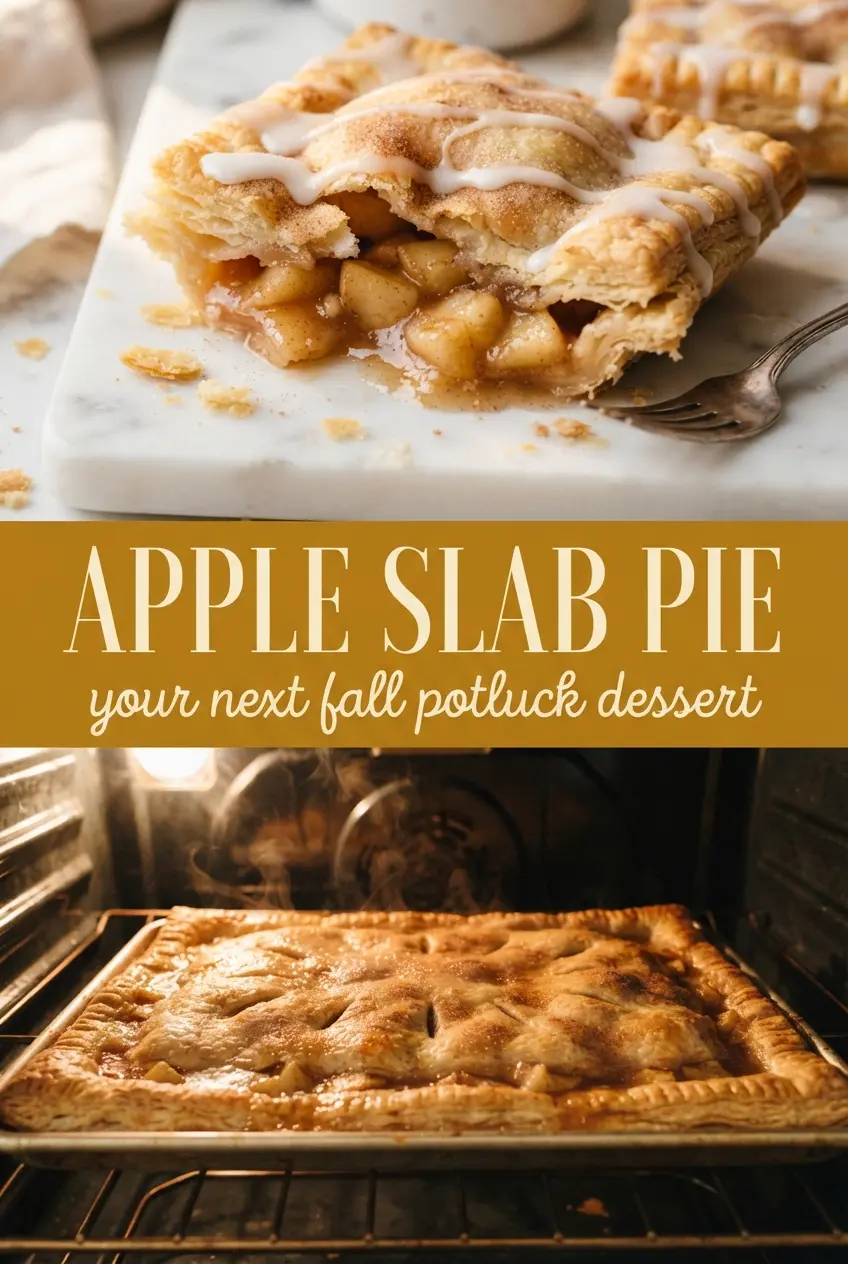
Lay the second crust over the apples, seal the edges, and cut vents so steam can escape in a controlled way. Brush the top with egg wash for color, then bake until the crust is a deep golden brown and the filling is bubbling at the vents. If the top is pale, it is not done. A slab pie needs enough color to guarantee the bottom crust baked through too.
Glazing after the pie cools slightly
Let the pie rest before you drizzle the glaze, or it will melt into the crust instead of sitting in clean ribbons. A warm pie gives you the best contrast: the glaze softens a little on contact but still holds its shape. Cool it for at least 30 minutes if you want neat squares instead of a loose, juicy mess.
How to adapt this apple slab pie without wrecking the texture
Make it dairy-free with a simple glaze swap
Use a plant-based milk in the glaze and you’re done. The texture stays the same, and the glaze still sets into a light sheen. The pie itself is already dairy-free if your crust is made without butter.
Use all store-bought dough for faster assembly
That shortcut works well here because the filling is the main event. Let both sheets soften just enough to roll without cracking, then chill the assembled pie before baking if the dough feels warm. Cold dough holds its shape and browns more evenly.
Swap the fruit if apples aren’t what you have
Peaches or pears can work, but they release more liquid than apples and soften faster, so the filling will be looser. Add an extra teaspoon of flour if the fruit is especially juicy, and watch the bake closely so the crust doesn’t overbrown before the center sets.
Skip the glaze for a more classic pie finish
The pie still tastes complete without it. You’ll get a cleaner, less sweet result, and the flaky top crust will stay a little crisper after cooling. Dust with powdered sugar instead if you want a lighter finish.
Storage and Reheating
- Refrigerator: Store covered for up to 4 days. The crust softens a little, but the filling stays tidy.
- Freezer: Freeze baked slices wrapped well for up to 2 months. Thaw in the refrigerator so the crust doesn’t turn soggy.
- Reheating: Warm slices in a 325°F oven until the crust is crisp again. The microwave will make the pastry limp, so avoid it if you want the best texture.
Questions I Get Asked About This Recipe
Apple Slab Pie
Ingredients
Equipment
Method
- Roll out one sheet of pie dough to fit a rimmed baking sheet and press into place. Keep the dough even so the edges are ready to crimp.
- Toss apple slices with granulated sugar, all-purpose flour, cinnamon, and nutmeg. Mix until every slice looks lightly coated.
- Spread the apple mixture evenly over the crust. Distribute to the edges for consistent doneness.
- Roll out the second sheet of dough and lay it over the top, sealing and crimping the edges. Trim any excess so the crust bakes flat.
- Cut a few vents in the top crust and brush with egg wash. Aim the vents toward the center so steam can escape.
- Bake at 375°F for 45-50 minutes until deep golden brown. Watch for bubbling syrup around the vents and edges that look fully baked.
- Cool slightly, then whisk powdered sugar, milk, and vanilla extract and drizzle over the top. Let the glaze fall in loose ribbons across the warm filling.