
Parmesan flower potatoes come out with crisp, bronzed edges and soft centers, the kind of side dish that gets noticed before it even hits the table. The accordion cuts open up in the oven, so the garlic butter can slide into every little crevice and the parmesan melts into a lacy, salty crust on top. You get a potato that looks fancy without requiring any tricky technique.
What makes this version work is the timing. The potatoes roast first so the cuts separate and the flesh starts to turn tender before the cheese goes on. If you add the parmesan too early, it can overbrown or cling to the pan instead of forming that thin, crisp shell on the potato itself. A quick brush of butter in the cuts is what carries the garlic flavor all the way through.
Below, I’ve included the small details that keep the petals fanning out instead of collapsing, plus a few variations if you want to change the cheese or make these fit a different dinner.
The potatoes fanned out beautifully and the parmesan got crisp around the edges without burning. I served them with roast chicken and every single one disappeared.
Save these Parmesan Flower Potatoes for the nights when you want a crisp, cheesy potato side that looks far fancier than the effort it takes.
The Cutting Mistake That Keeps These Potatoes From Opening Up
The whole look of parmesan flower potatoes depends on the cut. Go too deep and the potato falls apart before it roasts; stay too shallow and the slices never fan. The knife should stop just short of the bottom so the potato stays intact while the top layers loosen in the heat.
The other thing people miss is spacing. Once the potatoes are sliced, a quick press from the sides helps the layers separate enough to catch the butter and heat evenly. If they sit too tightly packed, they steam in their own moisture and you lose the crisp edges that make this dish worth repeating.
What Each Ingredient Is Actually Doing in This Dish
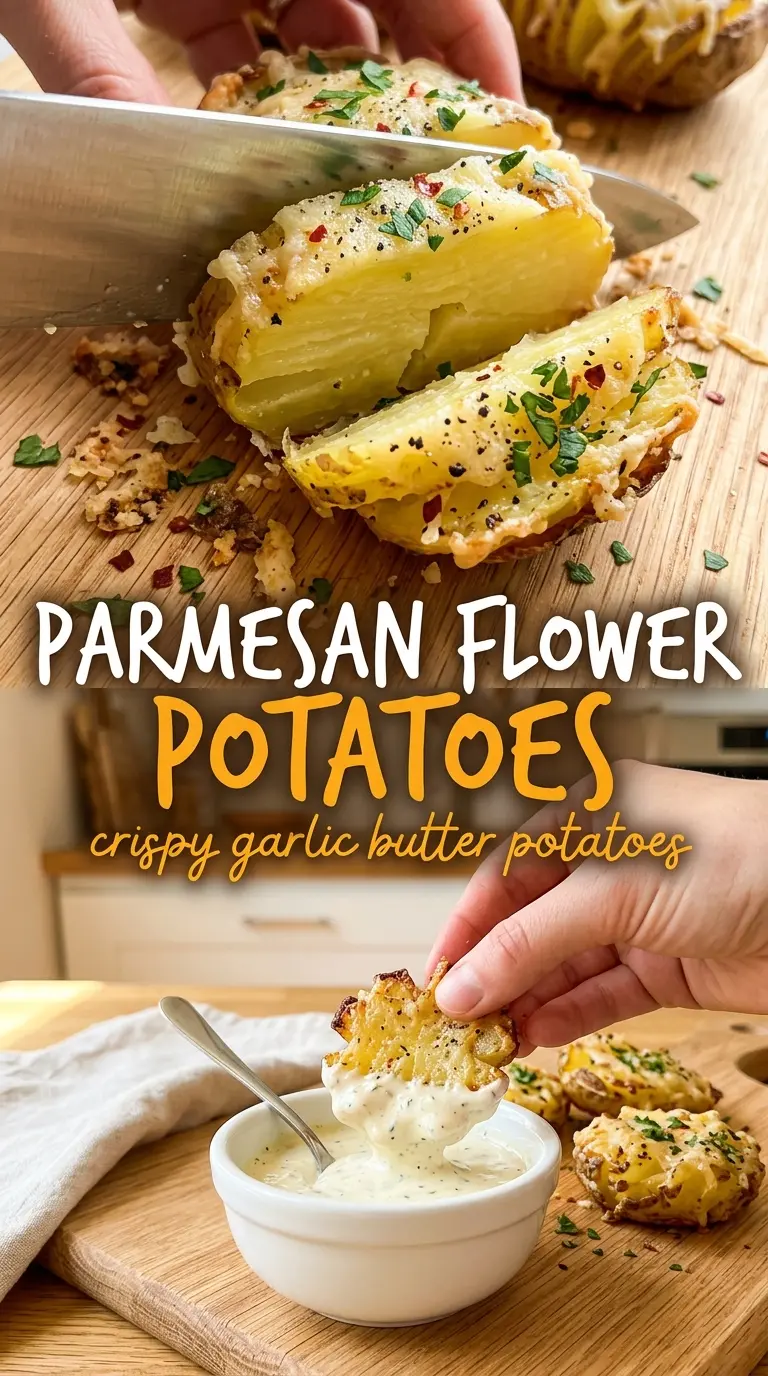
- Small potatoes — Waxy potatoes hold their shape better than starchy baking potatoes, which means the flower shape stays defined after roasting. If your potatoes are a little larger, just extend the roasting time until the centers give easily when pierced.
- Melted butter — Butter carries the garlic into the cuts and helps the parmesan brown. Olive oil works in a pinch, but it won’t give the same rich finish or the same deep, even color on the edges.
- Garlic — Fresh minced garlic gives the butter its savory base. Garlic powder can stand in if that’s what you have, but use less because it disperses differently and can taste dusty if overdone.
- Parmesan — Grated parmesan is the piece that turns the top into a crisp, salty crust. The finely grated kind melts fastest, while a coarser grate gives you a more uneven, crunchy finish. If you buy pre-shredded cheese, expect a slightly less even melt.
- Parsley — Fresh parsley brightens the finished potatoes and keeps the cheese from tasting heavy. Dried parsley won’t do much here; wait for the fresh herb if you can.
How to Roast Them So the Petals Crisp Instead of Collapsing
Cutting the Accordion
Set each potato on a cutting board between two wooden spoon handles or chopsticks so your knife can’t cut all the way through. Make thin slices across the top, leaving the bottom intact. The cuts need to be close enough together that the potato opens like a flower, not like a stack of thick chunks. If you cut too far down, the potato breaks apart in the oven and loses the shape that makes this recipe special.
Brushing on the Garlic Butter
Mix the melted butter with the minced garlic and brush it generously over the top and into the cuts. Use your fingers or the back of a spoon to gently fan the slices apart so the butter slips between them. That’s where the flavor lives, and it also helps the edges start browning early. If the butter pools only on top, the inside stays bland while the outside gets greasy.
Roasting Before the Cheese
Roast the potatoes at 400°F until the centers start to soften and the exposed edges look dry and lightly golden, about 30 minutes. This first bake is what opens the petals. If you add parmesan before this stage, it can scorch before the potato has time to cook through. The potatoes should look a little expanded and the slices should separate when nudged.
Finishing With Parmesan and Herbs
Sprinkle the parmesan over the tops and return the pan to the oven for a few more minutes, just until the cheese melts into golden spots and crisp edges. Pull them the moment the cheese turns deeply golden, because parmesan goes from toasted to bitter fast. Finish with parsley right away so the heat wakes up the herb and the potatoes stay bright against the browned cheese.
Three Ways to Change These Without Losing the Shape
Dairy-Free Version With Olive Oil
Swap the butter for olive oil and use a dairy-free hard cheese if you have one that melts well. You’ll lose a little of the rich, round flavor that butter gives, but the potatoes still crisp nicely and the garlic comes through cleanly. Brush the oil a little more lightly than butter so the tops don’t turn greasy before they brown.
Extra-Crispy Parmesan Edges
Use a finer grate of parmesan and let some of it fall into the cuts, not just on top. The smaller shreds melt fast and form more browned, lacy edges. If you want even more crunch, give the potatoes a few extra minutes at the end, but watch them closely because the cheese can darken fast.
Herb Swap for a Different Finish
Parsley keeps things fresh, but chives or rosemary change the whole feel of the dish. Chives give a mild onion note that works well with the cheese, while rosemary adds a woodsy edge that tastes better with roasted meat. Use rosemary sparingly because it can take over the potatoes if you add too much.
Storage and Reheating
- Refrigerator: Store leftovers in an airtight container for up to 3 days. The edges soften as they sit, but the flavor holds.
- Freezer: These freeze, but the texture changes enough that I only do it if I’m planning to re-crisp them later. Freeze in a single layer, then transfer to a bag once solid.
- Reheating: Reheat on a sheet pan in a 400°F oven or in an air fryer until the edges crisp again. The biggest mistake is microwaving them, which makes the petals limp and the parmesan rubbery.
Questions I Get Asked About This Recipe
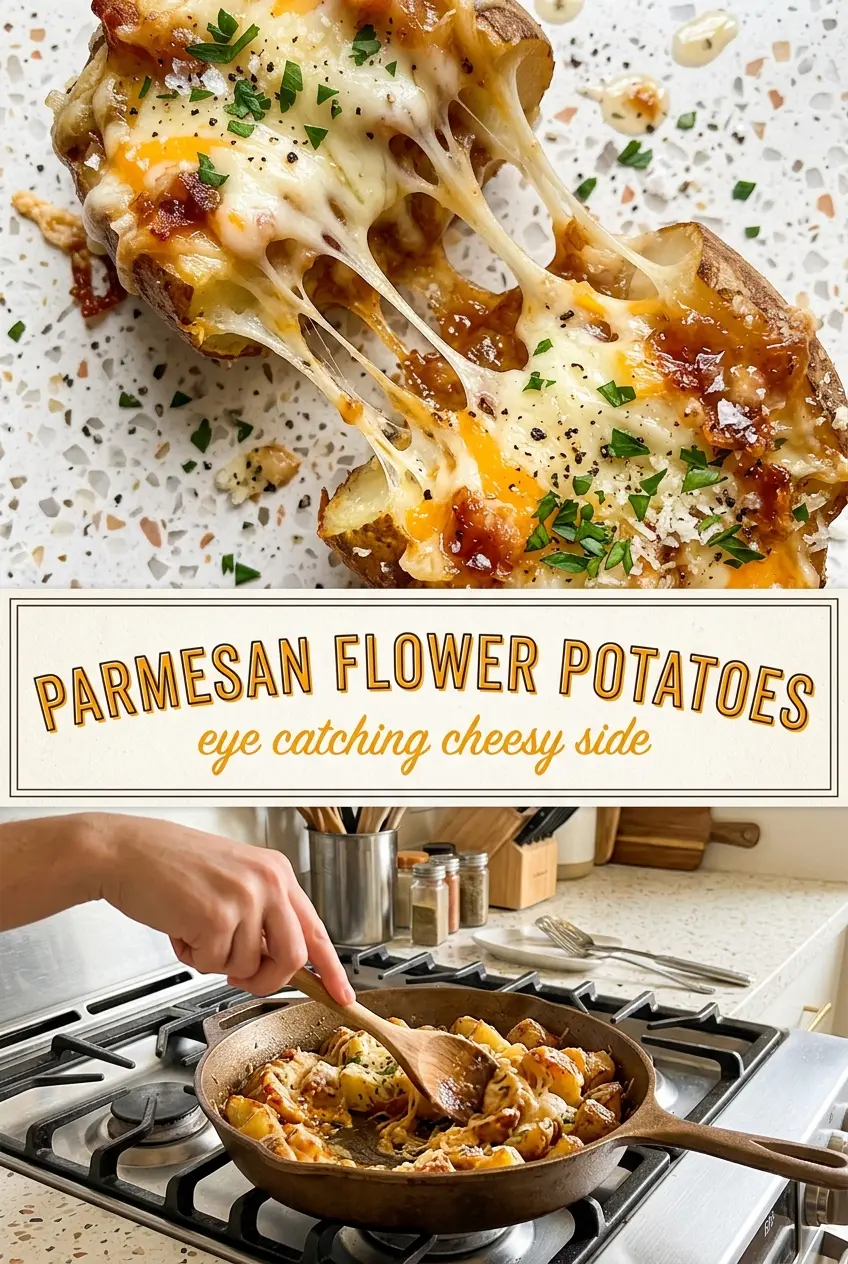
Parmesan Flower Potatoes
Ingredients
Equipment
Method
- Slice each potato into thin accordion cuts without cutting through, leaving the bottom intact so the layers stay connected.
- Fan the accordion slices slightly to resemble a flower shape with visible petals.
- Brush the fanned potatoes with garlic butter so the surfaces get an even coating.
- Roast on a sheet pan at 400F for 30 min, until the petals look crisp and bronzed at the edges.
- Sprinkle the potatoes with parmesan after the first 30 min so it can melt and brown on the hot surface.
- Bake for 5 more min at 400F until the cheese is golden, then top with fresh parsley for a bright finish.