
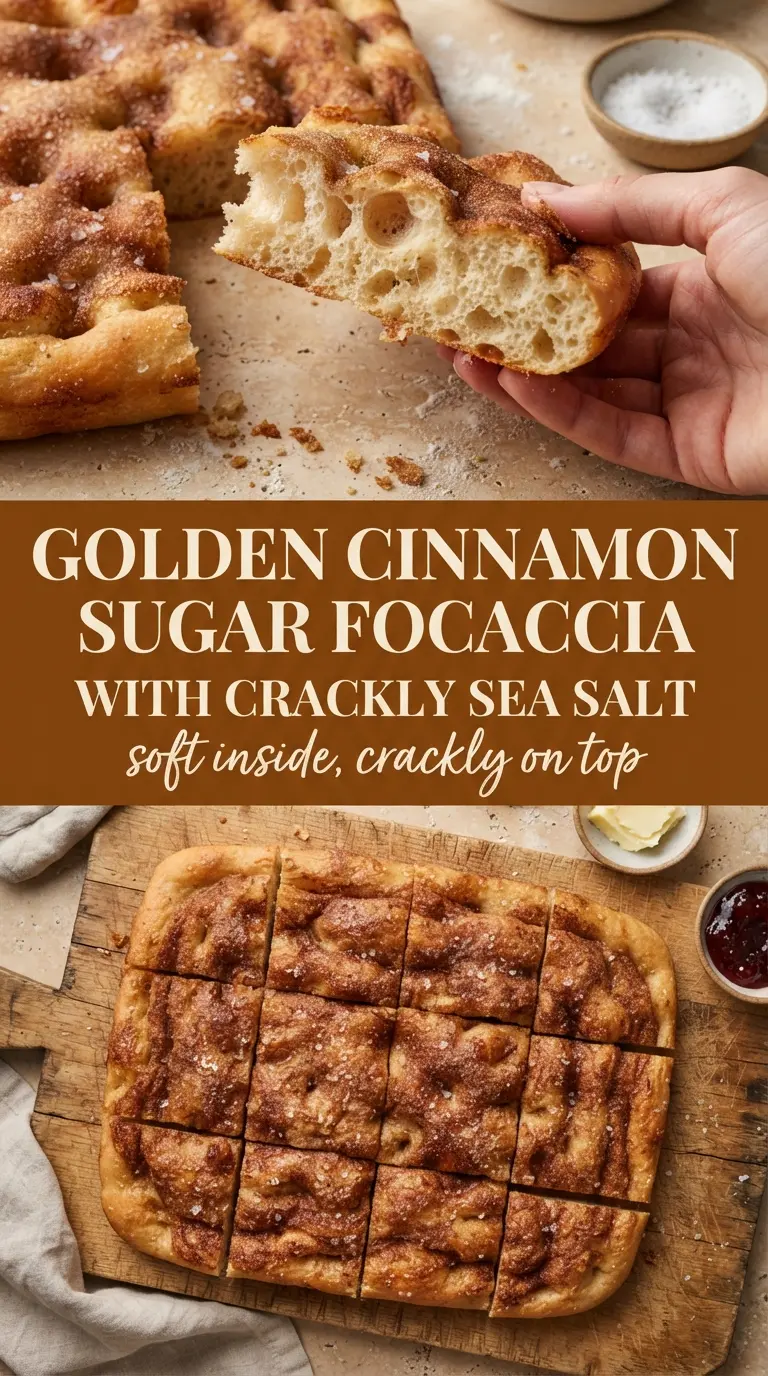
Cinnamon sugar focaccia bakes into something halfway between a soft, airy bread and the kind of sticky coffee cake you want to tear apart while it’s still warm. The top turns crackly and caramelized, the edges go deep golden, and the browned butter gives the whole pan a toasty richness that keeps the sweetness from tasting flat. It’s the kind of bake that disappears fast because every piece has a different texture: crisp at the corners, plush in the middle, and glossy where the cinnamon sugar melts into the dimples.
The trick is giving the dough time to develop on its own. A long rise builds flavor and structure without any kneading, and the dough stays loose and sticky on purpose, which is what gives focaccia its open crumb. Browning the butter adds a nutty note that plain melted butter can’t match, and the flaky sea salt on top keeps the sweetness in check so each bite lands cleanly instead of going cloying.
Below, I’ve laid out the part that matters most: how to handle the sticky dough without fighting it, how to get the topping evenly distributed, and what to watch for so the top bakes into a crackly layer instead of sinking into the bread.
The dough was bubbly and easy to spread after the overnight rise, and the cinnamon sugar baked into this crackly top that tasted like a bakery pastry. The browned butter made it smell incredible.
Like this cinnamon-sugar focaccia? Save it to Pinterest for the days when you want a no-knead bake with a crackly caramel top and soft, pillowy crumb.
The Reason the Topping Stays Crackly Instead of Melting Away
The biggest mistake with sweet focaccia is treating the topping like frosting. If the dough is underbaked or the butter is too heavy in one spot, the cinnamon sugar turns wet and sinks into the loaf instead of forming that crisp, crackly layer on top. What you want is a fully risen, deeply dimpled dough and an even brush of browned butter so the sugar has something to cling to without drowning the surface.
The other piece that matters is heat. A hot oven sets the crust before the sugar has time to dissolve completely into the dough, which is how you get those caramelized ridges and sandy, brittle patches that break apart when you bite in. If the pan goes in before the dough has doubled, the bread will be dense and the topping will look glossy in the wrong way — soft, not crisp.
- Overnight rise — This develops the flavor and gives the dough enough structure to hold the weight of the cinnamon sugar. That long rest is doing the work the kneading usually would.
- Bread flour — The extra protein helps the focaccia stay chewy and airy instead of collapsing under the topping. All-purpose flour works in a pinch, but the crumb will be a little less robust.
- Browned butter — This adds a nutty, almost toasted note that makes the bread taste richer without making it heavier. If you skip the browning, use the butter melted and warm, but you’ll lose some depth.
- Flaky sea salt — It keeps the sweetness balanced and sharpens the cinnamon. Don’t leave it off; it makes the whole thing taste more finished.
What Each Ingredient Is Doing in the Pan
The flour, yeast, and water build the structure, but the long rest gives the dough its personality. Instant yeast makes this especially forgiving because it mixes straight into the dry ingredients, and the warm water wakes it up without needing a separate proofing step. If your kitchen runs cool, the rise may need the full 18 hours; that’s fine. The dough should look bubbly and puffed, not just slightly larger.
Brown sugar and granulated sugar each bring something different. The granulated sugar in the dough gives a light sweetness and helps with browning, while the brown sugar on top melts into a deeper, more caramel-like layer. If you only have white sugar for the topping, the flavor will be simpler and a little less sticky, but it will still bake up well.
Use real butter here. The topping depends on the way butter browns and soaks into the dimples, and that flavor is a big part of what makes this loaf taste bakery-made. If you want to lean more dessert-like, you can add a pinch of cinnamon to the dough itself, but the topping is where the bold flavor belongs.
How to Build the Pan for a Soft Center and Crisp Edges
Mixing the Shaggy Dough
Stir the flour, yeast, salt, and sugar together first, then add the warm water and mix until no dry pockets remain. The dough will look messy and sticky, and that’s exactly right. Don’t try to turn it into a smooth ball; overworking it now only makes the bread tougher later. Cover the bowl and let it rest where it won’t be disturbed.
Letting the Dough Rise Overnight
After the first mix, the dough needs a long, quiet rise at room temperature until it looks doubled and full of bubbles. If it still seems flat after several hours, it usually just needs more time, not more yeast. A properly risen dough should feel alive when you nudge it — loose, jiggly, and airy. If your kitchen is cold, tuck the bowl somewhere slightly warmer, but don’t rush it with high heat.
Pressing and Dimpling the Pan
Oil the pan well, then scrape the risen dough in and use wet fingertips to stretch it gently toward the corners. Wet hands keep the dough from sticking and tearing. Press deep dimples all over the surface so the butter and sugar can pool in the little valleys instead of sliding straight off the top. If the dough snaps back, let it rest for 10 minutes and come back to it.
Butter, Sugar, and the Bake
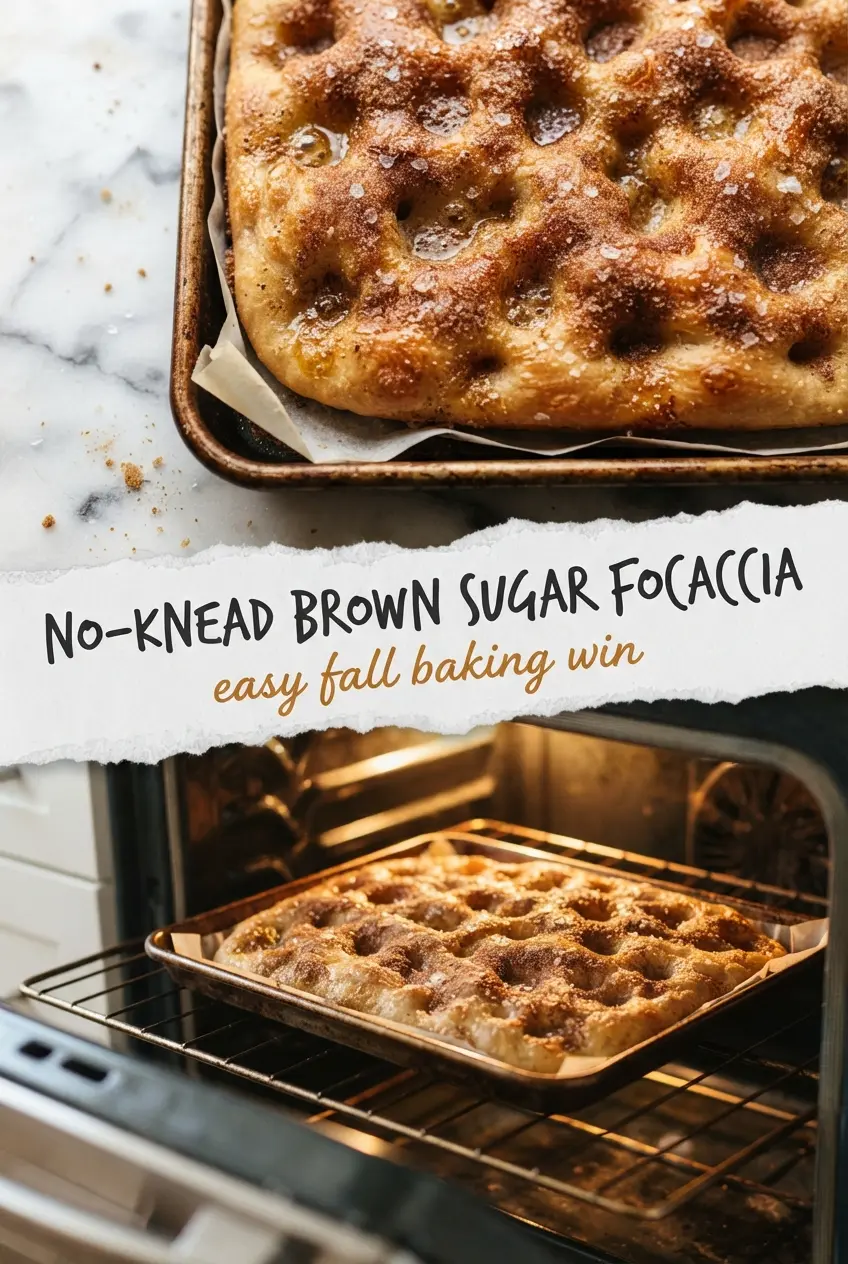
Brush the browned butter over the top while it’s still warm, then scatter the cinnamon sugar in an even layer. You want coverage, not a mound that hides the dough completely. Bake at 425°F until the top is deeply golden and the edges look crisp and set. If the center still feels pale or soft, give it a few more minutes; underbaked focaccia loses that crackly top fast once it cools.
Three Ways to Adapt This Sweet Focaccia Without Losing the Good Part
Dairy-Free Version with Coconut Oil
Swap the butter for melted coconut oil if you need a dairy-free loaf. You won’t get the same browned, nutty depth, but the cinnamon sugar will still bake into a crisp, caramelized top. Use refined coconut oil if you don’t want a coconut note competing with the spice.
A More Dessert-Like Version
Add a handful of chopped pecans or walnuts over the cinnamon sugar before baking. They toast in the oven and give the top more crunch, which works especially well if you serve this warm with coffee. Keep the layer light so the nuts don’t sink into the dough.
Using All-Purpose Flour Instead of Bread Flour
All-purpose flour will work if that’s what you have, and the recipe will still rise well. The crumb will be a little softer and less chewy, which is fine if you want a lighter texture. If you use all-purpose, watch the bake closely because it can brown a touch faster.
Storage and Reheating
- Refrigerator: Store covered for up to 3 days. The top will soften a little, but the bread stays pleasant.
- Freezer: This freezes well. Wrap slices tightly and freeze for up to 2 months, then thaw at room temperature before reheating.
- Reheating: Warm slices in a 325°F oven for 8 to 10 minutes. The oven brings back the crisp top better than the microwave, which makes the sugar layer sticky and the bread gummy.
Answers to the Questions Worth Asking
No-Knead Cinnamon Sugar Focaccia
Ingredients
Equipment
Method
- In a large bowl, stir together bread flour, instant yeast, salt, and granulated sugar until evenly combined.
- Add warm water and mix until a shaggy, sticky dough forms.
- Cover and let the dough rise at room temperature for 12-18 hours until doubled and bubbly, with a visibly aerated surface.
- Pour the dough into a well-oiled pan and dimple it deeply with wet fingertips to create wide wells.
- Brush the top generously with browned butter so it sinks slightly into the dimples.
- Mix brown sugar and ground cinnamon, then sprinkle thickly over the dough so the topping forms an even, heavy layer.
- Bake at 425°F for 25-30 minutes until deep golden and crackly on top.
- Sprinkle with flaky sea salt while the focaccia is still warm for a crisp, salty finish.