
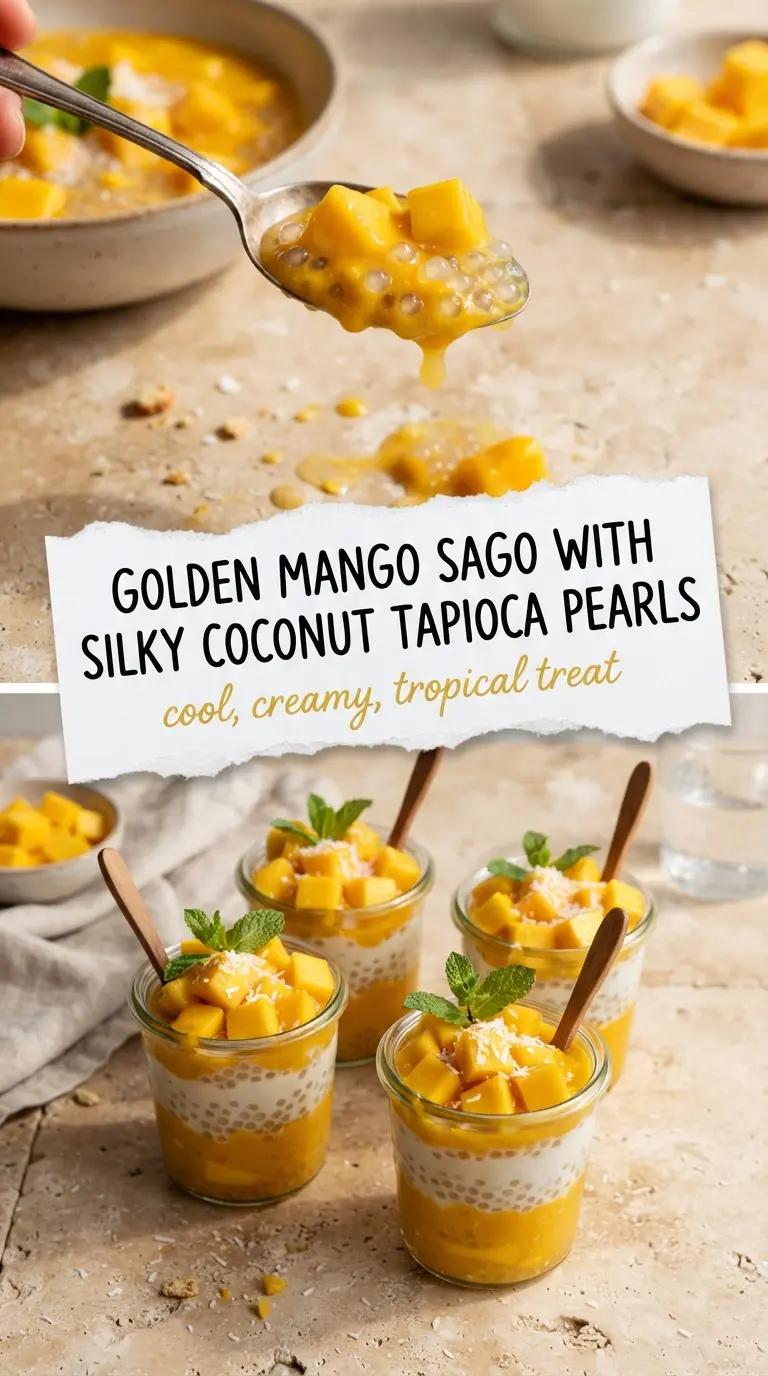
Silky mango puree, creamy coconut milk, and chewy tapioca pearls give mango sago the kind of spoonful that disappears fast. The contrast is what keeps you going back: cool and lush from the coconut-mango base, then a little bounce from the sago pearls, then a fresh burst of diced mango on top. When it’s chilled properly, it eats like a dessert and a snack at the same time.
What makes this version work is restraint. The mangoes carry the sweetness, so the sugar stays in the background instead of turning the whole bowl cloying. Rinsing the cooked tapioca pearls matters, too; it washes off the starch that can make the dessert gummy instead of clean and silky. Letting it chill long enough is part of the job, not an extra step.
Below, I’ll walk through the one place people usually go wrong with tapioca, plus how to keep the coconut base smooth and the mango flavor bright. There’s also a storage note worth knowing if you want to make it ahead for a crowd.
The tapioca stayed chewy without turning gluey, and the mango-coconut mixture chilled into the creamiest texture. I made it the night before, and it was even better after a few hours in the fridge.
Save this mango sago for a chilled coconut-mango dessert with chewy tapioca and fresh fruit on top.
The Reason Mango Sago Stays Creamy Instead of Turning Gluey
The biggest mistake with mango sago is treating the tapioca like a pasta and leaving it sitting in cloudy water. That starch clings to the pearls and thickens the dessert in all the wrong places. Rinsing them under cold water after cooking keeps the texture clean, which matters a lot here because the base is already rich.
The other thing that helps is giving the dessert time in the fridge. The coconut milk and mango puree thicken slightly as they chill, and the flavor settles down from sharp-sweet into something rounder and smoother. If you serve it immediately, it tastes fine. If you chill it, it tastes finished.
What Each Ingredient Is Actually Doing in This Dessert
- Small tapioca pearls — These give mango sago its signature chew. Cook them until the centers are translucent, not chalky, or they’ll stay hard in the middle and throw off the texture of the whole bowl.
- Ripe mangoes — The fruit does most of the sweetening here, so use mangoes that smell fragrant and give slightly at the stem end. If your mangoes are pale or fibrous, the puree will taste flat and need extra sugar to compensate.
- Coconut milk — This is what gives the dessert its creamy body. Full-fat coconut milk gives the best finish, but lite coconut milk works if you want something lighter; it just won’t have the same lush texture.
- Granulated sugar — The amount is small on purpose. It rounds out the mango and coconut without masking them, and you can adjust it after tasting the puree if your fruit is exceptionally sweet.
- Fresh mint — This is purely a finishing note, but it keeps the dessert from feeling heavy. A few leaves are enough.
Building the Mango Sago So Every Spoonful Stays Balanced
Cooking the Tapioca Until the Centers Disappear
Bring the pearls to a gentle boil and cook them until they’re translucent with just the faintest opaque dot in the center if the package calls for that. Stir often so they don’t clump on the bottom of the pot. If you overcook them, they lose their bounce and turn soft in a way that makes the dessert feel heavy. Drain them as soon as they’re done, then rinse until the water runs mostly clear.
Blending the Mango Base
Puree the mangoes with the coconut milk, sugar, and water until completely smooth. You want a pourable mixture that tastes bright before chilling, because cold will mute the sweetness a little. If the base tastes thin now, it will taste even thinner later, so adjust the sugar here, not after it has gone cold.
Assembling and Chilling
Stir the cooled tapioca into the mango base, then divide it into bowls or glasses. Top with the diced mango so it stays fresh and gives each bite some texture. Chill for at least an hour, and longer if you can; the dessert tastes cleaner and more cohesive once everything has had time to settle together.
Three Ways to Adjust Mango Sago Without Losing What Makes It Work
Dairy-Free by Nature, Richer by Coconut Choice
This recipe is already dairy-free as written, so the main choice is the coconut milk. Use full-fat coconut milk for the creamiest result, or swap in coconut cream for a thicker, more spoon-coating dessert. If you use a thinner canned coconut beverage, the dessert will taste lighter but lose some of the plush texture.
Less Sweet, More Mango
If your mangoes are very ripe, cut the sugar back a little and taste before chilling. That gives you a fruit-forward dessert with a brighter finish. Don’t cut the sugar to zero unless the mangoes are intensely sweet, because a little sweetness helps the coconut taste round instead of flat.
Turning It Into a Crowd Dessert
Double the batch and portion it into small cups for a party-friendly dessert that can be made ahead. Hold back the mint until the last minute so it stays fresh, and add the diced mango on top after chilling for the best color and texture. This keeps the sago from sinking into one dense layer at the bottom.
Storage and Reheating
- Refrigerator: Store covered for up to 2 days. The tapioca will continue to soften a bit, and the dessert may thicken as it sits.
- Freezer: I don’t recommend freezing it. Thawed tapioca turns unpleasantly spongy, and the coconut-mango base separates.
- Reheating: Don’t reheat this dessert. Serve it cold straight from the fridge, and if it thickens too much, stir in a splash of cold water or coconut milk to loosen it.
Answers to the Questions Worth Asking

Mango Sago
Ingredients
Equipment
Method
- Bring a pot of water to a boil over medium-high heat and cook the small tapioca pearls according to package directions until translucent, about 8–10 minutes. Stir occasionally so pearls cook evenly and don’t stick.
- Drain the cooked tapioca pearls and rinse under cold water until cool, then drain well again to remove excess starch and prevent clumping. Let them drain thoroughly before mixing.
- Puree three of the mangoes with the coconut milk, granulated sugar, and water until completely smooth, scraping the blender as needed. Stop and taste briefly to ensure the puree is sweet enough.
- Dice the remaining mango into small cubes and set aside for topping. Keep pieces uniform so each spoonful gets fruit.
- Divide the mango puree among serving bowls or glasses. Leave a little headroom for pearls and topping.
- Stir the cooked tapioca pearls into the bowls, distributing them evenly. Mix gently so the pearls stay translucent and separate.
- Top with the diced mango cubes. Chill for at least 1 hour until cold and set.
- Garnish each serving with fresh mint leaves just before serving. Serve cold for the best chewy-tapioca texture.