
Pillowy tortellini, caramelized butternut squash, and sage-scented cream belong together in the same skillet. The squash brings sweetness and a little bite at the edges, the tortellini stays soft and satisfying, and the fried sage cuts through the richness with a crisp, earthy finish. What makes this version worth making again is the contrast: nothing turns mushy, nothing tastes flat, and the whole dish lands with enough texture to keep every bite interesting.
The trick is giving the squash enough heat to brown before it goes into the sauce. If the cubes are cut too large or crowded in the pan, they steam instead of caramelize, and you lose the texture that makes this dinner stand out. The cream sauce stays light on purpose, just enough to coat the pasta without burying the sweetness of the squash or the sharpness of the Parmesan.
You’ll find the timing that keeps the tortellini tender, the squash edges crisp, and the sage crisp rather than bitter. I’ve also included the swaps that still keep the skillet balanced when you need to work with what’s in the fridge.
The squash got those crisp edges you mentioned, and the sage was perfect after just a few seconds in the butter. I’ve made this twice now and the sauce coats everything בלי getting heavy.
Save this butternut squash tortellini skillet for a fast pasta dinner with crispy sage and a silky Parmesan cream sauce.
The Reason the Squash Has to Brown Before It Meets the Cream
Butternut squash can turn soft in a hurry, and that’s the main thing that separates a good skillet dinner from a bland one. The flavor here comes from the edges: the cubes need enough direct heat to caramelize before they go into the sauce. If the pan is crowded or the squash goes in while it’s still damp, it steams and gets mealy instead of sweet and crisp.
The other mistake is adding the cream before the squash and tortellini are ready. Once dairy enters the pan, everything needs to move quickly and at lower heat. The cream should lift the browned bits from the skillet, not cover up the flavor you built first.
- Small-cut squash — Cut the cubes no larger than 1/2-inch so they cook through before the outside turns too dark. Bigger chunks take longer to soften and won’t give you those crisp, browned edges in time.
- Butter — This does more than add richness. It helps the sage fry cleanly and carries the browned flavor from the squash into the sauce.
- Parmesan — Grate it finely so it melts smoothly into the cream. Pre-grated cheese can work in a pinch, but it usually gives you a grainier sauce because of the anti-caking agents.
- Fresh sage — Dried sage won’t give the same crisp finish or the same clean, woodsy aroma. Fresh leaves fry in seconds and bring the whole dish into focus.
What Each Ingredient Is Doing in the Skillet
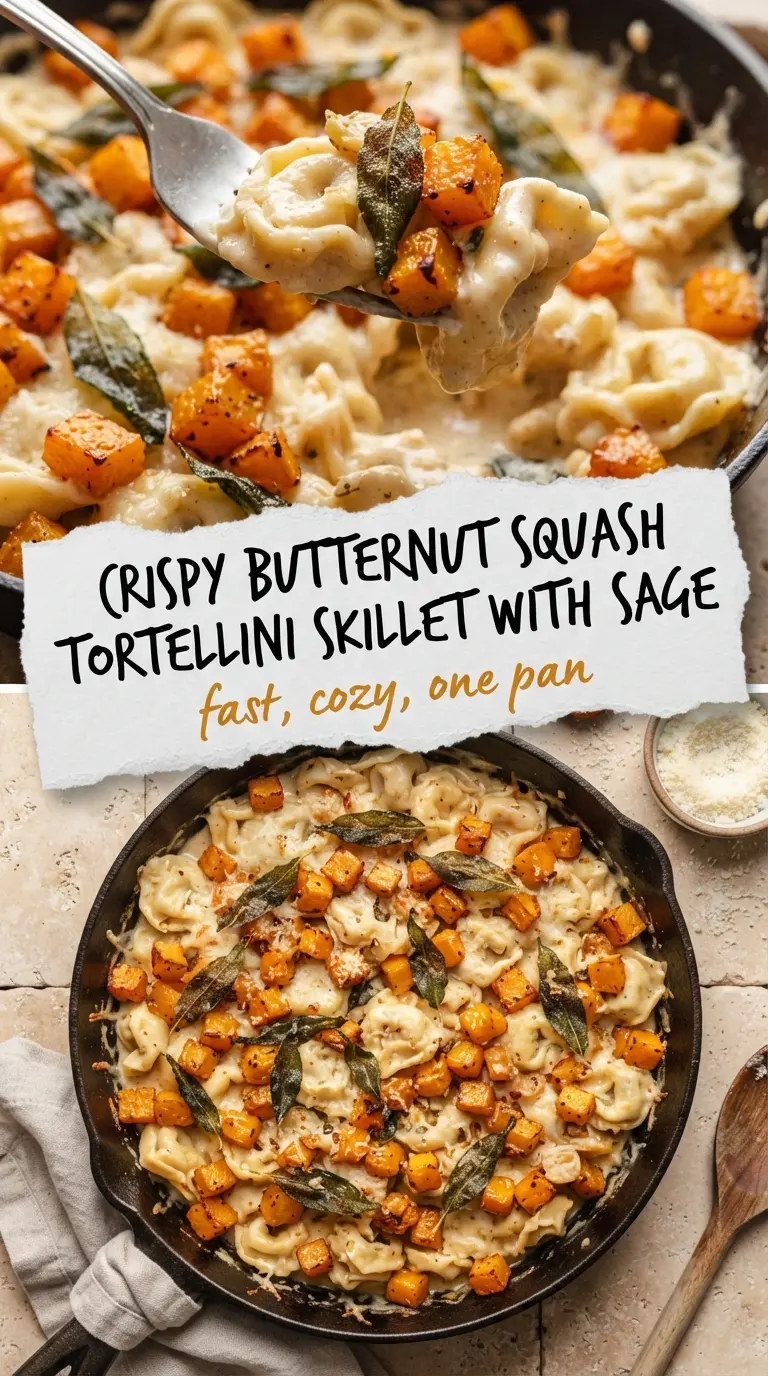
The tortellini is the backbone of the dish, so use a brand you already trust. Fresh tortellini cooks fast and stays tender, while frozen works too if you cook it just until it floats and then stop. Overcooking it in the skillet is how you end up with broken pasta that turns gummy in the sauce.
The cream can be heavy cream or whipping cream, but don’t substitute milk here. Milk is too thin and tends to split when it simmers with cheese. The sauce needs enough fat to coat the pasta and hold together once the Parmesan goes in.
The squash can be roasted or sautéed, and both work. Roasting gives you deeper caramelization if you want to use the oven, while a skillet shortcut keeps the dish firmly one-pan. If you sauté it, give it room and leave it alone long enough to brown on contact.
Building the Skillet in the Right Order
Getting the Squash Brown Before It Softens
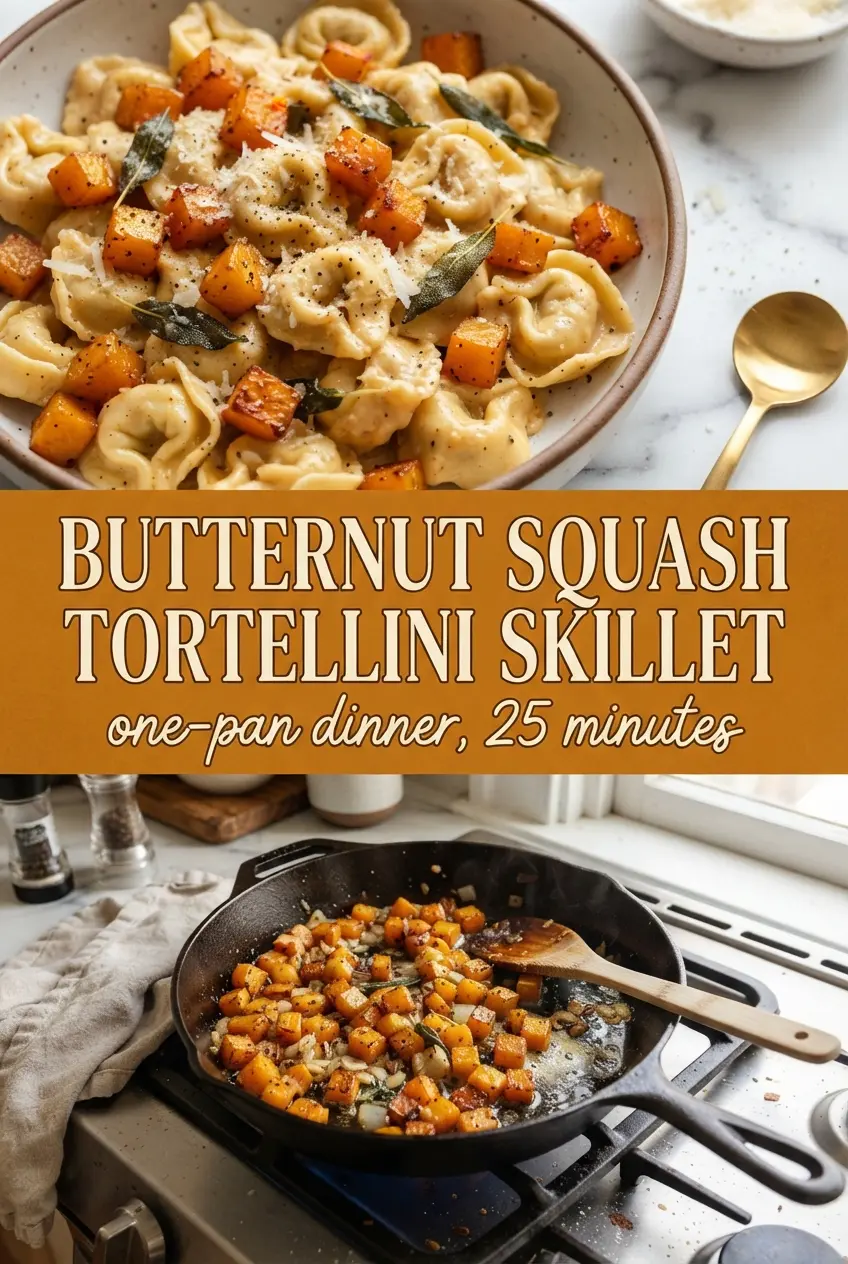
Toss the squash with olive oil and cook it until the cut sides are deeply golden and the centers are just tender. If you’re roasting, spread the cubes in a single layer so they don’t steam. If you’re using the skillet method, don’t stir constantly; let the squash sit long enough to pick up color before turning it. That browning is what gives the finished dish depth.
Cooking the Tortellini to Tender, Not Bloated
Cook the tortellini in salted water according to the package, then drain it as soon as it’s done. It will spend a little more time in the sauce, so stop just short of mushy. If the pasta sits too long in the colander, rinse it only if it’s sticking badly; otherwise, that starch helps the sauce cling.
Frying the Sage Without Burning It
Melt the butter in a large skillet and add the sage leaves once the foam starts to settle. They crisp fast, usually in less than a minute, and they’ll go from aromatic to bitter if you walk away. Pull them out as soon as they darken slightly and feel brittle. The butter should smell nutty, not blackened.
Finishing the Sauce on Low Heat
Add the cream to the same skillet and let it simmer briefly before adding the tortellini and squash. Stir in the Parmesan off the hottest part of the burner so it melts smoothly instead of clumping. If the sauce looks grainy, the heat was too high when the cheese went in. Pull it back, stir steadily, and it will smooth out.
Three Ways to Adapt the Skillet Without Losing What Makes It Work
Make it vegetarian as written, or add pancetta for extra salt
The base recipe is already vegetarian, which is part of why it works so well. If you want a meatier edge, cook diced pancetta before the butter goes in and use the rendered fat to fry the sage. That adds salt and crunch, but it also pushes the dish closer to rich and savory than sweet and balanced.
Use dairy-free cream and skip the Parmesan
A full-fat unsweetened oat cream or cashew cream can stand in for the heavy cream, but the sauce will be a little softer and less glossy. For the cheese, use a dairy-free Parmesan-style substitute or a spoonful of nutritional yeast for a nutty note. The result stays creamy, though it won’t have the same sharp finish as the original.
Make it a little lighter by using half-and-half carefully
Half-and-half works if you keep the heat low and never let the sauce boil, but it won’t be as stable as heavy cream. The sauce will still coat the tortellini, just with a thinner finish. If you go this route, add the Parmesan gradually and serve right away.
Storage and Reheating
- Refrigerator: Store leftovers in an airtight container for up to 3 days. The sauce will thicken and the pasta will soak up some of the cream.
- Freezer: I don’t recommend freezing this one. Tortellini and cream sauces both lose texture after thawing, and the squash turns soft.
- Reheating: Warm it gently in a skillet over low heat with a splash of cream, milk, or water to loosen the sauce. Microwaving on high tends to make the tortellini tough and the sauce separate.
Answers to the Questions Worth Asking
Butternut Squash Tortellini Skillet
Ingredients
Equipment
Method
- Toss the butternut squash cubes with olive oil, then spread on a sheet pan and roast at 425°F for 20 minutes, until golden and the edges look caramelized.
- If sautéing instead of roasting, cook the squash in a skillet until caramelized and crisp at the edges, stirring occasionally to brown evenly.
- Cook the cheese tortellini according to package directions, then drain and set aside.
- Melt butter in a large skillet, then fry the fresh sage leaves until crisp at the edges, about 1 minute, and remove to a paper towel to drain.
- Add heavy cream to the same skillet and simmer briefly until slightly thickened, keeping the heat gentle to avoid splitting.
- Toss the cooked tortellini and the crispy squash in the cream sauce until the pasta is coated and glossy.
- Stir in Parmesan cheese, then season with salt and pepper until balanced and creamy.
- Top the skillet with the crispy fried sage right before serving for maximum crunch.