
Mac and cheese stays at its best when the sauce is glossy, the noodles are tender, and the whole thing still feels comforting hours after it leaves the stove. This thermos version is built for that exact moment. The sauce clings to every elbow instead of pooling at the bottom, and the cheese stays creamy enough to give you that stretchy, satisfying bite when the lid comes off at lunch.
The trick is keeping the sauce a little looser than you would for a baked pan of macaroni. It thickens as it sits, so if it starts out too dense, it turns stiff by noon. A quick stovetop roux with milk keeps the texture smooth, and sharp cheddar brings enough flavor to carry the whole lunch without needing a long ingredient list. Preheating the thermos matters too; pouring hot mac and cheese into a cold container steals heat fast, and that’s when the texture starts to tighten up.
Below, I’ll walk through the small moves that keep this lunch creamy instead of gluey, plus the easiest swaps if you need to change the cheese or make it a little more kid-friendly.
I followed the thermos step and the mac and cheese was still creamy at lunch instead of turning into a brick. The sauce coated the noodles perfectly, and my son said the cheese taste was better than the cafeteria kind.
Save this thermos mac and cheese for lunches that need to stay creamy, cheesy, and hot until the very last bite.
The Thermos Trick That Keeps Mac and Cheese Creamy Instead of Claggy
Mac and cheese dries out fast when it sits in a sealed container, and the usual fix is to drown it in extra sauce. That works for a minute, but by lunchtime you often end up with heavy noodles and a greasy puddle underneath. This version avoids that by keeping the sauce just loose enough to coat the pasta without seizing up as it cools. The macaroni should be cooked to just tender, not soft, because it keeps absorbing sauce after you mix everything together.
The other thing that matters is heat retention. A thermos only does its job if you start with hot food and a hot container. If either one is lukewarm, the cheese sauce tightens while it waits, and that’s when the texture goes from creamy to pasty. Pack it right after mixing, while the sauce still looks glossy.
What Each Ingredient Is Actually Doing in This Dish

- Elbow macaroni — The curved shape holds onto cheese sauce better than long pasta, and the ridges on some brands help even more. Small shells work if that’s what you have, but they create a different bite and usually trap more sauce in the thermos.
- Sharp cheddar — Sharp cheddar gives the sauce enough punch to stay interesting after it cools a little. Pre-shredded cheese works in a pinch, but block cheese melts smoother because it doesn’t carry the anti-caking coating that can make sauces grainy.
- Milk — Whole milk makes the most stable, creamy sauce. Lower-fat milk works, but the sauce will be a little thinner at first and a little less rich once it settles. If you use unsweetened evaporated milk, the sauce gets extra silky and holds up well in a thermos.
- Butter and flour — This roux is what gives the sauce body without turning it into glue. Cook it for a full minute so the flour taste disappears, but don’t let it brown unless you want a deeper, nuttier note.
Building the Sauce So It Stays Smooth in the Thermos
Start with the Roux
Melt the butter over medium heat, then whisk in the flour until it looks sandy and smooth. Cook it for about a minute, just until it smells faintly nutty and loses that raw flour aroma. If you rush this stage, the sauce can taste chalky later. The color should stay pale; once it starts to brown, you’re building a different sauce entirely.
Whisk in the Milk Gradually
Add the milk in a slow stream while whisking constantly. That keeps the roux from clumping and gives you a base that thickens evenly instead of turning lumpy. Let it cook until it coats the back of a spoon and leaves a clear trail when you drag a finger through it. If the sauce looks too thick before the cheese goes in, add a splash more milk now, not later.
Finish Off the Heat
Pull the pan off the burner before adding the cheddar. High heat is what turns melted cheese grainy, and there’s no fixing that once it happens. Stir until the sauce goes smooth and glossy, then fold it through the macaroni right away. The pasta should look generously coated, not soupy, because that extra sauce is what keeps the lunch creamy after it sits.
Dairy-Free Mac and Cheese Thermos Lunch
Use unsweetened oat milk or cashew milk and a dairy-free cheddar-style shreds that melts well. The sauce won’t taste exactly like sharp dairy cheddar, but it can still be creamy and satisfying if you keep the heat low and stir until smooth.
Gluten-Free Version
Swap in gluten-free elbow pasta and use a 1:1 gluten-free flour blend in the roux. The sauce may need an extra minute to thicken, but the method stays the same. Don’t overcook the pasta or it can turn mushy after it sits in the thermos.
Extra-Loaded Lunch
Stir in finely chopped steamed broccoli, peas, or diced ham before packing. Keep the add-ins small and already cooked so they don’t drop the temperature of the pasta or make the thermos harder to fill tightly.
Storage and Reheating
- Refrigerator: Store leftovers in an airtight container for up to 3 days. The sauce will thicken as it chills.
- Freezer: It freezes, but the texture changes a bit and the sauce can go slightly grainy after thawing. Freeze in single portions if you need to, then whisk in a splash of milk when reheating.
- Reheating: Warm it gently on the stove or in the microwave with a spoonful of milk. The common mistake is blasting it on high heat, which dries out the pasta and makes the cheese separate.
Questions I Get Asked About This Thermos Mac and Cheese
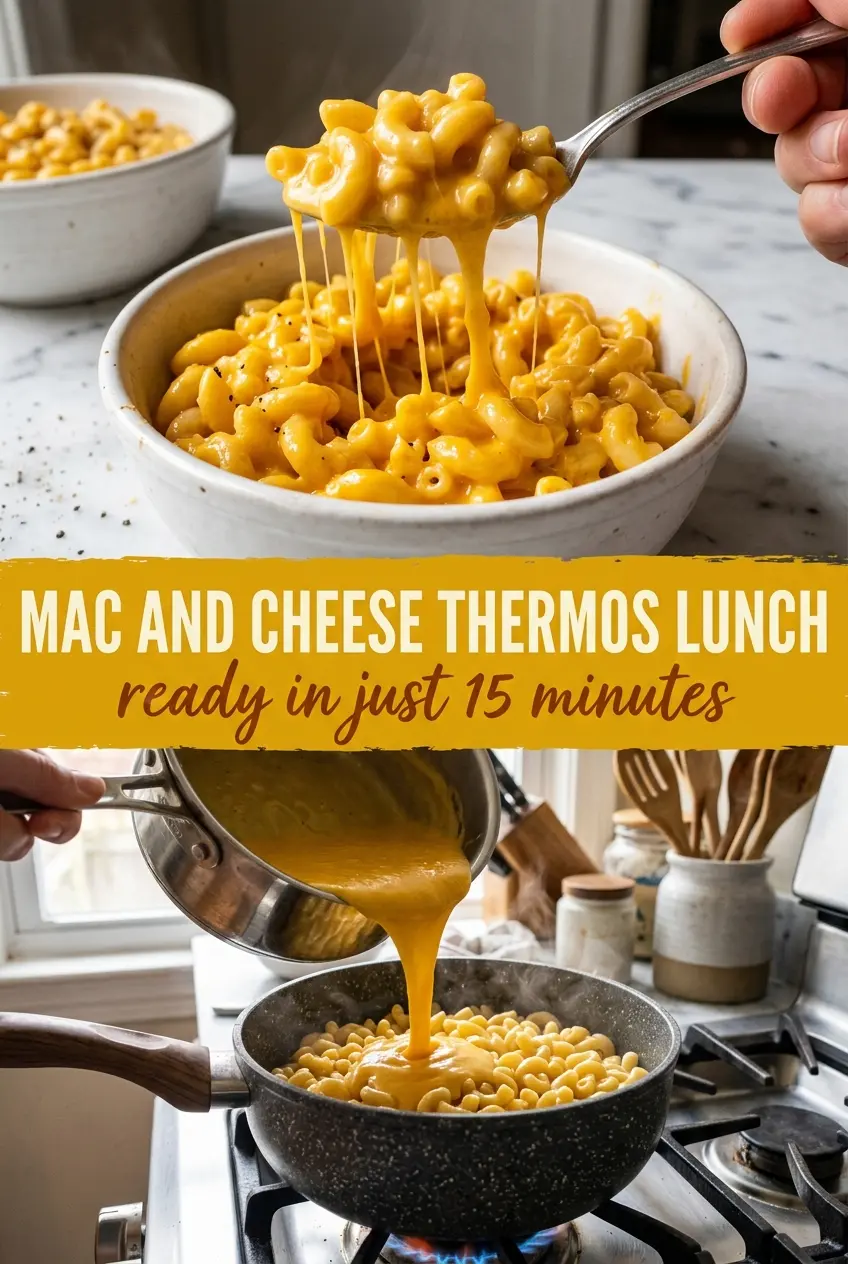
Mac and Cheese Thermos Lunch
Ingredients
Equipment
Method
- Cook the elbow macaroni according to package directions, then drain.
- Keep the drained macaroni warm so it’s ready to coat when the cheese sauce is thick.
- Melt butter in a saucepan over medium heat, then whisk in all-purpose flour and cook for 1 minute (lightly bubbling, no dark browning).
- Gradually whisk in milk and cook until thickened, about 3–4 minutes (sauce should coat the back of a spoon).
- Remove from heat and stir in shredded sharp cheddar cheese, garlic powder, salt, and pepper until smooth and glossy (no grainy cheese lumps).
- Toss the cheese sauce with the cooked macaroni until fully coated (every noodle looks shiny).
- Pack hot into a preheated thermos immediately so it stays warm and gooey until lunchtime.