
Lavender and lemon make a cake that tastes polished without losing the comfort of a homemade dessert. The crumb stays tender and light, the floral note stays in the background instead of turning perfumey, and the lemon keeps every bite clean and bright. That balance is what makes this cake worth baking more than once.
The trick is steeping the lavender in hot milk and butter just long enough to perfume the batter. Too little time and the lavender disappears; too much and it starts tasting woody. Beating the eggs and sugar until pale gives the cake some lift before the flour goes in, and the hot milk mixture finishes the batter with a soft, almost custardy texture.
Below, I’ve included the detail that matters most when working with lavender, plus a few smart variations if you want to change the pan shape or adjust the finish. The frosting is worth paying attention to on its own, because the honey and lemon zest keep the cream cheese from feeling heavy.
The lavender came through gently, not like soap, and the cake stayed so tender even after chilling overnight. The lemon frosting set up beautifully and sliced clean the next day.
Pin this lavender and lemon sheet cake for the moments when you want a floral citrus dessert that slices neatly and tastes elegant without extra fuss.
The Reason the Lavender Stays Soft Instead of Turning Soapy
Lavender can go wrong fast. If it boils hard, or if too much gets used, the cake starts tasting like potpourri instead of dessert. The milk and butter only need to get hot enough to steep the dried flowers; that gentle heat pulls out aroma without extracting the sharp, bitter edge that shows up when lavender sits too long.
The other thing that keeps this cake balanced is the lemon zest in the batter and frosting. It doesn’t just add brightness. It keeps the floral note anchored so each bite tastes clean instead of heavy. The cake itself is built with whipped eggs and sugar, which gives you lift before the flour and hot milk go in.
What Each Ingredient Is Actually Doing in This Dish

- Dried lavender flowers — Culinary lavender is the only version worth using here. Potpourri-grade buds can be harsh and dusty. If yours smells strong in the bag, use a little less than you think you need.
- Whole milk — The fat in whole milk carries the lavender flavor and helps the crumb stay tender. Lower-fat milk works, but the cake won’t have the same softness.
- Lemon zest — Fresh zest is non-negotiable. The oils in the peel are what cut through the floral notes. Bottled lemon juice won’t do the same job.
- Cream cheese — This frosting depends on cream cheese for tang and body. If you swap in all butter, the finish gets sweeter and flatter.
The Mixing Order That Keeps the Cake Light
Whipping the Eggs and Sugar First
Beat the eggs and sugar until the mixture turns pale and thick enough to fall from the beaters in ribbons. That step gives the cake structure before any flour goes in, which helps it rise without turning dense. If you rush past this, the crumb can bake up tight and a little heavy. Add the vanilla and lemon zest once the eggs have thickened so the zest gets distributed evenly.
Steeping the Lavender in Hot Milk and Butter
Warm the butter, milk, and lavender over low heat until the butter melts and the mixture is hot, then take it off the heat and let it sit briefly. You want the milk scented, not simmering. Strain if you prefer a cleaner look, or leave the lavender in for a stronger herbal note. If the milk gets too hot for too long, the lavender flavor can turn bitter.
Bringing the Batter Together
Add the flour mixture gradually, then pour in the hot milk in a slow stream while the mixer runs. The batter will look thin at first, then smooth out as the flour hydrates. This is where people often panic and overmix. Stop as soon as everything is combined, because extra beating after the flour goes in can toughen the cake.
Baking Until the Center Springs Back
Scrape the batter into the prepared pan and bake until a toothpick comes out clean and the center springs back when touched lightly. The edges should pull just slightly from the pan, not darken deeply. If you bake past that point, the cake still tastes good, but it loses the soft texture that makes this one special. Let it cool completely before frosting or the cream cheese layer will slide.
How to Adapt This Cake Without Losing the Balance
Make it as a sheet cake instead of layers
Use a sheet pan if you want a thinner cake with more frosting in every bite. The bake time will usually be shorter, so start checking early and look for the center to spring back. You’ll get a more casual, easy-to-slice dessert with the same floral citrus flavor.
Make it gluten-free
A good 1:1 gluten-free flour blend can work here because the cake gets structure from the whipped eggs as well as the flour. Choose a blend that includes xanthan gum if possible. The texture will be a touch more delicate, but the flavor stays the same.
Swap the frosting for a lighter finish
If you want something less rich, dust the top with powdered sugar and add a thin lemon glaze instead of the cream cheese frosting. You’ll lose the tangy contrast, but the lavender becomes more delicate and the cake tastes cleaner.
Storage and Reheating
- Refrigerator: Store covered for up to 4 days. The frosting firms up, but the cake stays tender.
- Freezer: Freeze unfrosted layers wrapped tightly for up to 2 months. Frosted slices freeze, too, but the cream cheese topping can look a little rough after thawing.
- Reheating: Let chilled slices sit at room temperature for 20 to 30 minutes before serving. Microwaving too long melts the frosting and dries the crumb, so use just a short burst if you need to take the chill off.
Questions I Get Asked About This Cake
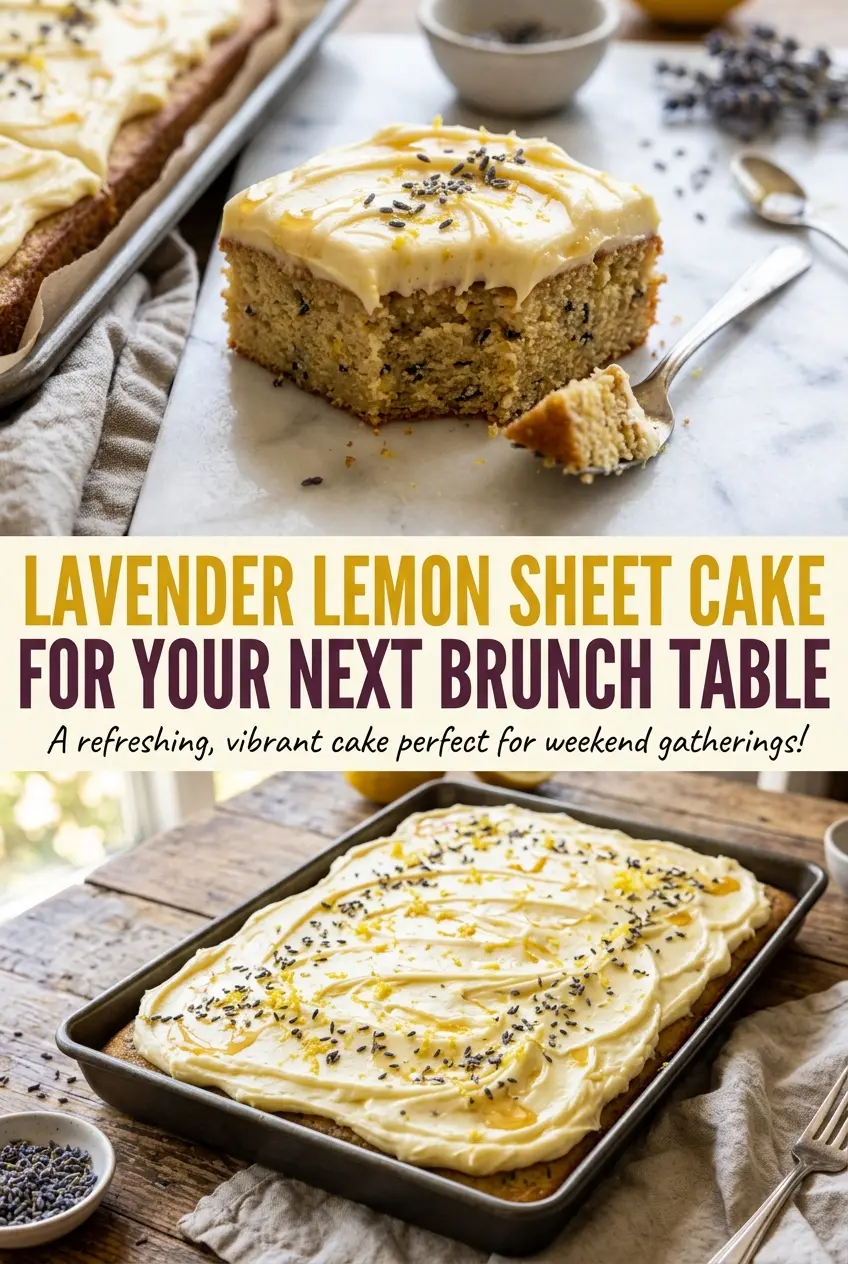
Lavender And Lemon Sheet Cake
Ingredients
Equipment
Method
- Preheat the oven to 350°F and grease two 9-inch round pans or a sheet pan.
- Stir together the all-purpose flour, baking soda, and salt.
- Heat the unsalted butter, whole milk, and dried lavender flowers over low heat until hot and the butter is melted, then let steep briefly.
- Beat the large eggs and granulated sugar until thickened and pale, then beat in the vanilla extract and grated lemon zest.
- Gradually add the flour mixture, then slowly pour in the hot lavender milk, beating until combined.
- Pour the batter into the prepared pan(s) and bake for about 30 minutes, until a toothpick comes out clean.
- Cool completely, then beat the unsalted butter, cream cheese, powdered sugar, honey, and grated lemon zest until smooth.
- Spread generously over the cake.