
Ground beef and potato casserole earns its place in the dinner rotation because it gives you sturdy, comforting layers without turning mushy or bland. The potatoes come out tender, the beef stays savory, and the cheese bakes into a browned top that holds everything together with just enough creaminess underneath. It’s the kind of casserole that settles onto the plate in neat scoops and tastes even better after it rests for a few minutes.
The part that makes this version work is the sauce: cream of mushroom soup gets loosened with milk and sour cream so it can seep between the potato layers instead of sitting on top in a heavy blob. Thin potato slices matter here. Thick slices take too long to soften, and you end up with a cooked-on-the edges, underdone-in-the-middle situation. Browning the beef with the onion first also matters because that step builds the base flavor the casserole depends on.
Below, I’ve laid out the layering order that keeps the potatoes cooking evenly, plus a few swaps that still keep the casserole rich and satisfying. If you’ve ever had a potato casserole turn dry or stubbornly firm, the process notes here will help you avoid that.
The potatoes were tender all the way through and the sauce stayed creamy instead of separating. I added the peas and my husband went back for seconds before I even sat down.
Save this ground beef and potato casserole for nights when you want creamy layers, tender potatoes, and a golden cheddar top without much fuss.
The Potatoes Won’t Finish Unless You Slice Them Right
This casserole lives or dies by the thickness of the potatoes. Thin, even slices cook through at the same pace as the beef layer and absorb enough sauce to turn tender without falling apart. If the slices are too thick, the top browns before the center softens, and no amount of extra cheese will fix that. A mandoline helps, but a sharp knife and a steady hand work too. Aim for slices that are thin enough to bend slightly, not sturdy chunks.
There’s another common mistake here: packing everything into the dish too tightly. The sauce needs room to move between the layers. When you layer the potatoes, beef, and cheese in a loose, even way, the casserole bakes into a creamy slice instead of a dense brick. That also helps the top stay bubbly instead of greasy.
What Each Ingredient Is Actually Doing in This Dish

- Ground beef — Use 80/20 if you can. It brings enough fat for flavor, and you’ll drain the excess after browning so the casserole doesn’t turn oily. Lean beef works, but the filling tastes a little less rich.
- Potatoes — Russets or Yukon Golds both work, but Yukon Golds hold their shape a little better and give a buttery texture. Slice them thin and evenly so they soften at the same rate. Uneven slices are the fastest way to get a mixed result.
- Cream of mushroom soup — This is the shortcut that gives the casserole body. It thickens as it bakes and helps bind the layers. If you need a swap, cream of chicken works fine, though the mushroom version gives a deeper savory note.
- Sour cream and milk — The sour cream adds tang and helps the sauce stay silky instead of gluey. Milk loosens the soup so it can travel through the layers. Whole milk gives the best texture, but 2% is fine.
- Cheddar cheese — Sharp cheddar gives you the strongest flavor, which matters in a casserole built from familiar ingredients. Pre-shredded cheese melts fine, but freshly shredded cheese melts a little smoother because it doesn’t carry the same anti-caking coating.
- Onion — The onion sweetens as it cooks with the beef and gives the casserole a more finished flavor. Dice it small so it softens fully in the skillet instead of staying crunchy in the middle.
- Peas or green beans — These are optional, but they add color and break up the richness. Use cooked or thawed vegetables so they don’t water down the sauce.
The Layering Order That Keeps the Center Creamy
Brown the Beef First
Cook the ground beef and onion together until the meat loses its pink color and the onion turns soft and translucent. If the pan looks wet, keep cooking until the moisture evaporates and the beef starts to sizzle again. That’s when the flavor deepens. Drain the fat after browning so the casserole stays creamy instead of greasy.
Whisk the Sauce Until It Looks Smooth
Stir the cream of mushroom soup, sour cream, and milk together until the mixture is uniform and pourable. It should look thick but not stiff. If you still see streaks of sour cream, keep whisking; those pockets can bake unevenly and create tangy spots in the finished casserole. This sauce should coat the back of a spoon, not sit in a paste.
Build the Layers Without Pressing Them Down
Start with potatoes, then add beef, vegetables if you’re using them, a portion of sauce, and cheese. Repeat the layers, ending with cheese on top. Resist the urge to compress everything. Loose layers let the sauce circulate around the potatoes, which is what gives you that tender, evenly baked center.
Bake Covered, Then Uncover for Color
Cover the dish tightly with foil and bake until the potatoes are nearly tender. The foil traps steam, which is what finishes the potatoes. Then remove it and keep baking until the top turns golden and the edges bubble hard. If the top browns before the potatoes are done, the slices were too thick or the dish was packed too full.
Three Ways to Make This Casserole Fit Your Table
Gluten-Free Version With a Better Texture Than You’d Expect
Use certified gluten-free cream of mushroom soup, or replace the soup with a homemade white sauce thickened with cornstarch. The casserole still bakes up creamy, and the potatoes do the heavy lifting on texture. Check the labels on your broth or seasoning if you add any extras.
Dairy-Free Adjustment That Still Feels Rich
Swap in a dairy-free cream soup, unsweetened plain non-dairy yogurt or sour cream alternative, and an unsweetened plant milk with some body, like oat milk. Use a good melting dairy-free cheddar-style shreds if you want the top to brown and soften. The result won’t taste exactly the same, but it still lands creamy and satisfying.
Add Bacon or Leftover Ham for a Saltier, Heartier Pan
Stir in cooked crumbled bacon or diced ham with the beef layer. Both add a smoky edge and make the casserole feel a little more substantial, but they also bring extra salt, so season the beef more lightly at the skillet stage. This is the easiest way to stretch the recipe without changing the structure.
Storage and Reheating
- Refrigerator: Store leftovers covered for up to 4 days. The potatoes firm up a bit as they chill, but the texture holds up well.
- Freezer: It freezes, but the potatoes can soften after thawing. For best results, cool completely, wrap tightly, and freeze in portions. Thaw overnight in the refrigerator before reheating.
- Reheating: Reheat covered in a 325°F oven until hot in the center. Add a splash of milk if the sauce looks thick. The common mistake is blasting it in the microwave on high, which can make the cheese separate and the potatoes tough at the edges.
Questions I Get Asked About This Recipe
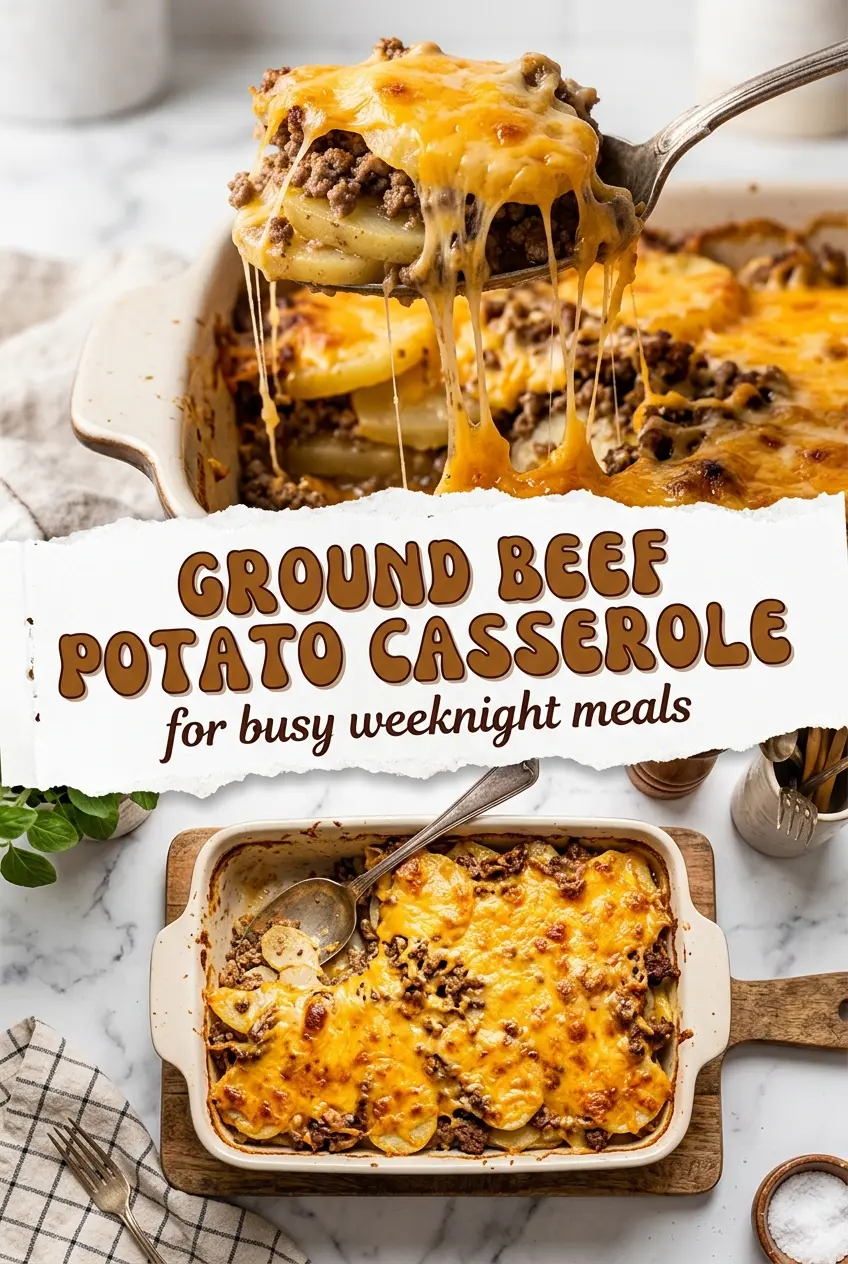
Ground Beef And Potato Casserole
Ingredients
Equipment
Method
- Preheat the oven to 350°F. Set up a 13x9-inch casserole dish and keep it ready for layering.
- Whisk together the cream of mushroom soup, sour cream, and milk until smooth. This creates the creamy sauce that will coat the potatoes evenly.
- Brown the ground beef and diced onion in a skillet over medium-high heat. Cook until the beef is no longer pink, then drain the fat.
- Season the browned beef mixture with salt and pepper to taste. Stir so the seasoning is evenly distributed.
- Layer the thinly sliced potatoes on the bottom of the 13x9-inch casserole dish. Spread them out so they form an even base.
- Add the beef and onion mixture over the potatoes. If using vegetables, scatter the peas or green beans in an even layer too.
- Pour half of the sauce over the potatoes and beef. Make sure most of the surface is covered for tender, creamy results.
- Top with 1 cup shredded cheddar cheese. Spread it into an even layer so it melts into a cohesive crust.
- Repeat the layers with the remaining potatoes and beef mixture, then pour on the rest of the sauce. Finish by topping with the remaining shredded cheddar cheese.
- Cover the casserole with foil and bake for 1 hour at 350°F. Look for bubbling around the edges and softened potatoes beneath the foil.
- Remove the foil and bake for another 30 minutes at 350°F. Bake until the potatoes are fork-tender and the top is golden and bubbly, with melted cheese pulling slightly at the surface.