
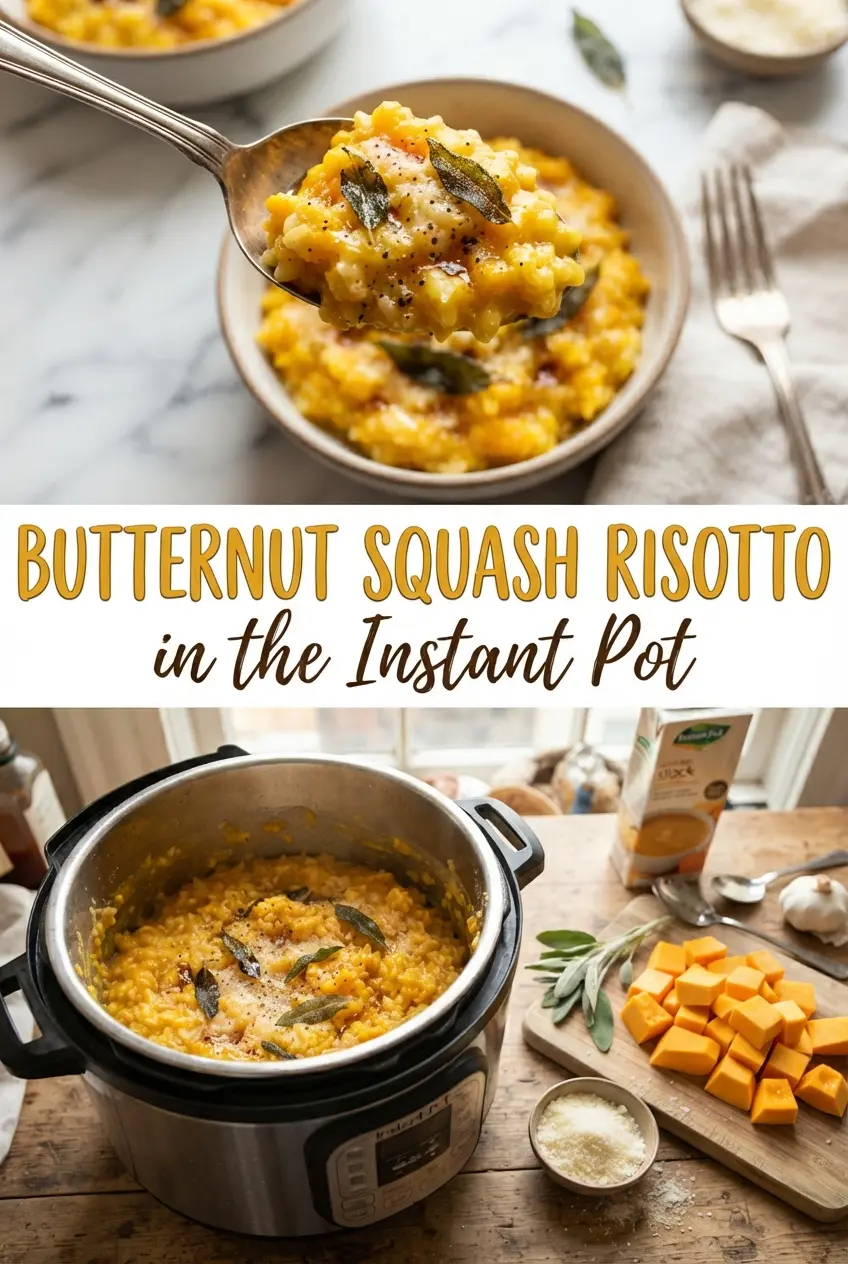
Creamy butternut squash risotto lands with that soft, spoonable texture people chase in a stovetop version, but without standing over the pot and stirring for half an hour. The squash turns tender and sweet under pressure, the rice gives up just enough starch to thicken the broth, and the browned butter with crisp sage at the end pulls the whole bowl into something deep, nutty, and comforting.
The trick here is balancing the quick-cooking pressure cooker method with the classic risotto finish. Arborio rice still needs a little toast in butter before the liquid goes in, because that step helps the grains hold their shape instead of turning mushy. Parmesan gets stirred in after pressure cooking, not before, so it melts into the risotto instead of seizing or turning grainy.
Below, I walk through the little details that keep the texture right, plus a few practical swaps if you need to work with what you have. The browned sage butter is worth paying attention to on its own; it takes the dish from good to the kind of dinner people remember.
The risotto came out creamy and the squash held its shape instead of disappearing. Browning the butter separately was worth it — the sage stayed crisp and the whole dish tasted richer.
Save this Instant Pot butternut squash risotto for a creamy dinner with browned butter, sweet squash, and crisp sage.
The Reason Instant Pot Risotto Stays Creamy Without Constant Stirring
The biggest mistake with pressure-cooker risotto is treating it like plain rice. If you skip the butter-toasting step, the grains can cook up soft on the outside before the center has the right texture. A quick sauté at the start gives the rice a little structure, and that matters even in the Instant Pot.
Another place people lose control is adding the cheese too early. Parmesan belongs at the end, when the rice is already tender and the pot is off the heat. If it goes in under pressure, it can turn stringy or clump instead of melting into the risotto’s natural starches.
- Arborio rice is nonnegotiable here. It’s the starch in arborio that gives risotto its creamy body without turning it into porridge.
- Butternut squash brings sweetness and a soft, velvety texture. Cube it evenly so it cooks at the same pace as the rice.
- White wine adds a clean acidic edge that keeps the dish from tasting flat. If you don’t cook with wine, use a splash of extra broth plus a little lemon juice at the end.
- Parmesan should be finely grated so it disappears into the risotto. Pre-shredded cheese won’t melt as smoothly and can leave the texture a little grainy.
- Fresh sage is best fried in the browned butter. Dried sage won’t give you the same crisp texture or that clean, piney finish.
Building the Flavor Before the Pressure Cook

The shallot and butter form the base, and that base needs a little patience. Let the shallot soften until it turns translucent and sweet, then toast the rice for about 2 minutes so the edges look glossy and lightly fragrant. That toasted coating helps the grains cook evenly under pressure instead of collapsing.
The broth should go in with enough liquid to fully cover the rice and squash. If the mixture looks too dry before sealing, the rice can cook unevenly and leave you with hard centers. Once the pressure cooking is done, quick release the pot so the risotto stops cooking at the right moment instead of crossing into sticky territory.
- Butter is doing double duty here: it softens the shallot and helps toast the rice. Use real butter, not a spread, because the flavor matters in such a simple dish.
- Shallot gives a gentler sweetness than onion. If you only have onion, use a small amount and cook it a bit longer so it softens fully.
- Chicken broth adds depth that water can’t match. Vegetable broth works too, but use one with decent body or the final risotto can taste thin.
- Salt and black pepper are best adjusted after the Parmesan goes in. The cheese brings salt, and seasoning too early can push the dish over the edge.
The Short Pressure-Cooker Window That Matters Most
Softening the Shallot and Toasting the Rice
Start by cooking the shallot in butter until it goes soft and loses its raw bite. Then stir in the arborio rice and let it toast for a couple of minutes; the grains should look a little translucent at the edges and smell nutty, not browned. If the rice starts to color too fast, the heat is too high and the bottom of the pot can scorch.
Adding the Wine and Liquid
Pour in the wine and let it bubble for a moment before the broth goes in. That little simmer cooks off the sharp alcohol flavor and leaves the risotto with a cleaner, rounder taste. Once the broth and squash are in, scrape up anything stuck to the bottom so the pot seals properly and nothing burns during pressure cooking.
Pressure Cooking and Quick Release
Cook on high pressure for 6 minutes, then quick release right away. That timing gives the rice enough heat to soften while keeping the grains intact, and it keeps the squash tender instead of collapsed. If you let it sit on warm too long before releasing, the rice will keep absorbing liquid and the texture can tighten up.
Finishing With Cheese, Browned Butter, and Sage
Stir the Parmesan into the risotto after pressure cooking, while the rice is still hot and loose. In a separate pan, cook the butter until it turns golden brown and smells nutty, then fry the sage leaves briefly until they crisp. Spoon the browned butter and sage over the top right before serving so the contrast stays sharp and the sage doesn’t go limp.
Three Ways to Adapt This Risotto Without Losing the Good Texture
Make it vegetarian with vegetable broth
Swap the chicken broth for a full-flavored vegetable broth. The risotto stays creamy, but you’ll lose a little savory depth, so taste carefully at the end and season with extra Parmesan and pepper if needed.
Make it dairy-free without ruining the body
Use olive oil instead of butter at the start and finish with a dairy-free Parmesan substitute or a spoonful of nutritional yeast. You won’t get the same browned butter flavor, but you’ll still get a creamy bowl if you keep the rice-to-liquid ratio the same.
Swap the squash for sweet potato
Cubed sweet potato works in place of butternut squash and gives the risotto a slightly denser, sweeter finish. Cut the cubes small so they cook through in the same pressure window; larger chunks can stay firm while the rice is already done.
Storage and Reheating
- Refrigerator: Store for up to 3 days. The risotto will thicken as it sits, which is normal.
- Freezer: It freezes, but the texture gets softer after thawing. Freeze in portions, then thaw overnight before reheating.
- Reheating: Warm it gently on the stove with a splash of broth or water, stirring until it loosens. High heat dries out the rice and makes the cheese separate instead of melting back in.
Answers to the Questions Worth Asking
Butternut Squash Risotto
Ingredients
Equipment
Method
- Melt 1 tbsp butter in a Dutch oven over medium heat, then sauté the diced shallot until softened. Stir in the arborio rice and toast for 2 minutes until lightly fragrant, then add the white wine and stir until mostly absorbed.
- Add the chicken broth and cubed butternut squash, then bring to a simmer and cover tightly. Cook on high pressure for 6 minutes, then quick release the pressure.
- In a separate pan over medium heat, brown 2 tbsp butter until golden and nutty. Fry the fresh sage leaves until crisp, then remove them to stop further browning.
- Stir the grated Parmesan into the risotto until creamy and fully combined. Top with the browned butter and crisp sage leaves, then season with salt and black pepper to taste and serve immediately.