
A Thanksgiving turkey with crisp, deeply bronzed skin and juicy meat underneath earns its place at the center of the table. The butter melts into the bird as it roasts, carrying garlic, thyme, rosemary, and sage all the way through the meat instead of sitting on the surface. That’s what gives this turkey its holiday-worthy aroma and keeps the breast from drying out before the legs are done.
The trick is getting seasoned butter both under and over the skin. Under the skin does the real work because it bastes the breast from the inside as the turkey cooks. Starting hot helps set the skin early, then lowering the oven gives the meat time to finish without burning the outside. The broth in the pan adds a little insurance against drippings scorching, and the lemon and onion in the cavity perfume the bird without making it taste citrusy or onion-heavy.
If you’ve had turkey that looked beautiful but carved up dry, the rest time below matters as much as the roasting time. You’ll also find a few practical swaps and make-ahead notes that help when oven space and timing get tight on a big cooking day.
The skin turned out crackly all over and the breast stayed juicy even after it sat on the platter for a while. The herb butter under the skin made the whole kitchen smell amazing, and the drippings were perfect for gravy.
Save this herb butter roasted Thanksgiving turkey for the holiday when you want crisp skin, juicy meat, and a pan full of gravy-worthy drippings.
The Skin Stays Crisp When You Start Hot and Finish Gentle
The mistake most people make with roast turkey is holding the oven at one temperature the whole time. That usually gives you pale skin at the beginning or burnt skin before the meat is done. Starting at 425°F sets the outside fast and gives the butter a chance to brown, then dropping to 350°F keeps the bird roasting evenly so the breast doesn’t dry out while the thighs catch up.
The other failure point is buttering the skin only from the outside. That tastes good, but it doesn’t protect the meat the way butter under the skin does. When the butter is tucked directly against the breast, it bastes the meat as it cooks and helps carry the herbs through every slice. The result is a turkey that slices cleanly and stays moist even after it rests.
What Each Ingredient Is Doing in This Bird
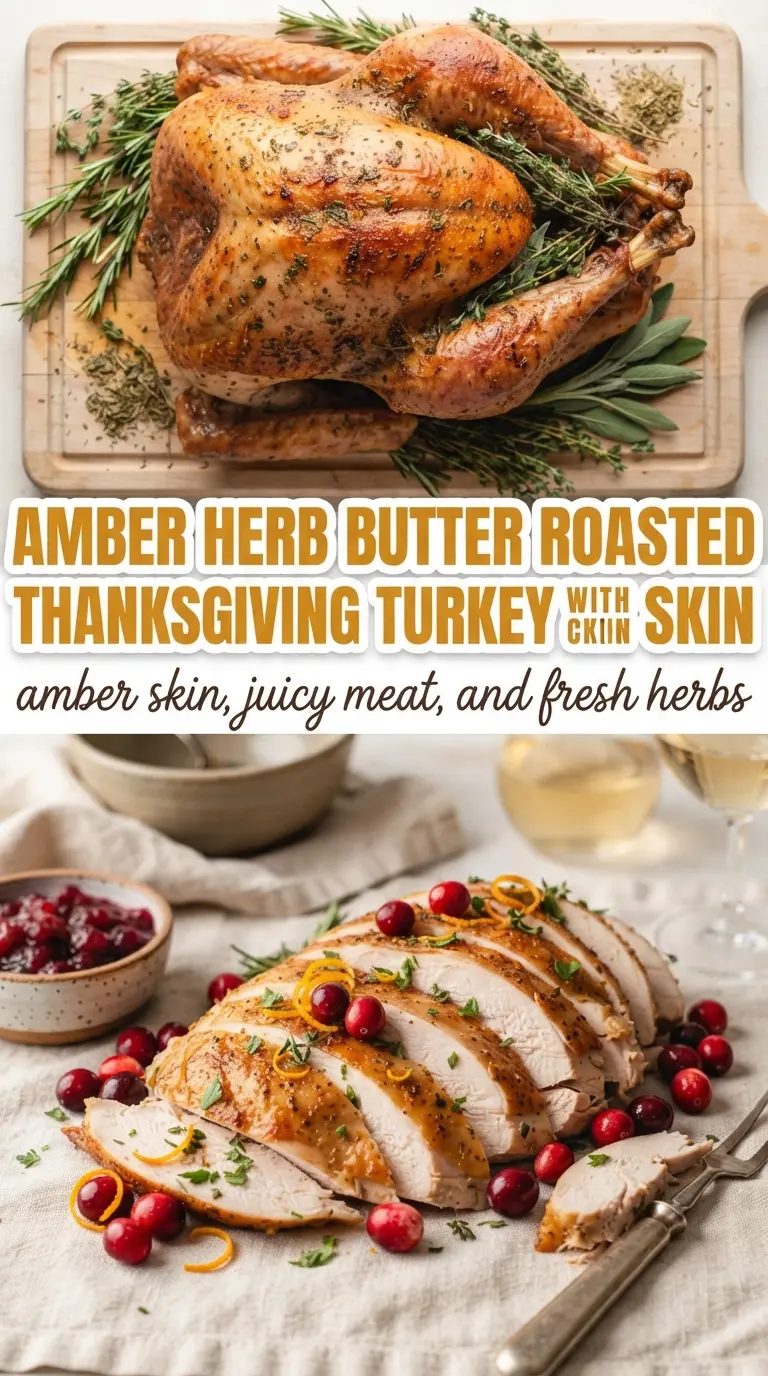
- Turkey — A 12- to 14-pound bird gives you enough roasting time for the skin to brown before the meat overcooks. A larger turkey can work, but the breast usually needs more protection, so the butter under the skin matters even more.
- Unsalted butter — This is the base of the flavor and the browning. Softened butter spreads under the skin without tearing it, and unsalted butter lets you control the seasoning instead of guessing how salty the final bird will be.
- Fresh thyme, rosemary, and sage — Fresh herbs keep the flavor bright and aromatic while the turkey roasts. Dried herbs can be used in a pinch, but they’ll taste more muted; if you swap them, use about one-third as much.
- Garlic — Garlic gives the butter some backbone and perfumes the drippings. Mince it finely so it disperses through the butter instead of staying in sharp little pockets.
- Lemon and onion — These go inside the cavity for aroma, not for strong flavor. They help round out the butter and keep the pan from smelling flat, but they won’t overwhelm the turkey if you only use half a lemon and a quartered onion.
- Chicken broth — The broth keeps the pan from drying out and gives you a better base for gravy. Store-bought broth works fine here; this is not the place where a fancy broth changes the outcome much.
The Part That Matters Most: Getting the Butter Where It Counts
Mixing the Herb Butter
Work the garlic and chopped herbs into softened butter until it looks evenly speckled. If the butter is too cold, it tears instead of spreading; if it’s too warm and glossy, it runs off the bird before it has a chance to season anything. You want it soft enough to smear, not oily.
Sliding It Under the Skin
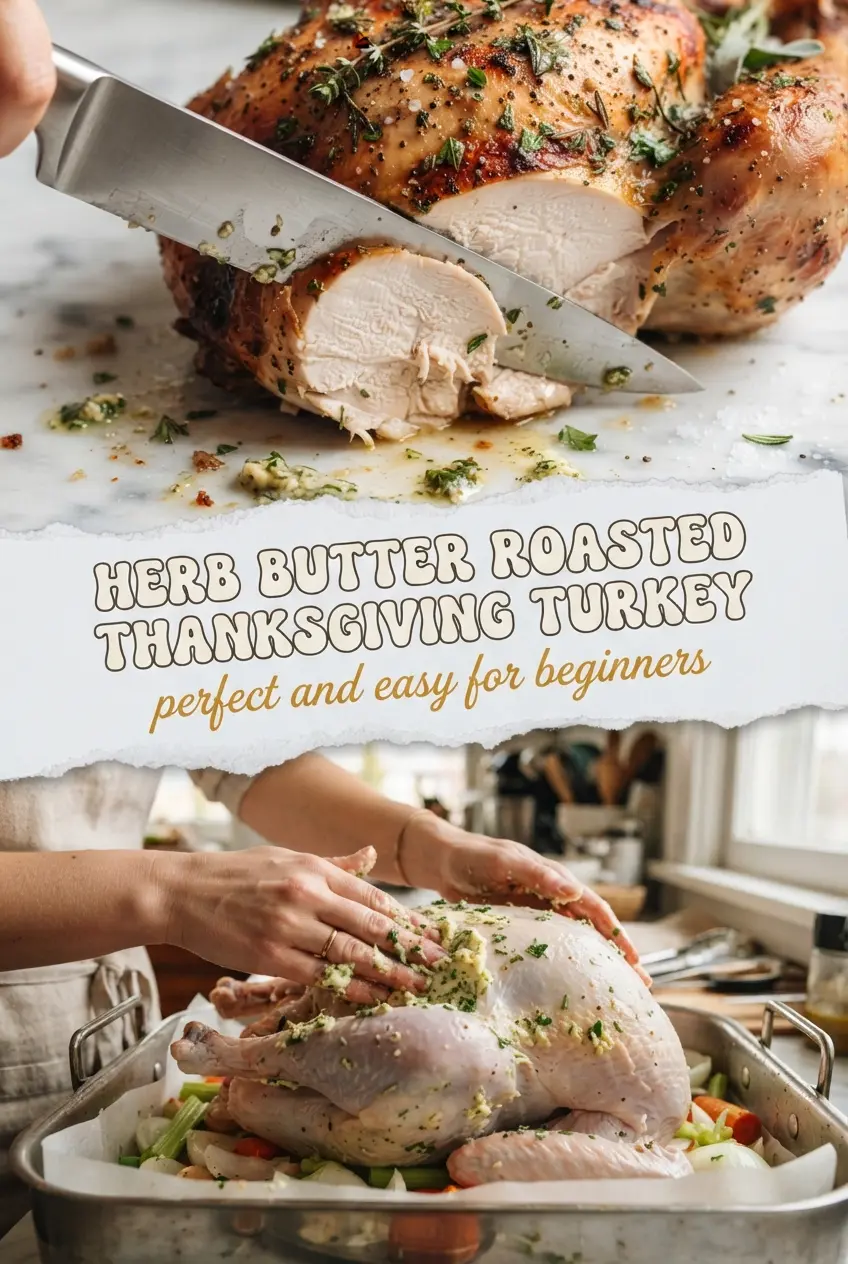
Loosen the skin gently over the breast with your fingers and slide the butter underneath in generous handfuls. Don’t rip the skin or poke through to the meat if you can help it, because the skin is what holds the butter in place. Spread the butter as evenly as you can so one side of the breast doesn’t roast faster than the other.
Roasting in Two Temperatures
Put the turkey in the oven at 425°F first, then lower it to 350°F after 30 minutes. That first burst of heat starts the browning, and the lower temperature keeps the meat from tightening up too quickly. The turkey is done when the thickest part of the thigh reaches 165°F and the juices run clear, not rosy.
Resting Before You Carve
Let the turkey rest for a full 30 minutes before carving. If you cut too soon, the juices run out onto the board instead of staying in the meat. Resting also gives you cleaner slices, which matters when you’re serving a bird this size.
How to Adapt This for Different Tables and Different Timelines
Dairy-Free Herb Roasted Turkey
Swap the butter for a plant-based butter that stays solid at room temperature. You’ll still get browning and herb flavor, though the drippings will taste a little less rich and a little more savory than classic butter-based pan juices.
Gluten-Free by Default
The turkey itself is naturally gluten-free as written. Just check your chicken broth and any gravy ingredients you plan to use afterward, because that’s where hidden gluten usually shows up.
Using Dried Herbs Instead of Fresh
If fresh herbs aren’t available, use about 2 teaspoons dried thyme, 2 teaspoons dried rosemary, and 1 teaspoon dried sage. The flavor will be a little less bright and more concentrated, so rub the butter thoroughly and don’t skimp on the resting time.
Make-Ahead Herb Butter
Mix the butter up to 3 days ahead and keep it chilled. Let it soften before using so it spreads easily under the skin. This is the best way to save time on the holiday itself without sacrificing the flavor.
Storage and Reheating
- Refrigerator: Store carved turkey in an airtight container for up to 4 days. The breast stays best if you keep it in larger slices instead of chopping it small.
- Freezer: Freeze cooked turkey for up to 3 months in tightly wrapped portions. Freeze with a spoonful of drippings or broth if you can, because lean turkey dries out fast in the freezer.
- Reheating: Reheat covered in a 325°F oven with a splash of broth until just warmed through. The common mistake is blasting it in the microwave, which turns the breast stringy and pulls out the moisture you worked to keep in.
Answers to the Questions Worth Asking
Herb Butter Roasted Thanksgiving Turkey
Ingredients
Equipment
Method
- Heat the oven to 425°F. Mix the softened butter, minced garlic, and chopped thyme, rosemary, and sage until evenly combined, then set aside.
- Loosen the skin over the breast and rub half the herb butter under the skin. Rub the remaining butter over the outside, then sprinkle all over with kosher salt and black pepper.
- Stuff the cavity with the halved lemon and quartered onion, then place the turkey on a sheet pan. Pour the chicken broth into the pan so there is liquid for roasting.
- Roast at 425°F for 30 minutes to start browning, with the skin visibly turning amber. Reduce the oven to 350°F and continue roasting until a thermometer reads 165°F in the thickest part, about 2½ to 3 hours total after the initial 30 minutes.
- Rest the turkey for 30 minutes before carving so the juices settle and the skin stays crackly. Carve and serve while still warm.