
Silky red lentils melt into a bowl of bright, golden soup with enough body to feel comforting and enough lemon to keep every spoonful lively. The coconut milk rounds out the turmeric and ginger, while the harissa oil and za’atar croutons turn a simple pot of soup into something that tastes layered, finished, and worth repeating.
The trick here is building flavor before the liquid goes in. Onion, garlic, ginger, turmeric, cumin, and black pepper all get a short cook in olive oil so the spices bloom instead of tasting dusty. Red lentils break down quickly, which gives the soup its creamy texture without cream, and the lemon goes in near the end so the soup stays bright instead of flat. The partially blended texture matters too: you want some body, but not a purée that feels heavy.
Below, I’ve included the one place this recipe can go bland if you rush it, plus the easiest way to adjust the texture if you want it thicker or more brothy. The harissa oil and za’atar croutons are optional in the strictest sense, but they’re the difference between a good lentil soup and one people remember.
The soup had that smooth, creamy texture without feeling heavy, and the lemon at the end kept it from tasting dull. I also loved the harissa oil on top — it gave each bowl a little heat and made it feel restaurant-style.
Save this golden lentil soup with harissa oil and za’atar croutons for a bowl that’s creamy, bright, and packed with texture.
The Reason This Lentil Soup Stays Bright Instead of Flat
Red lentil soup can go dull fast if every layer gets cooked the same way. The difference here is timing. The spices bloom in the oil first, which gives the turmeric and cumin a warmer, deeper taste, and the lemon waits until the end so it keeps its edge. If you add the acid too early, the soup can taste muted after simmering.
The other mistake is blending the whole pot until it’s completely smooth. That sounds polished, but it often makes lentil soup feel gluey. A partial blend gives you a creamy body with enough texture to keep each spoonful interesting. It also helps the coconut milk feel integrated instead of sitting on top of the broth in a thin layer.
- Blooming the spices first wakes up the turmeric, cumin, and black pepper. That short minute in hot oil matters more than extra salt at the end.
- Red lentils are the right lentil here because they break down quickly and thicken the soup naturally. Brown or green lentils stay too firm for this texture.
- Lemon at the end keeps the soup vivid. Stir it in after the heat has dropped a little so the flavor stays sharp and clean.
What Each Ingredient Is Doing in This Bowl

- Red lentils are the backbone. They soften fast and almost dissolve, which is what gives this soup its body without needing flour or cream.
- Turmeric, ginger, cumin, and black pepper create the base flavor. Black pepper isn’t just for heat here; it helps turmeric taste fuller and less earthy.
- Coconut milk smooths out the spices and makes the soup feel rich. Light coconut milk works if that’s what you have, but the broth will be thinner.
- Lemon juice is non-negotiable for the final balance. Fresh lemon matters more than bottled because the flavor is cleaner and brighter.
- Harissa oil is a finishing move, not an ingredient to simmer away. The heat and color stay sharp when it’s drizzled over the finished soup.
- Za’atar croutons add the crunch this bowl needs. Plain croutons work in a pinch, but the sesame and herbs make the whole dish taste more complete.
How to Build the Soup So It Stays Creamy, Not Grainy
Start with the onion until it turns soft and sweet
Cook the diced onion in olive oil over medium heat until it looks translucent and smells sweet, not sharp. If it browns too fast, the soup can pick up a bitter edge, so lower the heat and give it the full five minutes. The onion is done when it collapses easily and no raw bite is left.
Wake up the garlic, ginger, and spices
Stir in the garlic, ginger, turmeric, cumin, and black pepper for about a minute. The pan should smell warm and fragrant almost immediately. If the garlic starts to brown, the heat is too high and the spices will taste harsh instead of rounded.
Let the lentils simmer until they lose their shape
Add the rinsed lentils and broth, then simmer until the lentils are soft and beginning to fall apart, about 20 minutes. The pot should bubble gently, not boil hard, or the bottom can catch before the lentils finish cooking. At this stage the soup will look thin, which is normal; the thickness comes as the lentils break down.
Finish with coconut milk and lemon, then blend just enough
Stir in the coconut milk and lemon juice, then simmer a few more minutes so the flavors settle together. Use an immersion blender for a few quick pulses, or transfer part of the soup to a blender and return it to the pot. Leave some texture behind. If you blend every last bit, the soup loses the soft, rustic body that makes it satisfying.
How to Adapt This for a Bigger Bowl, a Lighter Bowl, or a Dairy-Free One
Make It Vegan and Naturally Dairy-Free
This version already lands there because the creaminess comes from coconut milk, not dairy. Keep the recipe as written and you still get a rich texture without needing any swaps. If you want a lighter finish, use half coconut milk and half broth, but expect a thinner, more brothy soup.
Make It Gluten-Free
The soup itself is gluten-free as long as your broth is certified gluten-free. Skip the za’atar croutons or use gluten-free bread cubes baked the same way. The texture of the soup doesn’t change at all.
Swap the Harissa Oil for a Milder Finish
If you want less heat, whisk the oil with a pinch of smoked paprika instead of harissa paste. You’ll still get that dramatic red finish, just without the chili heat. It’s a good move for kids or anyone who wants the soup more mellow.
Stretch It Into More Servings
Add an extra cup of broth and a handful more lentils if you’re feeding a crowd, then taste again for salt and lemon at the end. Lentils absorb liquid as they sit, so the soup can thicken more than you expect. A splash of hot broth right before serving brings it back to the texture you want.
Storage and Reheating
- Refrigerator: Keeps well for 4 to 5 days. It thickens as it sits, so the leftovers will be denser than the first bowl.
- Freezer: Freezes well for up to 3 months. Leave a little room in the container because the soup expands, and hold off on adding the croutons until serving.
- Reheating: Warm it gently on the stove over low to medium-low heat with a splash of broth or water. The biggest mistake is boiling it hard, which can dull the lemon and make the texture heavy.
Answers to the Questions Worth Asking
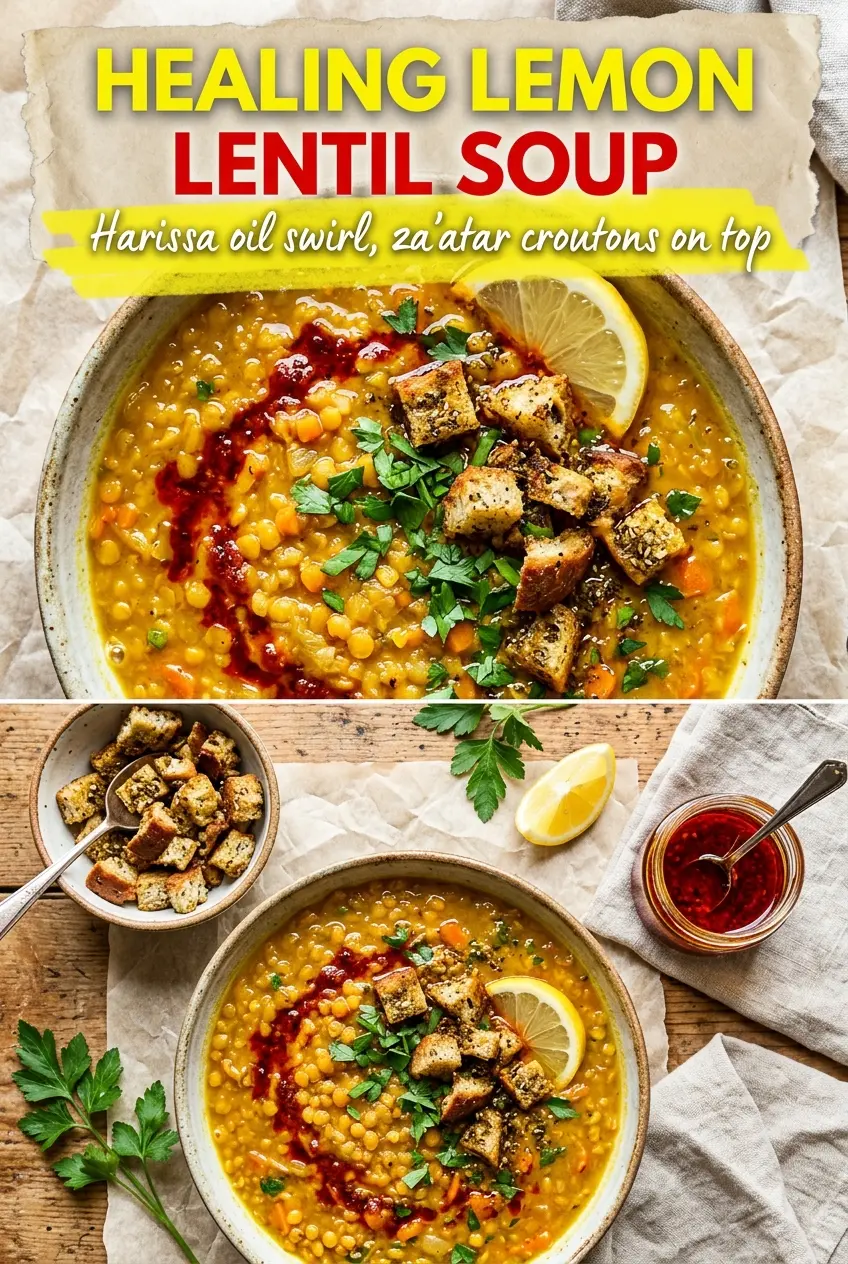
Healing Golden Lemon Lentil Soup
Ingredients
Equipment
Method
- Heat the olive oil in a Dutch oven over medium heat and sauté the onion for 5 minutes until softened. Add the garlic, ginger, turmeric, cumin, and black pepper; cook for 1 minute while fragrant.
- Add the rinsed red lentils and vegetable broth to the Dutch oven. Bring to a simmer and cook for 20 minutes, stirring once or twice, until the lentils are tender.
- Stir in the coconut milk and lemon juice, then simmer for 5 minutes to warm through. Season with salt to taste, and continue simmering until the soup looks golden and cohesive.
- Blend the soup partially until thick and creamy with some texture remaining. Stop when you reach your preferred consistency, then keep warm on low.
- Whisk the harissa oil ingredients together (olive oil and harissa paste) until smooth and red. Taste and adjust if you want more heat.
- Preheat the oven to 400°F. Toss thick bread cubes with olive oil and za'atar, spread on a sheet pan, and bake for 12 minutes until toasted and crisp at the edges.
- Ladle the soup into bowls. Drizzle with the harissa oil, top with the za'atar croutons, and garnish with fresh parsley before serving.