
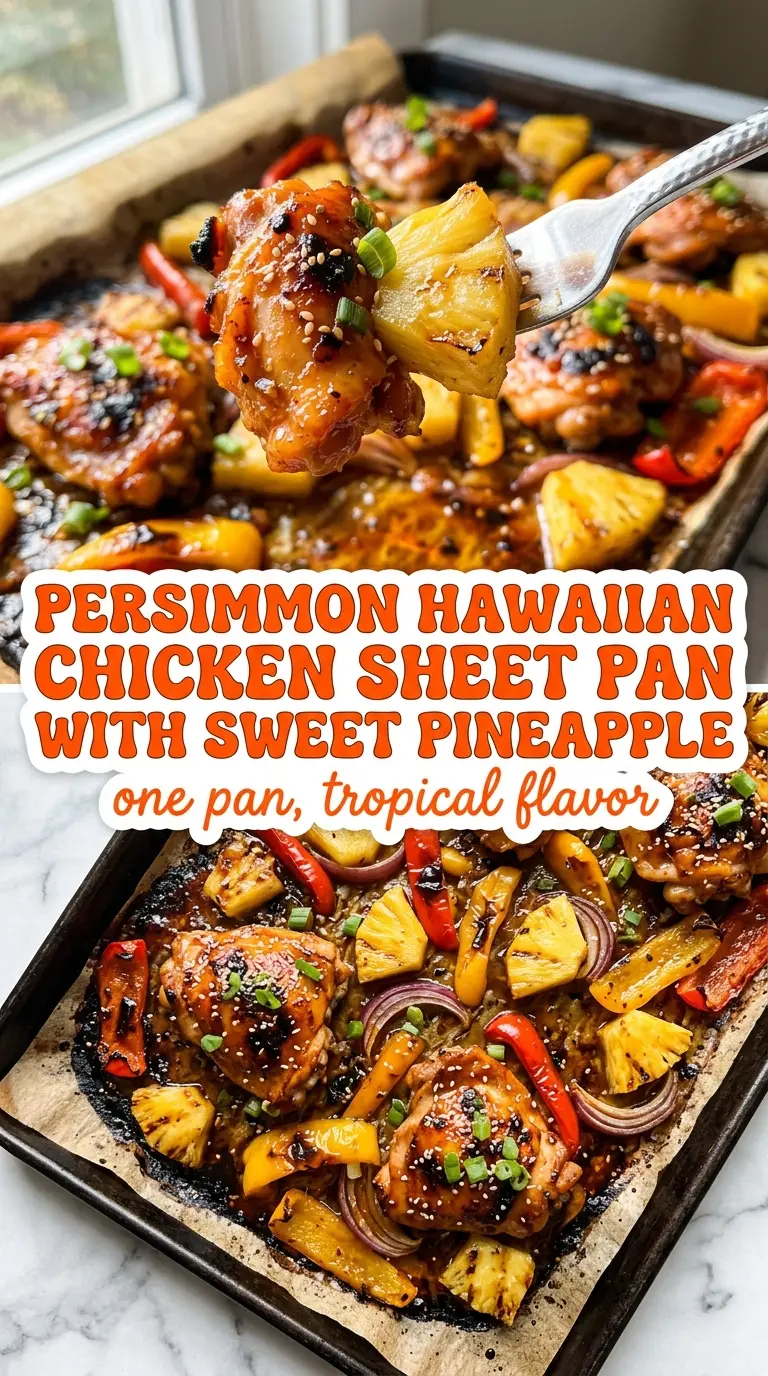
Sticky teriyaki glaze clings to tender chicken, sweet pineapple, and crisp-edged bell pepper in a way that makes this sheet pan dinner feel bigger than the effort it takes to pull off. The pineapple caramelizes where it hits the hot pan, the chicken stays juicy, and the sauce gets just enough color to taste deep and glossy instead of thin or sugary. It’s the kind of dinner that disappears fast because every bite has a little sweet, salty, and charred edge.
The part that makes this version work is the order of operations. The chicken and vegetables go in with only half the sauce at first, so the pan can actually roast instead of turn watery. Fresh pineapple matters here, too. It gives you those browned edges and keeps the pan from flooding with juice the way canned pineapple often does. A light coating of olive oil helps the glaze cling, and garlic powder adds a base note that keeps the whole dish from tasting one-dimensional.
Below, I’ve laid out the little details that keep this from turning soggy — including how to get the pineapple caramelized, when to add the second round of sauce, and a few smart swaps if you need to work with what’s in the fridge.
The pineapple browned at the edges and the teriyaki thickened right up on the pan instead of sliding off. I used fresh green onion on top and my husband asked if I could put this into the weekly rotation.
Save this Hawaiian Chicken Sheet Pan for the nights when you want sticky teriyaki, caramelized pineapple, and one-pan cleanup.
The Difference Between Roasting and Steaming on a Sheet Pan
The biggest mistake with a dinner like this is crowding the pan or starting with too much sauce. Once the chicken, pepper, and pineapple sit on top of one another, the heat can’t circulate. You end up with pale chicken and soft fruit instead of caramelized edges.
Half the teriyaki sauce goes in before roasting so the ingredients can pick up flavor as they cook, but the rest waits until the end. That second drizzle gives you a fresh, glossy finish without burning the sugars in the oven. If the pan looks wet halfway through cooking, that’s a signal the pieces are packed too tightly or the pineapple is releasing too much juice.
What Each Ingredient Is Actually Doing in This Dish
- Chicken breasts — Cutting them into cubes helps them cook quickly and evenly, and it also gives the glaze more surface area to cling to. Chicken thighs work too if you want a little more richness and don’t mind a slightly longer roast.
- Fresh pineapple — This is one of the ingredients that changes the whole pan. Fresh pineapple caramelizes instead of watering everything down, and those browned edges are where the best flavor sits.
- Teriyaki sauce — A bottled sauce is fine here, but use one that’s balanced and not overly thin. If yours is very salty or sweet, hold back a little at the end and add it gradually so the pan doesn’t turn sticky in the wrong way.
- Bell pepper — The pepper softens just enough to stay crisp-tender, and its sweetness supports the pineapple without making the dish taste sugary. Slice it into even pieces so it roasts at the same pace as the chicken.
- Olive oil and garlic powder — The oil helps the glaze coat instead of bead up, and the garlic powder gives the sauce some backbone. Fresh garlic can burn in this short roast, so the dry version is the smarter choice here.
How to Roast Everything So the Glaze Stays Sticky
Coating the Pan Mix
Toss the chicken, bell pepper, and pineapple with the olive oil, garlic powder, and only half the teriyaki sauce. That first coating should look glossy, not soupy. If the mixture looks like it’s sitting in liquid, the pan will steam and the pineapple won’t brown.
Spreading It Out for Real Heat
Spread everything in a single layer on a foil-lined sheet pan. Leave a little space between the pieces so the hot air can move around them. If the pan is crowded, the chicken will cook through but miss the caramelized edges that make this recipe taste finished.
Finishing With the Last Drizzle
Roast at 400°F until the chicken is cooked through and the pineapple is browned at the corners, about 20 to 25 minutes. The pan should smell sweet and savory, and the chicken should feel firm when pressed in the center. Add the remaining sauce after it comes out of the oven so it stays glossy and fresh instead of reducing into a sticky burn.
How to Adapt This for What’s in Your Kitchen
Use chicken thighs for a juicier version
Boneless thighs bring a little more fat and stay tender even if they go a few minutes long. The flavor gets richer, and the edges still caramelize well, though you may need an extra couple of minutes in the oven.
Make it gluten-free with a certified gluten-free teriyaki sauce
The rest of the ingredients are already naturally gluten-free. The only thing to check is the sauce label, since many teriyaki sauces use soy sauce with wheat.
Swap in canned pineapple only if it’s well drained
Fresh is better for browning, but canned pineapple can work in a pinch if you drain it thoroughly and pat it dry. The tradeoff is less caramelization and a softer texture, so the pan will taste sweeter and less roasted.
Storage and Reheating
- Refrigerator: Store leftovers in an airtight container for up to 4 days. The pineapple softens a bit, but the flavor holds up well.
- Freezer: It freezes, though the pineapple and peppers lose some texture after thawing. Freeze in a flat, sealed container for up to 2 months if you don’t mind a softer finish.
- Reheating: Warm it in a 350°F oven until heated through, or use a skillet over medium-low heat. The common mistake is blasting it in the microwave until the chicken turns rubbery and the sauce splits.