
Halloween sangria lands in the glass with a deep ruby color, bright citrus, and just enough fizz to keep each sip lively. The fruit soaks up the wine and brandy as it chills, so the last pour tastes even better than the first. It’s the kind of party drink that looks dramatic on the table without asking for much active work once the pitcher is mixed.
What makes this version work is the balance. Dry red wine keeps it from turning syrupy, pomegranate juice brings tartness and that dark, almost spooky color, and brandy gives the sangria enough backbone to taste layered instead of thin. The oranges matter more than they look; their peel and juice soften the edges of the wine while the fruit itself gives you something to spoon into glasses.
Below, I’ve included the little details that make a big difference, including how long to chill it, when to add the ginger ale, and a couple of smart ways to adjust it if you want a stronger, sweeter, or zero-proof version.
I let it chill overnight and the orange slices and pomegranate really took on the wine. Adding the ginger ale right before serving kept it crisp instead of flat, and the gummy eyeballs got all the kids excited.
Save this Halloween sangria for a spooky party pitcher with deep color, chilled fruit, and last-minute fizz.
The Reason This Sangria Tastes Better After It Sits
The biggest mistake with sangria is serving it as soon as the fruit hits the wine. The flavors need time to merge, and this one is better because it gets that rest. Four hours is the minimum, but overnight gives you a deeper, rounder drink where the pomegranate, citrus, and wine stop tasting separate.
The other detail that matters is when you add the ginger ale. If it goes in early, you lose the lift that makes the drink feel festive. Add it right before serving so the bubbles stay sharp and the sangria doesn’t flatten into a sweet, heavy punch.
What Each Ingredient Is Doing in This Halloween Sangria
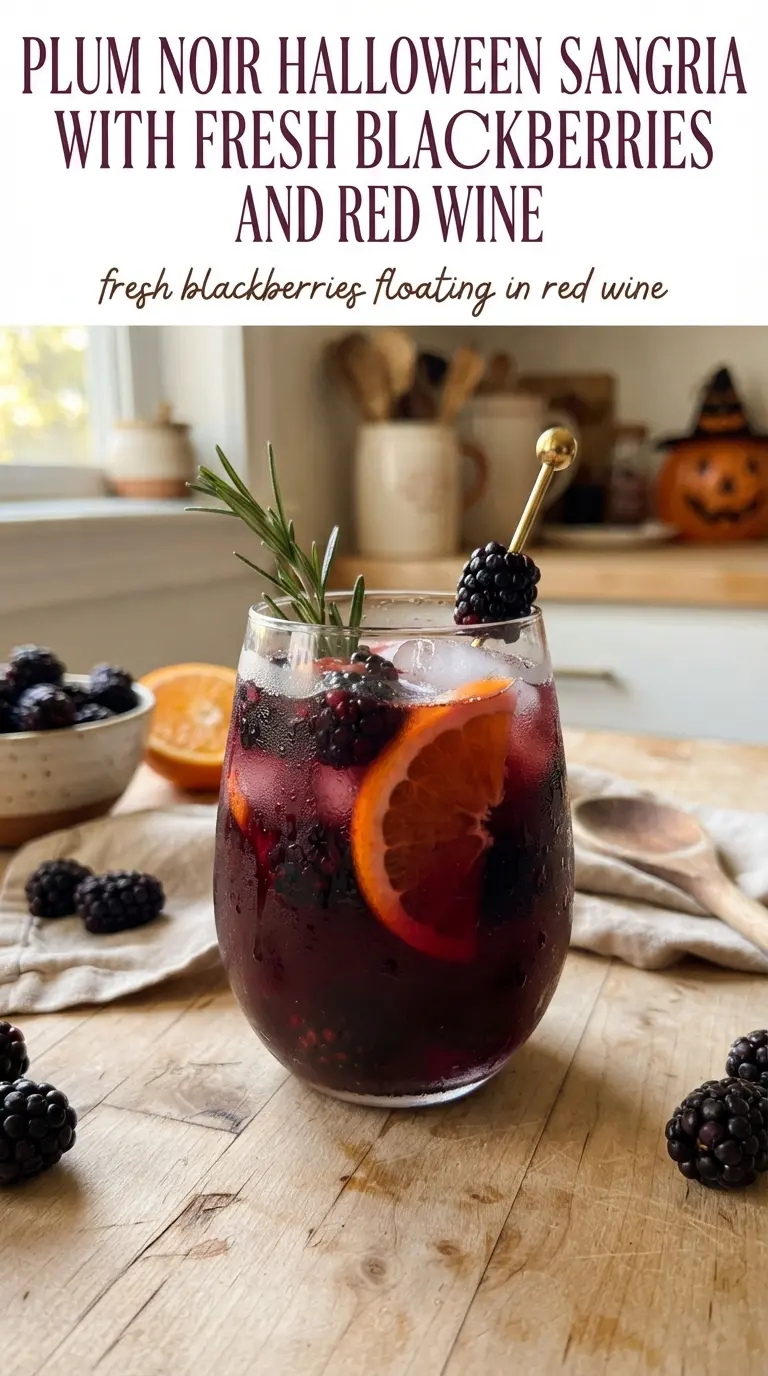
- Dry red wine — This is the base, so use something you’d actually drink. A fruity cabernet, merlot, or Spanish red works well. Don’t use an expensive bottle, but don’t grab the sweetest wine on the shelf or the sangria will taste heavy.
- Pomegranate juice — This brings the dark color and tart backbone that makes the drink taste crisp instead of syrupy. If you swap in a very sweet juice, the sangria loses that sharp edge.
- Brandy — It gives the drink warmth and body. If you skip it, the sangria still works, but it tastes lighter and less finished. A splash of orange liqueur can stand in if that’s what you have.
- Oranges — Slice them thin so they can release juice into the pitcher. The peel adds a little bitter citrus note that keeps the drink balanced.
- Pomegranate seeds — These are mostly for texture and a dramatic look in the glass. They also soak up flavor as the sangria sits.
- Ginger ale — Use it chilled and add it at the end. It sweetens the sangria slightly and gives you the sparkle that makes each glass feel fresh.
- Black licorice or gummy eyeballs — These are garnish only, but they sell the Halloween theme fast. Add them just before serving so they stay neat and don’t bleed into the drink.
Building the Pitcher So the Fizz Survives
Mix the base first
Combine the wine, pomegranate juice, brandy, and orange slices in a large pitcher or bowl. Stir once or twice to blend, then stop; you’re not whipping air into this, just marrying the liquids. The mixture should look dark and glossy with the oranges floating through it.
Let the fruit do its job
Chill the sangria for at least 4 hours. This is where the flavor rounds out, and it’s the step that separates a flat fruit punch from a proper sangria. If you rush this, the wine will taste separate from the juice instead of blended.
Add the sparkle at the end
Stir in the pomegranate seeds and pour the sangria over ice. Top each glass with ginger ale right before serving so the bubbles stay lively. If you add it to the whole pitcher too early, the fizz fades and the drink loses the bright finish that makes it taste fresh.
Garnish for the table
Finish with black licorice or gummy eyeballs if you want the spooky look. Keep the garnish simple so the drink still feels elegant enough for adults. The goal is a dramatic glass, not a bowl of candy floating in wine.
How to Adapt This for Different Crowds and Diets
Make it lighter and lower alcohol
Cut the brandy in half and replace it with more pomegranate juice or a splash of sparkling water at the end. You’ll get a softer, more sessionable drink that still tastes balanced, but it won’t have the same depth.
Make it alcohol-free
Swap the wine and brandy for chilled red grape juice or pomegranate grape juice, then add a squeeze of orange and finish with ginger ale. It won’t taste like sangria with the alcohol removed, but it will still have the same dark-fruit, citrusy shape.
Make it less sweet
Use a drier red wine and swap the ginger ale for club soda. You’ll lose some sweetness, but the drink gets brighter and more wine-forward, which works well if you don’t want a dessert-style punch.
Storage and Reheating
- Refrigerator: The base keeps for 2 days before the ginger ale is added. The fruit will soften and the color will deepen, which is part of the charm.
- Freezer: Don’t freeze sangria. The texture of the fruit and the balance of the drink suffer once it thaws.
- Reheating: No reheating needed. Just keep the base cold, add ice and ginger ale right before serving, and stir gently so you don’t lose the bubbles.
Answers to the Questions Worth Asking
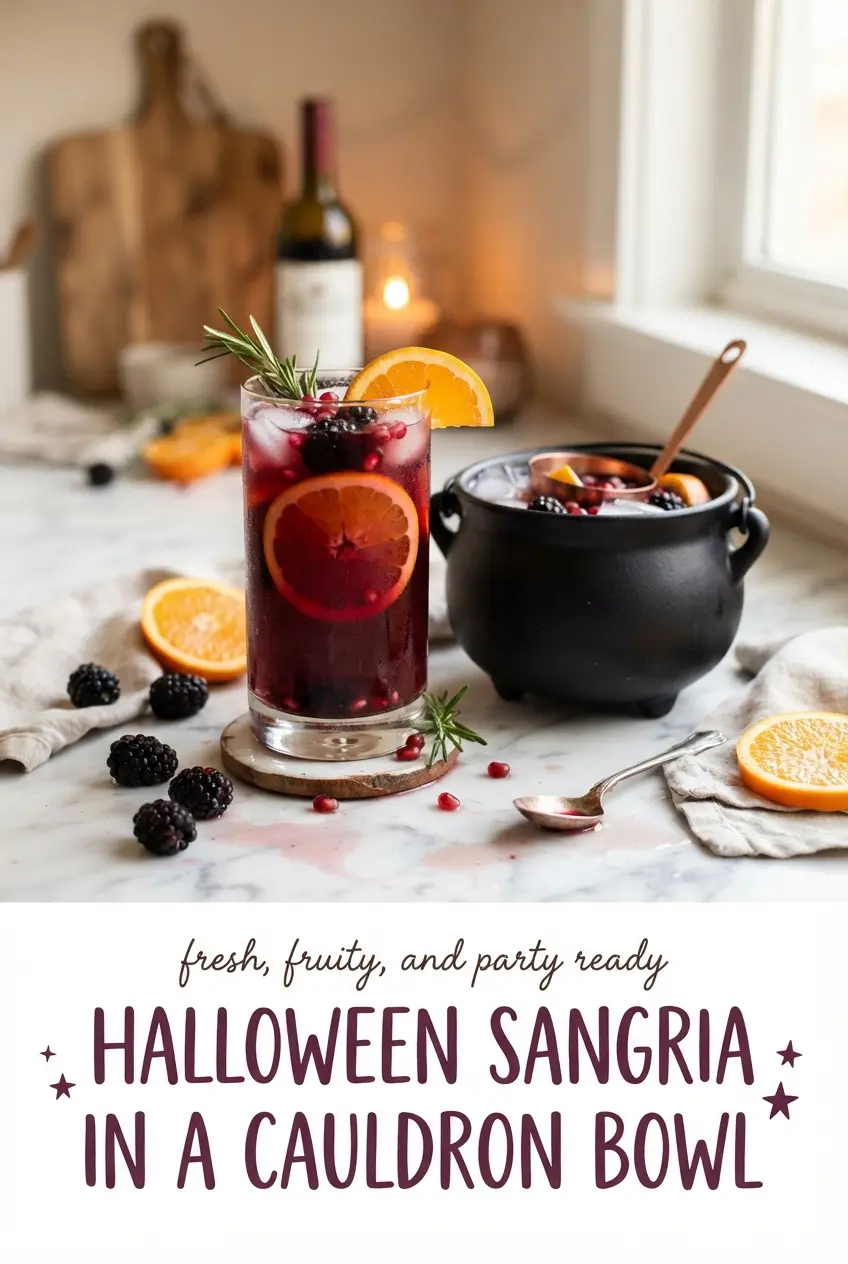
Halloween Sangria
Ingredients
Method
- Combine the dry red wine, pomegranate juice, brandy, and orange slices in a pitcher.
- Chill the sangria for at least 4 hours in the refrigerator until cold.
- Add the pomegranate seeds and pour into glasses over ice, so the fruit sinks and spreads through the drink.
- Top each glass with chilled ginger ale and finish with black licorice or gummy eyeballs garnish for a spooky look.