
Roasted acorn squash turns into a built-in bowl for a filling that hits all the right notes: savory sausage, sweet-tart apples, soft onion, and sharp cheddar melted into the cracks on top. The best part is the contrast. You get tender squash that holds its shape, a juicy stuffing that stays hearty, and those browned edges where the cheese and filling get just a little crisp.
This version works because the squash gets a head start in the oven before the stuffing goes in. That first roast dries out the cut surface enough to keep it from turning watery, and it gives the flesh a head start so everything finishes at the same time. Browning the sausage with the onion first builds the base, then the apples go in just long enough to soften without turning mushy. Sage pulls the whole dish toward cozy, but the apple keeps it from feeling heavy.
Below, I’ve included the trick for getting the squash tender without collapsing it, plus a few swaps that still keep the balance of sweet, savory, and cheesy just right.
The squash came out tender without getting watery, and the apples kept the stuffing bright instead of heavy. I also loved that the cheddar browned on top in the last 15 minutes.
Save this Apple Sausage Stuffed Acorn Squash for the nights when you want a simple stuffed squash with crisp edges, savory sausage, and sweet apple in every bite.
The Reason This Squash Stays Tender Instead of Turning Watery
Acorn squash can go wrong in two different ways: either it stays stubbornly firm in the middle, or it collapses and turns soft enough that the filling slides around. The fix is the same one used here. Roast the halves cut side down first so the flesh steams gently against the pan while the cut surface dries out enough to take on the stuffing later.
That first roast does more than soften the squash. It gives the inside enough structure to hold the sausage mixture without turning soggy once the cheese melts. If you roast cut side up from the start, the exposed flesh tends to dry before the center is tender, and the filling never sits as neatly.
The last bake is short on purpose. You’re not cooking the squash from raw at that point. You’re just warming the filling through and letting the cheddar melt into the edges.
What Each Ingredient Is Actually Doing in This Dish
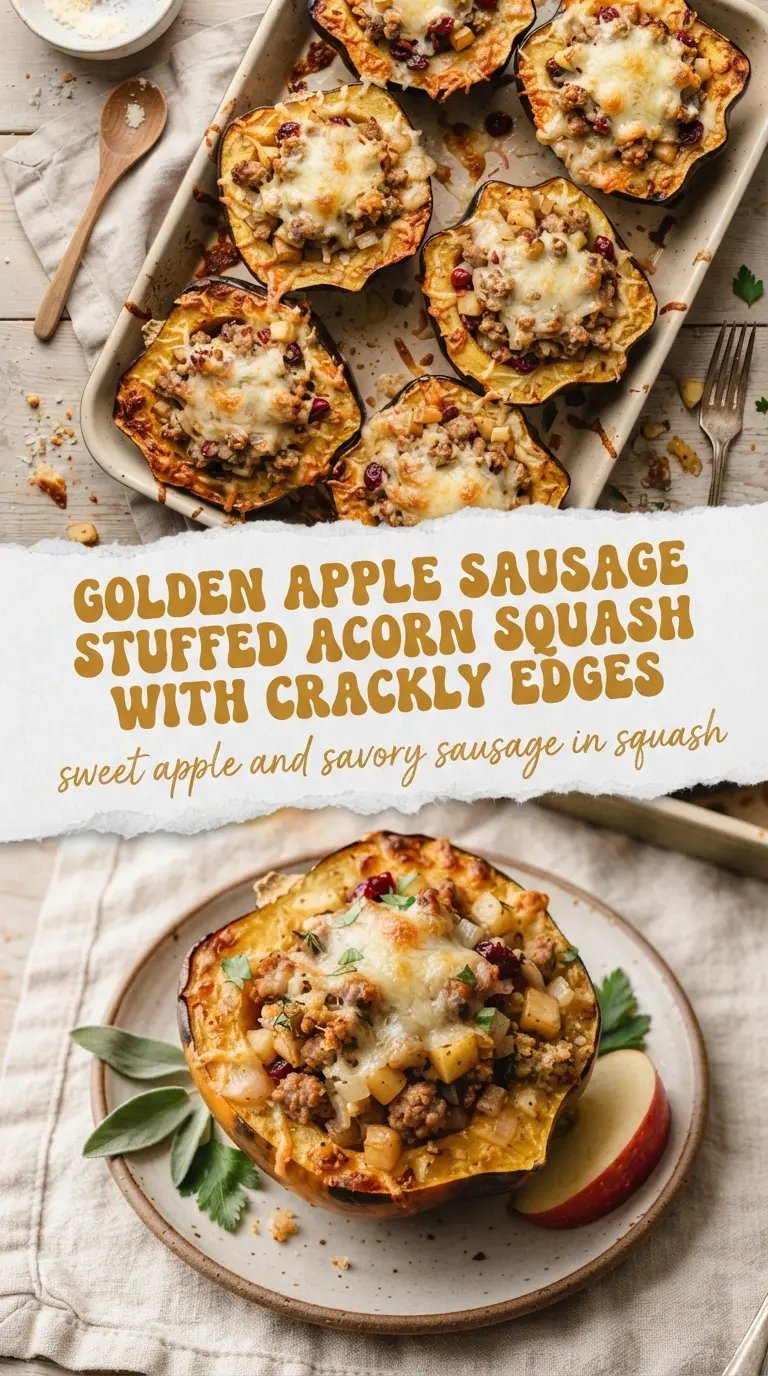
- Acorn squash — This is the structure of the whole dish. Choose squash that feel heavy for their size and have firm skin without soft spots. They need to be halved cleanly so they roast evenly and hold the filling well.
- Breakfast sausage — The seasoning in the sausage does a lot of work here, which is why a well-seasoned breakfast sausage is the easiest route. If you use mild sausage, the dish will taste flatter unless you add more salt and a bit of black pepper. Turkey sausage works too, but it gives a leaner, less rich finish.
- Apples — Tart apples keep the stuffing bright and prevent the sausage from tasting heavy. Dice them small enough to soften in the skillet but not so small that they disappear. A firm apple like Granny Smith, Honeycrisp, or Pink Lady holds up best.
- Yellow onion — Onion builds the savory base and gives the stuffing moisture without making it wet. Let it cook with the sausage so it picks up the fat and softens completely. Red onion will work in a pinch, but it brings a sharper edge.
- Dried sage — Sage ties the squash and sausage together. Fresh sage can work too; use about three times as much and add it near the end so it doesn’t get bitter.
- Sharp cheddar — Sharp cheddar gives the filling a salty, tangy finish and browns well in the oven. Pre-shredded is fine, but block cheese melts more smoothly because it doesn’t have the anti-caking coating.
Building the Filling So Every Bite Stays Balanced
Roasting the Squash First
Place the squash cut side down on the baking sheet and roast until the flesh gives when pressed with a fork but still holds its shape. The skin should look slightly glossy and the edges should start to caramelize, not blacken. If the squash is underdone at this stage, it will need too much time later and the filling can overcook before the center softens.
Cooking the Sausage and Onion Together
Brown the sausage first, then let the onion cook in the same pan so it picks up the browned bits and the rendered fat. You’re looking for the sausage to lose its pink color and the onion to turn soft and translucent with a little gold at the edges. If there’s a lot of grease in the pan, spoon off the excess before adding the apples or the stuffing can feel greasy.
Softening the Apples Without Turning Them to Mush
Add the diced apples and sage and cook just long enough for the apples to lose their raw crunch. They should stay in distinct pieces, with the edges starting to soften. If you cook them too long, they collapse into the sausage and you lose the sweet-tart pops that make this dish work.
Finishing in the Oven
Spoon the filling into the roasted squash halves, then top with cheddar and bake until the cheese is melted and the edges look crisp and browned. The filling should be hot all the way through, and the cheese should settle into the stuffing instead of sitting as a loose layer on top. Pull it once the edges look crackly, because that texture is the cue that the whole dish is ready.
Three Ways to Adapt This Without Losing the Balance
Use turkey sausage for a lighter version
Turkey sausage works well here, but it won’t bring as much rendered fat or richness as pork sausage. If you use it, cook the onions in a little olive oil so the filling doesn’t taste dry, and don’t skip the cheddar. The cheese matters more when the sausage is leaner.
Make it dairy-free
Leave off the cheddar or use a good melting dairy-free shreds-style cheese if you trust the brand. Without the cheese, the top won’t brown the same way, but the filling still tastes complete because the sausage, apple, and sage already carry the dish.
Swap the apple for pear
A firm pear gives you the same sweet contrast, but the flavor leans a little softer and more floral. Use it only if the pear is still firm enough to hold its shape in the skillet. Overripe pear turns mushy fast and disappears into the sausage.
Stretch it into a bigger meal
Add a handful of cooked rice, farro, or breadcrumbs to the filling if you need to feed more people. That makes the stuffing heartier and helps absorb some of the juices from the squash. Just don’t overload it, or the filling loses the loose, juicy texture that makes each forkful taste fresh.
Storage and Reheating
- Refrigerator: Store leftovers in an airtight container for up to 4 days. The squash softens a little more as it sits, but the flavor holds well.
- Freezer: It freezes decently, though the squash texture gets softer after thawing. Wrap portions tightly and freeze for up to 2 months for best results.
- Reheating: Warm in a 350°F oven until heated through, about 15 to 20 minutes for a halved portion. The oven keeps the edges from turning rubbery the way the microwave can, especially if the cheese is already on top.
Answers to the Questions Worth Asking
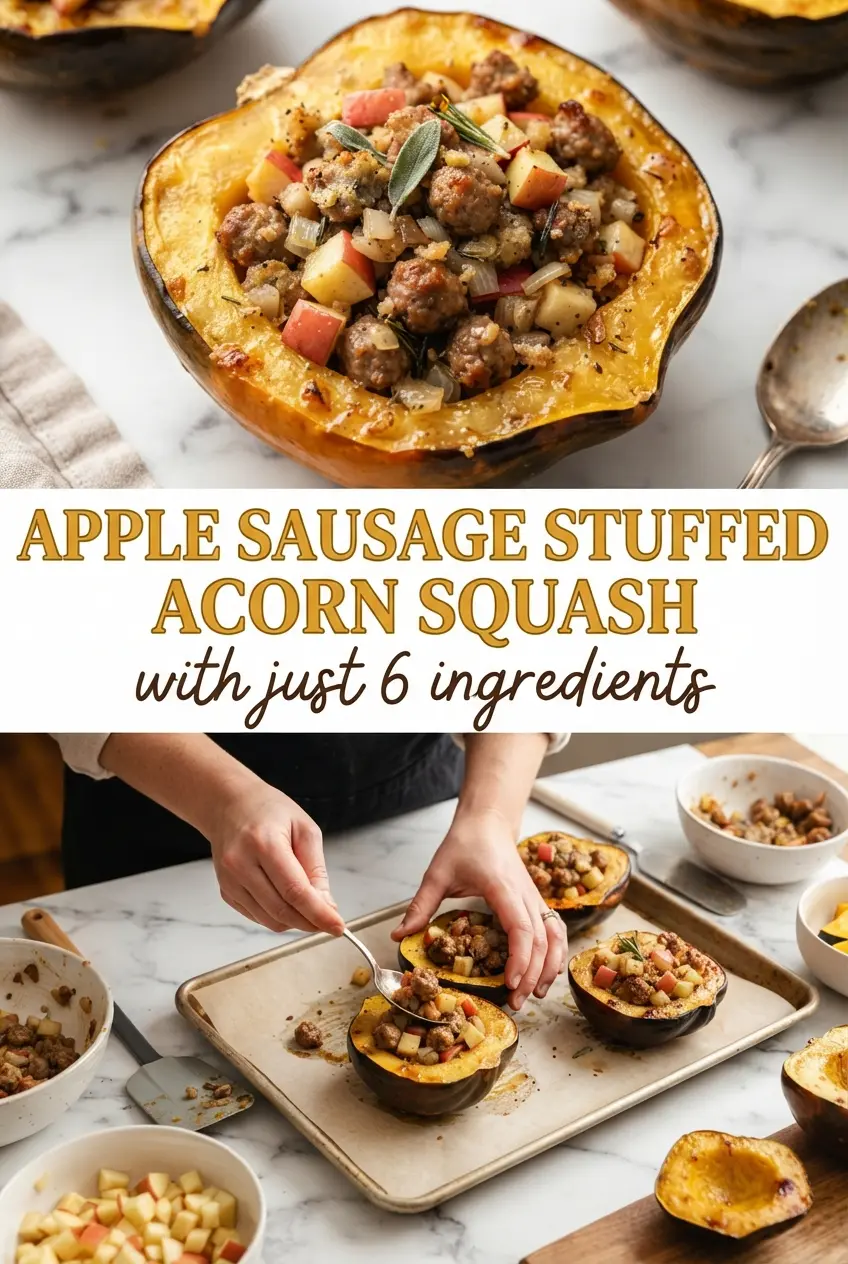
Apple Sausage Stuffed Acorn Squash
Ingredients
Equipment
Method
- Heat the oven to 400°F and roast the squash cut side down on a sheet pan for 30 minutes, until it starts to soften.
- Brown the breakfast sausage with the diced yellow onion for 8 minutes, stirring until the sausage is cooked through.
- Add the diced apples and dried sage, then cook for 4 minutes until the apples begin to soften.
- Fill the roasted squash halves with the sausage-apple mixture.
- Top each squash half with shredded sharp cheddar.
- Bake at 400°F for 15 minutes until the edges turn crackly.