
Charred green tomatoes give this salsa verde a bright, tangy edge that feels sharper and fresher than the usual tomatillo version. Broiling the vegetables first deepens the flavor without turning the salsa heavy, and the slight blistering on the tomatoes, onion, and jalapenos gives the blender something worth working with. What you get is a salsa with real character: tart, smoky, and lively enough to wake up chips, tacos, grilled chicken, or eggs.
The trick here is using green tomatoes before they fully ripen. They bring the kind of acidity tomatillos usually provide, but with a softer bite and a more garden-fresh sweetness underneath. A quick broil is enough to char the skins and soften the vegetables without cooking them into mush, and that balance keeps the salsa tasting bright instead of muddy. Garlic goes in unpeeled so it can roast gently without burning, then gets squeezed out after cooling, which keeps its flavor round instead of harsh.
Below, I’ve included the small details that matter most: how to control the heat, when to stop blending if you want a chunkier salsa, and how to keep the flavor from going flat after it sits in the fridge.
The broiled tomatoes gave it this smoky tang I didn’t expect, and the texture was perfect after just a few pulses in the blender. I used two jalapenos and it had enough heat without overpowering the lime.
Save this roasted green tomato salsa verde for the nights when you want something tangy, smoky, and quick to blitz together.
The Reason Green Tomatoes Work Better Than You’d Expect
Green tomatoes do something tomatillos usually do in salsa verde: they bring acidity, body, and a clean tartness that keeps the sauce from tasting flat. The mistake people make is assuming they need to be treated like ripe tomatoes. They don’t. Ripe tomatoes turn this into a wetter, sweeter salsa with less punch. Green tomatoes hold their shape better under the broiler and give you a brighter finish after blending.
The other piece that matters is the broiler. High heat at a short distance creates blistered skins and a little smoke without cooking out all the freshness. If you roast them too long, the salsa loses that sharp edge and starts tasting like cooked sauce instead of salsa. A few charred spots are good. A pan full of collapsed vegetables is not.
- Green tomatoes — Use firm, fully unripe tomatoes. The greener and tighter they are, the sharper the salsa will taste. If yours are starting to blush, the result will be softer and slightly sweeter, which still works but won’t taste as bright.
- Jalapenos — Seed them for a gentler salsa, or leave some seeds in if you want more heat. If you want a smoky but mild version, use one jalapeno and add a second only after tasting.
- Onion — Broiling the onion takes the raw bite out and adds sweetness. White or yellow onion both work. Red onion will make the salsa taste a little sharper and look darker.
- Garlic — Keep the cloves unpeeled while broiling so the outside doesn’t burn before the inside softens. Once it cools, the skins slip off easily and the garlic blends in without that harsh raw edge.
- Lime juice — Fresh lime wakes the whole salsa up at the end. Bottled juice tastes dull here, especially after the vegetables have already been cooked.
How to Keep the Broil Short and the Flavor Bright
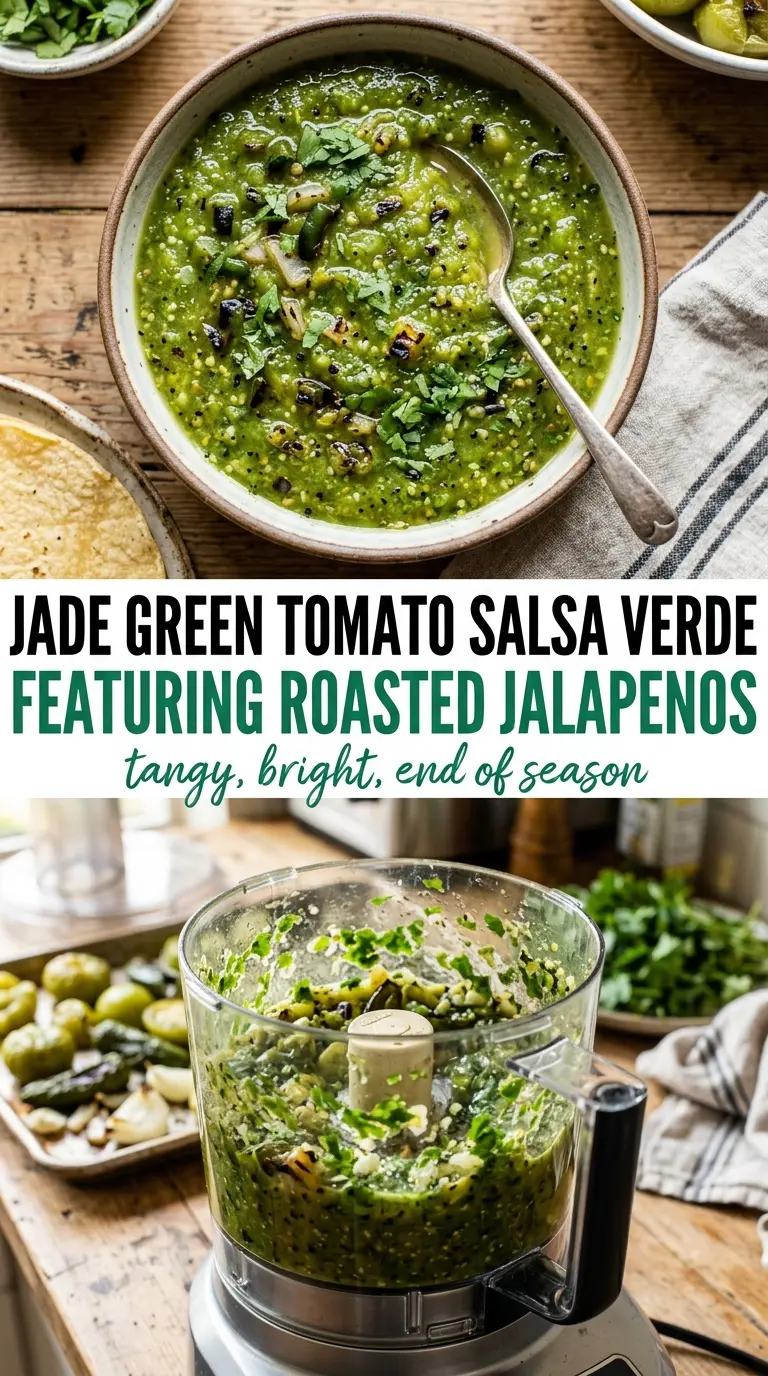
The vegetables go on a baking sheet in a single layer so they can blister instead of steam. Crowding the pan slows browning, and steaming is the fastest way to end up with pale, flat salsa. Broil until the skins are spotted and the onion has browned at the edges, then pull them before the tomatoes collapse completely.
Once the garlic cools, peel it and add everything to a blender or food processor with the cilantro and lime. Pulse instead of running the machine nonstop if you want texture. If you blend too long, the salsa turns looser and the cilantro can start to taste muddy. Salt comes last, because the vegetables and lime will tell you how much they need only after they’re together.
Broiling the Vegetables
Set the pan close enough to the broiler that the tomatoes blister in 8 to 10 minutes, flipping them halfway through. You’re looking for charred edges and softened centers, not deep roasting. If one side starts blackening fast, rotate the pan so the vegetables cook evenly and nothing burns before the onion has time to brown.
Blending to the Right Texture
Add the roasted vegetables, cilantro, and lime juice to the blender and pulse in short bursts. Stop early if you want a chunky salsa with visible bits of tomato and onion. Keep going only if you want it smooth. If the mixture looks too thick to move, add a spoonful of the roasting juices from the pan before reaching for water.
Seasoning at the End
Taste the salsa after blending, then add salt a little at a time. The broiled vegetables can taste softer and sweeter than they did on the sheet pan, so the finished salsa usually needs more salt than you’d expect. If the flavor feels dull, it usually needs salt or more lime, not more jalapeno.
How to Adjust the Heat, Texture, and Diet Around This Salsa
Mild Salsa Verde
Use one jalapeno and remove all the seeds and white ribs. That keeps the salsa bright and lively without the lingering burn. The roasted flavor still comes through, but the lime and cilantro stay more front and center.
Chunky Restaurant-Style Texture
Pulse only a few times and stop while the salsa still looks coarse. This gives you little bites of onion and tomato instead of a smooth pourable sauce. It’s the better choice if you’re serving it with chips or spooning it over grilled meat.
Dairy-Free, Gluten-Free, and Naturally Vegan
This salsa is already dairy-free, gluten-free, and vegan as written, so there isn’t a swap to manage. That makes it useful when you’re cooking for a mixed group and need something that works across a lot of diets without extra effort.
Storage and Reheating
- Refrigerator: Keep it in an airtight container for up to 1 week. The flavor often gets a little deeper after a day, though the texture may loosen slightly.
- Freezer: It freezes well for up to 2 months. Thaw in the fridge and stir before serving, since the mixture can separate a little after freezing.
- Reheating: This salsa is best served cold or at room temperature, not heated. If it tastes flat after chilling, let it sit out for 15 minutes and stir in a fresh squeeze of lime instead of warming it.