
Golden potatoes turn silky and tender in this French onion potato bake, while the top finishes with a bubbling layer of cheddar that catches just enough color in the oven. It has the kind of savory, slow-cooked flavor people usually expect from a much longer recipe, but the work here is mostly slicing, layering, and letting the oven do its part.
The packet of French onion soup mix does a lot of heavy lifting, but the real trick is in the cream and milk ratio. Heavy cream keeps the sauce rich enough to coat every slice, while the milk loosens it just enough to seep between the layers before baking. Yukon golds are the right potato here because they stay creamy instead of falling apart, and thin slices matter more than anything else for even tenderness.
Below you’ll find the little details that keep the bake from turning dry or bland, plus a few ways to adapt it for different meals and leftovers.
The potatoes came out tender all the way through and the onion flavor soaked into every layer. I used the chives on top and it tasted like a cross between French onion soup and a gratin.
Save this French Onion Potato Bake for the nights when you want creamy, savory potatoes with almost no extra work.
The Reason This Bake Stays Creamy Instead of Turning Thick and Gluey
Potato bakes go wrong when the sauce is too heavy, the slices are too thick, or the dish is baked uncovered from the start. Any one of those mistakes can leave you with dry edges and a center that still feels underdone. This version avoids that by using a light cream mixture that can move between the layers before the foil traps in steam.
The foil matters. Covered baking gives the potatoes time to soften all the way through, and only then does the cheese go on for the final stretch. If you skip that first covered bake, the top will brown before the potatoes have a chance to go tender. Thin slices also matter more than extra sauce here; once the potatoes are cut to a steady 1/8 inch or so, they cook evenly and absorb the onion seasoning without turning mushy.
What Each Ingredient Is Doing in This Dish
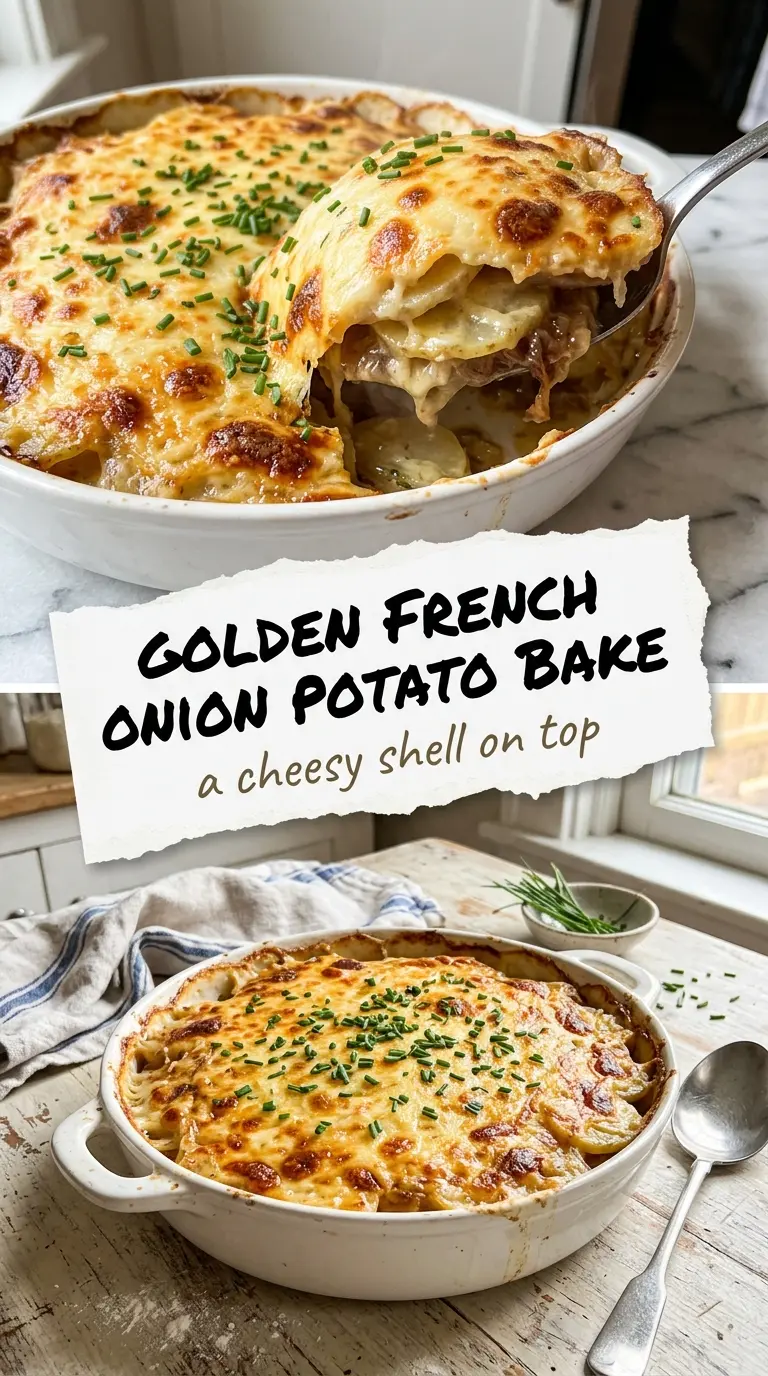
- Yukon gold potatoes — These are the best choice because they hold their shape while turning soft and buttery. Russets can work in a pinch, but they break down more and make the bake feel looser. Slice them thin and evenly so the whole dish finishes at the same time.
- Heavy cream — This gives the bake body and keeps the sauce rich after baking. You need the fat here; lower-fat cream substitutes are more likely to taste thin or separate. If you must swap, half-and-half will work, but the finished dish won’t feel as plush.
- Whole milk — The milk loosens the cream enough to let it travel through the layers. Skim milk will work technically, but it gives a flatter result and a less velvety sauce. Don’t replace both dairy components with one ultra-light option unless you want a much thinner bake.
- French onion soup mix — This is where the deep savory onion flavor comes from, along with salt and seasoning already balanced into the dish. A homemade onion seasoning blend can stand in, but it won’t give the same concentrated, salty-sweet profile. Taste your cheese before adding extra salt, since the mix already brings plenty.
- Gold cheddar cheese — This melts into a sharp, golden cap that balances the rich potatoes underneath. Pre-shredded cheese works, but freshly shredded melts smoother and browns better. If you want a milder finish, use regular cheddar; if you want more bite, use extra-sharp.
- Fresh chives — They cut through the richness and add a fresh onion note right at the end. Skip them if you need to, but the dish tastes brighter with them. Add them after the bake so they stay green and don’t turn limp.
Layering and Baking So Every Slice Cooks Through
Building the First Layer
Start with a lightly greased 9×13-inch dish so the dairy doesn’t weld itself to the edges. Lay in half the potatoes in an even layer, overlapping them just a little, then pour over half the cream mixture so it seeps down between the slices. If the potatoes look dry at this stage, press them down gently with the back of a spoon; they don’t need to be submerged yet, just evenly coated.
Letting the Foil Do the Work
Cover the dish tightly with foil and bake it until the potatoes are tender enough to pierce with a knife, not just soft on the edges. That covered time is what keeps the center from staying chalky. If your slices were cut thicker than planned, give them a few extra minutes before uncovering instead of rushing to the cheese step.
Finishing with Cheese and Color
Once the potatoes are tender, uncover the dish and scatter the cheddar evenly over the top. The cheese should melt into a glossy layer and start bubbling at the edges before the top picks up deeper color. If the surface looks dry before the cheese has melted, the dish probably needed a tighter foil seal or a little more time under cover.
The Rest That Makes It Slice Cleanly
Let the bake sit for 10 minutes before serving. That short rest gives the sauce time to settle back into the layers instead of running all over the plate. It also makes the texture richer, because the potatoes finish absorbing a little more of the savory cream while they rest.
Three Ways to Adjust It Without Losing the Point
Dairy-Free Version
Use a full-bodied unsweetened oat or cashew cream and a dairy-free shredded cheese that melts well. The texture will be a little less rich than the original, but the onion seasoning still carries the dish. Skip any thin milk alternatives, since they tend to make the sauce watery instead of silky.
Gluten-Free Check
This works well as long as your French onion soup mix is certified gluten-free. The potatoes, dairy, and cheese are naturally fine, so the seasoning packet is the only ingredient that needs checking. If you mix your own onion seasoning, you can control that completely.
Make It Meatier
Fold in cooked bacon or browned sausage between the potato layers if you want this to eat more like a main dish side. Keep the amount modest so the sauce still reaches every layer. Too much add-in can block the cream from moving through the potatoes.
Make-Ahead for a Crowd
You can assemble the dish a few hours ahead and keep it covered in the fridge until baking time. If it goes into the oven cold, add a little extra covered time so the center catches up. This is the easiest way to get a hot, creamy side dish on the table without juggling last-minute prep.
Storage and Reheating
- Refrigerator: Store leftovers covered for up to 4 days. The potatoes will firm up a bit as they chill, but the flavor deepens overnight.
- Freezer: It freezes, but the texture gets softer after thawing, so I only freeze it if I need to. Wrap portions tightly and thaw in the fridge before reheating.
- Reheating: Reheat covered in a 325F oven until hot in the center. The biggest mistake is blasting it in the microwave or a hot oven, which dries out the edges before the middle warms through.
Answers to the Questions Worth Asking
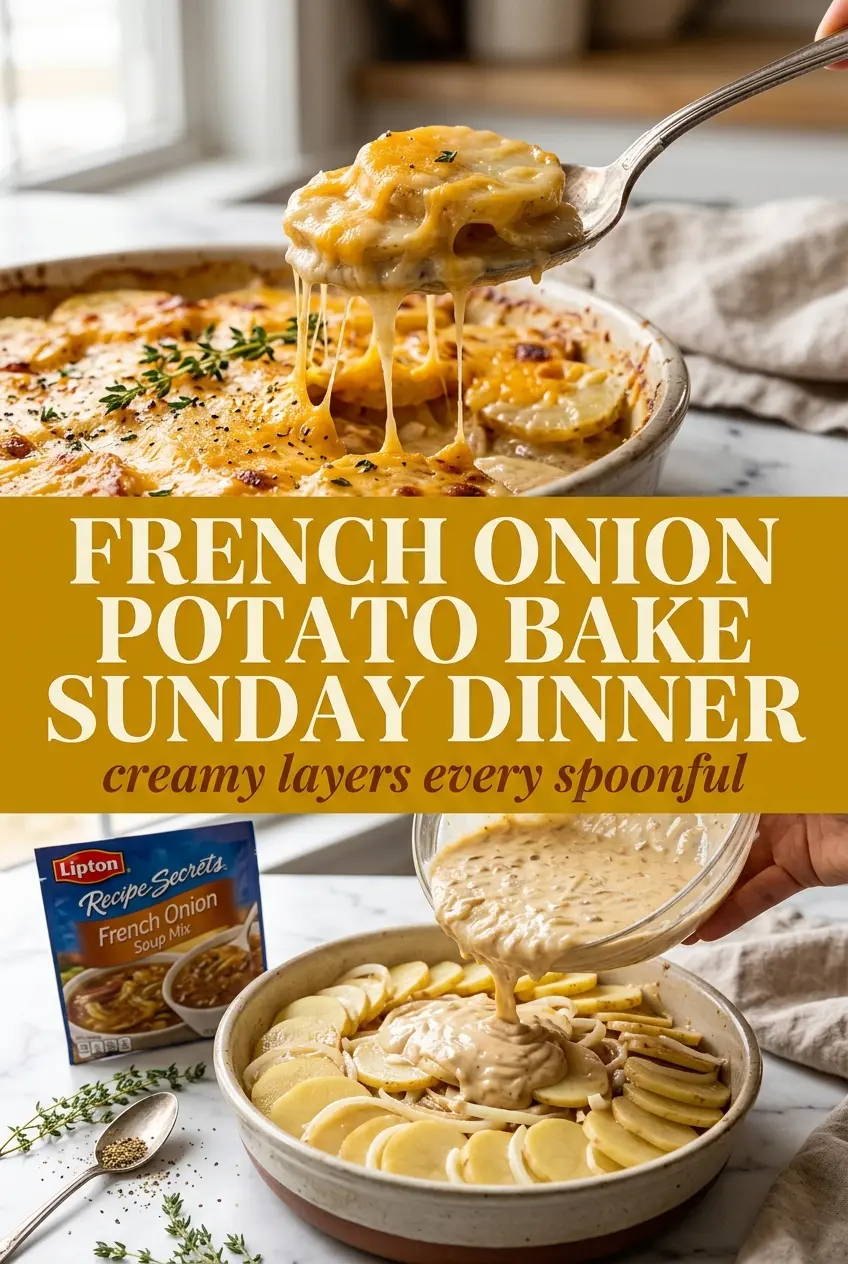
French Onion Potato Bake
Ingredients
Equipment
Method
- Preheat the oven to 375F and lightly grease a 9x13-inch baking dish. Use a thin coating so the potato edges release easily after baking.
- Whisk together the heavy cream, whole milk, and French onion soup mix in a bowl or jug. Whisk until the mix is fully dissolved and the sauce looks smooth.
- Layer half of the thinly sliced Yukon gold potatoes in the bottom of the baking dish and pour over half of the cream mixture. Press down gently to help the sauce reach the potato slices.
- Repeat with the remaining potatoes and cream mixture, pressing down gently to submerge the potatoes. Make sure the top layer is evenly covered by the sauce.
- Cover with foil and bake for 45 minutes at 375F. The potatoes should be starting to soften around the edges.
- Uncover and sprinkle the shredded gold cheddar cheese evenly over the top. Spread it so it melts in a consistent layer across the surface.
- Bake uncovered for another 20-25 minutes at 375F until the potatoes are tender and the top is golden and bubbling. Watch for bubbling at the center and browned edges.
- Let rest for 10 minutes at room temperature before serving. This sets the sauce so it clings to the potatoes instead of pooling.
- Garnish with chopped fresh chives right before serving. Add a fresh pop of color and mild onion herb flavor.