
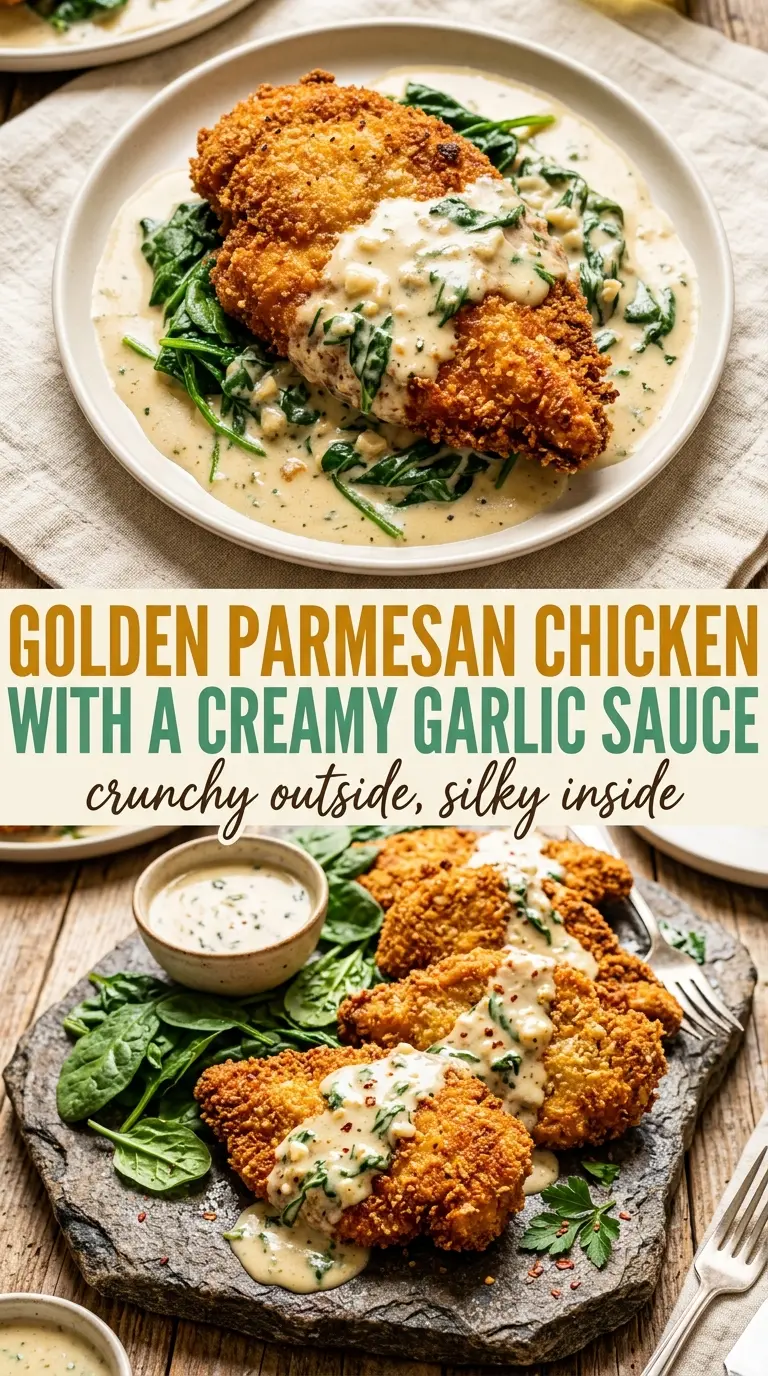
Crispy Parmesan chicken stays memorable when the coating actually clings and the sauce stays silky instead of turning grainy. This version gives you both: a thin, shattering crust on the chicken and a creamy garlic sauce that settles into every ridge without softening the coating too fast. The result is rich, but not heavy, with enough sharp Parmesan and lemon pepper to keep each bite lively.
The trick is starting with thin cutlets. They cook fast, brown evenly, and give you more crust per bite than a thick breast ever will. Flour helps dry the surface just enough for the Parmesan to stick, while the air fryer gives you that fried texture without a pan of oil. The sauce follows the same logic: low heat, then cheese, then spinach at the end so it wilts without going dull.
Below, I’ve laid out the parts that matter most — how to keep the crust crisp, what the Parmesan is doing in both the breading and the sauce, and the couple of small adjustments that make this dinner come together smoothly on a weeknight.
The chicken stayed crisp under the sauce, and the Parmesan in the coating gave it a salty crunch that held up way better than I expected. My husband kept saying the sauce tasted like restaurant garlic cream, and the spinach made it feel like a full meal.
Love this crispy Parmesan chicken with creamy garlic sauce? Save it to Pinterest for the nights when you want a fast chicken dinner with a crunchy crust and a rich, spinach-studded sauce.
The Reason the Crust Stays Crisp Instead of Getting Soggy
The biggest mistake with sauced chicken is treating the coating like a garnish instead of part of the dish. If the chicken is thick, uneven, or damp, the breading steams before it has a chance to set. Thin cutlets solve most of that problem before you even start. They cook through in minutes, which means the Parmesan crust has time to turn golden without overcooking the meat underneath.
The second mistake is drowning the chicken too early. If you pour the sauce over the cutlets and let them sit, that crisp edge softens fast. Serve the sauce alongside or spoon it over right at the table if you want the crunch to last. The air fryer helps here too, because it dries and browns the coating in a way that mimics frying without leaving the chicken greasy.
- Thin cutlets cook quickly and evenly, which keeps the crust crisp before the chicken has time to dry out.
- Parmesan in the coating adds salt, fat, and browning power. Grated Parmesan works better than shredded here because it sticks more evenly.
- Flour gives the cheese something to grip. Skip it and the coating is patchy.
What Each Ingredient Is Actually Doing in This Dish
- Chicken breasts need to be butterflied into thin cutlets so they cook fast and stay tender. If you use thick breasts without flattening them, the crust will finish long before the center does.
- All-purpose flour helps dry the surface and gives the Parmesan a base to stick to. A fine dusting is enough; heavy flouring turns pasty in the air fryer.
- Grated Parmesan is doing double duty here, both in the crust and the sauce. Freshly grated melts more smoothly than the canned stuff, but the canned version is fine for the coating if that’s what you have.
- Heavy cream gives the sauce its body. Half-and-half will work in a pinch, but the sauce will be thinner and needs a gentler simmer.
- Chicken broth loosens the cream so the sauce doesn’t taste flat or overly rich. Use a low-sodium broth if your Parmesan is salty.
- Spinach is there for color and a little freshness. Stir it in at the end so it stays bright instead of turning army green and limp.
Getting the Chicken Golden and the Sauce Smooth
Butterflying and Seasoning the Cutlets
Slice each chicken breast horizontally into two thin pieces, then season them before coating. The goal is an even surface with no thick hump in the middle, because that hump is what leaves you with dry edges and a raw center. Salt, pepper, and garlic powder go on first so the chicken itself tastes seasoned, not just the crust. If the chicken feels wet, pat it dry first or the coating will slide off in spots.
Building the Parmesan Crust
Mix the flour and Parmesan together, then press the chicken into the mixture so it picks up a thin, even layer. Shake off the excess; too much coating turns dusty instead of crisp. The crust should look pale but evenly covered before it goes into the air fryer. If clumps form, break them up with your fingers and keep the coating light.
Air Frying to a Deep Golden Finish
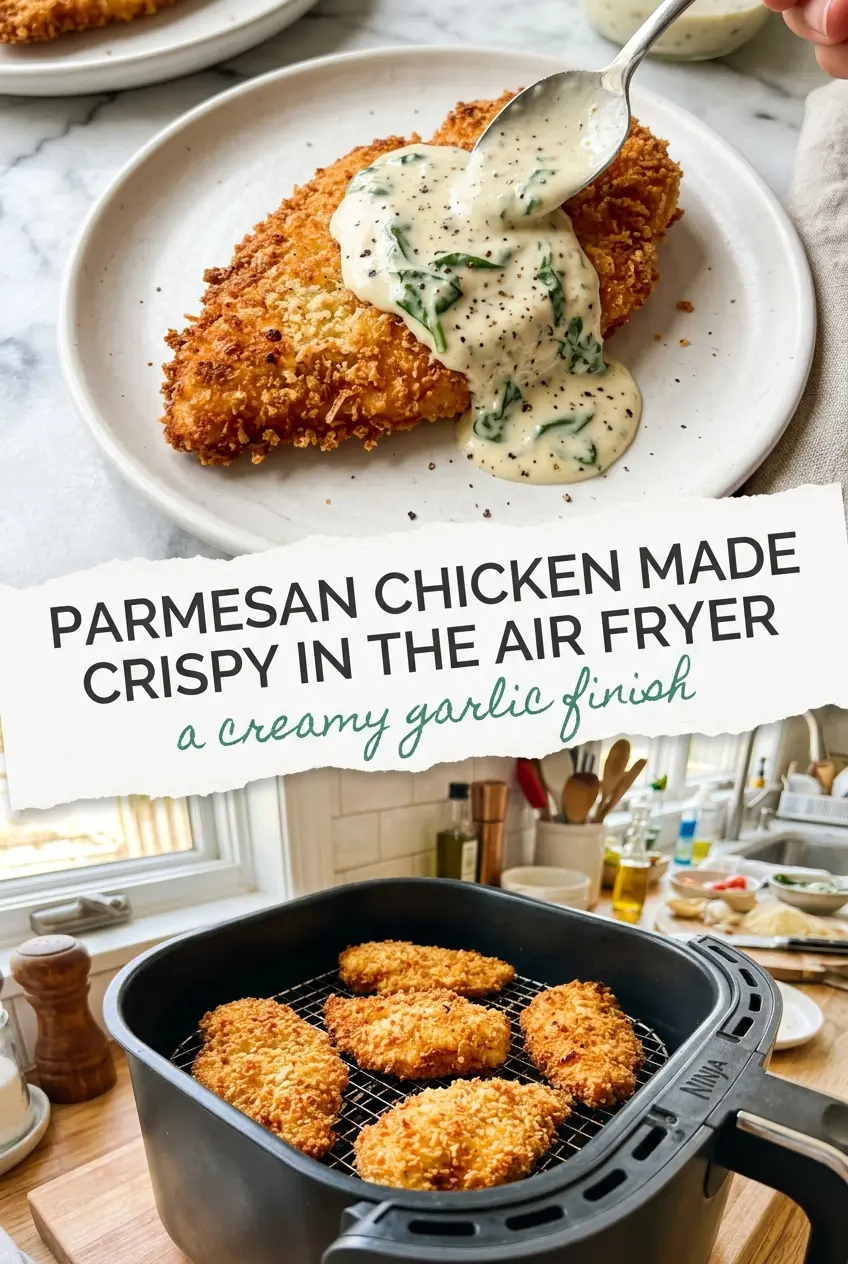
Cook the chicken at 375°F until the coating is golden and the edges look dry and set. Halfway through, the crust should already smell toasty and feel firm to the touch. If you overcrowd the basket, the chicken steams and you lose the crisp finish, so leave space between the pieces. Pull it as soon as it’s done; overcooked cutlets go stringy fast.
Finishing the Garlic Cream Sauce
Melt the butter, add the cream, broth, garlic powder, and lemon pepper, then bring it only to a low boil before adding the Parmesan. If the heat is too high, the cheese can seize or turn grainy. Stir slowly until the sauce thickens enough to coat a spoon, then fold in the spinach just until it wilts. Spoon it over the chicken right before serving so the crust still has some life left in it.
How to Adapt This for Different Kitchens and Different Moods
Dairy-Free Version That Still Browns Well
Use a dairy-free Parmesan-style alternative in the coating and a creamy oat or cashew cooking cream in place of the heavy cream. The sauce won’t have the same sharpness or body as the original, but it will still cling to the chicken and give you a rich finish.
Gluten-Free Coating
Swap the all-purpose flour for a fine gluten-free flour blend. The coating will still crisp, but it may brown a touch faster, so watch the last couple of minutes in the air fryer closely.
Extra Saucy Version for Pasta or Rice
Double the sauce if you want enough to serve over pasta, mashed potatoes, or rice. The chicken stays the same, but the extra sauce turns this from a plated entrée into a full pan dinner with enough to soak into the sides.
Storage and Reheating
- Refrigerator: Store leftovers for up to 3 days. The chicken will lose some of its crispness once sauced, but the flavor holds up well.
- Freezer: The cooked chicken freezes better without the sauce. Freeze the cutlets in a single layer, then thaw and sauce them fresh for the best texture.
- Reheating: Reheat the chicken in the air fryer or oven at 350°F until hot. Warm the sauce separately over low heat, stirring often so the Parmesan doesn’t tighten up or split.
Answers to the Questions Worth Asking
Crispy Parmesan Chicken With Creamy Garlic Sauce
Ingredients
Equipment
Method
- Butterfly the chicken breasts by cutting in half horizontally to create thin cutlets. Keep the cutlets even so they cook crisp and golden throughout.
- Season the chicken with salt, pepper, and garlic powder, then coat in the flour and Parmesan mixture, shaking off any excess. Aim for a thin, even crust so it crisps in the air fryer.
- Air fry the chicken at 375°F for about 6 minutes per side, until golden and crispy. Pause halfway to ensure both sides brown evenly.
- In a saucepan, melt the butter, add the heavy cream, chicken broth, garlic powder, and lemon pepper, and bring to a low boil. Watch for small bubbles around the edges before thickening.
- Stir in the Parmesan and simmer for about 10 minutes until the sauce thickens; keep the heat low to prevent grainy cheese. You’ll see the sauce turn glossy and coat the back of a spoon.
- Fold in the chopped spinach until wilted. Cook just until bright green and tender, about 1–2 minutes.
- Pour the creamy garlic sauce over the crispy chicken or add the chicken back into the sauce, then garnish with parsley before serving. Serve immediately to keep the crust crisp.