
Golden chicken, glossy bowtie pasta, and crisp-tender broccoli all get pulled together by a buttery lemon sauce that clings to every curl and ridge. The Cajun seasoning gives the chicken a deep, savory edge, while Parmesan and lemon keep the whole skillet from tasting heavy. It lands right in that sweet spot between comforting and bright, which is why it doesn’t sit around as leftovers for long.
The trick here is building layers instead of dumping everything into one pan at once. The chicken needs enough heat to brown before the butter and garlic go in, and the broccoli only needs a short blanch so it stays green and snappy instead of going dull and soft. Once the lemon hits the hot butter, the sauce turns fragrant fast, and the Parmesan melts in best when the pan isn’t screaming hot.
Below, I’ll walk through the part that matters most: keeping the sauce silky while the pasta, chicken, and broccoli all finish together. There’s also a practical storage note and a few swaps for when you need to adjust the dish without losing what makes it work.
The lemon butter sauce coated every piece of pasta and the broccoli stayed crisp instead of getting mushy. I liked that the chicken browned first, because it gave the whole dish a lot more flavor than the usual one-pan pasta.
Save this Cowboy Butter Lemon Bowtie Chicken with Broccoli for a fast skillet dinner with a buttery lemon sauce and crisp-tender broccoli.
The Chicken Needs a Real Sear Before the Butter Goes In
The biggest mistake in a skillet pasta like this is rushing straight to the sauce and never giving the chicken a chance to brown. If the pan is crowded or the heat is too low, the chicken steams, the seasoning sits on the surface, and the final dish tastes flat no matter how much butter you add. A deep golden crust gives the whole skillet its backbone.
The other thing that matters is sequence. Butter, garlic, lemon, and Parmesan all want different heat levels, and if you toss them together too early, the sauce can turn greasy or grainy. Browning the chicken first and then building the sauce in the same pan gives you flavor that feels layered instead of one-note.
What Each Ingredient Is Actually Doing in This Dish
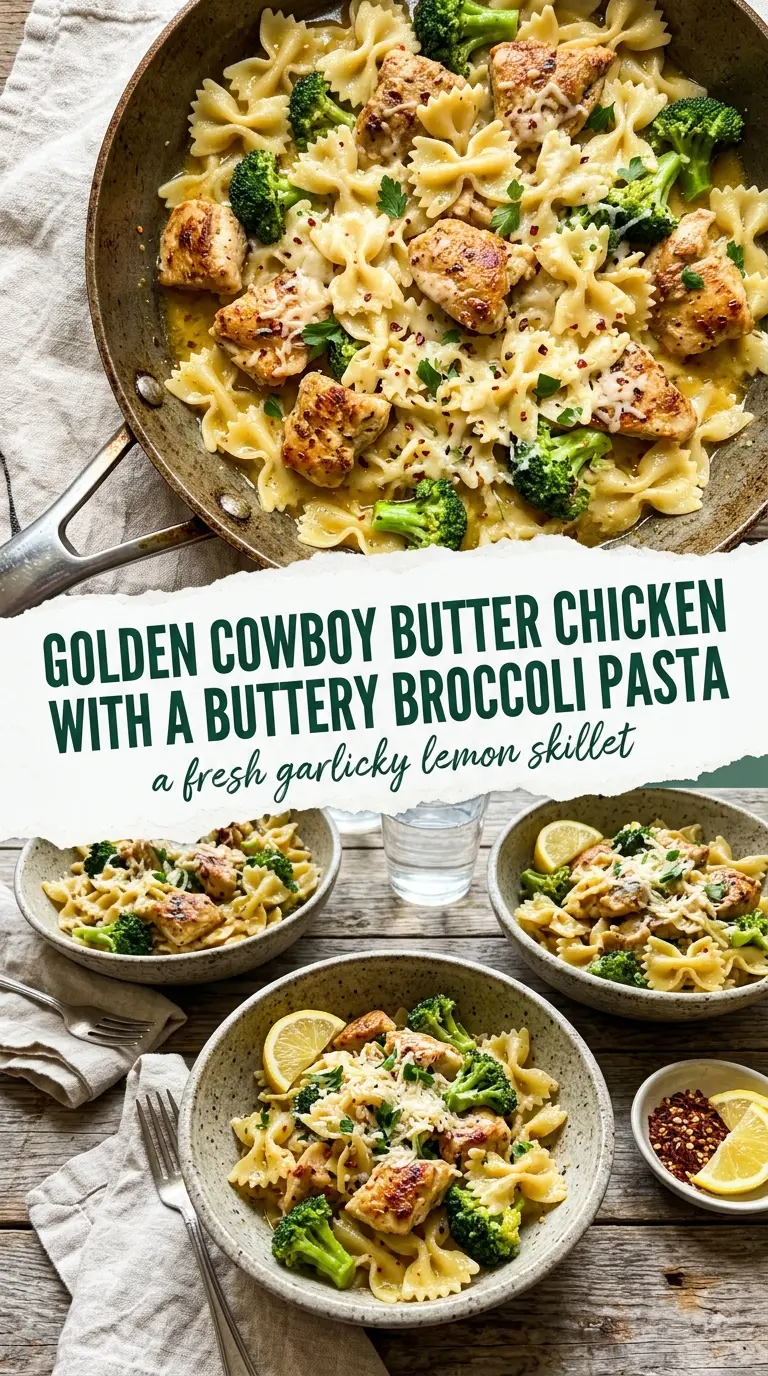
- Chicken breasts — Bite-sized pieces cook fast and brown evenly. If you use chicken thighs, they’ll give you a little more richness and stay forgiving if you go a minute longer, but breasts keep the dish lighter and cleaner tasting.
- Butter — This is the base of the sauce, so use real butter here. Olive oil can brown the chicken, but it won’t give you the same round, velvety finish once the lemon and Parmesan go in.
- Lemon juice and zest — The zest carries the bright aroma; the juice brings the acidity that keeps the sauce from feeling heavy. Bottled lemon juice works in a pinch, but fresh lemon is what makes the sauce taste sharp and clean instead of dull.
- Parmesan — Freshly grated Parmesan melts more smoothly than the pre-shredded kind, which often contains starches that can make the sauce clump. If you only have the bagged version, add it off the heat and stir patiently.
- Broccoli — A short blanch keeps the florets bright and crisp so they don’t collapse when they hit the skillet. Frozen broccoli can work, but thaw and drain it well first or the extra water will thin the sauce.
The Part Where Everything Comes Together in One Pan
Cook the Pasta and Broccoli Before the Skillet Starts
Boil the farfalle until it’s just tender, then drain it well so it doesn’t water down the sauce later. Blanching the broccoli for only 2 to 3 minutes keeps it bright green and gives you that crisp bite against the pasta. If you cook it until it’s soft in the water, it will go mushy as soon as it gets tossed with the hot chicken and butter.
Brown the Chicken Without Crowding It
Season the chicken before it goes into the pan, then let it sit in the hot butter long enough to take on a deep golden color. If the pieces are packed too tightly, they’ll steam instead of sear, and you lose the savory crust that makes this skillet worth repeating. Cook until the chicken is opaque through the center and the edges have that slightly crisp look.
Build the Sauce in the Same Pan
Once the chicken is cooked, add the remaining butter and garlic and stir just until fragrant. Garlic burns fast, especially in a skillet that’s already hot, so keep it moving and add the lemon as soon as the aroma blooms. The lemon juice should sizzle lightly, not spatter violently; that’s the sign the pan is at the right point for the final toss.
Finish With Pasta, Broccoli, and Parmesan
Add the pasta and broccoli back into the skillet and toss until everything is coated in the butter-lemon pan juices. Turn the heat down before you add the Parmesan so it melts into a silky coating instead of turning stringy. If the sauce looks loose at first, give it another minute of tossing — the starch from the pasta and the cheese will tighten it up.
How to Adapt This for a Different Pantry or Diet
Make It Gluten-Free Without Losing the Skillet Texture
Use your favorite gluten-free bowtie pasta and cook it just to al dente, since it can go from tender to fragile faster than wheat pasta. Rinse only if the package instructions call for it, then drain well before tossing it into the skillet so the sauce still clings.
Swap in Chicken Thighs for a Richer Finish
Boneless thighs work well if you want juicier pieces and a slightly deeper savory taste. They need a little longer to cook through, but the final skillet feels a touch richer and less lean than the breast version.
Dairy-Free Version With a Different Finish
Use a good dairy-free butter and skip the Parmesan, then finish with a spoonful of nutritional yeast for a little savory depth. The sauce won’t be as creamy and glossy, but the lemon, garlic, and Cajun seasoning still carry the dish.
Storage and Reheating
- Refrigerator: Store leftovers in an airtight container for up to 3 days. The pasta will absorb some of the sauce, so expect it to look a little tighter the next day.
- Freezer: It freezes, but the pasta softens and the sauce loses some of its silky texture. If you need to freeze it, cool it completely and pack it tightly for up to 2 months.
- Reheating: Warm it gently in a skillet over low heat with a splash of water or chicken broth. High heat is the mistake here — it dries the chicken out and can make the Parmesan seize instead of loosen back into a sauce.
Answers to the Questions Worth Asking
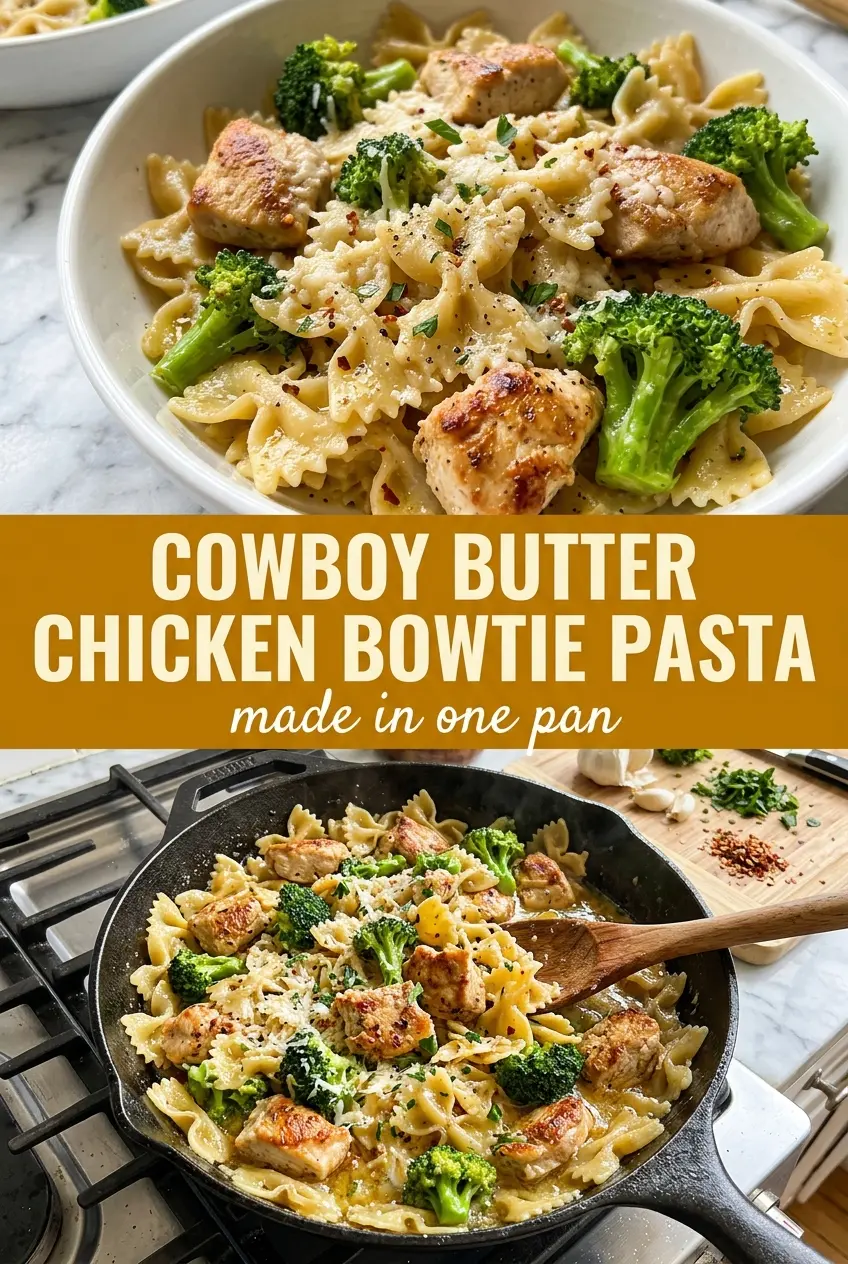
Cowboy Butter Lemon Bowtie Chicken With Broccoli
Ingredients
Equipment
Method
- Cook the bowtie pasta according to package instructions, then drain and set aside (no temperature needed). Look for tender pasta that still holds its shape.
- Bring a pot of salted water to a boil, add the broccoli florets, and blanch for 2 to 3 minutes until crisp-tender, then drain and set aside. The broccoli should stay bright green and slightly firm.
- Season the bite-sized chicken with Cajun seasoning, garlic powder, smoked paprika, salt, and black pepper until evenly coated. The chicken should look speckled with spices.
- Heat 2 tablespoons of butter in a large skillet over medium-high heat, add the chicken, and cook 4 to 5 minutes per side until golden brown and cooked through. Watch for deep browning and juices running clear.
- Add the remaining butter and the minced garlic to the skillet, then stir until fragrant, about 30 to 60 seconds. The garlic should smell toasted without turning dark.
- Stir in the lemon juice and zest, scraping up any browned bits from the skillet. The sauce should look glossy and aromatic.
- Return the pasta, broccoli, and chicken to the skillet, toss to combine, and stir in the Parmesan until creamy and clinging to the noodles. The pasta should look lightly coated instead of watery.