
Cookie dough protein balls hit that sweet spot between dessert and snack: soft, chewy, and just rich enough to feel like a treat, but sturdy enough to grab from the fridge when you want something fast. The almond flour gives them that raw-cookie-dough texture without any baking, and the protein powder keeps the bites from tasting like straight-up candy. Mini chocolate chips seal the deal. They taste like the spoonful you weren’t supposed to eat, except now it’s portioned into a batch you can actually keep in the fridge.
The texture depends on balance. Too dry, and the balls crumble instead of rolling cleanly. Too wet, and they turn sticky and heavy. That’s why the milk goes in a little at a time, only as needed. Different protein powders absorb differently, and nut butter can vary a lot in thickness, so the dough should be soft but not loose. Once it firms up in the refrigerator, the flavor settles in and the bites get that classic cookie-dough chew.
Below, I’ve included the small details that keep these from turning pasty or grainy, plus a few simple swaps if you need to work around what’s in your pantry.
The dough came together fast and the texture was spot on after chilling — soft and chewy, not gritty. I used almond butter and needed just a splash of milk, then the mini chips held up perfectly.
Save these cookie dough protein balls for the times you want a no-bake sweet snack with a soft chewy bite and chocolate chips in every mouthful.
The Texture Problem Most Protein Bites Run Into
Protein bites often fail for one of two reasons: they go chalky from too much powder, or they turn greasy and soft because the nut butter takes over. This version avoids both by leaning on almond flour for structure. Almond flour behaves a lot like the base of edible cookie dough, so the bites stay tender without getting dense or dry.
The other key is the chill time. Right after mixing, the dough should hold together when pressed, but it will still feel a little soft. That’s normal. Refrigerating it for at least 10 minutes lets the almond flour hydrate and the nut butter firm up, which is what gives you that clean cookie-dough bite instead of a sticky paste.
What Each Ingredient Is Actually Doing in This Dough
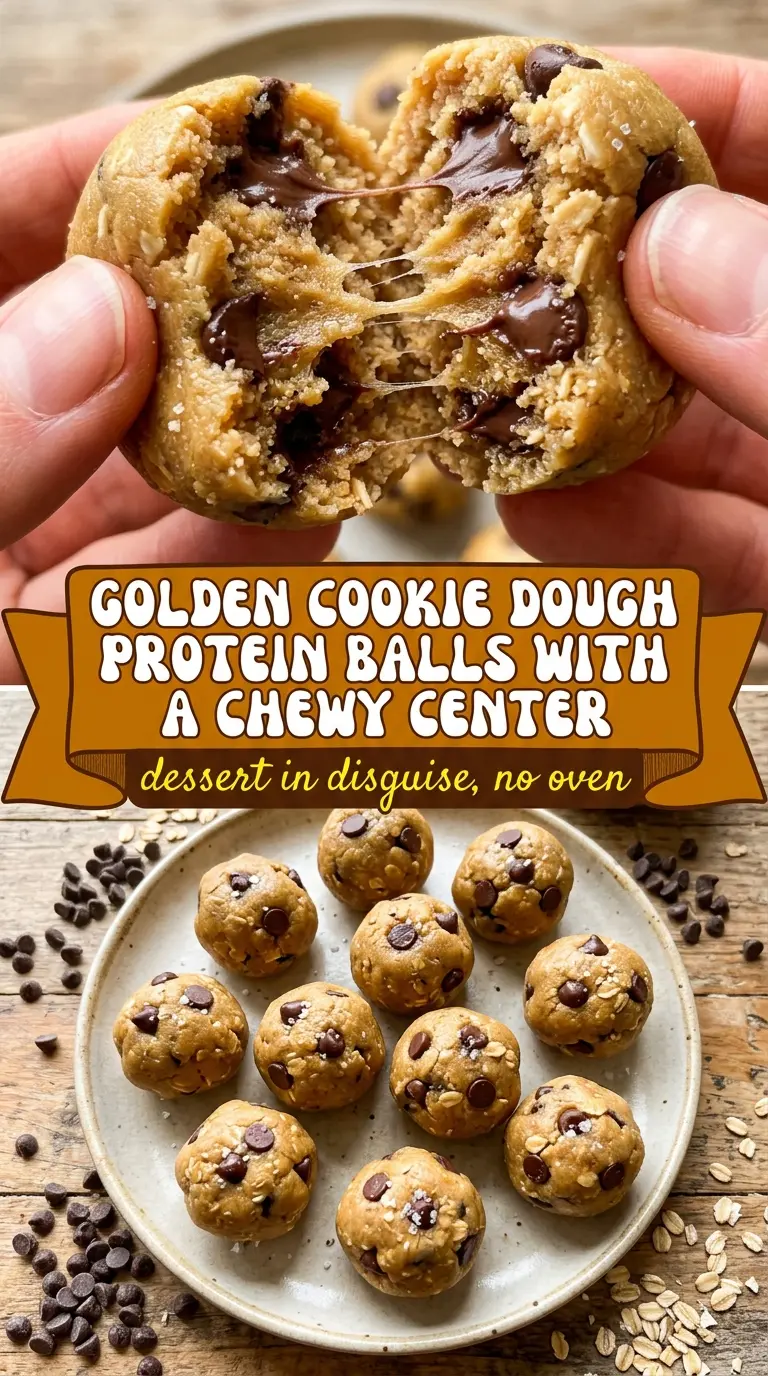
- Almond flour — This is the backbone of the recipe. It gives the dough that classic raw-cookie-dough feel and keeps the texture tender. Regular flour won’t work here without cooking, and coconut flour is much drier, so don’t swap it one-for-one.
- Vanilla protein powder — This adds sweetness, body, and the protein boost that makes these more than just a dessert bite. Different brands vary a lot, especially in how dry they are, so the final texture may need a spoonful or two of milk. If your powder is very sweet, cut the maple syrup back slightly.
- Peanut butter or almond butter — Nut butter binds everything together and adds the rich, doughy mouthfeel. Creamy is best here because chunky nut butter makes the balls harder to roll. Almond butter gives a milder finish, while peanut butter tastes a little more like a classic cookie-dough candy.
- Maple syrup — This is doing more than sweetening. It also helps the mixture hold together and gives the bites that soft, slightly sticky chew. Honey can work, but it tastes sharper and thickens the dough a little differently.
- Mini chocolate chips — Mini chips distribute better than standard chips, so every bite gets chocolate without the dough falling apart. If you only have regular chips, chop them a bit so they mix in more evenly.
- Milk — This is the adjustment tool. Add it only when the dough looks dry or won’t come together in a ball. A little goes a long way, and too much will make the mixture too soft to roll cleanly.
How to Mix, Fix, and Roll the Dough Cleanly
Start with the dry base
Stir the almond flour and protein powder together first so the powder doesn’t clump in pockets later. Then add the nut butter, maple syrup, and vanilla, and work it together until the mixture looks thick and crumbly but begins to press into a dough. If it still looks sandy after a minute of stirring, that’s the point where a tablespoon of milk helps. Don’t pour the milk in all at once or the whole batch can go from workable to sticky fast.
Watch for the right dough texture
The finished dough should feel soft, almost like play dough, and it should hold its shape when you pinch it. If it cracks at the edges, add another small splash of milk and stir again. If it spreads or sticks heavily to your hands, you’ve gone too far with the liquid and need a little more almond flour. The goal is a dough that rolls without leaving a greasy film on your palms.
Fold in the chips last
Chocolate chips go in after the dough is already formed so they stay whole and don’t get smashed into the base. Stir just until they’re evenly distributed. Overmixing here doesn’t help anything; it only warms the dough and makes it softer than you want. Once the chips are in, portion the dough into small balls and roll them firmly so there are no loose seams.
Chill before serving
The refrigerator finish is what gives these their best texture. Ten minutes is enough to firm them up, but longer chilling makes them even easier to store and grab later. If you eat them right away, they’ll taste fine, but the edges won’t have that neat, set bite. Cold is what turns them from soft dough into snackable bites.
Three Smart Ways to Adapt These Bites
Dairy-Free and Gluten-Free as Written
These cookie dough protein balls already skip wheat and dairy if you use a dairy-free protein powder and dairy-free chocolate chips. That makes them an easy option for a lot of eaters without any special technique. The only thing to watch is the protein powder brand, since some dairy-free blends are drier than whey-based powders and may need a little more milk.
Lower-Sugar Version
Use a lightly sweetened protein powder and reduce the maple syrup by 1 tablespoon if you want a less dessert-like bite. The texture will be a touch firmer and less sticky, which some people actually prefer. Don’t cut the syrup too far or the mixture won’t bind well enough to roll.
Swap the Nut Butter
Peanut butter gives the boldest, most classic cookie-dough flavor, while almond butter stays milder and a little cleaner tasting. Sunflower seed butter can work if you need a nut-free version, but it brings a different flavor and can turn slightly green over time when mixed with baking soda in other recipes; that isn’t an issue here, though the taste is more earthy. Choose a creamy version either way so the dough rolls smoothly.
Storage and Reheating
- Refrigerator: Store in an airtight container for up to 1 week. The texture gets a little firmer after day one, which works well for grab-and-go snacking.
- Freezer: These freeze well. Freeze in a single layer first, then move them to a container or bag for up to 2 months. Let them sit at room temperature for 5 to 10 minutes before eating so they soften slightly.
- Reheating: No reheating needed. If they’ve been frozen, the only mistake is trying to microwave them, which can make the chips mushy and the dough oily. Thaw them gently instead.
Answers to the Questions Worth Asking
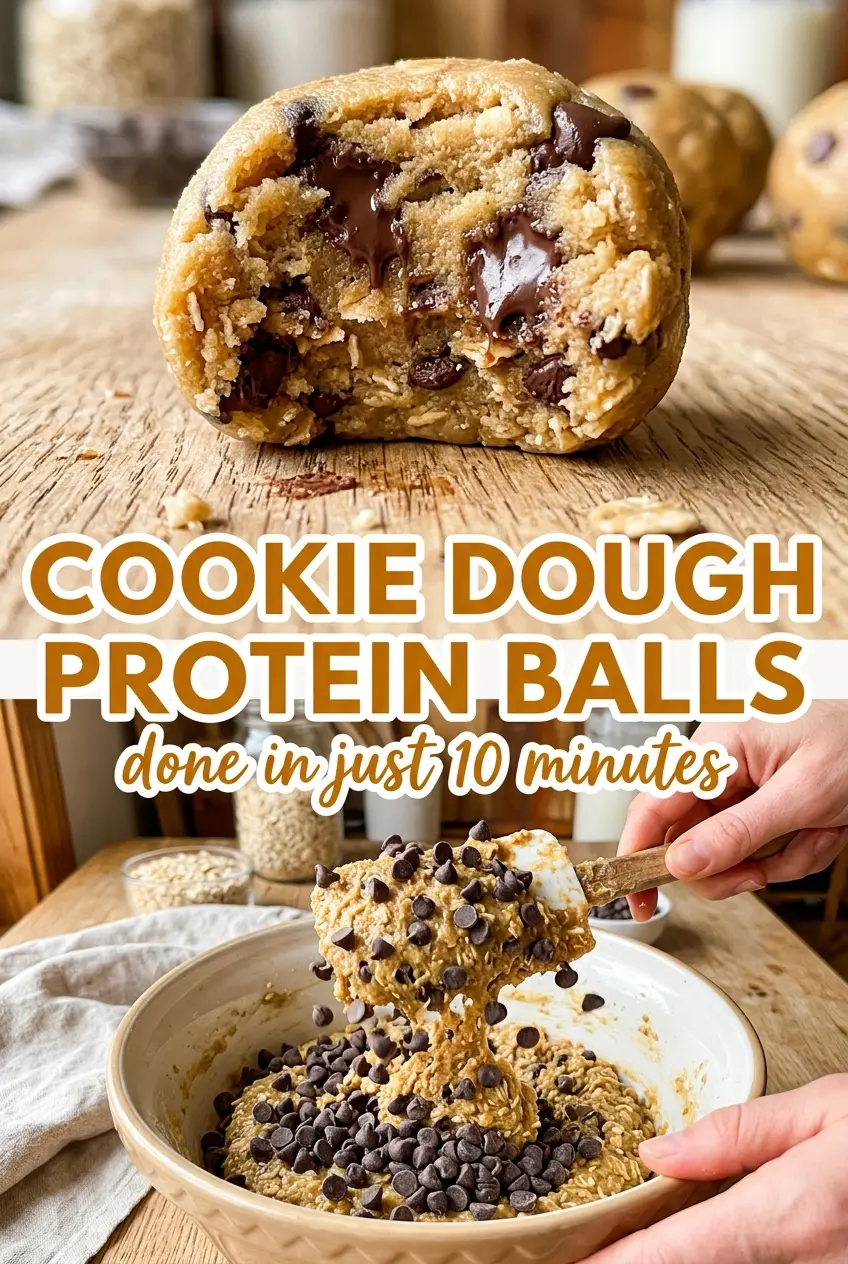
Cookie Dough Protein Balls
Ingredients
Method
- Stir together almond flour, vanilla protein powder, creamy peanut butter or almond butter, maple syrup, and vanilla extract until a dough forms, adding milk a tablespoon at a time if too dry.
- Stop mixing once the dough holds together and looks uniform with no dry pockets.
- Fold in mini chocolate chips until they’re evenly distributed through the dough.
- Roll the dough into small balls about bite size and place them on a plate or tray.
- Refrigerate the protein balls for at least 10 minutes to firm up before serving, until they hold their shape when picked up.