
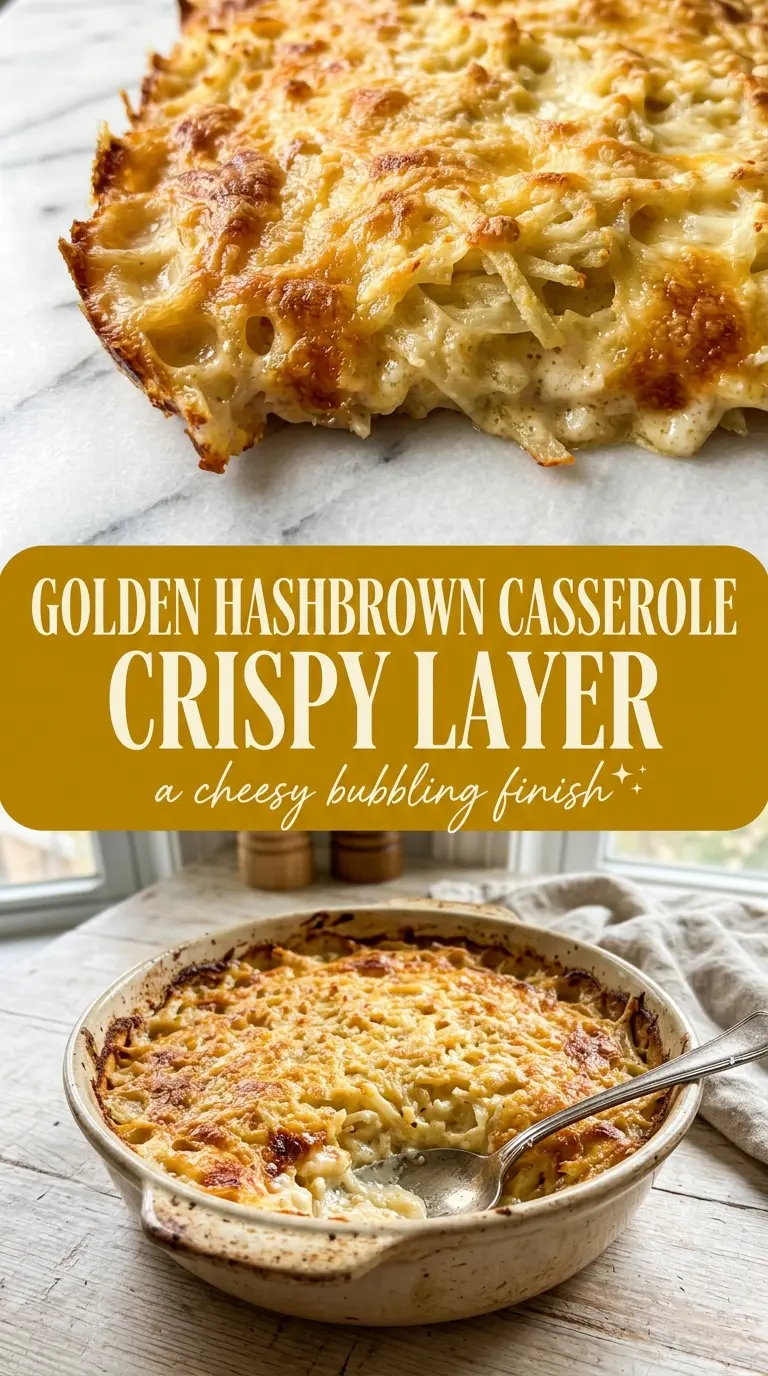
Golden hashbrown casserole comes out at its best when the top turns deeply cheesy and the center stays soft, creamy, and spoonable. The potatoes keep just enough texture to hold together, while the sour cream and cheddar melt into a sauce that coats every shred without turning heavy. It’s the kind of dish that disappears fast at brunch and still feels comforting enough to serve alongside a weeknight roast.
What makes this version work is the balance of moisture and the way the cheese is layered. Frozen hash browns need to be thawed first so they don’t water down the casserole, and the mixture gets its richness from sour cream plus cream of chicken soup instead of a thin sauce that slides to the bottom. A little onion gives the whole pan a sharper, savory edge so the cheese doesn’t taste flat.
Below, I’ll walk through the part that matters most: keeping the casserole creamy in the middle while still getting that browned, bubbling top. I’ve also included a few swaps that actually work if you need to adjust for what’s in your fridge.
The casserole baked up creamy in the middle with a really good cheesy crust on top, and the onion gave it more flavor than the versions I’ve had before. I covered it for most of the bake like you said, and it never dried out.
Love this creamy hashbrown casserole? Save it to Pinterest for brunches, holiday dinners, and nights when you want a golden, cheesy side that holds up beautifully.
The Reason This Casserole Stays Creamy Instead of Watery
The biggest mistake with hashbrown casserole is starting with potatoes that still hold a lot of ice water. Thawing the hash browns first matters because frozen shreds dump moisture as they bake, and that extra liquid dilutes the sauce and keeps the top from browning properly. If the potatoes go in cold and wet, the casserole tends to bake up loose in the middle instead of rich and cohesive.
The other thing that makes a difference is covering the dish for most of the bake. That traps steam long enough to heat the potatoes through without drying out the cheese layer on top. Then the uncovered finish lets the surface set and brown instead of staying pale and soft.
What Each Ingredient Is Actually Doing in This Dish
- Thawed hash browns — This is nonnegotiable if you want a creamy casserole with a good texture. If the potatoes still feel icy, spread them on a towel-lined tray for a few minutes and blot them dry before mixing.
- Cream of chicken soup — It gives the casserole body and seasoning in one step. You can use cream of mushroom if that’s what you have, but the flavor will be a little earthier and less classic.
- Sour cream — This is what keeps the filling tangy and rich instead of flat. Full-fat works best here because low-fat versions can turn thin once baked.
- Cheddar cheese — Use a sharp cheddar if you want the flavor to come through the dairy and potatoes. Pre-shredded cheese works, but freshly shredded melts smoother and gives you fewer dry flecks in the filling.
- Onion — A small finely chopped onion disappears into the casserole but gives it a real savory backbone. If raw onion is too strong for you, sauté it first until just softened before adding it.
How to Layer the Pan So the Top Browns and the Center Stays Soft
Mix the creamy base first
Stir the soup, sour cream, milk, onion, and one cup of cheese together before the potatoes go in. That gives you an even base so the hash browns don’t clump and the seasoning spreads through the whole pan. If you add the potatoes too early, the mixture gets patchy and the bottom layer can turn dense.
Coat every shred without breaking them down
Add the thawed hash browns last and fold them gently until they’re fully coated. You want the shreds separated and slick with sauce, not mashed together. A heavy hand here turns the casserole pasty, while a light fold keeps the texture fluffy and distinct.
Bake covered, then uncover for the finish
Cover the dish tightly with foil and bake until the center is hot and the edges are bubbling. That first stretch is what cooks the potatoes through without drying the top. Remove the foil for the last few minutes only, long enough for the cheese to turn lightly browned and a little blistered at the corners.
Let it rest before serving
Give the casserole a short rest after it comes out of the oven. The sauce thickens as it sits, and cutting in too early makes the filling run across the plate. After a few minutes, it settles into neat scoops with a creamy center and a crisp cheesy top.
What to Change When You Need This Casserole to Fit Your Table
Make it vegetarian without losing the casserole texture
Swap the cream of chicken soup for cream of mushroom or cream of celery. You’ll keep the same thick, bind-together texture, but the flavor shifts a little more savory and less chicken-forward. It’s the cleanest swap if you want the dish to stay as close to the original as possible.
Use a hashbrown casserole with extra crunch on top
Add a handful of crushed butter crackers or cornflakes over the cheese before the final uncovered bake. That gives you a crisper lid and a little more contrast against the soft center. The tradeoff is that the top becomes more topping than cheese crust, so use this when you want crunch over pure melt.
Make it ahead for brunch or the holidays
Assemble the casserole, cover it tightly, and refrigerate it unbaked for up to a day. Let it sit on the counter while the oven preheats so it doesn’t go in ice-cold, which can throw off the bake time. You may need a few extra minutes under the foil if it’s coming straight from the fridge.
Storage and Reheating
- Refrigerator: Store leftovers covered for up to 4 days. The potatoes will tighten up a little, but the casserole stays creamy.
- Freezer: It freezes well in a tight, freezer-safe container for up to 2 months. Thaw it overnight in the fridge before reheating so the center warms evenly.
- Reheating: Reheat covered in a 325F oven until hot all the way through. The common mistake is blasting it uncovered in the microwave, which dries the cheese and leaves the middle cold.
Questions I Get Asked About This Recipe

Cheesy Hashbrown Casserole
Ingredients
Equipment
Method
- Preheat the oven to 350F and spray a 9x13-inch casserole dish with nonstick spray, so the casserole releases cleanly.
- In a large bowl, combine the onion, 1 cup of the cheddar cheese, milk, cream of chicken soup, and sour cream until the mixture looks smooth and evenly speckled.
- Add the thawed hash browns to the bowl and stir until evenly coated, then season with salt and pepper for balanced flavor.
- Pour the mixture into the prepared dish and top with the remaining shredded cheese to create a browned, melty layer.
- Cover with foil and bake for 45-50 minutes at 350F until the center is hot and the edges are starting to set.
- Remove the foil and bake for another 5-10 minutes at 350F until the cheese is lightly browned and bubbly.