
Apple cider braised pork shoulder turns a tough, economical cut into something spoon-tender and deeply savory, with just enough sweet-tart apple flavor to keep every bite interesting. The long oven time does the heavy lifting here, but what makes this version stand out is the way the cider, mustard, and browned pork bits build a sauce that tastes polished without needing much from you.
The browning matters. So does scraping the pot after the vinegar and cider go in, because that is where the flavor lives. The apples go in later on purpose, after the pork has already softened, so they hold their shape just enough to turn silky at the edges instead of disappearing into the braising liquid.
Below you’ll find the small details that keep the meat tender, the sauce balanced, and the finish clean. If you’ve ever had braised pork come out flat or watery, the notes under this recipe will help.
The pork came out fork-tender and the cider sauce reduced beautifully without turning sweet. I loved that the apples held their shape and soaked up all that mustardy broth.
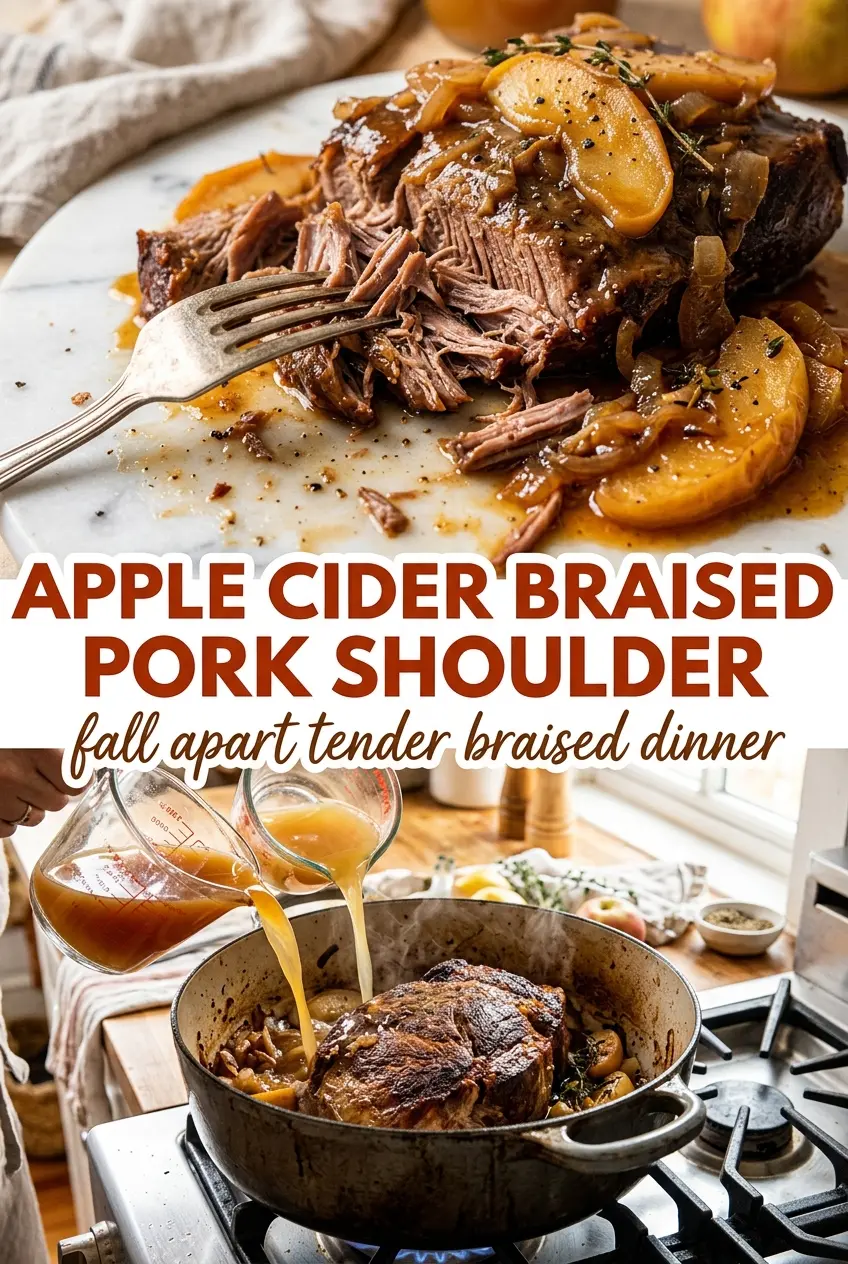
Braised pork shoulder with apples and cider has the kind of sauce you’ll want to spoon over everything on the plate.
The Part Most Braises Get Wrong: Building Enough Flavor Before the Oven
A braise fails fastest when the pot goes into the oven tasting thin. Pork shoulder can handle a long cook, but it can’t invent flavor that isn’t there. Browning the meat first gives you those dark, sticky bits on the pan, and the cider vinegar loosens them into the liquid so the sauce tastes layered instead of one-note.
The other mistake is rushing past the stovetop work. Garlic and herbs only need a minute in the hot fat; any longer and the thyme and rosemary can turn bitter. Once the liquid goes in, the pork should sit partly submerged, not fully drowned. That keeps the top from turning bland while the bottom stews.
What Each Ingredient Is Actually Doing in This Dish

- Pork shoulder — Boneless shoulder is the right cut because it has enough fat and connective tissue to turn tender without drying out. Pork loin won’t give you the same result; it tightens up instead of melting.
- Apple cider — Use real cider, not apple cider vinegar and not apple juice if you can help it. Cider gives you fruit flavor with enough body to survive a long braise without tasting candy-sweet.
- Dijon mustard — This sharpens the sauce and keeps the cider from leaning too sweet. Whole-grain mustard works in a pinch, but Dijon blends more smoothly into the braising liquid.
- Granny Smith apples — Their tartness holds up against the pork and the reduced cider. Softer sweet apples can work, but they collapse faster and make the finished dish taste heavier.
- Apple cider vinegar — This is the ingredient that wakes everything up. If you’re short, use a smaller splash of white wine vinegar, but keep it restrained so the braise doesn’t turn sharp.
How to Braise the Pork So It Stays Tender, Not Dry
Brown the Pork in Serious Heat
Pat the pork dry before it hits the oil, then let it sit long enough to form a deep brown crust on each side. If the pan is crowded or the meat is damp, it steams instead of searing and you lose the base flavor the whole dish depends on. Five minutes per side is a guide, but the real cue is color: dark golden edges and a surface that releases easily from the pot.
Pull the Flavor off the Bottom of the Pot
After the herbs and garlic hit the pan, add the vinegar first, then the cider, broth, and mustard. Scrape until the bottom looks clean and the liquid turns a little cloudy with browned bits. If those bits stay stuck, the braise tastes flat no matter how long it cooks.
Cook Until the Meat Gives Way
Cover the pot and move it to the oven at 325F. You want a low, even simmer around the pork, not a hard boil, so the connective tissue softens gently. Start checking around the two-hour mark; the meat is ready when a fork slides in with no resistance and the chunks start to split at the edges.
Add the Apples Late
The apples and onions go in after the pork has already become tender. That timing keeps them from dissolving into the sauce and lets them pick up the braising liquid without losing all structure. When they come out soft and glossy, the dish is done.
How to Adapt This for a Different Table
Make it dairy-free without changing the texture
This recipe is naturally dairy-free as written, which is one reason it works so well for a crowd. Keep the broth, cider, and mustard combination the same, and the sauce still finishes with a rich, glossy body.
Swap in boneless pork butt for a richer braise
Pork butt and pork shoulder are often sold under different names, but both work here. If your cut is especially fatty, skim a little more off the surface after braising so the sauce stays balanced.
Use pears when you want a softer, sweeter finish
Firm pears can stand in for the apples, but they soften faster and bring a gentler sweetness. The sauce will taste rounder and less tart, so keep the vinegar in the recipe rather than reducing it.
Gluten-free by default, with one thing to check
The braise itself doesn’t rely on flour, so it fits a gluten-free table as long as your Dijon and broth are certified gluten-free. If you want the sauce thicker, reduce it on the stovetop after the pork comes out instead of reaching for flour at the start.
Storage and Reheating
- Refrigerator: Keeps for 4 days in a sealed container. The sauce thickens as it chills, and the pork gets even more flavorful by the next day.
- Freezer: Freezes well for up to 3 months. Cool it completely first, then freeze the pork with plenty of sauce so it doesn’t dry out when thawed.
- Reheating: Reheat gently on the stove over low heat, covered, with a splash of broth or water if the sauce has tightened up. High heat can make the pork stringy and push the apples past their best texture.
Answers to the Questions Worth Asking
Apple Cider Braised Pork Shoulder
Ingredients
Equipment
Method
- Preheat the oven to 325F. Position a rack in the middle so the Dutch oven braises evenly.
- Season the pork shoulder generously with salt and pepper. Pat it lightly so the seasoning adheres to the meat.
- Heat the olive oil in a large Dutch oven over medium-high heat and brown the pork on all sides, about 5 minutes per side. Leave deep browned spots for flavor in the sauce.
- Remove the pork and sauté the garlic, thyme, and rosemary in the pot for 1 minute. Stir until fragrant and aromatic, watching that garlic does not burn.
- Add the apple cider vinegar, apple cider, chicken broth, and Dijon mustard, scraping up any browned bits from the bottom. Bring the liquid to a gentle simmer so it starts braising immediately.
- Return the pork to the pot, cover, and braise in the oven for 2 to 2 1/2 hours, flipping halfway. Continue braising until fork-tender and the meat easily pulls apart.
- Add the sliced onion and apples, cover, and return to the oven for 20-30 minutes. Cook until the apples are soft and the onions are tender.
- Remove the herb sprigs, adjust seasoning, and serve the pork with the braising liquid spooned over top. Taste and add salt and pepper if needed for balance.