
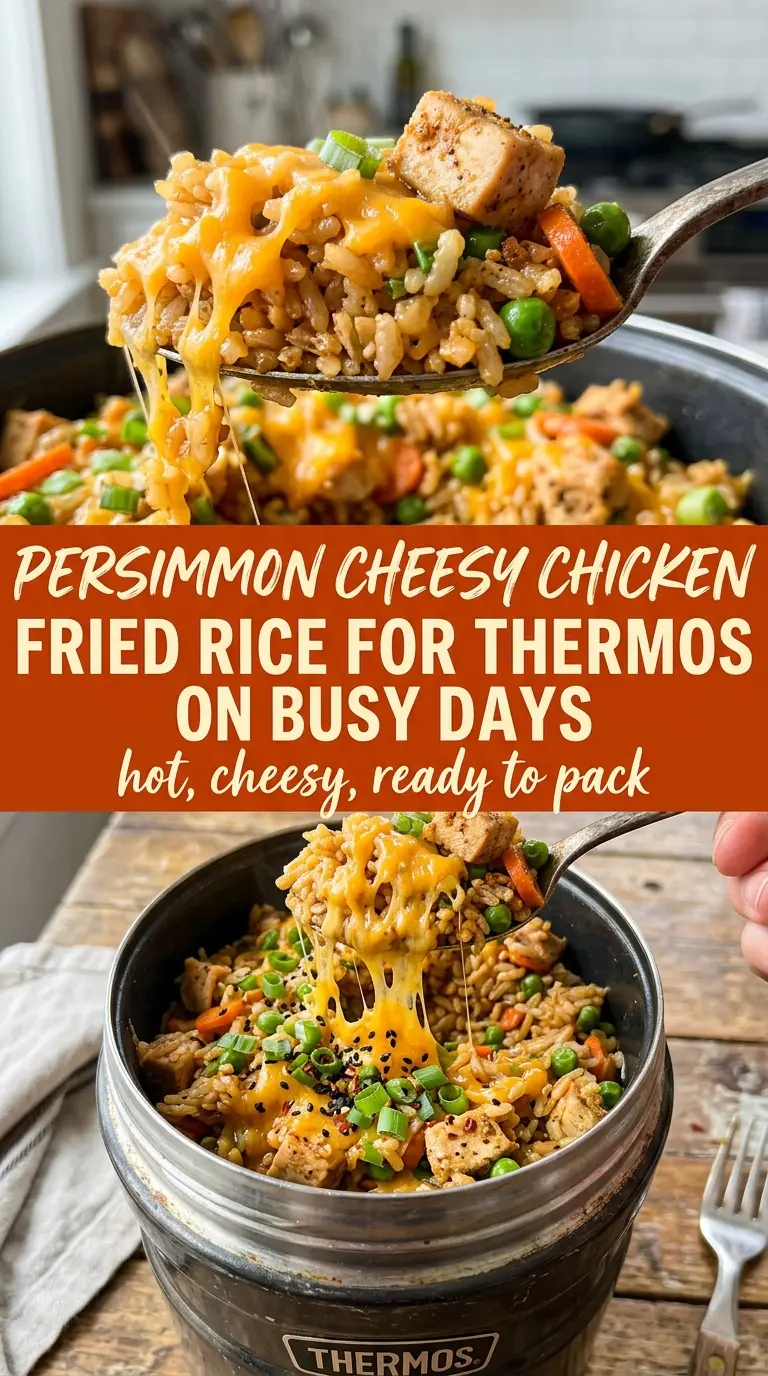
Cheesy chicken fried rice packs the kind of lunch that actually gets eaten instead of pushed around the container until the end of the day. The rice stays savory and satisfying, the chicken adds enough substance to keep it from feeling like a side dish, and the cheddar melts into the hot rice just enough to coat everything without turning heavy. Packed into a preheated thermos, it holds onto that comforting, just-cooked feel for hours.
The trick is starting with cold, cooked rice. Fresh rice turns sticky and soft in the pan, but cooled rice fries up with a little separation between the grains, which is what gives you that proper fried rice texture. The cheese goes in off the heat so it melts into the rice instead of seizing up or turning stringy in the pan. I also like using a simple frozen pea-and-carrot mix here because it cooks fast and keeps the whole dish moving on a weeknight.
Below, I’ll show you the small details that keep this lunch from getting soggy, plus a few swaps that work when you need to use what you already have.
The rice stayed fluffy instead of turning mushy, and the cheddar melted right into the chicken and veggies. I packed it in a warmed thermos at 7 a.m. and it was still hot at lunch with no weird clumping.
Cheesy Chicken Fried Rice for Thermos is the lunch that stays comforting, cheesy, and hot when the day runs long.
The Secret to Fried Rice That Stays Fluffy in a Thermos
The biggest mistake with thermos fried rice is treating it like regular takeout fried rice. A lunch that starts out a little wet or soft only gets softer as it sits, which is how you end up with a dense, clumpy reheated mess by noon. Cold rice and fast cooking are what keep the grains separate enough to hold their shape after they’re packed tight.
There’s another detail that matters here: the cheese goes in at the end, after the skillet comes off the heat. If you add it too early, it can clump around the rice and coat the pan instead of the food. Added at the finish, it melts into the hot grains and gives you a creamy, savory texture without turning the whole dish greasy.
What Each Ingredient Is Actually Doing in This Dish
- Cooked, cooled rice — Day-old rice works best because it’s drier and less sticky. If you only have fresh rice, spread it on a sheet pan and chill it for at least 30 minutes before cooking.
- Cooked chicken — Leftover rotisserie chicken is perfect here. Dice it small so it heats through quickly and mixes evenly with the rice.
- Frozen peas and carrots — The bagged mix is convenient and reliable. No need to thaw first; the hot pan takes care of that while the vegetables keep their shape.
- Cheddar cheese — Sharp cheddar gives the most flavor, and pre-shredded works fine. If you grate it yourself, it melts a little smoother, but either way it should go in off the heat.
- Soy sauce — This seasons the whole pan and gives the rice that fried rice backbone. Low-sodium soy sauce is the better choice if your chicken is already well seasoned.
Building the Pan in the Right Order
Getting the vegetables hot first
Start with the oil in a large skillet or wok over medium-high heat, then add the peas and carrots. You want them hot and tender before anything else goes in, because undercooked vegetables cool the rice down and keep the whole pan from frying properly. Give them just 2 to 3 minutes; if they start browning hard, the heat is too high and you’re heading toward dry edges before the rice is ready.
Scrambling the eggs in the clear space
Push the vegetables to one side of the pan and pour the beaten eggs into the empty side. Let them set for a few seconds before stirring so you get soft curds instead of tiny streaks of egg disappearing into the rice. If the pan is crowded and the eggs spread everywhere, they’ll cook too fast and turn rubbery, so keep them in one zone until they’re just set.
Frying the rice with the chicken
Add the rice and chicken and break up any clumps with your spatula as you stir. The pan should sound active, with a steady sizzle, and the rice should look hot and loose, not wet or steamy. Pour in the soy sauce and keep tossing until every grain looks seasoned and the chicken is hot through; if the pan starts to look glossy or crowded, let it cook a minute before stirring again so the rice can fry instead of steaming.
Melting the cheese without breaking the texture
Take the pan off the heat before stirring in the cheddar. That stop in cooking matters, because direct heat can make the cheese stringy in one spot and gluey in another. Stir until the cheese melts into the rice and the whole pan looks lightly coated, then finish with the green onions for a fresh bite that cuts through the richness.
How to Adapt It for Different Lunch Boxes and Diets
Dairy-Free Version
Leave out the cheddar and finish with a drizzle of sesame oil or a small pat of dairy-free butter if you want extra richness. You’ll lose the creamy melt, but the rice stays satisfying and the savory chicken-soy base still carries the dish.
Gluten-Free Swap
Use tamari or a certified gluten-free soy sauce in place of regular soy sauce. The flavor stays close, and because the rest of the ingredients are naturally gluten-free, this is an easy swap with no change in texture.
Vegetable-Heavy Version
Add diced bell pepper, corn, or chopped broccoli along with the peas and carrots, but keep the pieces small so they cook quickly. The more vegetables you add, the less dense the rice will feel, which is a nice change if you want a lighter lunch.
Storage and Reheating
- Refrigerator: Store leftovers in an airtight container for up to 4 days. The rice firms up a bit as it chills, which is normal.
- Freezer: It freezes well for about 2 months if you portion it first. Thaw overnight in the fridge before reheating so the rice warms evenly.
- Reheating: Reheat in a skillet with a splash of water or broth over medium-low heat, or microwave covered in short bursts. The common mistake is blasting it on high heat, which dries out the rice and makes the cheese oily instead of creamy.
Answers to the Questions Worth Asking
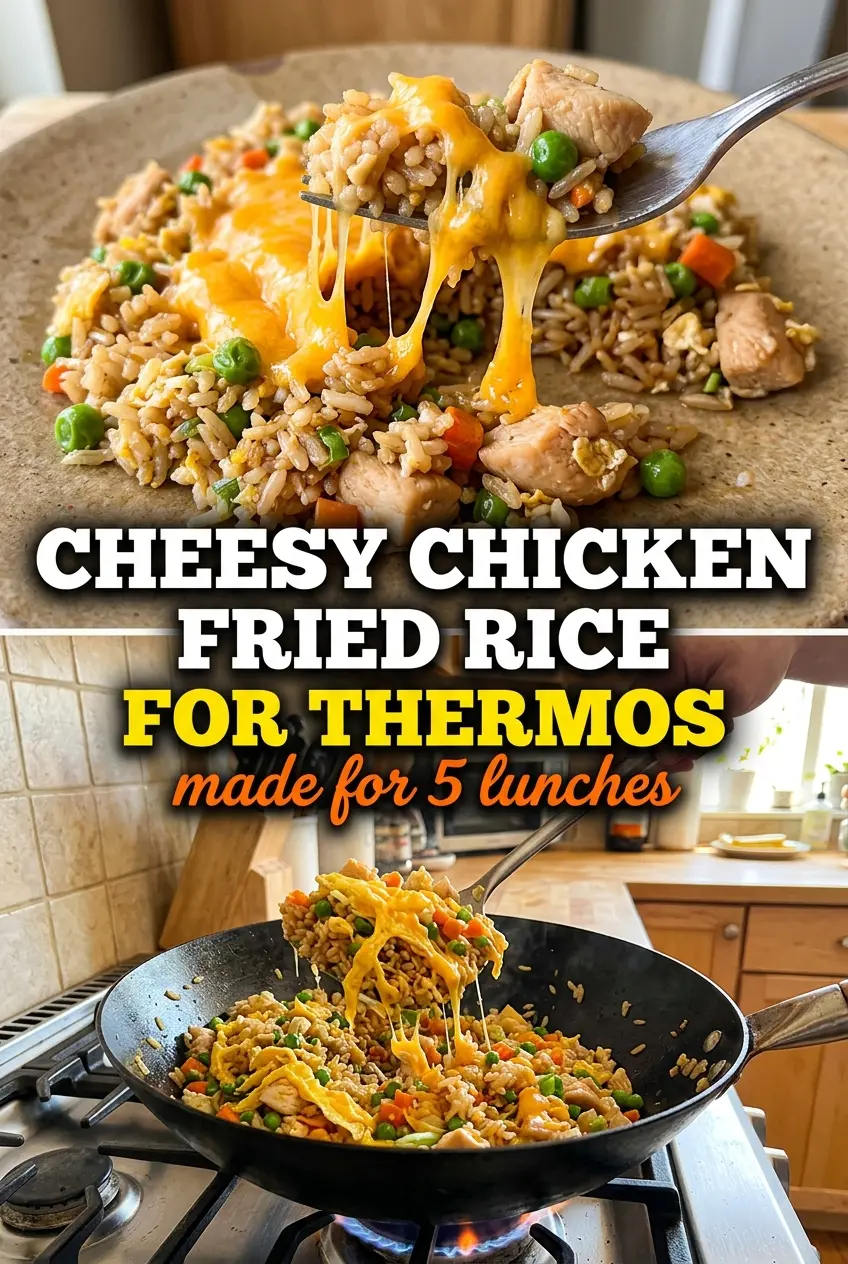
Cheesy Chicken Fried Rice for Thermos
Ingredients
Equipment
Method
- Heat the vegetable oil in a large skillet or wok over medium-high heat until shimmering. This cue helps the rice and chicken heat quickly without steaming.
- Add the frozen peas and carrots and cook for 2-3 minutes until tender. Stir occasionally so they thaw and develop a light, glossy sheen.
- Push the vegetables to one side and scramble the large eggs on the other side of the pan. Cook until just set, then gently mix with the vegetables.
- Add the cooked, cooled rice and diced cooked chicken, breaking up any clumps, then stir everything together. Keep the pan hot so the mixture turns steamy at the edges.
- Pour in the soy sauce and stir-fry for 3-4 minutes until heated through. Continue stirring so the seasoning coats the rice evenly.
- Remove from heat and stir in the shredded cheddar cheese until melted, then top with the green onions. The visual cue is a smooth, lightly stretchy cheese coating.
- Pack the fried rice hot into a preheated thermos to keep warm until lunchtime. Fill quickly and seal right away to trap heat.