
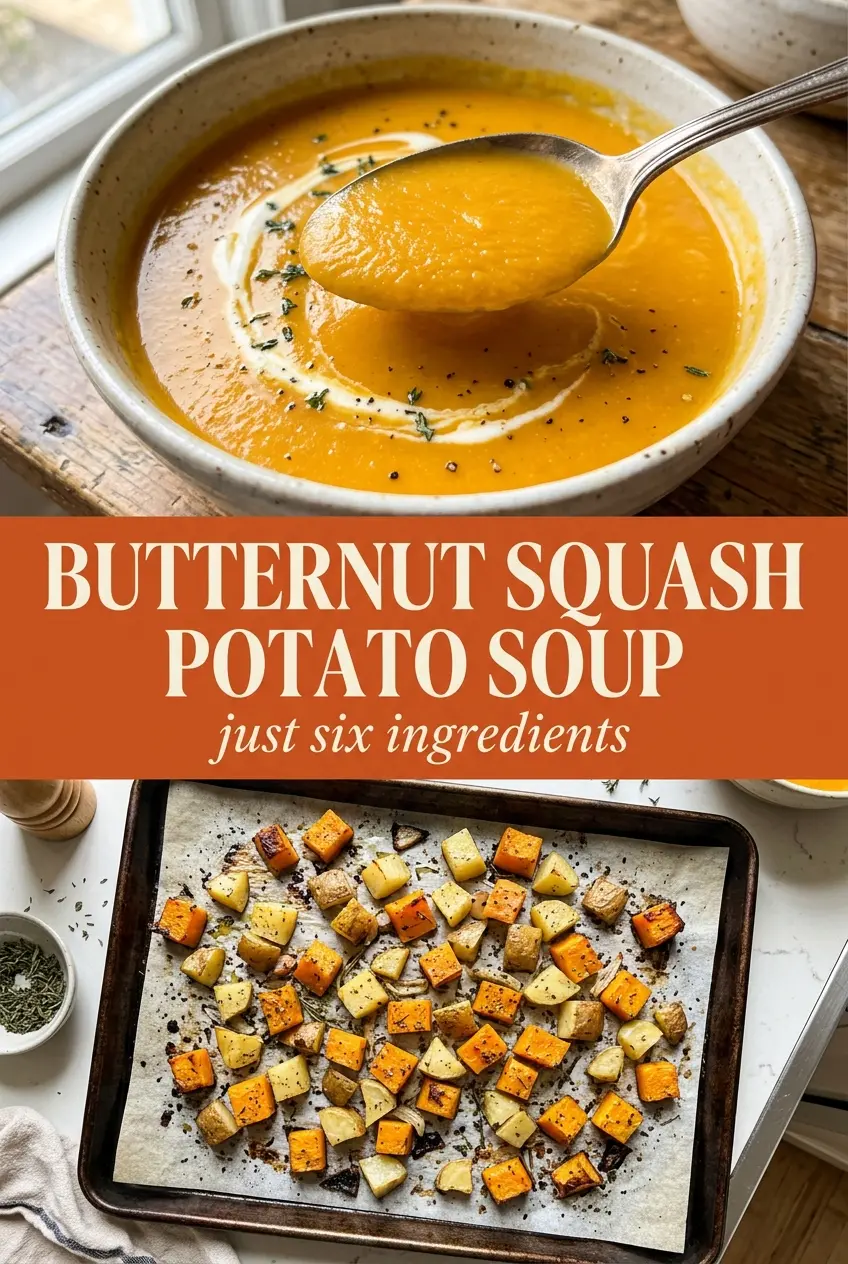
Roasted butternut squash and potatoes make a soup that lands somewhere between silky and substantial. The squash brings a deep, almost caramelized sweetness after roasting, while the potatoes give it body without making it heavy. The result is a bowl that feels smooth and comforting, but still tastes like the vegetables themselves instead of a generic blended soup.
The roasting step is what separates this version from the usual stovetop mash-and-simmer approach. Tossing the squash with olive oil and giving it real color in the oven builds flavor before it ever hits the pot, and that matters because this soup only has a handful of ingredients. The potatoes simmer until they’re tender enough to disappear into the blend, which keeps the texture velvety instead of starchy or grainy.
Below, I’ll show you the part that matters most when blending, plus a few simple ways to adapt it if you want it dairy-free or a little richer. There’s also a storage note worth reading if you like making a pot ahead for later in the week.
The squash roasted up sweet and the soup blended so smooth. I loved that the potatoes made it creamy without needing a ton of cream, and it reheated beautifully for lunch the next day.
Save this butternut squash potato soup for the nights when you want a silky, roasted vegetable soup with almost no fuss.
The Roasting Step That Gives This Soup Its Sweetness
Most squash soups go flat because everything is cooked in one pot from the start. That method works, but it leaves the squash tasting boiled instead of concentrated. Roasting the butternut squash first changes the whole bowl: the edges caramelize, the flavor deepens, and the soup tastes like someone paid attention to it.
The other thing that matters here is the potato. It does more than add thickness. It gives the blended soup a smooth, spoon-coating body that heavy cream alone can’t provide. If your soup ever turns thin after blending, it usually means the vegetables weren’t cooked long enough or there wasn’t enough potato to give it structure.
- Butternut squash — Fresh squash gives the best roasted flavor here. Frozen cubes can work in a pinch, but they’ll brown less and the soup will taste a little softer and less concentrated.
- Potatoes — A starchy potato, like Yukon Gold or russet, blends into the smoothest texture. Waxy potatoes hold their shape more, which is the opposite of what you want in a soup like this.
- Heavy cream — This finishes the soup with a round, velvety texture. If you skip it, the soup still works, but it lands lighter and less lush.
- Vegetable broth — Use a broth you actually like the taste of, because with only six ingredients, every one of them shows. A bland broth makes a bland soup.
What Each Ingredient Is Actually Doing in This Bowl

The onion builds the savory base, so don’t rush it. Cook it until soft and translucent; if it starts to brown hard before the squash goes in, the soup can pick up a sharp edge that fights the sweetness of the vegetables. Olive oil is doing more than preventing sticking during roasting. It helps the squash caramelize instead of drying out.
The cream goes in at the end for a reason. If you add it too early and then boil the soup hard, it can taste flat and lose that fresh, silky finish. Salt isn’t listed in the ingredient rundown, but you’ll still need it at the end. Roasted squash always needs a little seasoning to wake it up.
Building the Soup So It Stays Silky, Not Grainy
Roast the squash until the edges color
Spread the squash in a single layer and roast it at 400°F until the pieces are tender and some edges are browned. Pale squash makes pale soup. You want a little color on the pan because that’s where the deeper flavor comes from. If the cubes are crowded, they steam instead of roast, and the soup loses the sweet, nutty note that makes it worth the extra step.
Cook the onion before the broth goes in
Sauté the onion in a large pot until it turns soft and glossy. This gives the soup a savory base before the vegetables and broth are added. If the onion stays crunchy, it won’t disappear into the finished soup the way it should. Keep the heat moderate so it softens without taking on too much color.
Blend only after everything is tender
Add the roasted squash, potatoes, and broth, then simmer until the potatoes are completely tender and break apart easily with a spoon. That stage matters because undercooked potatoes blend up slightly gritty. Blend until the soup is fully smooth, then add the cream off the heat or over very low heat. High heat after the cream goes in is how a smooth soup starts to separate.
Finish with taste, not guesswork
Season at the end after the soup is blended. Roasted vegetables need more salt than people expect, and the broth can shift how much you need. Taste after the cream goes in, then adjust until the squash tastes round and clear instead of dull. If it still feels flat, it usually needs salt more than anything else.
Three Ways to Adjust It Without Losing the Good Texture
Dairy-Free Finish
Swap the heavy cream for full-fat coconut milk or an unsweetened oat cream. Coconut milk brings a subtle sweetness that fits the squash, while oat cream keeps the flavor more neutral. Use the same amount and stir it in at the end so it stays smooth.
Richer, More Savory Soup
Replace half of the vegetable broth with chicken broth if you don’t need the soup to stay vegetarian. The result is a deeper, more savory base that balances the squash’s sweetness. It doesn’t change the texture, just the background flavor.
Thicker, More Filling Bowl
Use a little less broth if you want a denser soup that eats more like a puree. Start with 3 1/2 cups and thin it later if needed. This gives you a spoon-coating texture that’s nice for serving with bread or a salad.
Storage and Reheating
- Refrigerator: Store in an airtight container for up to 4 days. The soup may thicken as it chills because of the potatoes.
- Freezer: It freezes well, but the texture can turn slightly less silky after thawing. Freeze in portions and leave a little headspace in the container.
- Reheating: Rewarm gently over low heat, stirring often. Don’t boil it hard once the cream is in, or the texture can turn a little grainy or separate.
Answers to the Questions Worth Asking
Butternut Squash Potato Soup
Ingredients
Equipment
Method
- Preheat the oven to 400°F and set out a sheet pan. This ensures the squash roasts quickly and evenly.
- Toss the butternut squash cubes with olive oil, then spread them on the sheet pan in a single layer. Roast for 25-30 minutes until tender and lightly caramelized.
- Heat a Dutch oven over medium-high heat and sauté the onion until soft. Cook until the onion looks translucent, about 5 minutes.
- Add the roasted butternut squash, diced potatoes, and vegetable broth to the pot. Bring everything to a simmer.
- Simmer for 15-20 minutes, until the potatoes are tender and easily pierced. Stir occasionally so the mixture heats evenly.
- Blend the soup until smooth using an immersion or countertop blender. Blend in short pulses if needed to avoid splashing.
- Stir in the heavy cream and season to taste before serving. Serve warm for the creamiest texture.