
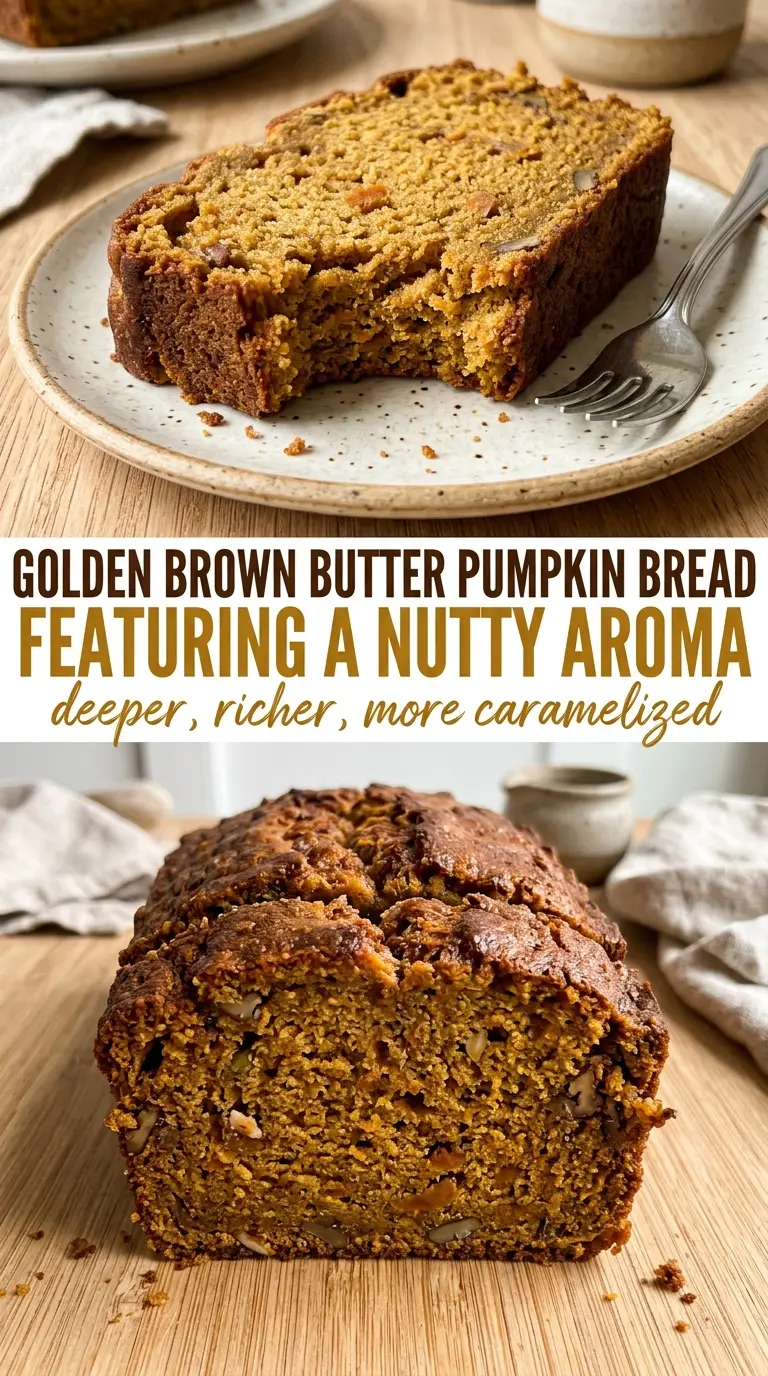
Brown butter gives pumpkin bread a deeper, toastier flavor that plain melted butter just can’t match. The loaf bakes up tender and golden, with a moist crumb and a gently caramelized edge that slices cleanly once it cools. That nutty aroma coming from the oven tells you exactly why this version earns repeat status.
The trick is letting the butter go past melted and all the way to amber, with little brown specks at the bottom of the pan and a smell that turns rich and nutty. Cool it briefly before mixing it with the pumpkin and eggs so the batter stays smooth. Pumpkin puree brings moisture and body, while the pumpkin pie spice keeps the loaf warm without burying the butter flavor.
Below, you’ll find the small timing detail that keeps the butter from burning, plus a few ways to adjust the loaf if you want to make it dairy-free, sweeter, or easier to store for later.
The brown butter made the whole loaf taste toasted and rich, and the crumb stayed moist for days. I let it cool a little like you said and the batter came together perfectly without any egg bits.
Save this brown butter pumpkin bread for the loaf with the nutty crust and deep caramel flavor you want all season long.
The Reason Brown Butter Keeps This Pumpkin Bread from Tasting Flat
Most pumpkin bread leans soft and sweet, but a loaf built on browned butter has a deeper backbone. The butter doesn’t just add richness here; it brings toasted, nutty notes that keep each slice from tasting one-dimensional. That extra step changes the whole loaf.
The other thing that matters is restraint. Pumpkin puree carries a lot of moisture, so the batter should be mixed only until the flour disappears. Overmixing tightens the crumb and makes the loaf bake up dense instead of tender.
If your loaf usually sinks in the middle, the problem is often too much heat too fast or batter that’s been beaten into submission. This version stays balanced when the brown butter is cooled just enough and the dry ingredients are folded in gently.
What Each Ingredient Is Actually Doing in This Loaf
- Butter — This is the whole point of the recipe. Browning it cooks off the water and leaves behind toasted milk solids, which give the bread its nutty, caramel-like depth. Don’t swap in oil if you want the same flavor.
- Pumpkin puree — Use pure pumpkin, not pumpkin pie filling. The puree adds moisture and structure without extra sweetness or spices, which keeps the loaf in control.
- Eggs — They bind the batter and help it rise into a sliceable loaf. Room-temperature eggs mix more easily with the slightly warm butter, which keeps the batter smooth.
- Flour — All-purpose flour is the right choice here because it keeps the crumb soft without making it cakey. Too much flour, packed into the cup, will dry the loaf out, so spoon and level it.
- Pumpkin pie spice — This carries the warm spice note, but it shouldn’t overpower the brown butter. If yours tastes flat, check whether the spice blend is old; stale spices lose a lot of punch.
- Baking soda — It gives the loaf lift and helps the batter brown. If it’s past its prime, the bread can bake up heavy, so use fresh baking soda here.
How to Brown the Butter and Keep the Batter Smooth
Cooking the butter past melted
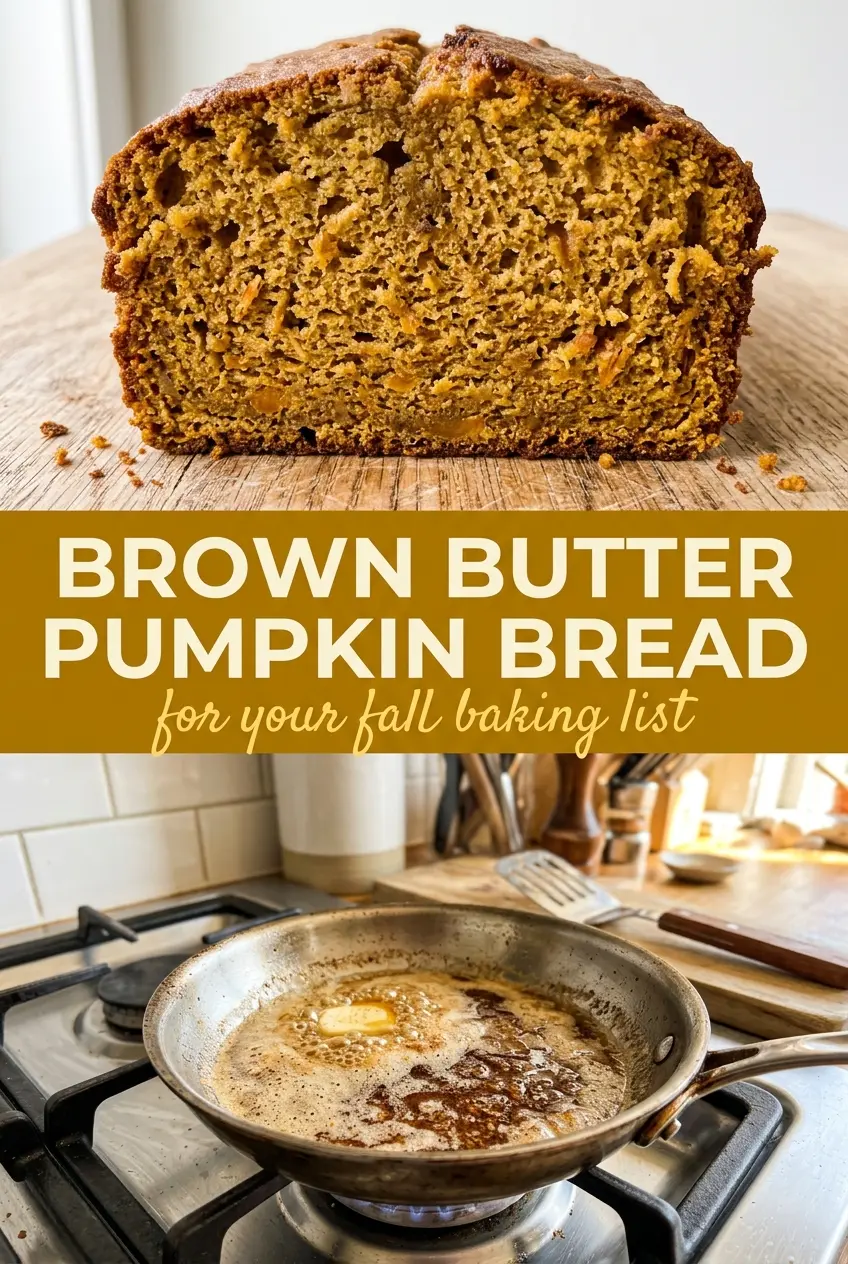
Set the butter over medium heat and watch it closely once it foams. The milk solids will fall to the bottom, turn golden, then deep amber, and the smell shifts from buttery to nutty. Pull it off the heat as soon as you see that color; if it goes too far, the flavor turns bitter in a hurry.
Mixing the wet ingredients first
Whisk the pumpkin puree and eggs together before adding the cooled brown butter. That gives you a smooth base and keeps hot butter from cooking the eggs in streaks. If the butter is too warm, the mixture can look broken or slightly scrambled, so let it cool until it feels warm, not hot.
Bringing the batter together without overworking it
Add the flour, sugar, pumpkin pie spice, and baking soda, then fold just until no dry patches remain. The batter will be thick and fragrant. Stop there. Stirring past that point builds gluten and gives you a tight loaf instead of a tender one.
Baking until the center sets
Scrape the batter into a greased loaf pan and bake until a toothpick comes out clean from the center, usually with a few moist crumbs but no raw batter. The top should be deeply golden and split naturally down the middle. If the top is browning too fast before the middle is done, lay a loose piece of foil over it for the last 15 minutes.
How to Adapt This for Different Needs and Leftovers
Dairy-Free Version
Use a plant-based butter that browns well, not a spread with a lot of water. You won’t get quite the same toasted milk flavor, but you’ll still get a richer loaf than plain oil can give you.
Less Sweet Loaf
Cut the sugar back a little if you want the pumpkin and butter to lead the way. The loaf will bake a touch less tender and a little more breakfast-like, but the structure holds.
Pumpkin Muffins Instead of a Loaf
Divide the batter among muffin cups and shorten the bake time until the centers spring back when pressed. You lose the long, even slice of a loaf, but you gain more browned edges and faster cooling.
Storage and Reheating
- Refrigerator: Keeps well for 4 to 5 days in an airtight container. The crumb firms up a little in the fridge, but the flavor deepens.
- Freezer: Freezes well. Wrap slices individually, then place them in a freezer bag for up to 3 months so you can thaw only what you need.
- Reheating: Warm slices in a toaster oven or microwave just until the butter softens and the crumb turns plush again. Overheating dries the loaf out fast, especially once it has been refrigerated.
Questions I Get Asked About This Recipe
Brown Butter Pumpkin Bread
Ingredients
Equipment
Method
- Melt the butter in a skillet over medium heat, swirling occasionally, until it turns amber and smells nutty, about 5-7 minutes, with visible browned milk solids. Remove from heat and let cool slightly.
- Preheat the oven to 350°F and grease a loaf pan, coating the corners and edges so the loaf releases cleanly.
- Whisk together the pumpkin puree, eggs, and cooled brown butter until smooth, with no streaks of butter visible.
- Fold in the flour, granulated sugar, pumpkin pie spice, and baking soda until just combined, stopping as soon as no dry flour remains.
- Pour the batter into the prepared loaf pan, tapping the pan once to settle the batter evenly.
- Bake for 55-65 minutes at 350°F, until a toothpick inserted in the center comes out clean and the top looks golden-brown.