
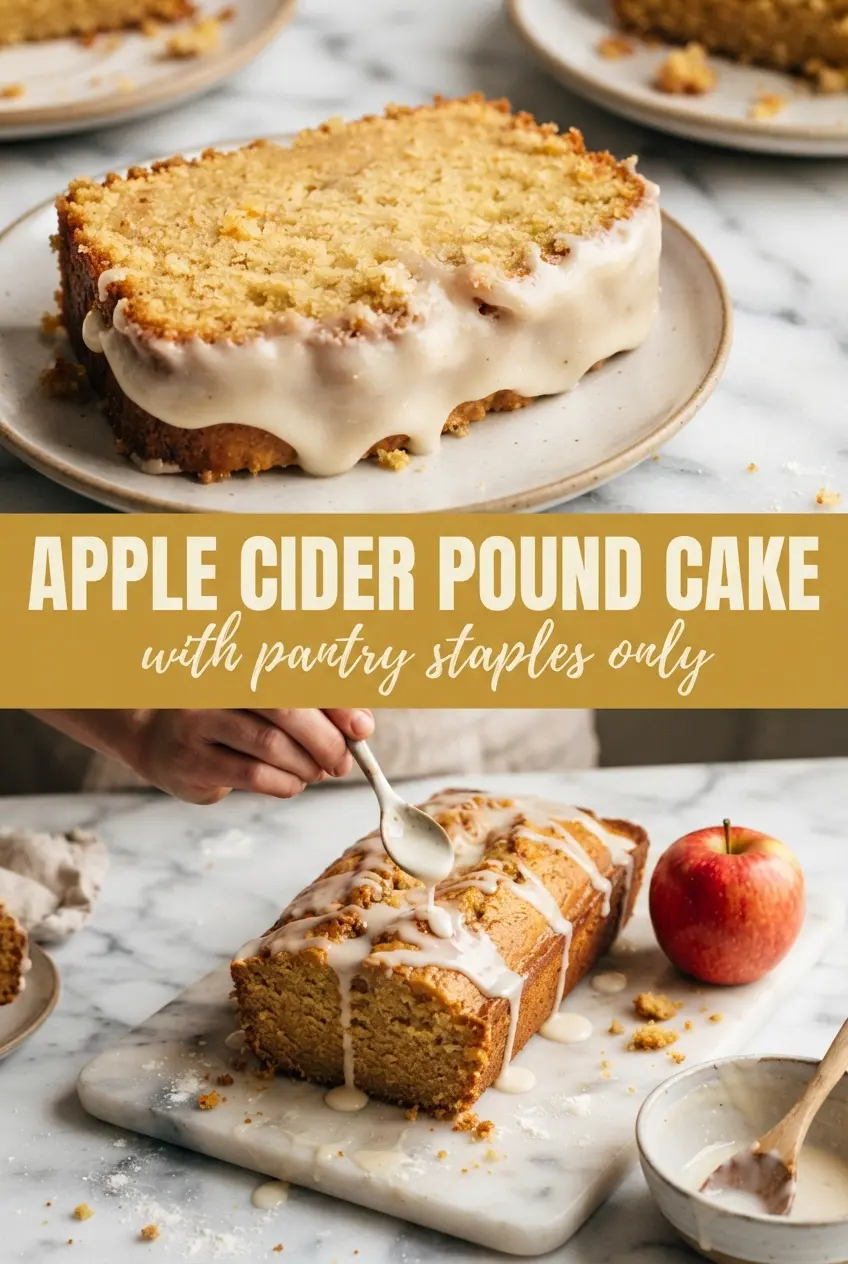
Apple cider pound cake bakes up with a tight, tender crumb and a buttery edge that slices cleanly without feeling heavy. The apple flavor is subtle but unmistakable, and the vanilla glaze settles into the top with a soft sheen that makes each slice look as good as it tastes. It’s the kind of cake that disappears one piece at a time, usually before it has fully cooled.
The trick is reducing the cider before it ever touches the batter. That step concentrates the apple flavor and keeps the cake from tasting watered down, which is the mistake that flattens a lot of cider cakes. The other key is the sour cream. It keeps the crumb plush and fine without making the batter loose, so you still get the dense pound cake texture you want.
Below, I’ll walk through the two places where this cake can go sideways — overmixing the batter and under-reducing the cider — plus a few smart swaps if you want to bake it in a different pan or skip the glaze.
The cider flavor came through beautifully, and the crumb stayed so tender even after a day on the counter. The glaze set up perfectly and didn’t soak into the cake.
Save this apple cider pound cake for the days when you want a buttery loaf cake with real cider flavor and a glossy vanilla glaze.
The Reason the Cider Has to Be Reduced First
Apple cider straight from the bottle sounds convenient, but it brings too much water to the batter. That extra liquid dilutes the flavor and loosens the crumb, which is how pound cakes lose the dense, velvety texture that makes them worth baking in the first place. Reducing the cider concentrates the apple note and gives you a deeper, rounder flavor without adding spice or extracts to carry the load.
There’s another reason this step matters: reduced cider behaves more like a flavoring than a liquid. It blends into the batter without making it soupy, so the cake can rise into a fine crumb instead of baking up gummy in the center. If your cider still tastes thin after reducing, keep going. It should taste almost like apple syrup before it cools.
What Each Ingredient Is Actually Doing in This Cake

- All-purpose flour — This gives the cake its structure without making it tough. Cake flour will make the crumb a little finer and softer, but all-purpose holds up better to the cider and sour cream here.
- Butter — Use real unsalted butter and let it soften fully. It’s the backbone of the flavor and the reason the cake eats like pound cake instead of quick bread.
- Reduced apple cider — This is the whole point of the recipe. Reduce it until you have 1 cup, then cool it before mixing it in, or it can melt the butter and throw off the batter.
- Sour cream — This keeps the crumb tender and moist without making the cake feel wet. Plain Greek yogurt works in a pinch, but sour cream gives the cleanest, richest texture.
- Vanilla extract — It rounds out the cider and keeps the cake from tasting one-note. A good vanilla matters more in the glaze, where the flavor is front and center.
- Powdered sugar, milk, and vanilla for the glaze — The glaze should be thick enough to coat the back of a spoon and still drip in a slow ribbon. If it’s too thin, it will disappear into the cake; if it’s too thick, warm it with a few drops of milk at a time.
Building the Batter Without Losing the Crumb
Creaming the Butter Until It Looks Pale
Beat the butter and sugar for the full four minutes until the mixture turns lighter in color and looks fluffy instead of grainy. That step traps air, and those tiny air pockets are what keep a pound cake from baking up like a brick. If you rush it, the cake will still taste fine, but the texture will be tighter and heavier than it should be.
Adding the Eggs One at a Time
Work each egg in fully before adding the next one. The batter should look smooth and glossy before you move on. If the mixture looks curdled, it usually means the eggs were too cold or the butter was too firm, but it usually comes back together once the flour goes in.
Alternating the Dry Ingredients and the Liquids
Add the flour mixture in batches, alternating with the reduced cider and sour cream. This keeps the batter from turning dense on one side and loose on the other. Stop mixing the moment the last streak of flour disappears, because overmixing at this point will build too much gluten and make the cake chewy instead of tender.
Baking Until the Center Springs Back
Bake at 325°F until the top is deep golden and a tester comes out with a few moist crumbs, not wet batter. The center should spring back lightly when pressed, and a bundt pan may need a few extra minutes over a loaf pan. If the top browns before the middle is done, tent it loosely with foil and keep baking until the crumb is set through the center.
How to Adjust the Cake for Different Pans and Preferences
Bake It in a Bundt Pan for a More Elegant Slice
A bundt pan gives you a prettier presentation and a slightly firmer edge where the batter meets the pan. Grease every ridge well, or the cake can stick in the details. The bake time may run a little longer than a loaf pan, so start checking late in the range.
Skip the Glaze for a Less Sweet Finish
The cake is rich enough to stand on its own if you want a simpler slice. Without the glaze, the cider flavor comes through a little more clearly and the top stays matte instead of glossy. I still like to dust it with a little powdered sugar if I’m serving it plain.
Make It Dairy-Free Without Changing the Method
Use a high-quality plant-based butter and a thick dairy-free yogurt in place of the sour cream. The texture will be slightly less rich, but the cake still bakes up with good body if the yogurt is thick enough to mimic sour cream. For the glaze, use your preferred non-dairy milk one teaspoon at a time so it doesn’t turn runny.
Use Fresh Cider, Not Spiced Apple Juice
Fresh apple cider gives a clean apple taste that tastes baked in, not layered on. Spiced juice usually brings cinnamon or clove into the cake whether you want it or not, and it can make the flavor muddy. If cider isn’t available, unsweetened apple juice works, but reduce it down carefully because it can be sweeter than cider.
Storage and Reheating
- Refrigerator: Store covered for up to 4 days. The crumb stays tender, though the glaze will soften slightly by day two.
- Freezer: This cake freezes well without the glaze. Wrap slices or the whole cooled cake tightly in plastic and foil, then freeze for up to 2 months. Thaw at room temperature before glazing.
- Reheating: Warm slices in the microwave for 10 to 15 seconds or in a low oven until just heated through. Overheating dries out the butter-rich crumb, so stop as soon as the cake loses its chill.
Answers to the Questions Worth Asking
Apple Cider Pound Cake
Ingredients
Equipment
Method
- Reduce the apple cider to 1 cup and cool completely.
- Heat the oven to 325°F and grease a loaf or bundt pan.
- Cream the softened butter and granulated sugar until light and fluffy, about 4 minutes, then beat in the eggs and vanilla until smooth.
- Mix in the flour, baking powder, and salt alternating with the reduced cider and sour cream, mixing just until no dry streaks remain.
- Bake until the center springs back and a toothpick comes out clean, 60 to 70 minutes, then cool the cake.
- Whisk the powdered sugar, milk, and vanilla extract until smooth, then drizzle the glaze over the cooled cake.