
Apple Cider Donut Cake brings that bakery-style spice-cake comfort without the fryer, and the texture is what keeps people coming back. The crumb stays soft and moist, the cinnamon reads warm instead of aggressive, and the glossy cider glaze sinks just enough into the top to give every slice that donut-shop finish. It tastes like something you meant to serve with coffee, not something you threw together on a Tuesday.
The trick here is reducing the cider before it ever hits the batter. That step concentrates the apple flavor and keeps the cake from tasting flat, which is the main problem with a lot of cider cakes. Creaming the butter and sugar properly matters too, because that aeration gives the cake a lighter crumb instead of a dense, heavy one.
Below, I’ll walk through the one step people rush most often, why the reduced cider belongs in both the cake and the glaze, and a few smart swaps if you need to work with what’s already in your kitchen.
The cider reduction made all the difference, and the glaze set up perfectly without running off the cake. Mine baked in 38 minutes and came out with that soft, donut-like crumb everyone kept sneaking slices of.
Save this Apple Cider Donut Cake for when you want a soft, spiced bundt with that cider glaze dripping over the top.
The Cider Reduction Is What Gives This Cake Its Donut Shop Flavor
Most apple cider cakes taste like cinnamon cake with a whisper of apple. That happens when the cider goes straight into the batter at full strength and gets diluted by flour, sugar, and milk. Reducing it first changes the whole cake. You get a deeper apple flavor, less excess liquid, and a glaze that tastes like cider instead of powdered sugar with a splash of fruit.
The other place people lose texture is in the mixing. Once the flour goes in, the batter only needs to come together. If you beat it hard at that point, the crumb turns tight and bready instead of tender. The batter should look thick and smooth, not whipped, and the oven does the rest.
- Reduced apple cider — This is the flavor engine. Unreduced cider brings too much water and not enough concentration, so simmering it down is non-negotiable if you want the cake to taste like apples instead of sweet spice.
- Butter — Softened butter creams with the sugar to build a lighter crumb. If it’s too cold, it won’t trap enough air; if it’s melted, the cake can bake up heavy.
- Powdered sugar — It makes the glaze smooth and quick-setting. There’s no good substitute here if you want that thin, glossy finish that clings to the top of the cake.
- Milk — This loosens the batter just enough for a soft slice. Whole milk is best, but any milk you already have will work; the cake depends far more on the cider reduction than on the milk choice.
Getting the Batter Light Before the Oven Does the Rest
Reduce the cider first and cool it completely
Pour the cider into a small saucepan and simmer until you have 1/2 cup left, then measure out 2 tablespoons for the glaze and let the rest cool. If you add warm cider to the batter, it can soften the butter too much and throw off the texture. The reduction should smell concentrated and a little syrupy, not burnt or sharp.
Cream the butter and sugar until it looks pale
Beat the softened butter and sugar until the mixture lightens in color and looks fluffy around the edges of the bowl. That step builds the structure that keeps the cake from turning compact. Add the eggs one at a time so the batter stays smooth instead of looking curdled.
Mix just until the flour disappears
Add the flour, baking powder, cinnamon, milk, and cooled reduced cider, then mix only until no dry streaks remain. The batter will be thick, and that’s correct. Overmixing here is the fastest way to lose the soft, donut-like crumb that makes this cake worth baking.
Glaze while the cake is cool enough to hold it
Whisk the reserved cider into the powdered sugar until you have a thick, pourable glaze, then drizzle it over the cooled cake. If the cake is warm, the glaze will run off instead of setting on top. If it seems too thick, add cider a teaspoon at a time; if it looks thin, it will never sit on the cake properly.
How to Adjust the Cake Without Losing the Donut Cake Character
Dairy-Free Version
Swap the butter for a plant-based baking stick and use an unsweetened milk alternative. The cake will still be tender, but the flavor will be a little less rich, so the cider reduction matters even more.
Gluten-Free Swap
Use a 1:1 gluten-free baking flour with xanthan gum already included. The cake will be slightly more delicate, so let it cool fully before turning it out of the pan or it can crack.
Turn It Into Cupcakes
Divide the batter into lined muffin cups and bake until the centers spring back and a tester comes out clean, usually much faster than the bundt. You’ll get more glaze on each portion and a little more browned edge, which makes them feel closer to actual cider donuts.
Storage and Reheating
- Refrigerator: Store covered for up to 4 days. The crumb stays moist, though the glaze will soak in a bit more by day two.
- Freezer: Freeze slices tightly wrapped for up to 2 months. Thaw at room temperature; I’d glaze after thawing if you want the cleanest look.
- Reheating: Warm individual slices in the microwave for 10 to 15 seconds. Too much heat makes the glaze melt and the cake go rubbery, so keep it brief.
Answers to the Questions Worth Asking
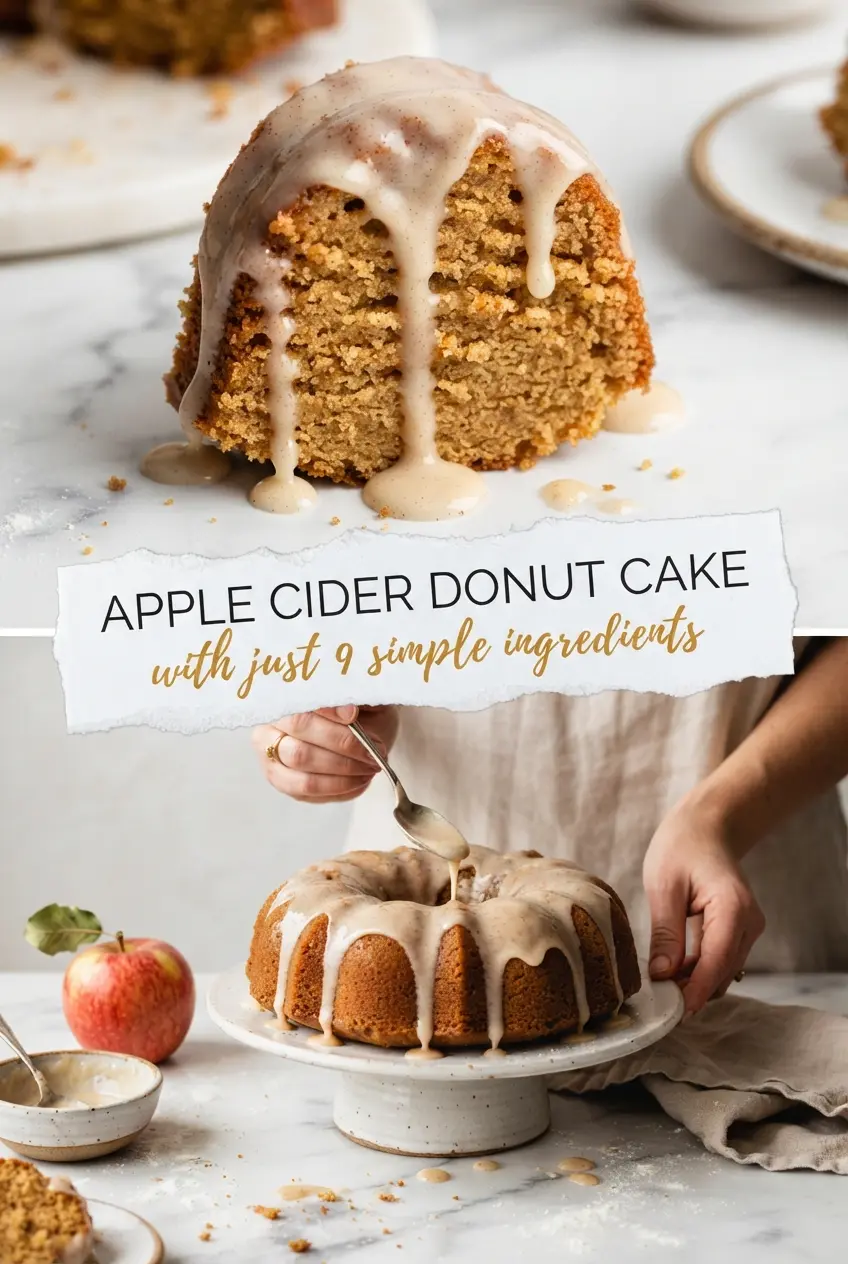
Apple Cider Donut Cake
Ingredients
Equipment
Method
- Simmer the apple cider until reduced to 1/2 cup, then cool to room temperature. Reserve 2 tbsp of the reduced cider for the glaze; you should see the cider look thicker and darker.
- Heat the oven to 350°F and grease a bundt pan or a 9-inch pan. The pan should be well coated so the cake releases cleanly.
- Cream the softened unsalted butter with the granulated sugar until light and fluffy. The mixture should look smoother and slightly paler.
- Beat in the large eggs one at a time. Stop and scrape the sides so everything is evenly combined.
- Mix in the all-purpose flour, baking powder, cinnamon, milk, and the reduced cider. Fold just until no dry streaks remain, and the batter should be smooth and thick.
- Bake for 35 to 40 minutes at 350°F, until the center springs back and a tester comes out clean. The top should be lightly browned and set.
- Cool the cake in the pan first, then cool further until warm to the touch. The cake should feel firm enough to glaze without soaking through.
- Whisk the powdered sugar with the reserved 2 tbsp of reduced cider until glossy and pourable. The glaze should ribbon off the whisk in a thin stream.
- Drizzle the glaze over the cooled cake. The glaze should sit on top with a shiny finish.