
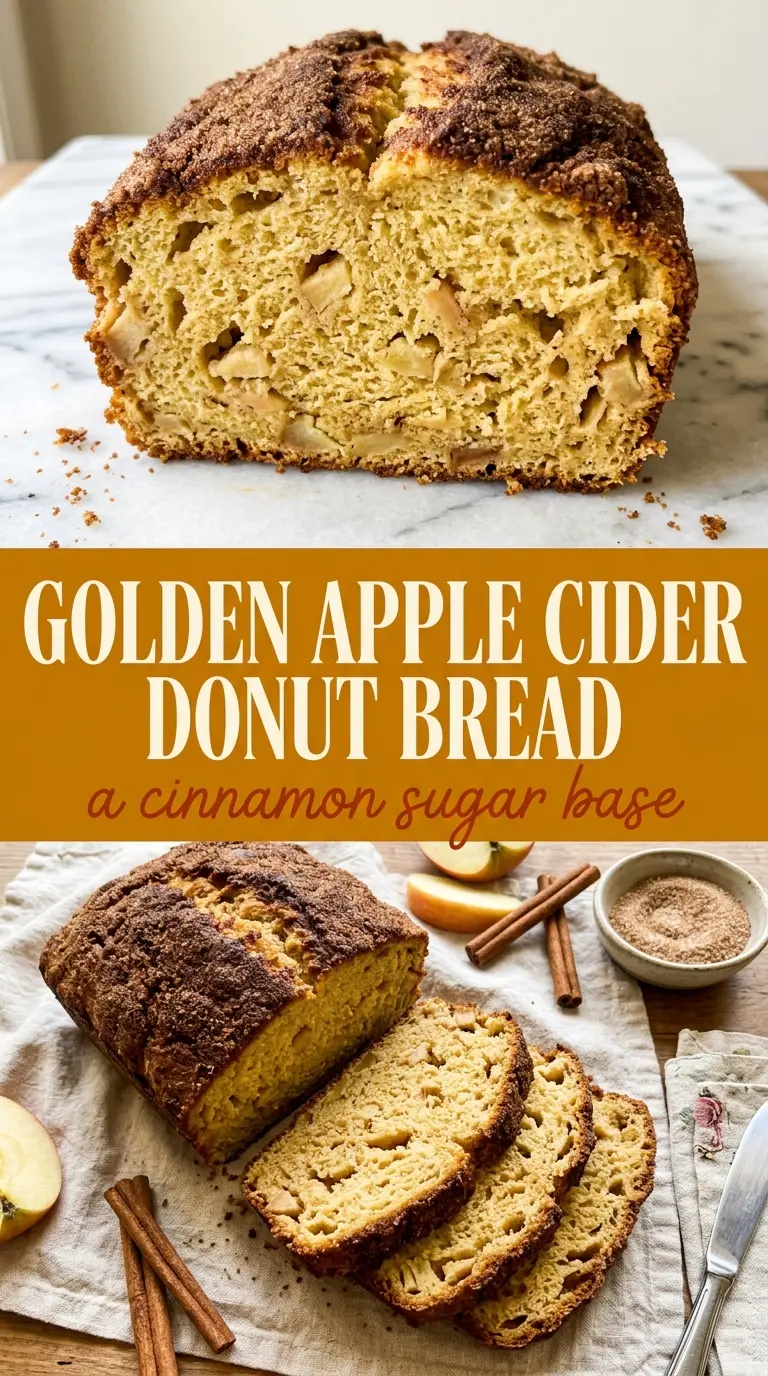
Apple cider donut bread bakes up with a tender crumb, a deep apple-cider flavor, and that crackly sugar top that makes each slice taste like it came straight from a county fair stand. The cider gets reduced first, which is the trick that keeps the loaf from tasting thin or one-note. You end up with a bread that smells like cinnamon and nutmeg when it comes out of the oven and stays moist enough to slice cleanly the next day.
The batter is built with sour cream for a soft, plush texture and a little brown sugar for a rounder, almost caramel note under the spice. That reduced cider matters more than most people expect. Without it, the apple flavor gets lost once the flour and butter go in. The topping is brushed on while the loaf is warm so it grabs the surface instead of sliding off, which gives you that donut-style finish instead of a plain sweet loaf.
The cider flavor came through beautifully, and the cinnamon sugar top turned crackly as it cooled. I sliced it while it was still warm and the crumb stayed soft instead of gummy.
Save this apple cider donut bread for the loaf that bakes up moist, spiced, and finished with that crackly cinnamon-sugar top.
The Reason the Apple Flavor Needs to Be Concentrated First
Apple cider is one of those ingredients that sounds bold until it hits a full loaf of flour, sugar, butter, and spice. Then it can fade fast. Reducing it before it goes into the batter concentrates the flavor and removes extra water, which keeps the crumb tender instead of wet and dense. That one step is what separates a loaf that tastes like spice bread with a hint of apple from one that actually tastes like cider.
The other place people lose flavor is in the spice balance. Cinnamon carries the loaf, but nutmeg gives it that warm donut-shop depth. If you overdo the nutmeg, it turns sharp and dominant, so keep it in the background where it belongs. The sugar topping also matters because it adds texture and a little crunch, which is part of why this bread feels like a cider donut instead of just a sweet quick bread.
What Each Ingredient Is Actually Doing in This Loaf
- Apple cider — Reducing it is nonnegotiable here. Fresh cider gives the best apple flavor, but the key is evaporation, not brand. If you swap in apple juice, the loaf will taste sweeter and flatter, so reduce it the same way and expect less depth.
- Sour cream — This is what keeps the crumb plush and moist without making the loaf heavy. Plain full-fat Greek yogurt works if that’s what you have, but the loaf will be a little tighter and tangier.
- Butter and sugars — Melted butter gives an easy, tender crumb, while the mix of granulated and brown sugar keeps the flavor balanced. Brown sugar brings a hint of molasses that plays nicely with the spice and helps the loaf stay soft for days.
- Cinnamon and nutmeg — These are the donut note. Cinnamon does the heavy lifting, and nutmeg adds warmth in the background. Don’t add extra nutmeg unless you want it to start tasting perfumey.
- Apple pie spice topping — This finishes the loaf with the flavor of a cider donut coating. If you don’t have it, use cinnamon with a pinch of nutmeg and allspice. The sugar needs the butter on the warm loaf so it clings and sets into that crackly crust.
Building the Loaf Without Overmixing the Batter
Reducing the Cider
Pour the cider into a small saucepan and let it simmer until it drops to about half a cup. It should look a little syrupy and smell stronger, not just warm. If you rush this and stop too soon, the loaf loses its apple identity. Let it cool before it goes into the batter so it doesn’t start melting the butter back into the eggs.
Mixing the Wet Ingredients
Whisk the melted butter, sugars, and eggs until the mixture looks glossy and thickened slightly. Stir in the vanilla, sour cream, and cooled cider next. If the cider is still hot, the batter can look broken or greasy, so give it a few minutes to cool properly.
Bringing the Batter Together
Add the dry ingredients and fold just until the flour disappears. A few streaks are fine. Overmixing builds gluten and turns a tender loaf chewy, which is the opposite of what you want here. The batter should look thick and spoonable, not stiff or stretchy.
Baking and Finishing the Top
Pour the batter into a greased 9×5-inch loaf pan and bake until a toothpick comes out clean with just a few moist crumbs. If the top browns too quickly, tent it loosely with foil for the last 10 minutes. Brush the warm loaf with melted butter and sprinkle on the sugar mixture while the surface is still tacky so it sets into a crisp coating instead of falling off.
How to Adapt This for Different Diets and Situations
Gluten-Free Version
Use a 1:1 gluten-free baking blend that includes xanthan gum. The loaf will be a touch more fragile when warm, but the cider and sour cream still keep it moist. Let it cool fully before slicing or the center can look gummy.
Dairy-Free Swap
Replace the butter with a neutral plant-based butter and use a thick dairy-free yogurt or unsweetened coconut yogurt instead of sour cream. The loaf will still stay tender, though the topping will taste a little less rich unless you use a good butter substitute.
Extra Donut-Like Finish
For a stronger cider donut effect, brush the loaf with butter twice: once right out of the pan and again after 5 minutes. That builds a thicker sugar crust and gives you more of the sandy, crackly texture you get on a fresh fried donut.
Storage and Reheating
- Refrigerator: Store covered for up to 4 days. The sugar top softens a bit, but the loaf stays moist.
- Freezer: Wrap slices individually and freeze for up to 2 months. Thaw at room temperature so the crumb doesn’t dry out from the edges first.
- Reheating: Warm slices in a 300F oven or toast lightly. Microwaving too long makes the crumb rubbery and melts the sugar coating into a sticky patch.
Answers to the Questions Worth Asking

Apple Cider Donut Bread
Ingredients
Equipment
Method
- Heat the apple cider in a small saucepan to a simmer, stirring frequently, until reduced to 1/2 cup. Transfer to a small bowl and let cool to room temperature.
- Preheat the oven to 350F and grease a 9x5-inch loaf pan. Set the pan aside while you mix the batter.
- Whisk together the all-purpose flour, baking powder, baking soda, salt, cinnamon, and nutmeg in a bowl. Whisk until evenly combined with no visible clumps of spice.
- Whisk the melted unsalted butter, granulated sugar, brown sugar, and large eggs in a large bowl until smooth. Stir in the vanilla extract, sour cream, and cooled reduced cider until the batter looks glossy.
- Gently fold the dry ingredients into the wet mixture just until combined. Stop as soon as you don’t see dry flour to keep the loaf tender.
- Pour the batter into the prepared pan and bake at 350F for 45-50 minutes, until a toothpick inserted in the center comes out clean. The loaf should be golden and spring back slightly when pressed.
- Brush the warm loaf with melted butter, then sprinkle with the cinnamon-sugar topping. Let it sit briefly so the topping sets into a crackly layer before slicing.