
Deep, dark beef stew with tender chunks of meat, soft potatoes, and broth that tastes like it simmered all afternoon is exactly the kind of one-pot dinner that earns repeat requests. This version leans into a rich red-wine base, so the broth comes out plum-colored and full-bodied instead of flat or watery. The little mozzarella eyeballs on top are playful, but the stew underneath is the part that keeps people coming back for another bowl.
The key is building flavor in layers. Browning the beef first leaves behind the browned bits that give the broth its depth, and the tomato paste needs that minute in the hot pot so it tastes roasted instead of raw. The red wine does more than add color; it loosens everything stuck to the bottom and gives the stew a deeper edge that plain broth can’t match.
Below you’ll find the part that matters most: how to keep the beef tender instead of stringy, how to know when the broth has reduced enough, and a few smart swaps if you want to change the vegetables or leave off the spooky garnish.
The beef turned out fork-tender and the broth had this deep, rich color from the wine that made it feel special without any extra work. I added the mozzarella eyeballs at the end and my kids lost their minds.
Save this spooky beef stew for a Halloween dinner with rich wine broth and fun eyeball garnishes.
The Reason This Stew Tastes Bigger Than the Ingredient List
A good beef stew doesn’t taste slow because it cooked a long time. It tastes slow because every layer had a job. Browning the beef gives you the base note, the onion and carrot soften into the broth instead of staying separate, and the wine lifts the browned bits off the bottom so none of that flavor stays stuck to the pot. If you skip the browning or rush the simmer, the broth can taste thin even when the ingredient list looks solid.
The other trap is heat. Tough cuts of beef don’t get tender from a hard boil; they tighten up and stay chewy. Gentle simmering is what breaks the meat down gradually, and the broth should move with a few lazy bubbles, not churn. That slower pace is what turns this into spoon-tender stew instead of meat in vegetable soup.
What Each Ingredient Is Actually Doing in This Dish
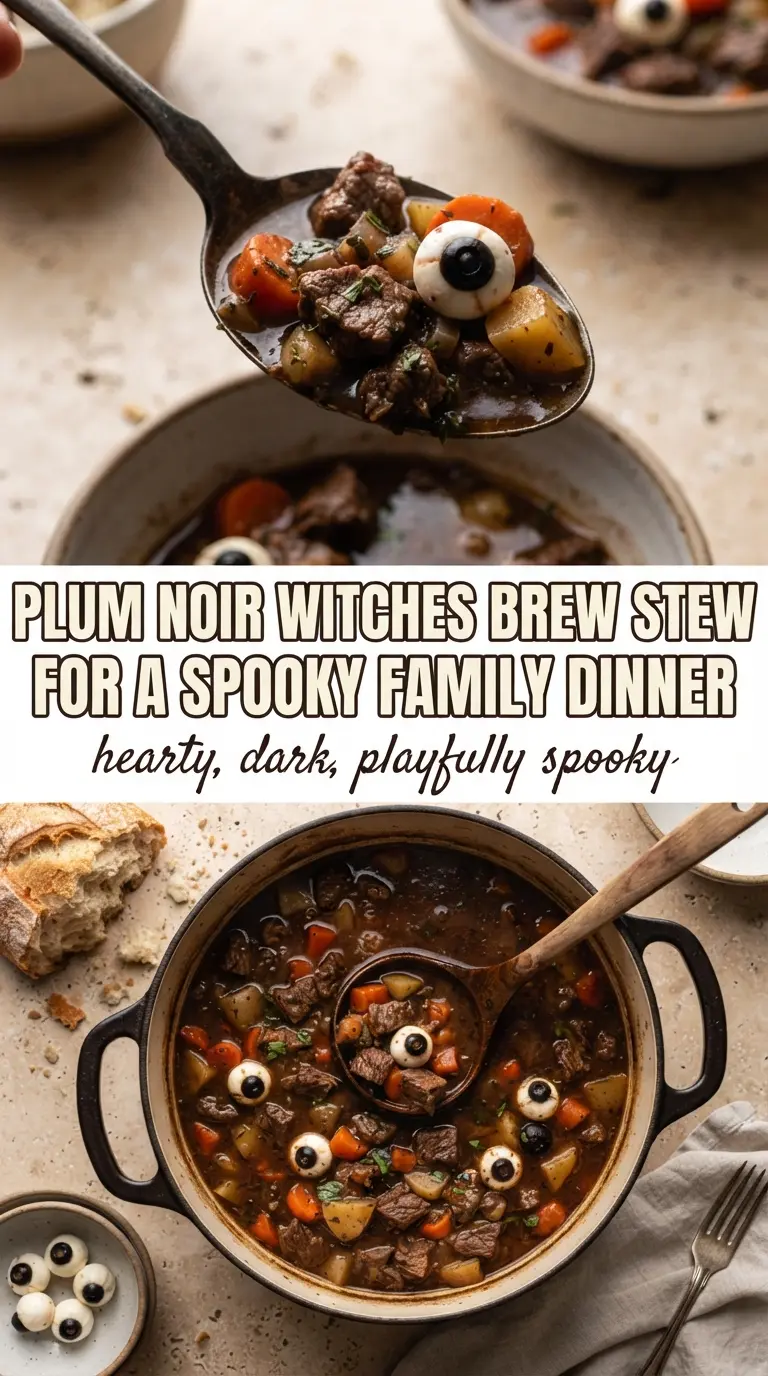
The beef stew meat is the backbone here. Chuck-style stew meat has enough connective tissue to turn silky after a long simmer, while lean cuts can dry out and taste bland. The red wine brings depth and helps deglaze the pot; use something dry and drinkable, not sweet. If you want to skip the wine, add another 1/2 cup broth plus 1 tablespoon red wine vinegar at the end for brightness, but you won’t get the same dark, rounded flavor.
Tomato paste is small but important. Cooking it for a minute in the hot pot deepens the flavor and gives the broth a more robust, almost roasted edge. Potatoes and carrots hold the stew together and give you something soft and starchy to eat with the beef, but cut them large enough that they don’t dissolve during the long simmer. The mozzarella eyeballs are just for the finish, so keep them cold until serving and add them at the table if you want them to keep their shape.
Building the Dark Broth Without Losing the Beef
Brown the Beef in Batches
Heat the olive oil until it shimmers, then add the beef in a single layer. If the pot looks crowded, brown it in batches; packed meat steams, and steamed meat won’t give you the deep brown crust you need. Let the pieces sit untouched long enough to release cleanly from the bottom before turning them. Those browned bits left behind are part of the broth, so don’t scrub the pot clean.
Soften the Vegetables in the Same Pot
Once the beef is out, add the onion, carrots, and garlic to the same pot. The vegetables will pick up the beef drippings and start building sweetness as they soften. If the garlic goes in too early or the heat is too high, it can turn bitter, so stir just until it smells fragrant and the onion turns translucent. You don’t need full color here; you want a soft base, not browned vegetables.
Deglaze, Then Simmer Low and Slow
Stir in the tomato paste and cook it for about a minute before pouring in the wine. That short step removes the raw edge and makes the broth taste richer. Scrape the bottom of the pot as the wine goes in, then add the broth, thyme, beef, and potatoes. Bring it up to a gentle simmer, then lower the heat so the surface barely moves; if it boils hard, the meat can seize up before it gets tender.
Stop When the Meat Gives Easily
After about 1 1/2 to 2 hours, check the beef with a fork. It should fall apart with light pressure, not fight back. The potatoes should be soft all the way through, and the broth should taste full, not sharp. If the liquid seems thin near the end, let it simmer uncovered for a few extra minutes so it reduces naturally instead of trying to thicken it too aggressively.
How to Adapt This for Different Tables and Diets
Skip the Wine Without Flattening the Broth
Use an extra 1/2 cup beef broth plus 1 tablespoon red wine vinegar or balsamic at the end. The stew won’t have the same deep wine note, but the vinegar keeps the flavor from tasting heavy. Add it gradually so the broth stays balanced.
Make It Gluten-Free Without Changing the Texture
This stew is naturally gluten-free as long as your broth is certified gluten-free. No flour is needed because the potatoes help body the broth a bit as they simmer. If you want a thicker finish, mash a few potato cubes against the side of the pot instead of adding a starch slurry.
Swap the Vegetables for What You Have
Parsnips, celery, or turnips all fit the same simmering window as the carrots and potatoes. Just keep the pieces similar in size so everything finishes together. Softer vegetables like peas should go in near the end or they’ll turn dull and overcooked.
Storage and Reheating
- Refrigerator: Keeps for 4 days in a sealed container. The broth gets even deeper by day two, and the potatoes soften a little more.
- Freezer: Freezes well for up to 3 months, though the potatoes can turn a little softer after thawing. For the best texture, cool it completely before freezing and leave a little room at the top of the container.
- Reheating: Warm it gently on the stove over low heat until the stew is hot all the way through. A hard boil can break down the potatoes and dry out the beef, so go slow and add a splash of broth if the stew has thickened in the fridge.
Answers to the Questions Worth Asking
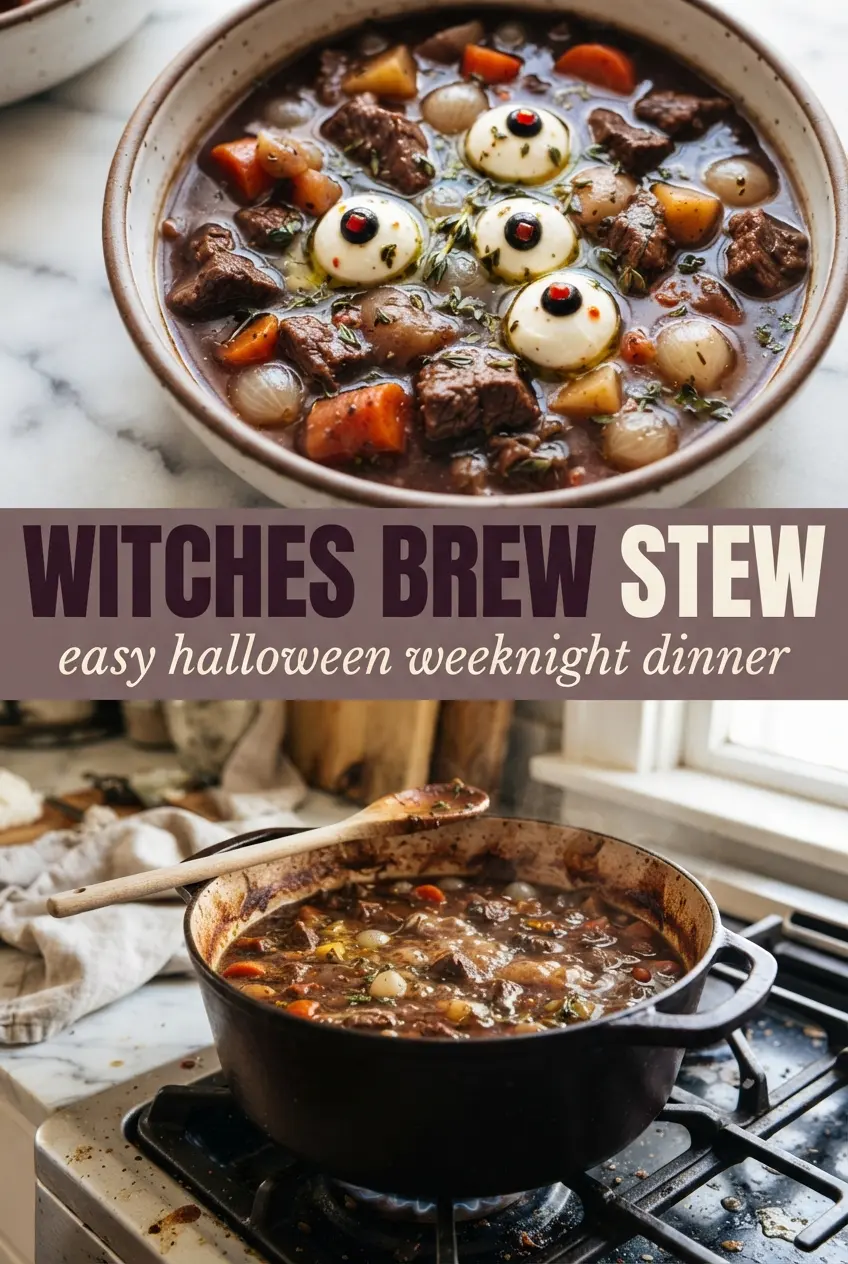
Witches Brew Stew
Ingredients
Equipment
Method
- Heat olive oil in a large Dutch oven over medium-high heat, then brown the beef stew meat until well browned, about 8-10 minutes. Transfer the browned beef to a plate or bowl and set aside.
- In the same Dutch oven, sauté the onion, carrots, and garlic until softened, about 5-7 minutes. Scrape up any browned bits as you stir.
- Stir in tomato paste and cook for exactly 1 minute. Keep stirring so it turns brick red and fragrant without burning.
- Pour in the red wine and scrape up browned bits from the bottom, then let it bubble for 1-2 minutes. Add beef broth and dried thyme, stirring to combine.
- Return the beef to the pot and add the cubed potatoes. Make sure the potatoes are submerged in the liquid.
- Bring the stew to a simmer, then reduce heat to maintain a gentle simmer. Simmer for 1.5-2 hours until the meat is fork-tender, stirring occasionally.
- Ladle the stew into bowls and garnish with the small mozzarella balls with olive centers. Serve immediately while hot.