
Roasted acorn squash turns silky and sweet in the oven, and that soft texture is exactly what makes this dish feel complete. The filling brings the contrast: chewy wild rice, tender kale, toasted pecans, and little bursts of cranberry that keep every bite moving instead of tasting heavy or soft all the way through. It lands right in that sweet spot where a side dish can hold its own as a main course.
What makes this version work is balance. The squash roasts cut-side down first, which helps it steam and caramelize at the same time instead of drying out. The filling is built in a skillet so the onion gets some browning before the kale goes in, and that little bit of color matters. If you pile everything together raw, the final dish tastes flat. Here, each part gets cooked just enough to bring out its best texture before it all goes back into the squash.
Below, I walk through the spots where people usually lose the texture on stuffed squash and how to keep the filling from turning mushy. There’s also a make-ahead note for holiday cooking, which is where this recipe really earns its keep.
The squash came out tender without collapsing, and the wild rice filling stayed chewy with just enough crunch from the pecans. I made it the night before Friendsgiving and reheated it just before dinner, and it held up beautifully.
Save this wild rice stuffed acorn squash for a holiday side that eats like a meal and still feels special enough for the center of the table.
The Part Where Most Stuffed Squash Gets Soft Instead of Structured
The biggest mistake with stuffed squash is treating the squash and the filling like they need the same amount of time in the oven. They don’t. If you roast the squash until it turns completely floppy, it can’t hold the filling without collapsing. You want it tender enough to pierce with a fork, but still sturdy enough to keep its shape when you pile in the rice mixture.
The other problem is moisture. Kale gives off a little water, onions release moisture, and wild rice can go from pleasantly chewy to wet if you overcook it before it goes into the squash. That’s why the filling gets cooked until the kale just wilts and the rice is warmed through, not until it tastes finished on its own. The last bake is there to marry everything together, not to cook it from scratch.
- The squash should roast cut-side down first so the flesh steams and softens without drying out.
- The filling should look loose in the pan, not soupy. If there’s liquid pooling at the bottom, keep cooking until it evaporates.
- Wild rice gives the best chew here. Regular white rice turns too soft and loses the contrast that makes the dish worth making.
- Toast the pecans. Untoasted nuts taste dull against the sweet squash and tart cranberries.
What Each Ingredient Is Actually Doing in This Dish
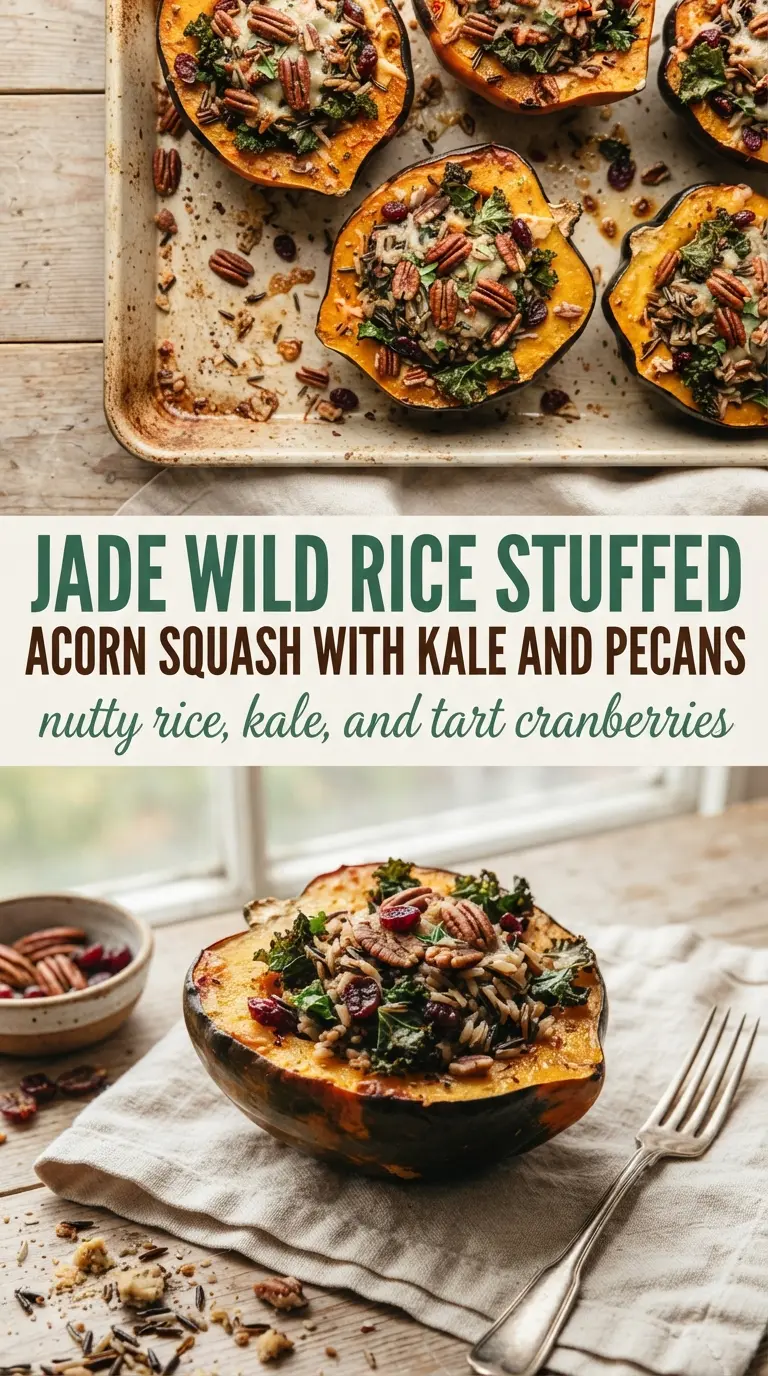
- Acorn squash — This is the base and the bowl. Choose squash that feel heavy for their size and have firm skin with no soft spots. If your squash are small, they’ll cook faster; start checking early so they don’t collapse.
- Wild rice — This is what keeps the filling from tasting mushy. True wild rice has a long, chewy texture that stands up well after baking. A wild rice blend works in a pinch, but it won’t have the same bite.
- Kale — Kale gives the filling body and a little bitterness to balance the sweet squash and cranberries. Chop it finely so it wilts evenly. If you use spinach instead, add it at the very end because it cooks down much faster.
- Pecans — These bring crunch and a toasted nuttiness that makes the filling feel finished. Walnuts work too, but pecans taste softer and a little sweeter here, which fits the squash better.
- Dried cranberries — These keep the filling from leaning too savory. They add small bursts of tart sweetness that wake up the whole dish. If yours are very dry, chop them once or twice so they distribute better.
- Yellow onion — Onion builds the savory backbone. Let it cook until translucent and lightly golden around the edges so the flavor has some depth before the rest of the filling goes in.
- Olive oil and thyme — Olive oil helps the squash roast and carries the thyme through the filling. Thyme fits here because it echoes the earthy flavor of the squash without pushing the dish toward something heavier or meatier.
Building the Filling So the Squash Stays Elegant
Roasting the Squash First
Cut the squash in half, scoop out the seeds, and brush the cut sides with oil before placing them face-down on the pan. That contact with the hot pan helps the flesh caramelize around the edges while the steam softens the center. If the squash is still hard in the thickest part after 30 minutes, give it another 5 to 10 minutes instead of forcing the filling in early.
Cooking the Onion and Kale
Cook the onion in the oil until it softens and starts to pick up a little color. That step gives the filling a sweeter, deeper base. Add the kale next and stir just until it wilts; if you cook it down until it’s fully collapsed and dark, it tends to disappear in the final dish.
Bringing the Filling Together
Stir in the cooked wild rice, pecans, cranberries, and thyme off the heat once the kale has softened. The filling should be warm, seasoned, and easy to mound, not wet or heavy. Taste it before stuffing the squash. Once it goes into the squash, the flavor mellows a little, so it should taste just a touch more seasoned than you think it needs.
The Final Bake
Spoon the filling into the roasted squash halves and return them to the oven until everything is heated through and the edges look a little set. This second bake is short on purpose. You’re warming and marrying the flavors, not trying to cook anything from raw. If the tops start to dry out, tent loosely with foil for the last few minutes.
How to Adapt This for Different Tables and Different Schedules
Make It Vegan and Keep the Same Hearty Texture
This recipe is already vegetarian and naturally vegan as written, so there’s nothing to replace. That’s part of why it works so well for a mixed table: the squash gives richness without dairy or meat, and the pecans add enough body that it still feels substantial.
Swap in Brown Rice or Quinoa When Wild Rice Isn’t Handy
Brown rice gives you a softer, more familiar chew, while quinoa makes the filling lighter and a little nuttier. Neither has the same firm bite as wild rice, so the dish will feel less rustic, but both still hold up well in the squash.
Use Dried Cherries Instead of Cranberries
Dried cherries are a great swap if that’s what you have. They taste a little rounder and less sharp than cranberries, so the filling comes off slightly sweeter and more mellow. If the cherries are large, chop them so they don’t clump together.
Storage and Reheating
- Refrigerator: Store leftovers in an airtight container for up to 4 days. The squash softens a bit as it sits, but the flavor stays good.
- Freezer: This freezes better than you might expect, though the squash texture gets softer after thawing. Freeze individual portions wrapped tightly, then thaw in the refrigerator before reheating.
- Reheating: Reheat covered in a 350°F oven until hot through. The biggest mistake is blasting it in the microwave, which can make the squash watery and the filling unevenly hot.
Answers to the Questions Worth Asking

Wild Rice Stuffed Acorn Squash
Ingredients
Equipment
Method
- Heat the oven to 400°F, place squash halves cut-side down on a sheet pan, and rub with 1 tbsp olive oil. Roast at 400°F for 30 minutes until the squash is tender around the edges (visual cue: cut sides look slightly softened and glossy).
- Warm the remaining 1 tbsp olive oil in a Dutch oven over medium heat and cook the diced onion for 5 minutes. Add the chopped kale and cook until wilted (visual cue: kale turns deep green and reduces in volume).
- Stir in the cooked wild rice, toasted pecans, dried cranberries, and dried thyme, then season with salt and black pepper to taste. Cook for 1–2 minutes to combine (visual cue: filling looks evenly studded with cranberries and glossy from oil).
- Flip the roasted squash so cut-side up, then spoon the filling into each half. Bake at 400°F for 15 minutes (visual cue: filling is hot throughout and the squash holds its shape when pressed lightly).