
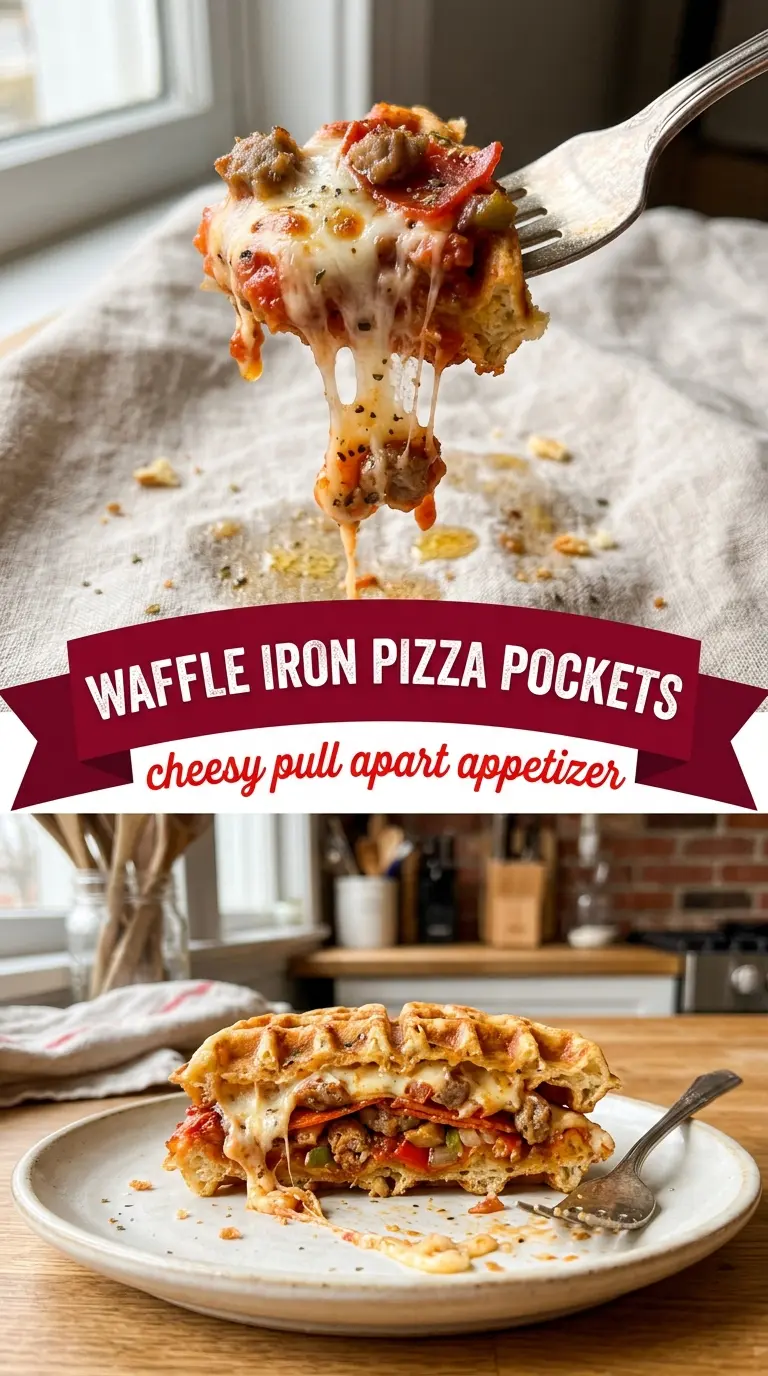
Crisscrossed golden grid marks turn these waffle iron pizza pockets into something far more fun than standard handheld pizza. The outside gets crisp and deeply browned in the waffle iron while the inside stays gooey with melted mozzarella, pepperoni, and just enough sauce to taste like pizza without turning the dough soggy. The result is a snack that eats like a hot pocket with real texture: crunchy edges, stretchy cheese, and a sealed pocket that’s sturdy enough to hold in your hand.
The trick is using pizza dough that’s rolled thin enough to cook through before the filling overheats, but not so thin that it tears when you fold it. A light hand with the sauce matters here too. Too much and the steam will force the seams open; just enough gives you that familiar pizza flavor without a leak. The waffle iron does the heavy lifting by pressing the dough tightly around the filling, which is why the pockets come out sealed and crisp instead of puffed and underdone.
Below you’ll find the little details that keep the filling inside, how to avoid a doughy center, and a few smart ways to change up the filling when pepperoni isn’t what you’re craving.
The edges came out crisp and the cheese stayed inside for once. I used a little less sauce than I thought I needed, and that was the right call — no leaking, just a perfect melty center.
Waffle iron pizza pockets with crisp grid marks and a melty pepperoni center
The Part That Keeps the Filling Inside Instead of Leaking Out
The biggest mistake with waffle iron pizza pockets is overfilling them. Pizza dough needs room to seal, and the waffle iron adds pressure from both sides as it cooks. If you stuff them like a calzone, the first thing to escape is the sauce, and once that happens the seam weakens fast. A modest filling gives you a cleaner seal and a pocket that stays crisp instead of soggy.
The other thing that matters is the order of assembly. Put the cheese closest to the dough and tuck the sauce in the middle. That gives the mozzarella a chance to melt and act like glue around the edges while the sauce stays contained in the center. Pressing the dough into the hot iron for about five minutes gives it enough time to brown fully, but if your iron runs hot, check early so the outside doesn’t overcook before the center is heated through.
What Each Ingredient Is Doing in This Pocket
- Pizza dough — This is your structure, and it needs enough elasticity to fold without tearing. Store-bought dough works well here, and it’s the easiest route if you want a crisp outside with minimal fuss. If the dough springs back while you roll it, let it rest for 10 minutes so the gluten relaxes.
- Pizza sauce — Use a thick sauce, not a thin, watery one. Thin sauce turns the inside steamy and can force the pocket open. If your sauce runs loose, simmer it for a few minutes first or use less than you think you need.
- Shredded mozzarella — Low-moisture mozzarella melts cleanly and gives you the stretchy cheese pull these pockets need. Fresh mozzarella can work, but it releases more liquid and softens the crust. Shred it yourself if you can; pre-shredded cheese is fine, though it doesn’t melt quite as smoothly.
- Pepperoni slices — Pepperoni brings fat and seasoning, and that fat helps the filling taste more like classic pizza. You can chop larger slices into smaller pieces so they distribute evenly. That keeps the pockets from bulging in one spot and sealing unevenly.
- Italian seasoning — This is the finish that makes the outside taste like pizza instead of just toasted dough. A light sprinkle after cooking keeps the herbs fragrant. If you add it before cooking, some of that flavor gets dulled by the heat.
Press, Seal, and Pull at the Right Moment
Rolling the Dough Thin Enough
Roll each round thin enough to fit the waffle iron without fighting it, but keep enough thickness that the dough doesn’t split when you fold it. You want a soft, even sheet with no thick rim around the edge. If the dough looks patchy or bouncy, let it rest for a few minutes before rolling again. That small pause keeps the finished pocket from shrinking away from the filling.
Building the Filling in the Center
Spoon the sauce into the middle of the dough, then add cheese and pepperoni on top. Leave a clean border around the edge so the seam has dough to grip. If the filling reaches the edge, the pocket will pop open once the iron starts pressing down. Less filling here is the safer, better-tasting choice.
Sealing Before the Waffle Iron Takes Over
Fold the dough over and press the edges together firmly before it goes into the iron. A pinched seam holds better than a loose fold, especially once the filling warms and starts to soften. If your dough feels slippery from sauce, wipe a little away from the seam before sealing. That tiny cleanup step prevents leaks better than extra flour ever will.
Cooking to a Deep Golden Finish
Preheat the waffle iron fully, then cook the pockets for about 5 minutes until the outside is deep golden and the grid marks are set. Don’t open the iron too early or the dough can tear before the crust has enough structure. When they’re ready, the pockets release more cleanly and the cheese inside will be molten, not dry. Sprinkle with Italian seasoning right after cooking while the surface is still hot enough to hold the herb aroma.
Three Ways to Make These Work for Different Cravings
Vegetarian Pizza Pocket
Skip the pepperoni and add finely chopped mushrooms, olives, or sautéed peppers. Vegetables add more moisture, so cook off any extra liquid first or the pocket will soften from the inside. The result is still crisp on the outside, but with a lighter, veggie-forward filling.
Dairy-Free Version
Use a dairy-free mozzarella that melts well and stick with a thicker sauce. Some plant-based cheeses soften more than they melt, so don’t pack in too much filling or the texture can turn gummy. The waffle iron still gives you a crisp crust, which helps balance that softer center.
Extra Crispy, Less Saucy Pocket
Cut the sauce back and add a little extra cheese plus pepperoni for a drier, firmer filling. This version is better if you’re serving them as a grab-and-go snack or packing them for later. You lose some saucy pizza feel, but the crust stays crisp longer.
Storage and Reheating
- Refrigerator: Store in an airtight container for up to 3 days. The crust softens a bit in the fridge, but it still holds up well.
- Freezer: These freeze well. Cool completely, wrap individually, and freeze for up to 2 months. Reheat from frozen for the best texture.
- Reheating: Use a toaster oven or air fryer at 350°F until hot and crisp again. The microwave will warm the center, but it turns the crust soft and chewy, which is the main thing you don’t want here.
Answers to the Questions Worth Asking
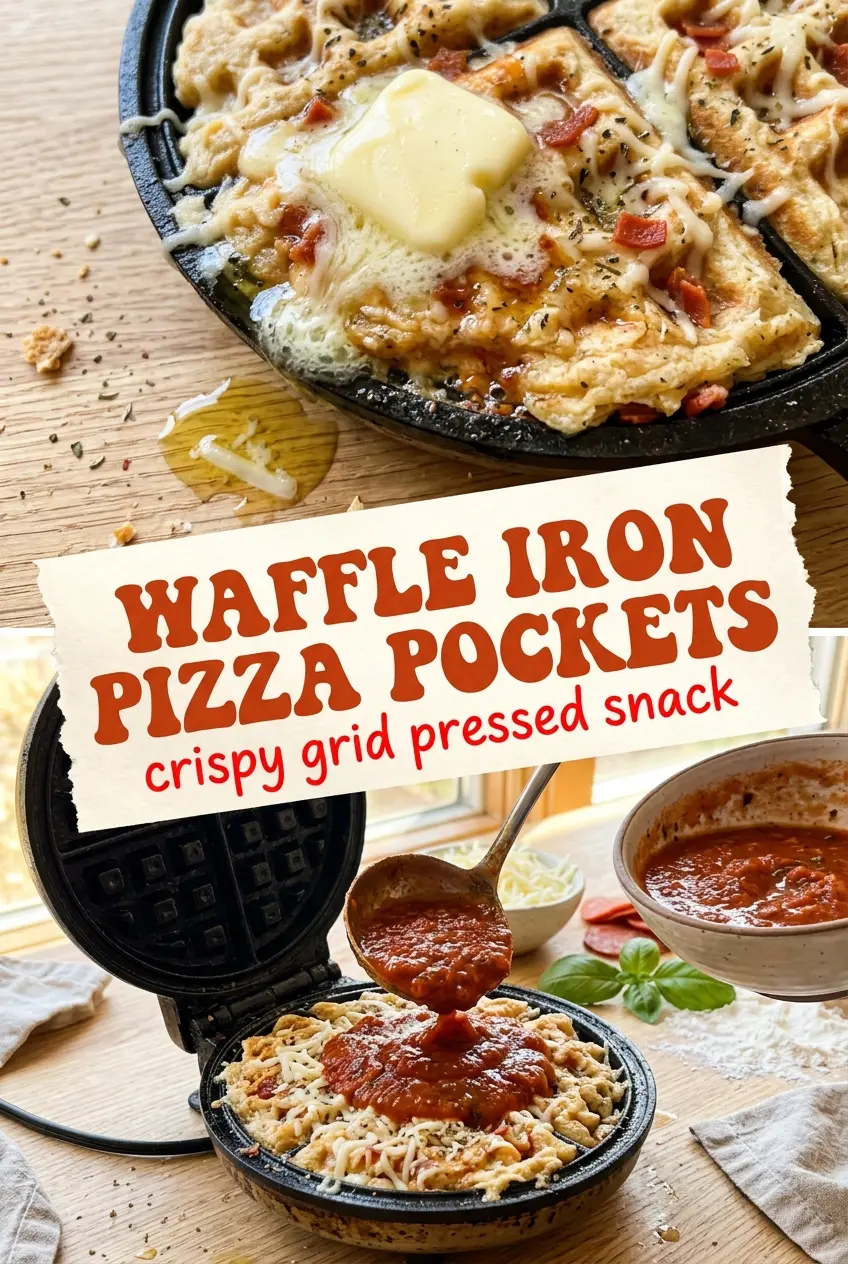
Waffle Iron Pizza Pockets
Ingredients
Equipment
Method
- Roll the pizza dough into rounds large enough to fold over the filling with some overlap at the edges.
- Place a round of dough on a flat surface and spoon pizza sauce into the center, leaving a border for sealing.
- Top the sauce with shredded mozzarella so it covers the center evenly.
- Add pepperoni slices over the cheese, keeping them within the center area.
- Fold the dough over the filling and press the edges together to seal tightly so the filling won’t leak.
- Preheat a waffle iron, then place a sealed pocket inside and press for 5 min until golden with clear grid marks.
- Sprinkle Italian seasoning over the hot waffle iron pizza pockets before serving.