
Roasted acorn squash turns tender and lightly caramelized in the oven, then gets filled with savory turkey, rice, and a cranberry glaze that lands right between sweet and tart. The squash holds its shape, the filling stays hearty, and the whole dish eats like a complete dinner instead of a side that wandered onto the plate.
The key is roasting the squash first so it softens before the filling goes in. If you stuff it too early, the turkey mixture overcooks before the squash is ready. The cranberry sauce and maple syrup glaze also needs that second bake; it loosens just enough to brush over the top and settle into the nooks of the squash without turning sticky or burnt.
Below, I’ve laid out the small details that make this dinner work: how to keep the squash from tipping, how to season a mild turkey filling so it still tastes balanced, and what to change if you want to use what’s already in your pantry.
The squash roasted up tender without collapsing, and the cranberry maple glaze gave the turkey filling just enough sweetness to keep my kids interested. I loved that it all came together in one pan for dinner.
Pin this turkey stuffed acorn squash for a cozy dinner with sweet cranberry glaze, savory turkey, and tender roasted squash.
The Reason This Squash Stays Tender Instead of Turning Watery
Acorn squash can go from perfectly soft to soggy if it’s crowded, under-roasted, or stuffed before the flesh has a chance to firm up. Roasting it cut side down does two things at once: it traps steam so the squash turns tender, and it keeps the cut surface from drying out before the rest of the dish is ready. That’s the difference between squash that slices neatly and squash that collapses under the filling.
The filling matters too. Ground turkey releases moisture as it cooks, and if you rush that step, the rice and glaze end up tasting diluted. Browning the turkey with the onion first gives you a deeper base flavor, and letting the mixture cool for a minute before stuffing keeps the glaze from thinning out when it hits the pan.
- Roast the squash cut side down so the flesh softens evenly.
- Cook the turkey until the pan is dry enough that the onion and meat start to brown, not just steam.
- Use cooked rice, not raw, or the final bake will be too short for it to soften.
- Brush the glaze on at the end so it stays bright and doesn’t scorch.
What Each Ingredient Is Actually Doing in This Dish
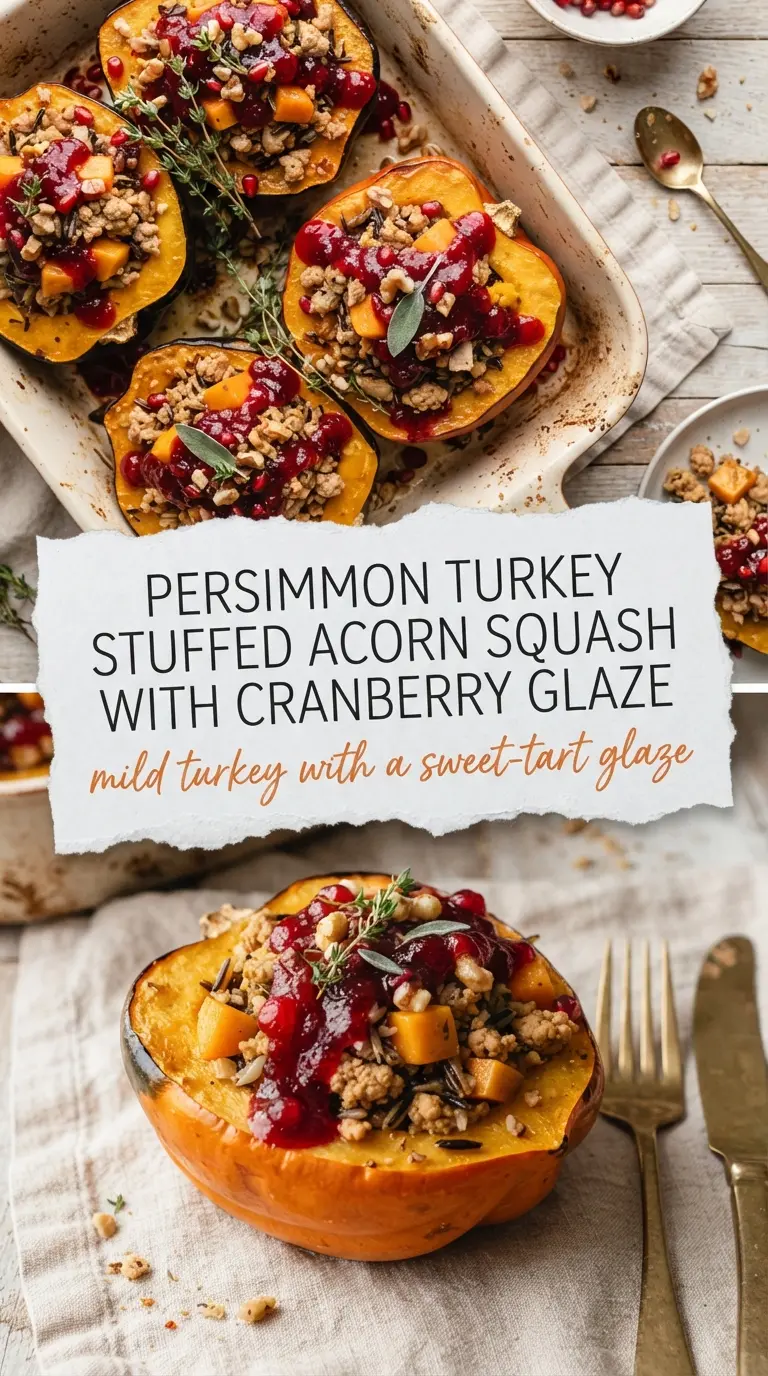
- Acorn squash — This is the edible bowl and the sweet, earthy backbone of the dish. Pick squash that feel heavy for their size with firm skin; soft spots mean the flesh will collapse before the filling finishes. If you need a substitute, delicata squash works well, but it roasts faster and gives you thinner walls.
- Ground turkey — Lean turkey keeps the filling light and lets the cranberry glaze shine. The tradeoff is that it can taste flat if you don’t brown it properly, so don’t stop at “no longer pink.” Let some of it stick briefly to the pan before stirring so you get flavor, not just cooked meat.
- Rice — Cooked rice stretches the filling and helps it hold together inside the squash halves. Cold leftover rice works fine, and it actually mixes in more cleanly than freshly steamed rice. If you use brown rice, the filling gets a nuttier bite and a little more chew.
- Cranberry sauce and maple syrup — This glaze gives the dish its sweet-tart finish and keeps the turkey from tasting one-note. Jellied or whole-berry cranberry sauce both work; whole-berry gives you a looser, more rustic finish. The maple syrup softens the cranberry’s sharp edge, so don’t skip it unless you want a more tart result.
- Dried sage — Sage is what makes this taste like a cohesive fall dinner instead of turkey and squash on the same plate. If your sage is old and dusty, it won’t carry the dish, so use fresh dried sage if you can. A small pinch of thyme can stand in, but the flavor will be less classic and a little less warm.
The 15 Minutes That Pull Everything Together
Roasting the Squash Until It Gives
Set the squash halves cut side down on a baking sheet and roast at 400°F until a fork slides in with little resistance. You want the flesh tender enough to eat cleanly, but still sturdy enough to hold the filling. If the squash is underdone here, the second bake won’t fix it; the filling will be ready before the squash is.
Cooking the Turkey and Onion
Brown the turkey with the diced onion in a skillet until the meat loses its raw look and the onion turns soft and translucent. Keep the heat high enough to get some browning, because that browned fond is what keeps the filling from tasting bland. If liquid pools in the pan, keep cooking until it evaporates before you move on.
Mixing the Filling and Glaze
Stir in the cooked rice and dried sage, then whisk the cranberry sauce with the maple syrup until the glaze is smooth. The filling should hold together when stirred, not slump into a wet mound. If your cranberry sauce is very thick, warm it for a few seconds so it brushes on easily.
Stuffing, Brushing, and Finishing
Fill each squash half generously, then brush the cranberry glaze over the top before returning the pan to the oven. That final bake lets the flavors settle and gives the top a glossy finish without drying out the turkey. Pull it when the glaze looks set and the filling is hot all the way through.
How to Adapt This for Different Tables
Make it dairy-free without changing the structure
This recipe is naturally dairy-free as written, which is one reason it’s such an easy weeknight option. Keep the filling simple and use a cranberry sauce that doesn’t hide butter or cream in the ingredient list. The texture stays the same, and you still get a full, balanced dinner.
Swap the turkey for ground chicken or pork
Ground chicken gives you a similar mild filling, while ground pork adds more richness and a little sweetness. Pork holds onto the sage and cranberry glaze especially well, but it also makes the dish heavier. Keep the same cooking method and brown the meat fully before stuffing the squash.
Use quinoa instead of rice for a lighter, higher-protein filling
Quinoa works if you want a little more texture and a slightly nuttier finish. Cook it first and let it cool before mixing it with the turkey, or it can turn mushy in the oven. The result is a bit looser than rice, but it still stuffs well.
Storage and Reheating
- Refrigerator: Store leftovers in an airtight container for up to 4 days. The squash softens a little more as it sits, but the flavor stays solid.
- Freezer: It freezes, but the squash texture gets softer after thawing. For the best result, freeze the filling separately from the squash halves and assemble fresh if you can.
- Reheating: Reheat covered in a 350°F oven until hot, or use the microwave for individual portions. Don’t blast it uncovered, or the turkey dries out while the squash turns leathery.
Answers to the Questions Worth Asking
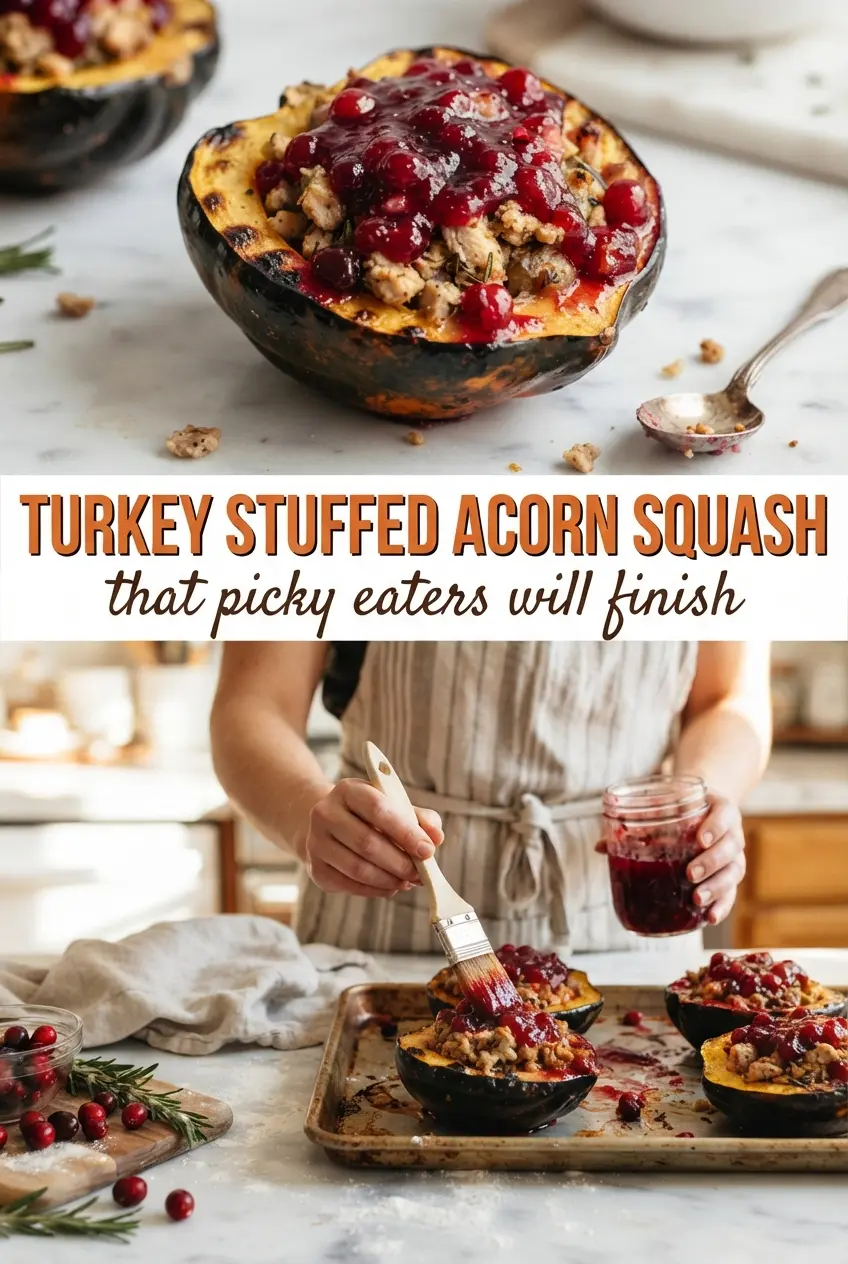
Turkey Stuffed Acorn Squash
Ingredients
Equipment
Method
- Heat the oven to 400°F. Place the acorn squash halves cut side down on a sheet pan and roast for 30 minutes, until the flesh starts to turn tender.
- Brown the ground turkey with the diced yellow onion for 7 minutes, stirring until no longer pink and fragrant. Mix in the cooked rice and dried sage, then season with salt and black pepper to taste.
- Whisk the cranberry sauce and maple syrup together until smooth and glossy, with no streaks.
- Fill each roasted acorn squash half with the turkey-rice mixture and brush the tops with the cranberry-maple glaze. Bake for 15 minutes until the filling is hot throughout and the glaze looks set.