
Thanksgiving cornbread dressing should come out moist in the middle, golden on top, and full of the kind of savory flavor that tastes like it had time to build. This version gets there without canned soup or shortcuts that flatten everything out. The cornbread brings the structure, the onions and celery bring sweetness and bite, and the sage does the heavy lifting in the background.
What matters most here is balance. If the cornbread is too fresh and soft, the dressing can turn heavy. If it’s too dry, it won’t hold together well enough. The broth and eggs bridge that gap, giving you a spoonable center that still slices cleanly once it rests. Cooking the onions and celery first matters too, because raw vegetables never soften enough in the oven alone and their flavor stays sharper than it should.
Below you’ll find the little details that keep this dressing from turning soggy or bland, plus a few simple swaps if you need to work with what’s already in your kitchen.
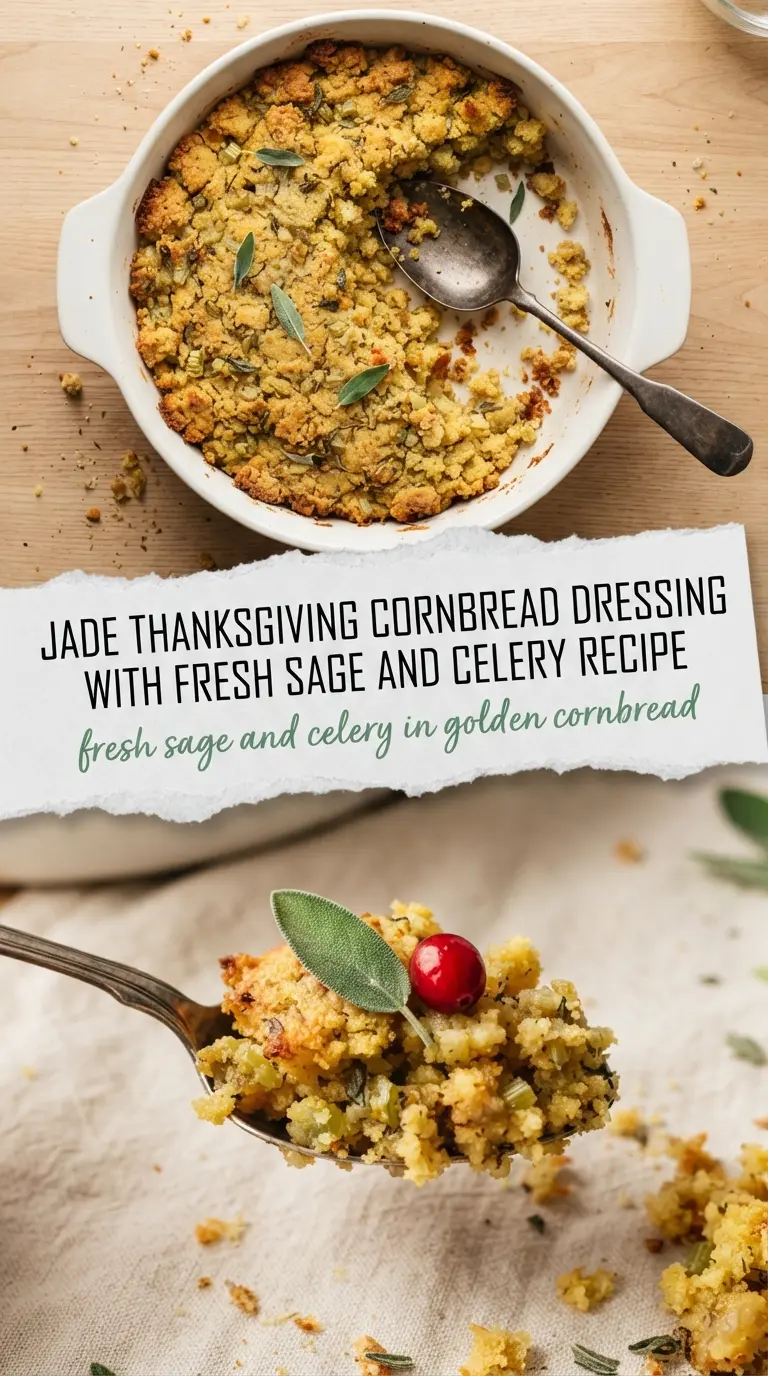
The dressing baked up with a crisp, golden top and stayed moist underneath. I loved that the sage came through without taking over, and the texture was spot on the next day too.
Save this Thanksgiving cornbread dressing for the holiday table when you want a golden top, a moist center, and real sage flavor.
The Difference Between Moist Dressing and a Pan of Mush
Most dressing problems start with too much liquid added too fast. Cornbread soaks up broth quickly, and if you pour in the full amount all at once, it can go from properly hydrated to heavy and wet before you notice what happened. The better move is to add the broth gradually and stop when the mixture looks saturated but still holds its shape when stirred.
The other thing that gets overlooked is the cornbread itself. Homemade cornbread usually has more texture and less sugar than boxed mix, which helps the finished dressing stay savory instead of turning soft and sweet. If your cornbread is very fresh, give it time to dry out a bit before mixing. Slightly stale cornbread absorbs broth more evenly and bakes into a better crumb.
- Broth — This is where the moisture comes from, but it also carries salt and flavor. Use a good chicken broth if you can; the dressing will taste thin if the broth tastes thin.
- Eggs — They bind everything together so the dressing slices instead of collapsing. Don’t skip them, or the center can turn crumbly after baking.
- Fresh sage — Fresh sage gives the dressing its classic holiday character. Dried sage can work in a pinch, but use less because it tastes sharper and more concentrated.
- Cornbread — The texture of the cornbread determines the final dressing. Slightly dry cornbread is ideal because it soaks without disintegrating.
What Each Ingredient Is Doing in This Dish
- Butter — This softens the vegetables and gives the dressing a rounder, richer base than oil would. It also helps carry the sage and thyme into the whole dish.
- Onion and celery — These need to cook first so they lose their raw crunch and turn sweet and tender. If you skip that step, the dressing can taste uneven and the vegetables stay too firm after baking.
- Garlic — Garlic only needs a short minute in the pan. Add it after the onions and celery have softened so it doesn’t burn and turn bitter.
- Fresh thyme — Thyme adds a quieter herbal note that keeps the sage from tasting one-dimensional. If you only have dried thyme, use about half the amount.
- Chicken broth — This loosens the mixture and seasons it at the same time. Vegetable broth works if needed, but the flavor will be a little lighter.
- Eggs — Beaten eggs disappear into the mixture and set up in the oven, which is what holds the dressing together without making it dense.
Building the Dressing So It Bakes, Not Cooks Like Porridge
Softening the vegetables first
Cook the onion and celery in butter until the onion turns translucent and the celery loses its raw snap. This takes about eight minutes over medium heat, and it matters because the oven won’t fully fix undercooked vegetables later. When the garlic and herbs go in, stir just long enough to wake them up. If the garlic browns, pull the pan off the heat right away so the flavor stays sweet instead of harsh.
Mixing without crushing the cornbread
Use a big bowl and fold the cornbread gently with the vegetables, broth, and eggs. You want the mixture evenly moistened, not mashed into paste. The best visual cue is that the cornbread looks hydrated and loose but still has visible pieces. If it’s soup-like, you’ve gone too far with the broth, and the baked dressing will come out dense instead of tender.
Baking until the top sets
Spread the mixture into the buttered dish and bake until the top is deep golden and the center feels set when you nudge the pan. Forty to forty-five minutes is the usual range, but ovens vary, so trust the texture more than the clock. The center should still feel soft, not wet. Let it rest for a few minutes before serving so it settles and slices more cleanly.
How to Adapt This for Different Tables and Leftover Cornbread
Make it dairy-free without losing the base flavor
Swap the butter for a neutral dairy-free butter or olive oil. You’ll lose a little of that classic buttery finish, but the onions, celery, and sage still carry the dish. Use a dairy-free cornbread too, and keep an eye on seasoning because some plant-based fats taste saltier than butter.
Use turkey broth after Thanksgiving
Turkey broth works in place of chicken broth and gives the dressing a deeper, leftover holiday flavor. If the broth is strongly seasoned or salty, back off on the salt until after baking. This swap makes the whole pan taste a little more savory and a little less neutral.
Turn it into a vegetarian dressing
Use vegetable broth instead of chicken broth and stick with plenty of sage, thyme, and buttery vegetables. The flavor will be a little lighter, so taste the mixture before baking and season more boldly than you think. The texture stays the same as long as you keep the egg.
Storage and Reheating
- Refrigerator: Store leftovers covered for up to 4 days. The dressing firms up a bit as it chills, which is normal.
- Freezer: It freezes well in portions. Wrap tightly and freeze for up to 2 months, then thaw overnight in the fridge before reheating.
- Reheating: Warm covered in a 325°F oven with a splash of broth if it looks dry. Microwaving works for a small serving, but it can make the edges rubbery if you heat it too long at once.
Answers to the Questions Worth Asking

Thanksgiving Cornbread Dressing
Ingredients
Equipment
Method
- Heat the oven to 375°F and butter a baking dish so the dressing releases easily after baking.
- Cook the onion and celery in the butter for 8 minutes until softened.
- Add the garlic and herbs, then cook for 30 seconds to 1 minute until fragrant.
- Mix the cornbread with the cooked vegetables, chicken broth, and beaten eggs, and season with salt and black pepper.
- Pour into the prepared dish and bake for 40 to 45 minutes until golden on top and set in the center.