
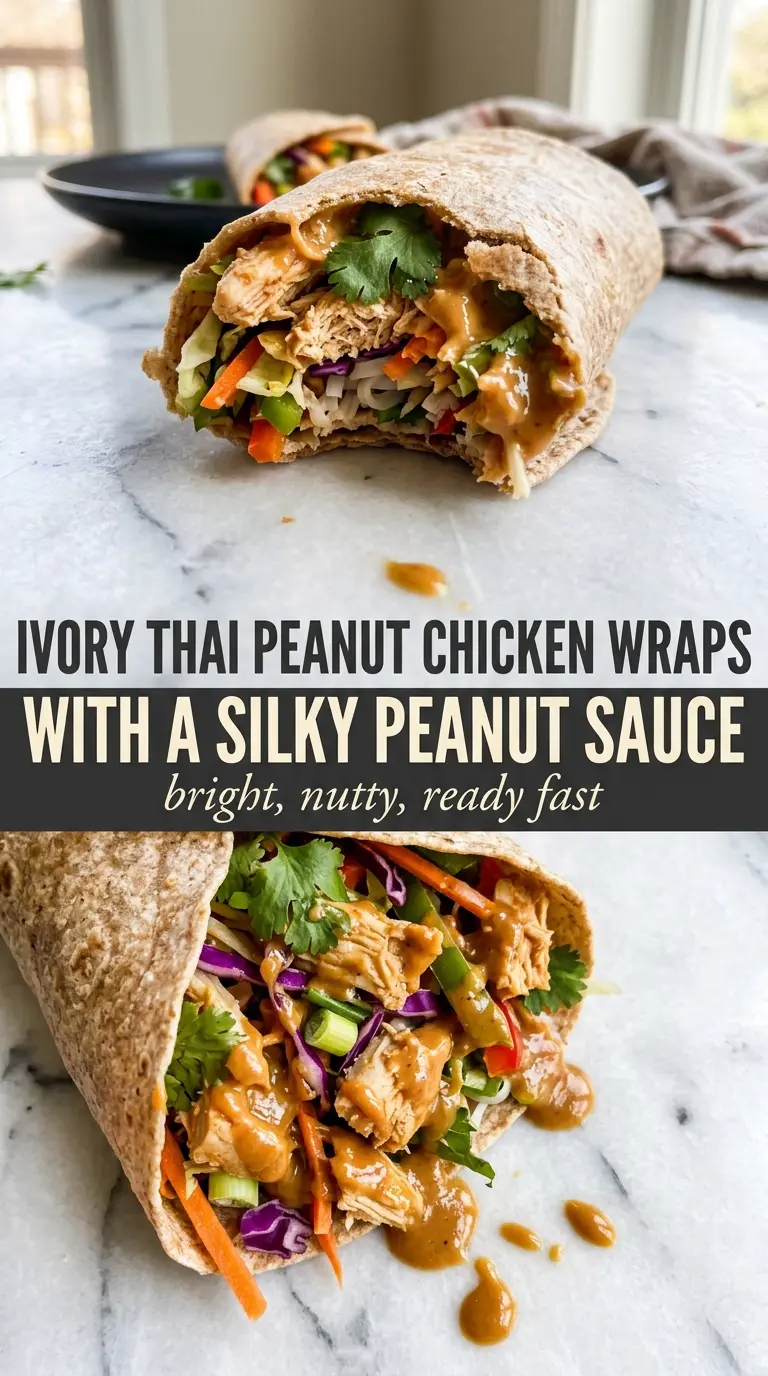
Soft tortillas wrapped around shredded chicken, crunchy vegetables, and a creamy peanut sauce hit that sweet spot between fresh and satisfying. The sauce clings to the chicken without drowning the wrap, the cabbage stays crisp, and every bite gets a little heat, a little tang, and a lot of peanut flavor. It’s the kind of lunch that feels put together without asking much from you.
What makes these wraps work is the sauce. Peanut butter alone turns thick and gluey, so the soy sauce, rice vinegar, honey, and a little sriracha pull it into something smooth, balanced, and spoonable. Warm water added a tablespoon at a time keeps it pourable instead of stiff, which matters because you want it to coat the chicken and still drizzle over the filling. If you’ve ever had a wrap go pasty or fall apart because the filling was too heavy, this version fixes both problems.
Below, I’ve laid out the small details that matter most: how thin the sauce should be, why the chicken gets tossed before it’s wrapped, and what to change if you want to use what’s already in the fridge.
The sauce loosened up perfectly with warm water and coated every bit of chicken without turning the wraps soggy. I made these for lunch and my husband asked me to pack the same thing the next day.
Save these Thai Peanut Chicken Wraps for a fast lunch with crunchy cabbage and a silky peanut sauce.
The Secret to a Peanut Sauce That Stays Smooth in a Wrap
Peanut sauce can go wrong in two directions: it turns too thick and pasty, or it gets thinned so aggressively that it slips out of the tortilla the second you pick it up. The fix is to build it gradually. Start with the peanut butter, soy sauce, vinegar, honey, and sriracha, then add warm water a little at a time until the sauce drips off a spoon in a slow ribbon. That texture coats the chicken instead of gluing the whole wrap together.
The other thing that matters here is balance. Peanut butter brings body, but it also needs salt, acid, and a little sweetness to taste complete. Soy sauce sharpens the peanut flavor, rice vinegar keeps it from reading heavy, and honey rounds out the edges so the sriracha doesn’t take over. If the sauce tastes flat, it usually needs acid before it needs more salt.
What Each Ingredient Is Actually Doing in This Wrap
- Shredded cooked chicken — This is the backbone of the filling, and shredded meat catches the sauce better than chopped pieces. Rotisserie chicken works well here because it’s already seasoned and moist enough to absorb the peanut sauce without drying out.
- Peanut butter — Use a creamy peanut butter for the smoothest sauce. Natural peanut butter works too, but if it separates in the jar, stir it very well first so the sauce doesn’t turn grainy or greasy.
- Soy sauce — This brings salt and depth that plain salt won’t fully replace. If you need a gluten-free version, tamari slides in cleanly with the same amount.
- Rice vinegar — The vinegar keeps the sauce bright and stops it from tasting heavy. Lime juice can work in a pinch, but rice vinegar gives a softer, cleaner tang.
- Honey — A small amount smooths out the sharp edges and helps the sauce taste balanced. Maple syrup can stand in if that’s what you have, though the finish will be a little deeper and less clean.
- Shredded carrots and red cabbage — These aren’t just for color. They bring crunch and moisture control, which matters because a wrap that’s all chicken and sauce turns dense fast.
- Cilantro — It adds the fresh, herbal note that keeps the wrap from tasting one-dimensional. If cilantro tastes soapy to you, use thinly sliced green onions instead.
- Tortillas — Large, soft tortillas are worth using here because they roll cleanly and hold the filling without splitting. If yours are stiff, warm them briefly so they flex instead of cracking.
How to Keep the Wraps Tight Without Crushing the Filling
Whisk the Sauce Until It Loosens, Not Until It Runs
Stir the peanut butter, soy sauce, rice vinegar, honey, and sriracha together first, then add warm water a tablespoon at a time. You’re looking for a sauce that pours slowly and coats the spoon, not something thin enough to puddle immediately. If you dump in too much water at once, the sauce can go from creamy to watery fast, and it won’t cling to the chicken the same way.
Toss the Chicken Before You Build the Wrap
Coat the shredded chicken with half the sauce while it’s still in a bowl. That step keeps the filling seasoned all the way through instead of leaving the flavor only on the surface. If you add all the sauce at the end, the wrap can get slippery and the vegetables won’t stay anchored.
Layer the Crunch Under the Saucy Chicken
Lay the carrots, cabbage, and cilantro on the tortilla first, then add the sauced chicken on top. The vegetables act like a little cushion and help keep the tortilla from getting soggy before you get to the table. Roll the wrap tightly from the bottom and tuck the sides in as you go; if the filling is piled too high, it will burst through the seam instead of staying compact.
Drizzle the Rest, Then Slice Cleanly
Use the remaining sauce sparingly inside the wrap or on the side. Too much inside the tortilla makes the wrap harder to seal, but a little extra on top keeps every bite rich and glossy. Slice with a sharp knife in one motion so the tortilla doesn’t drag the filling out of place.
How to Adapt These Wraps for What You Have on Hand
Gluten-Free Version
Swap the soy sauce for tamari and check that your tortillas are certified gluten-free. The sauce keeps the same texture and the same salty backbone, so you don’t lose the balance that makes the filling work.
Dairy-Free and Naturally Creamy
This recipe is already dairy-free as written, and the peanut butter gives it all the creamy body it needs. If you want a softer finish, add an extra teaspoon of warm water instead of introducing any dairy substitute.
Make It Spicier or Milder
Add more sriracha if you want the heat to linger, or cut it back to a few drops for a gentler wrap. The sauce still works either way because the honey and vinegar keep the peanut flavor from feeling flat.
Storage and Reheating
- Refrigerator: Store the chicken filling and vegetables separately for up to 3 days. Wrapped leftovers keep, but the tortilla softens and the crunch fades.
- Freezer: Freeze the sauced chicken only for up to 2 months. The vegetables and tortillas don’t freeze well for this recipe, so add those fresh after thawing.
- Reheating: Warm the chicken gently in the microwave or in a skillet over low heat with a splash of water. High heat can make the peanut sauce tighten up and turn thick instead of creamy.
Answers to the Questions Worth Asking
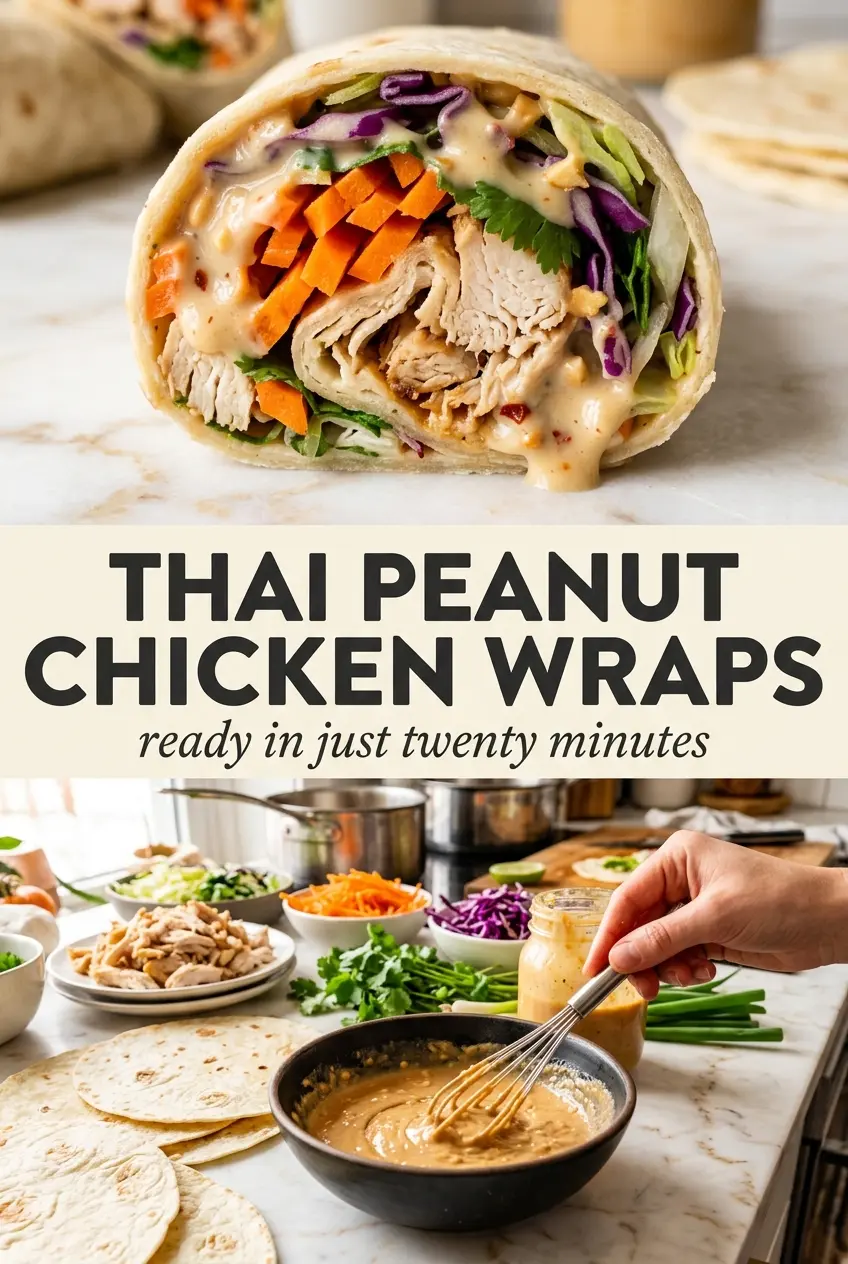
Thai Peanut Chicken Wraps With Creamy Peanut Sauce
Ingredients
Method
- Whisk peanut butter, soy sauce, rice vinegar, honey, and sriracha until smooth, then add warm water 1 tbsp at a time to thin to a pourable consistency (no need to heat).
- Stop whisking when the sauce looks glossy and drizzles off a spoon in a thin ribbon.
- Toss the shredded chicken with half the peanut sauce until evenly coated and satiny.
- Taste and adjust with a little extra sriracha if you want more heat.
- Lay out tortillas and layer carrots, cabbage, and cilantro in the center.
- Add the peanut chicken on top of the vegetables.
- Drizzle the remaining peanut sauce over the filling for a creamy, nutty finish.
- Roll the tortillas tightly into wraps and slice in half so the fillings stay stacked.
- Serve immediately for the best crunch against the creamy sauce.