
Silky coconut broth, tender chicken, and the sharp lift of lemongrass and lime make this Thai coconut chicken soup the kind of bowl people ask for again before they’ve finished the first one. The broth stays creamy without turning heavy, and the ginger gives it a clean warmth that keeps every spoonful moving. It tastes bright and rich at the same time, which is exactly why it earns a spot in the regular dinner rotation.
The trick here is keeping the coconut milk at a gentle simmer instead of a hard boil. That keeps the broth smooth and lets the lemongrass and ginger infuse without turning flat or muddy. Thin-sliced chicken cooks fast and stays tender, and the lime goes in at the end so the soup keeps its sharp, fresh edge instead of tasting cooked down.
Below, I’ve laid out the small details that matter most: how to bruise the lemongrass so it actually perfumes the pot, when to add the fish sauce, and what to change if you want to make it dairy-free, lighter, or a little hotter.
The broth turned out silky and the lime at the end made the whole pot pop. I used chicken thighs and it was still tender after the 10-minute simmer.
Save this Thai Coconut Chicken Soup for the nights when you want a creamy, fragrant broth with bright lime and tender chicken.
The Secret to Keeping Coconut Soup Creamy Instead of Separated
The biggest mistake in coconut-based soups is boiling them hard and too long. Coconut milk can handle heat, but it doesn’t like aggression. A gentle simmer keeps the broth smooth and lets the aromatics do their work without turning the soup grainy or dull.
Another thing that matters here is the order. Lemongrass and ginger go in first so they can perfume the oil before the liquid is added. Fish sauce goes in while the soup simmers so it blends into the broth instead of tasting sharp on top, and lime waits until the end because citrus loses its brightness fast in heat.
What Each Ingredient Is Actually Doing in This Soup

- Coconut milk — This is the body of the soup, not just the liquid. Full-fat coconut milk gives you that silky, velvety finish, while light coconut milk makes the broth thinner and less satisfying. If you swap it, the soup loses its creamy texture and the whole bowl tastes flatter.
- Lemongrass — Bruising the stalks is worth the extra second because it releases the citrusy, floral aroma hiding inside. Slice it into chunks big enough to fish out later, or the fibers can be annoying to eat around. If you can only find lemongrass paste, use it sparingly and add it with the liquid so it doesn’t scorch.
- Fresh ginger — Ginger keeps the coconut milk from feeling heavy. Fresh beats powdered here because you want the clean heat and brightness, not a dusty spice note. Slice it thin so it has enough surface area to flavor the oil and broth quickly.
- Fish sauce — This is the savory backbone of the soup. It won’t taste fishy once it’s simmered; it just deepens the broth and makes the coconut taste rounder. Soy sauce can work in a pinch, but the soup will lose some of the Thai-style complexity.
- Lime juice — Add it at the end, always. Heat dulls the sharp edge, and this soup needs that burst of acid to balance the richness. Bottled lime juice works only if that’s what you have, but fresh gives the cleanest finish.
How to Build the Broth Without Losing the Brightness
Waking Up the Aromatics
Warm the coconut oil over medium heat, then add the bruised lemongrass and sliced ginger. Let them sizzle just long enough to smell fragrant, not browned. If the ginger starts catching color fast, the heat is too high and the broth will pick up a bitter edge later.
Cooking the Chicken Before the Liquid Goes In
Add the sliced chicken and stir it through the aromatic oil until the outside loses its pink color. Thin slices cook fast, which keeps the meat tender and lets the soup come together quickly. If you cut the chicken thick, it will need more simmer time and can turn stringy before the broth is ready.
Simmering the Coconut Milk Gently
Pour in the coconut milk and chicken broth, then bring everything to a soft simmer. You want small bubbles around the edges, not a rolling boil. That gentle heat keeps the coconut milk smooth and gives the lemongrass time to infuse without the broth reducing too aggressively.
Finishing With Lime and Chili
Stir in the fish sauce and let the soup simmer until the chicken is cooked through and the broth tastes layered, about 10 to 12 minutes. Pull out the lemongrass before serving so nobody bites into the woody stalks. Add the lime juice and sliced chili at the end, then taste once more; if the soup feels rich but slightly flat, it usually needs another small squeeze of lime, not more salt.
Three Smart Ways to Change This Soup Without Losing What Makes It Good
Use chicken thighs for a richer bowl
Boneless thighs give you a little more forgiveness and a deeper chicken flavor. They stay tender even if the soup simmers a few minutes longer, which makes them a good choice if you like a heartier texture. The broth will taste a little rounder and less lean.
Make it dairy-free and gluten-free without changing the method
This soup already works naturally for both diets as written, as long as your broth and fish sauce are labeled gluten-free. That’s one of the nice things about it: the coconut milk does the creamy work, so you don’t need cream or flour to get a full-bodied soup.
Add noodles or vegetables for a more filling meal
Rice noodles, mushrooms, baby spinach, or thin-sliced bell pepper all fit in without fighting the broth. Add quick-cooking vegetables near the end so they stay bright and don’t turn mushy. If you add noodles, cook them separately or they’ll steal too much broth as they sit.
Turn the heat up carefully
A sliced red chili gives a clean, fresh burn without muddying the broth. If you want more heat, add the chili earlier so it softens into the soup. If you want a sharper finish, keep the chili for the bowl and let each person adjust their own spice level.
Storage and Reheating
- Refrigerator: Keep leftovers covered for up to 4 days. The broth may thicken slightly as it chills, which is normal.
- Freezer: It freezes well for about 2 months, though the coconut milk may separate a little when thawed. Stir well after reheating and it usually comes back together.
- Reheating: Warm it slowly over low heat until just steaming. Don’t boil it hard, or the coconut milk can break and the chicken can turn dry.
Answers to the Questions Worth Asking
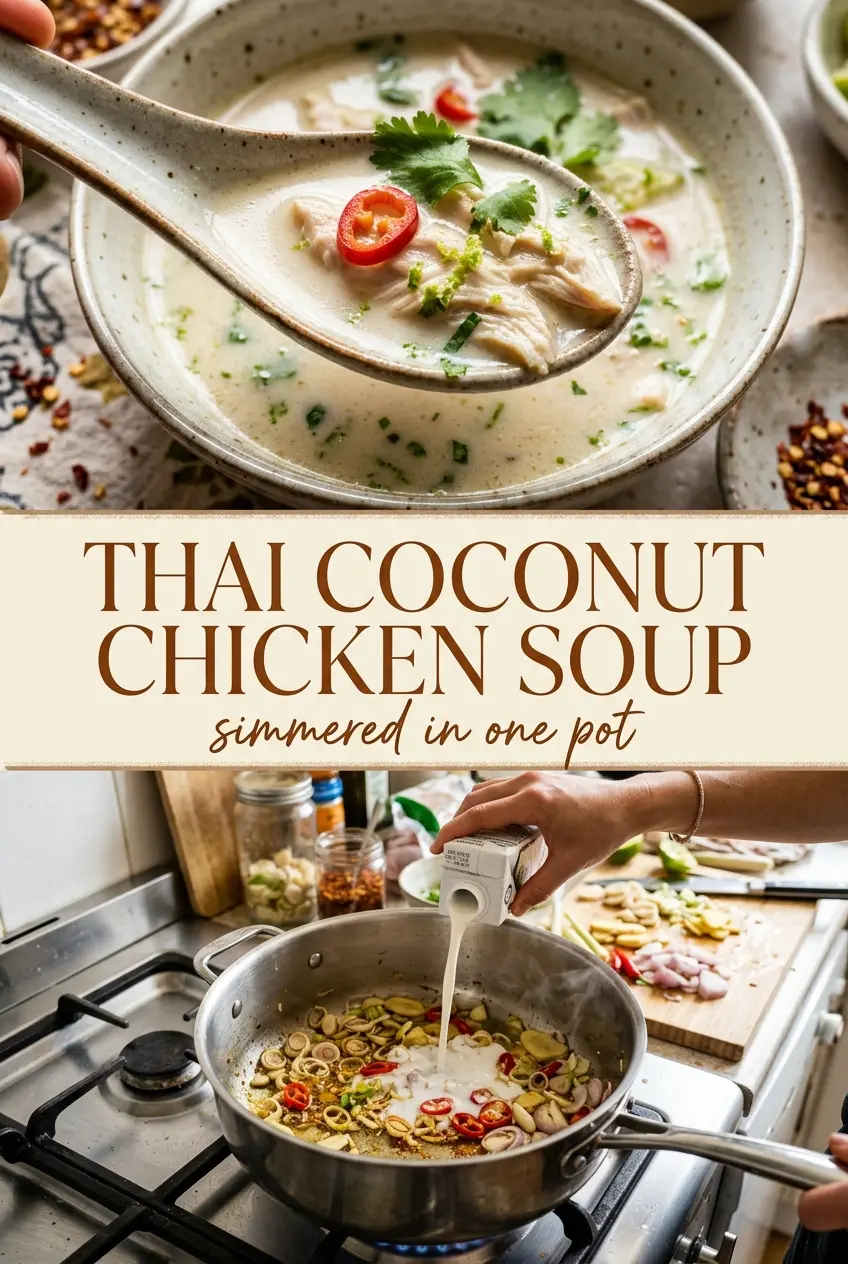
Thai Coconut Chicken Soup
Ingredients
Equipment
Method
- Heat 1 tbsp coconut oil in a large pot over medium heat and briefly sauté the lemongrass and ginger until fragrant, about 1-2 minutes. You should see the aromatics turn slightly shinier and smell sharp and fragrant.
- Add the sliced chicken and cook over medium heat for 3-4 minutes, stirring, until no longer pink. The pieces should look opaque throughout.
- Pour in the coconut milk and chicken broth, then bring the soup to a gentle simmer over medium-high heat. Small bubbles should break the surface without a hard boil.
- Stir in the fish sauce and simmer for 10-12 minutes, until the chicken is cooked through. The broth should look creamy and slightly thickened, and the chicken should be tender.
- Remove the lemongrass stalks from the pot. The soup should look smooth with the aromatics fully cleared.
- Stir in the lime juice and sliced chili, then simmer for 1-2 minutes. The soup should brighten and smell fresh as the chili disperses.
- Garnish with fresh cilantro before serving. Add it right at the table so the leaves stay vivid.