
Bright, tangy zucchini relish has a way of turning a pile of summer squash into something you reach for all year. The zucchini stays tender but not mushy, the onions soften into the brine, and the vinegar-sugar balance lands in that sweet spot where you keep tasting it straight from the jar. The jalapeno gives it a clean little kick without pushing it into hot sauce territory, so it works on burgers, hot dogs, grain bowls, and even spooned over roasted pork.
What makes this version worth keeping is the prep. Salting the zucchini and onion first pulls out excess water, which keeps the relish from ending up thin and flat after it cooks. That resting time also helps the vegetables hold their shape, so you get a relish with a little bite instead of a soft spread. The mustard seed matters too; it gives the jar that classic relish texture and a gentle pop in every spoonful.
If you’ve only ever bought relish from the store, this one tastes brighter and cleaner. Below, you’ll find the exact point where the zucchini is ready, why the simmer stays short, and how to hot-pack the jars so the finished relish keeps its color and crunch as well as it can.
The zucchini stayed bright and the relish thickened up exactly right after the water bath. I used it on bratwurst that night and my husband kept going back for “just one more bite.”
Love the bright sweet-heat of this zucchini relish? Save it to Pinterest for burger nights, bratwurst, and the next time your garden leaves you with more squash than you know what to do with.
The Secret to Zucchini Relish That Stays Crisp Instead of Turning Watery
The biggest problem with homemade relish isn’t flavor. It’s water. Zucchini carries a lot of moisture, and onions do too, so if you skip the salting and draining stage, the finished relish can taste thin and the brine can look loose instead of glossy and clingy. That extra hour is what keeps the vegetables from cooking into a soft, soupy jam.
The short simmer matters for the same reason. You’re not trying to cook the zucchini down until it disappears. You’re just heating everything long enough for the sugar to dissolve, the vinegar to mellow, and the mustard seed to bloom in the brine. Once the mixture turns hot and the vegetables look evenly coated, it’s ready for the jars.
What Each Ingredient Is Actually Doing in This Dish
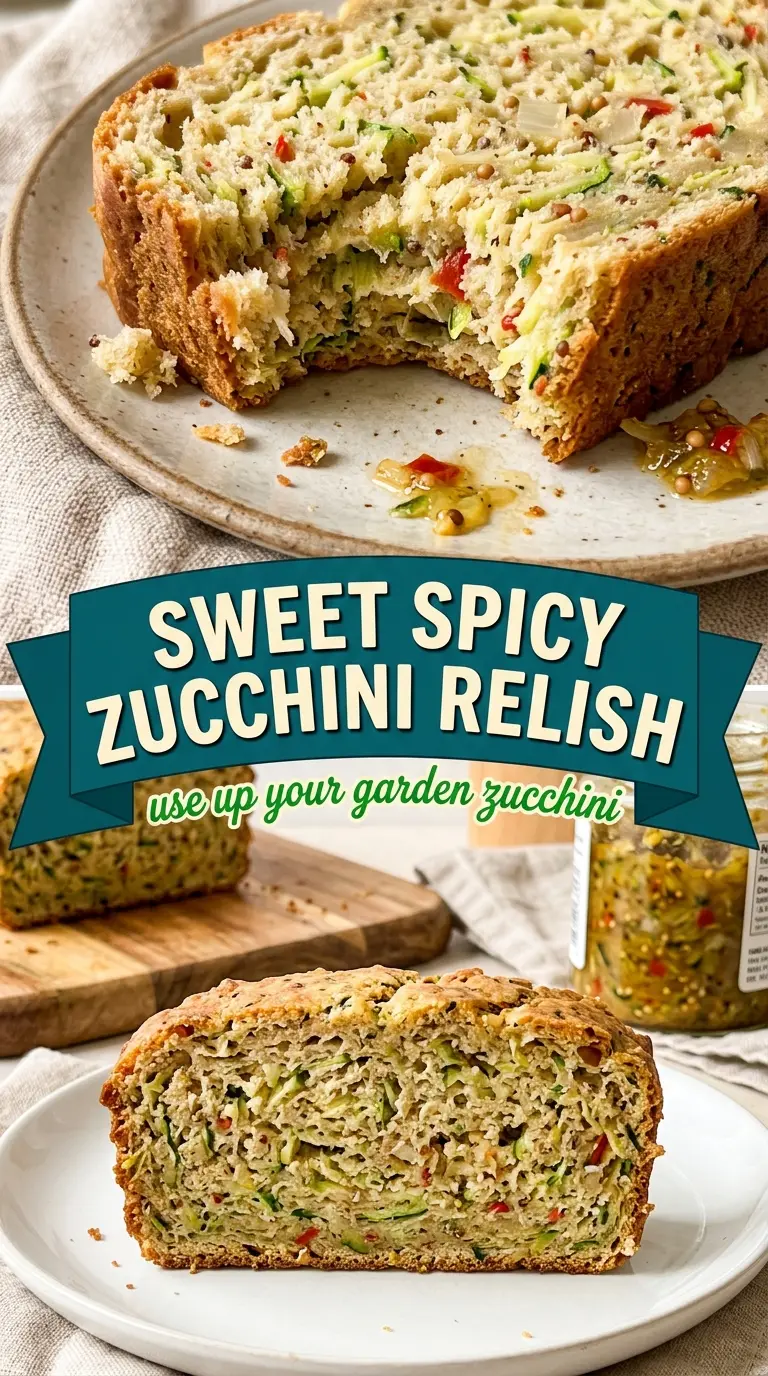
- Zucchini — Shred it on the coarse side so it reads like relish instead of puree. Smaller shreds break down too fast and can get soft after canning.
- Onions — Diced onions add body and a little bite. Yellow or white onions both work; red onion will tint the relish and change the look more than the flavor.
- Apple cider vinegar — This gives the relish its clean tang and helps preserve the bright color. Don’t swap in a milder vinegar unless you’re willing to lose some sharpness.
- Mustard seed — Whole mustard seed gives that classic deli-style finish. Ground mustard won’t replace the texture, and the relish will taste flatter.
- Jalapeno — A single minced jalapeno adds warmth without taking over. If you want less heat, remove the seeds and ribs; if you want more, leave them in.
- Sugar — The sugar doesn’t just sweeten the relish. It rounds out the vinegar and helps the brine coat the vegetables instead of tasting harsh.
How to Cook It Without Losing the Crunch
Salt, Drain, and Let the Water Out
Combine the shredded zucchini and diced onion with salt and let them sit for the full hour. As they rest, they’ll release a surprising amount of liquid, and that liquid needs to be drained off before the rest of the ingredients go in. If you rush this part, the relish will still taste fine, but the texture will be much looser and the jars will settle into a watery brine.
Build the Brine in One Pot
Stir the drained vegetables together with the sugar, vinegar, mustard seed, and minced jalapeno in a large pot. The sugar should start dissolving almost immediately, and the mixture will look loose at first. That’s normal. Use a pot with enough room to stir without sloshing, because once it starts simmering, the brine bubbles up fast and can scorch around the edges if the heat is too high.
Simmer Just Until It Comes Together
Keep the simmer at about 20 minutes, stirring now and then, until the zucchini turns translucent at the edges and the liquid looks slightly thickened. You want the vegetables to stay distinct. If the pot goes past that point, the relish softens too much and loses the fresh, snappy texture that makes it good on a plate of grilled food or tucked into a sandwich.
Jar While It’s Hot
Spoon the relish into hot, clean jars while the mixture is still steaming. The heat helps the brine move into all the gaps, and it also keeps the finished relish looking bright instead of dulling as it cools. Leave the proper headspace, wipe the rims, and process in a water bath for 10 minutes so the seals set correctly.
Three Ways to Adjust the Heat, Sweetness, or Diet
Mild Relish for Kids and Heat-Sensitive Cooks
Leave out the jalapeno entirely or use only half of one with the seeds removed. You’ll still get a bright, tangy relish with the same texture, just without the gentle burn at the back of the throat. The flavor leans sweeter and more classic this way.
Lower-Sugar Version
You can reduce the sugar a little, but don’t cut it too hard or the relish starts tasting sharp and one-note. Sugar balances the vinegar and helps the brine cling to the zucchini, so a smaller reduction is safer than a drastic one. The texture stays the same, but the finish will be more tart.
Gluten-Free and Pantry-Friendly
This recipe is naturally gluten-free as written, so there’s nothing special to swap. That’s one reason it’s such a useful canning recipe to keep around. Just check your mustard seed and vinegar labels if you’re cooking for someone with celiac disease and want to avoid cross-contact from packaged ingredients.
No Water-Bath Shortcut? Don’t Skip the Safety Step
If you don’t have a setup for water-bath canning, this isn’t the place to improvise. The relish is meant to be processed for shelf storage, and that step is part of the recipe, not an optional finish. Without it, keep the jars refrigerated and use them sooner rather than later.
Storage and Reheating
- Refrigerator: Once opened, keep the relish refrigerated and use it within 3 to 4 weeks. The flavor gets a little rounder after a day or two, and the texture stays best when it’s kept cold.
- Freezer: I don’t recommend freezing this relish. Zucchini turns soft after thawing, and the brine can separate, which takes away the crisp relish texture.
- Reheating: This relish is meant to be served cold or at room temperature. If you’re using it on a hot sandwich or burger, add it after the food comes off the heat so it keeps its bite and doesn’t get lost in the steam.
Answers to the Questions Worth Asking

Sweet and Spicy Zucchini Relish
Ingredients
Equipment
Method
- Combine the shredded zucchini with the diced onions and salt them thoroughly, then let them stand for 1 hour to draw out moisture and turn glossy.
- Drain the zucchini and onions well so the relish won’t thin; set the drained mixture aside while you prepare the brine.
- In a pot, stir together the drained zucchini-onion mixture with the sugar, apple cider vinegar, mustard seed, and minced jalapeno until the sugar dissolves and the mixture looks evenly coated.
- Bring the pot to a simmer and cook for 20 min, stirring occasionally, until the mixture looks bright and slightly thickened.
- Pack the relish into clean jars while hot, leaving appropriate headspace, then wipe rims for a good seal.
- Process the jars in a water bath for 10 min so they seal properly for pantry storage.