
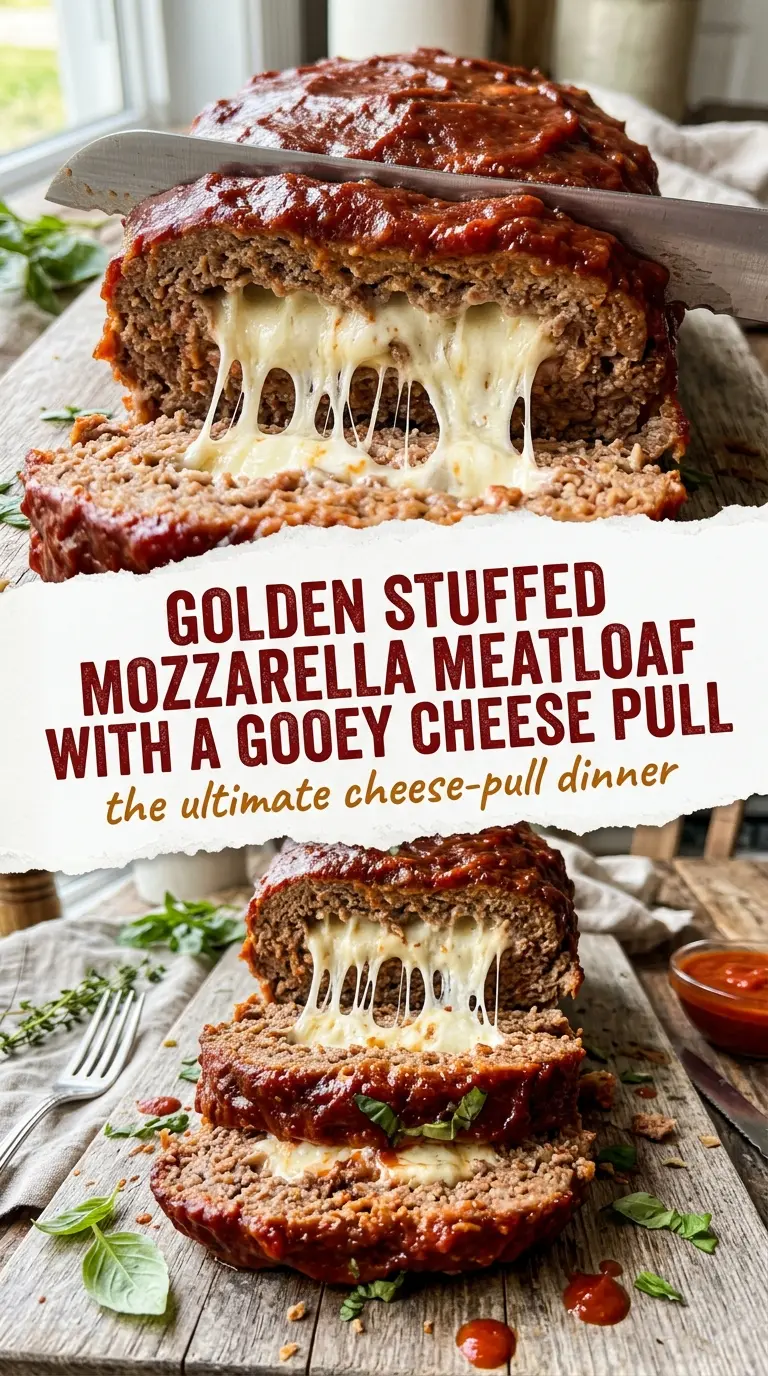
Stuffed mozzarella meatloaf is the kind of dinner that lands on the table looking familiar, then surprises everyone the second the knife cuts through the center. The outside bakes into a firm, savory crust while the middle stays soft enough to hold a thick ribbon of melted mozzarella. Slice it too soon and the cheese will run; rest it long enough and you get those long, stretchy strands that make this dish worth putting in the oven.
The trick is keeping the meat mixture tender without turning it dense. Breadcrumbs, milk, and eggs bind everything just enough, while the parmesan adds salt and a little backbone so the loaf doesn’t taste flat under the marinara. The other important part is sealing the cheese completely inside the meat. Any gap becomes a leak, and once mozzarella starts escaping onto the pan, you lose the whole payoff.
Below you’ll find the little details that keep the loaf from splitting open, plus a few smart ways to adapt it if you want a different cheese, a lighter version, or leftovers that reheat without drying out.
The mozzarella stayed right in the middle and every slice had that long cheese pull without the loaf falling apart. I rested it the full 10 minutes and it sliced cleanly, which never happens when I rush meatloaf.
Save this stuffed mozzarella meatloaf for the night you want a classic comfort dinner with a molten cheese center and no complicated prep.
The Reason the Cheese Stays in the Middle Instead of Leaking Out
Meatloaf only looks forgiving. Once you stuff it, every weak seam turns into a cheese escape hatch. The biggest mistake is treating the loaf like a stuffed pocket instead of a sealed package. You want the mozzarella completely surrounded by meat, with the edges pressed together firmly enough that the seam disappears before it goes in the oven.
Temperature matters too. Cold mozzarella is easier to handle and gives you a little more structure while you shape the loaf. If the cheese is warm or soft before baking, it starts to slump as soon as the meat loosens in the heat, and that’s when the filling finds its way out. Resting after baking matters just as much. The loaf finishes setting as it sits, and that short wait is what keeps the slices clean.
What Each Ingredient Is Actually Doing in This Dish
- Ground beef — Use beef with enough fat to stay juicy, not dry out in the oven. Leaner beef works, but the loaf will be firmer and a little less plush. If you only have very lean beef, the milk and eggs matter even more.
- Breadcrumbs — These hold onto moisture and keep the meat from packing into a tight brick. Fresh breadcrumbs give a softer texture; dry breadcrumbs are fine and a little easier to measure consistently. Don’t add extra just because the mixture feels loose before baking.
- Eggs and milk — This is the binder that keeps the loaf cohesive without making it rubbery. If you skip the milk, the texture turns drier and tighter. If you need a dairy-free option, unsweetened plain non-dairy milk works, but the loaf will lose a little richness.
- Parmesan — This adds salty depth inside the meat, so the finished loaf doesn’t rely on the marinara for all its flavor. The grated stuff from a wedge tastes cleaner, but the shelf-stable version works fine here.
- Mozzarella — A low-moisture mozzarella log or thick strips are the best choice because they melt into long strands without flooding the loaf. Fresh mozzarella has too much moisture and can make the center soggy. Keep it in one piece or large strips so the middle stays dramatic instead of disappearing into the meat.
- Marinara sauce — Use a sauce you already like, because this is the first thing you taste once the loaf slices open. A thicker marinara stays on top instead of running down the pan. If your sauce is thin, simmer it for a few minutes before spooning it over the loaf.
Building the Loaf So It Bakes Through Without Splitting
Mix Just Until the Meat Comes Together
Combine the beef, breadcrumbs, eggs, milk, parmesan, seasoning, salt, and pepper with a light hand. The mixture should look evenly combined, but it should still feel soft, not paste-like. If you overwork it, the proteins tighten and the loaf bakes up dense instead of tender. A few streaks at the start are fine; stop as soon as the ingredients hold together.
Seal the Cheese Like You Mean It
Press half the meat into a loaf shape, lay the mozzarella down the center, then cover it with the remaining meat. Press the seam closed from all sides, especially at the ends, where leaks usually start. If the top looks thin in spots, patch it with a little extra meat from the edges. The loaf should feel sealed before it goes anywhere near the oven.
Bake Until the Center Is Done, Not Just the Outside
Spoon the marinara over the top and bake at 375°F until the meat is cooked through, about 40 to 45 minutes. The outside should look set and browned at the edges, but the real test is the center temperature if you use a thermometer. Pull it when the center reaches 160°F. If you cut in too early, the cheese will run out before it has a chance to settle.
Let It Rest Before the First Slice
This is the part people skip and then regret. Give the loaf 10 minutes to rest so the juices settle and the cheese thickens just enough to cling to the meat instead of pouring onto the pan. Use a sharp knife and cut cleanly through the center. That first slice is where the payoff lives.
Three Ways to Adapt This Stuffed Mozzarella Meatloaf
Gluten-Free Version
Swap the breadcrumbs for certified gluten-free breadcrumbs in the same amount. The loaf will still hold together well, but some GF crumbs absorb liquid faster, so don’t add extra unless the mixture looks wet enough to slump. The texture stays close to the original.
Dairy-Free Adaptation
Use unsweetened non-dairy milk in the meat mixture and skip the parmesan. The meat loaf will still bind, but it loses a little savory depth, so add a pinch more salt and a spoonful of nutritional yeast if you want that extra roundness. The mozzarella center is the main dairy ingredient here, so for a full dairy-free version you’ll need a plant-based melting cheese.
Using a Different Cheese in the Middle
Provolone gives you a sharper melt and a little more salt, while fontina turns creamier and less stringy. Choose a firm block or thick slices, not shredded cheese, or the filling will disappear into the meat as it bakes. If you want the classic cheese pull, mozzarella is still the best choice.
Storage and Reheating
- Refrigerator: Store sliced or unsliced meatloaf in an airtight container for up to 4 days. The cheese center firms up a bit, but the flavor stays solid.
- Freezer: Freeze tightly wrapped slices or a whole cooled loaf for up to 2 months. Wrap first in parchment, then foil, then place in a freezer bag so the meat doesn’t pick up freezer flavor.
- Reheating: Reheat covered in a 300°F oven until warmed through, or microwave slices in short bursts with a spoonful of marinara on top. High heat dries out the beef and makes the cheese separate instead of melting back smoothly.
Answers to the Questions Worth Asking
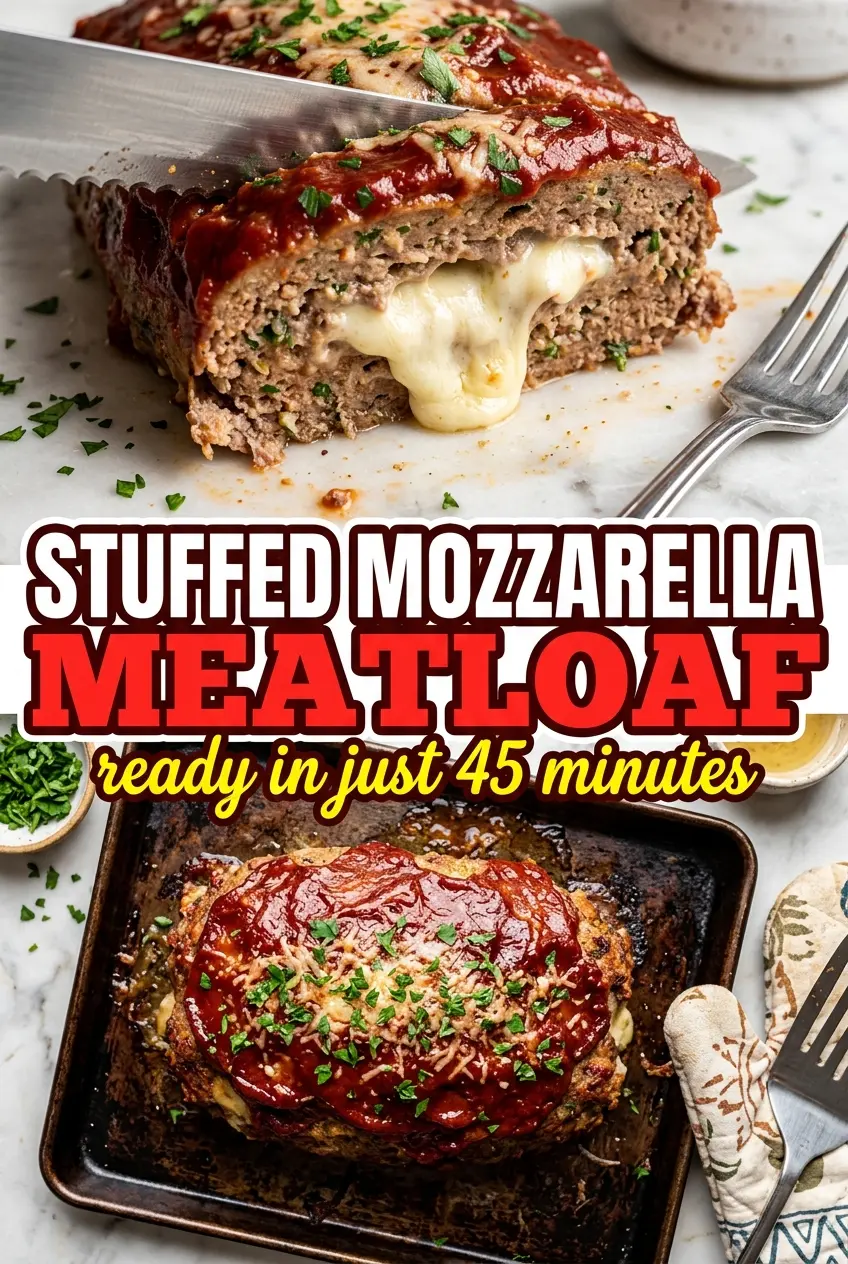
Stuffed Mozzarella Meatloaf
Ingredients
Equipment
Method
- Preheat the oven to 375°F and line a sheet pan with parchment paper (visual cue: parchment covers the pan).
- Combine ground beef, breadcrumbs, eggs, milk, grated parmesan, Italian seasoning, Salt, and pepper until just mixed (visual cue: mixture holds together without being overly compact).
- Press half the meat mixture into a loaf shape, place the mozzarella down the center, and cover with the remaining meat, sealing the edges completely (visual cue: mozzarella is fully enclosed).
- Top with marinara sauce (visual cue: sauce covers the top evenly).
- Bake at 375°F for 40–45 minutes, until the meat is cooked through (visual cue: juices run clear and the loaf looks browned).
- Let rest for 10 minutes before slicing to let the cheese set slightly (visual cue: loaf firms up and slices cleanly).