
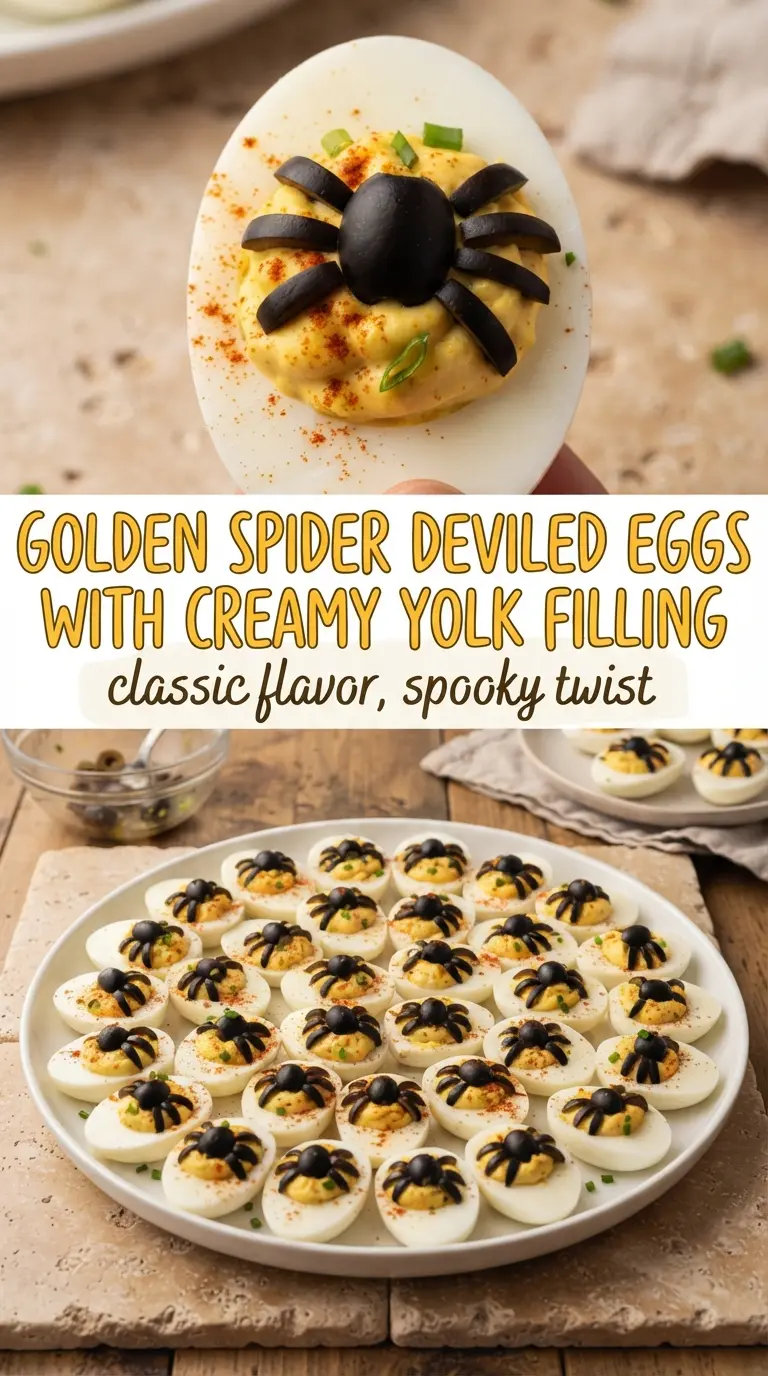
Spider deviled eggs keep everything people already like about a good deviled egg: creamy filling, bright mustard tang, and a tender bite from the whites. The only difference is the finish, and that playful little olive spider turns a familiar appetizer into something people actually stop to look at before they reach for one. They disappear fast because they taste like the classic version, just dressed up with a little more personality.
The filling works because it stays simple. Egg yolks, mayonnaise, Dijon, and a splash of vinegar give you that smooth, lightly sharp base without turning gloopy or heavy. The texture matters here: if the yolks are mashed until completely smooth and the filling is piped instead of spooned, the eggs look cleaner and the spider topping has a neat surface to sit on. Thin olive slices also matter more than most people think. Thick pieces look clumsy; thin slices curl into better little legs and keep the garnish from overpowering the egg.
Below, I’ve included the small details that make these look polished instead of fussy, plus the best way to handle them if you’re making them ahead for a party.
The filling was smooth and held its shape when I piped it, and the olive spiders stayed put even after chilling. I used the star tip like you suggested and they looked like something from a party tray, not just a regular deviled egg.
Save these spider deviled eggs for a spooky appetizer that looks polished, pipes cleanly, and comes together fast.
The Little Detail That Keeps Deviled Eggs from Looking Messy
Spider deviled eggs live or die on presentation. The filling can taste perfect and still look sloppy if it’s spooned in unevenly or if the olive pieces are cut too thick to read as legs. A smooth, piped mound gives you a clean base, and that matters because the spider decoration needs a defined center to sit on. If the filling is loose, the olives slide around. If it’s stiff enough to hold ridges from a piping tip, the whole tray looks intentional.
The other common problem is overfilling the whites. Too much filling pushes up and spills over the edges, which makes the eggs harder to garnish neatly. A modest swirl or small mound gives you enough height for the spider body without crowding the egg. Chill them after assembling so the filling sets slightly and the olive pieces cling better instead of slipping on the surface.
What the Yolks, Mustard, and Olives Are Each Doing Here
- Egg yolks — These are the base of the filling, so if they’re overcooked and chalky, the texture never fully recovers. Start with properly hard-boiled eggs and cool them well before mixing; that keeps the yolks from tasting dry or sulfur-heavy.
- Mayonnaise — Mayo gives the filling its body and that classic deviled egg creaminess. Use the one you actually like eating on its own, because there’s nowhere for a bad mayo flavor to hide here.
- Dijon mustard — Dijon adds sharpness and depth without making the filling taste aggressively mustardy. Yellow mustard works in a pinch, but the flavor is brighter and less rounded.
- White vinegar — This wakes up the yolks and keeps the filling from tasting flat. If you swap in lemon juice, the eggs will still work, but the flavor shifts a little more noticeably.
- Black olives — Slice them thin so they look like legs instead of chunky garnish. Jarred olives are fine here; the important part is the cut, not the brand.
Building the Filling, Then Adding the Spider
Make the yolks completely smooth
Scoop the yolks into a bowl and mash until no dry bits remain. A fork works, but a small masher or fine sieve gives you a smoother filling faster. If the yolks stay lumpy, the piping tip will catch and the finished eggs won’t look as clean. Mix in the mayonnaise, Dijon, vinegar, salt, and pepper until the filling turns thick and glossy.
Pipe for shape, not just convenience
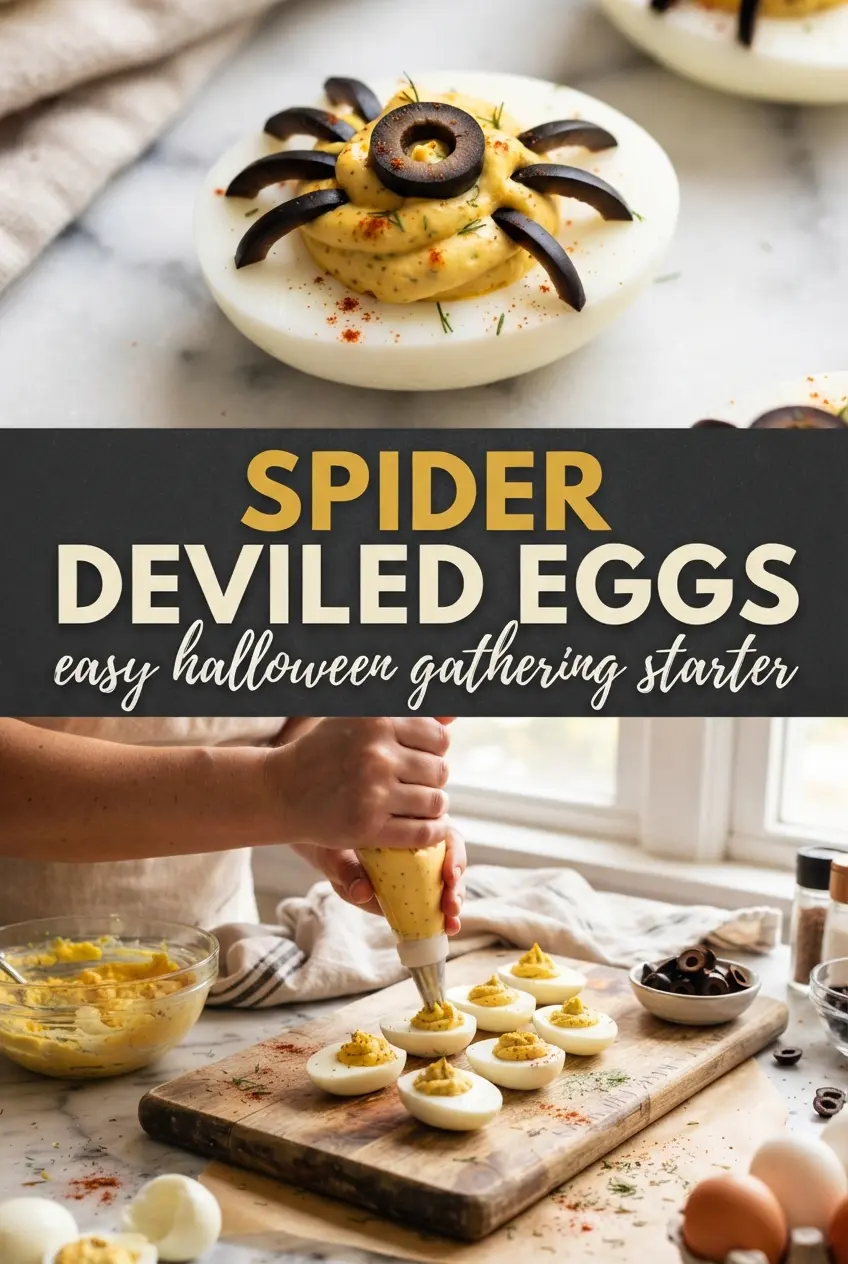
Spooning works, but piping gives these eggs the polished finish that makes the spider decoration look deliberate. Transfer the filling to a piping bag or a zip-top bag with the corner snipped off, then pipe into the egg whites in a neat mound or swirl. If the filling is too stiff to pipe smoothly, add a small spoonful of mayonnaise rather than forcing it through the tip.
Build the spider on a dry, chilled surface
Dust the tops lightly with paprika before adding the olives. Then place one small olive piece in the center for the body and arrange thin slices around it for legs. If the eggs are warm or wet, the olive pieces can slide, so chilling the filled eggs for a few minutes first helps them stay put. Use the tip of a knife or tweezers if you want the legs to fan out evenly.
Ways to Dress These Up or Keep Them Simple
Dairy-Free Spider Deviled Eggs
This recipe is already dairy-free as written, which is handy when you need a party appetizer that works for a wider group. Just check your mayonnaise label if that matters for your table, because some brands use different oils or add-ins that change the flavor.
Sharper, Tangier Filling
Add an extra half teaspoon of vinegar or a small squeeze of lemon if you like a brighter filling. That extra acidity cuts through the richness and makes the egg flavor pop, but too much will thin the mixture and blur the piping detail.
More Polished for a Party Tray
Use a star piping tip for the filling and shave the olive slices as thin as you can. The ridges from the tip catch the paprika and give the eggs more structure, while thinner olive pieces look more like spider legs and less like chopped garnish.
Storage and Reheating
- Refrigerator: Store covered for up to 2 days. The eggs stay tasty, but the garnish looks best the same day.
- Freezer: Don’t freeze deviled eggs. The whites turn rubbery and the filling separates after thawing.
- Reheating: Serve chilled or at cool room temperature. Reheating ruins the texture, so pull them from the fridge about 15 minutes before serving instead of warming them.
Answers to the Questions Worth Asking
Spider Deviled Eggs
Ingredients
Equipment
Method
- Scoop the yolks from the halved eggs into a bowl and mash until smooth, leaving no large lumps.
- Mix the mashed yolks with mayonnaise, Dijon mustard, white vinegar, salt, and pepper until creamy and cohesive.
- Pipe or spoon the yolk mixture back into the egg white halves, filling each cavity evenly.
- Dust lightly with paprika so the tops look lightly speckled.
- Arrange thin olive slices around each yolk to form spider legs, then place a small olive piece as the body.
- Chill the deviled eggs until ready to serve, keeping them covered so the filling stays firm.