
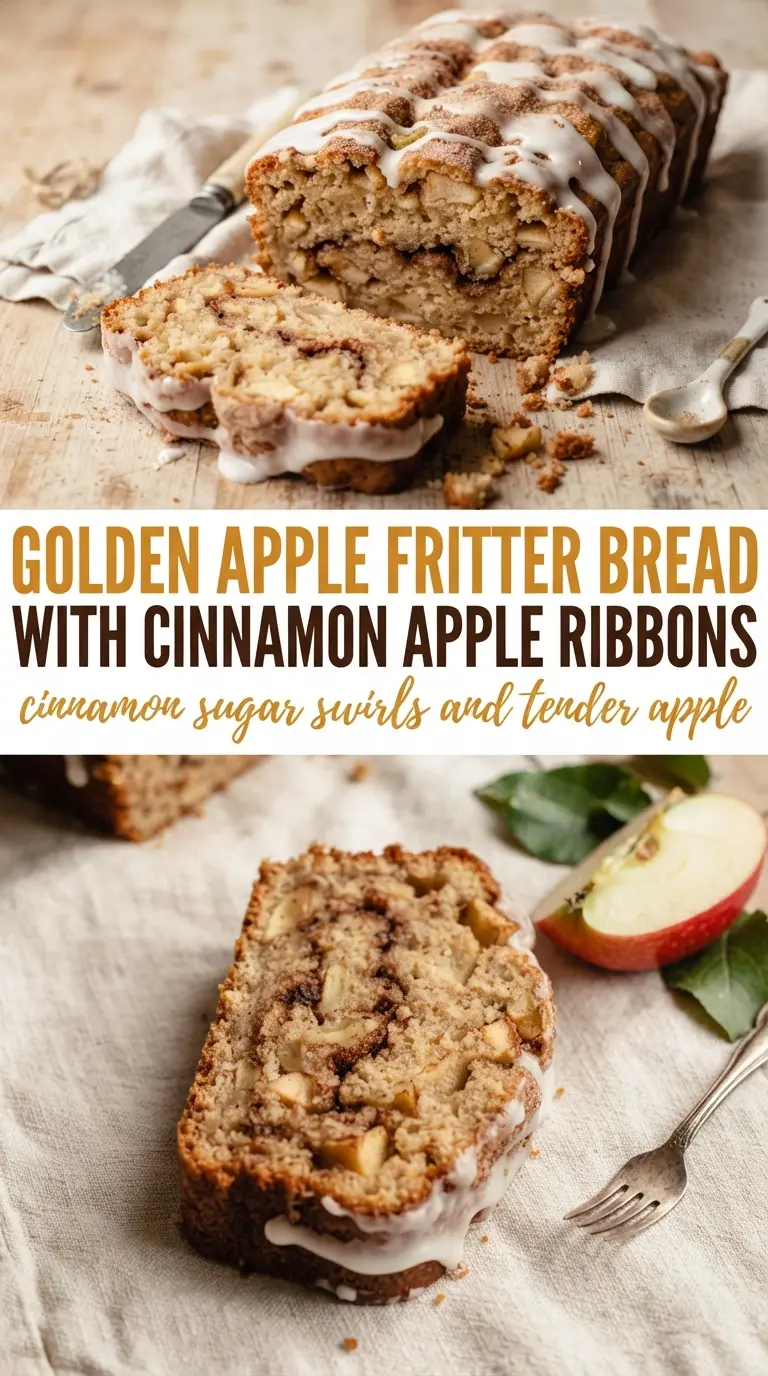
Chunks of tender apple and ribbons of cinnamon sugar turn this loaf into something that slices like quick bread but eats like a bakery treat. The crumb stays soft and moist, the top bakes up with a little crackle, and the glaze sets into a thin sweet finish once the loaf is fully cooled. It has all the cozy apple fritter flavor without the mess of frying.
What makes this version work is the balance: enough brown sugar to keep the bread tender, enough cinnamon to carry the apple flavor, and diced apples small enough to soften without turning the batter watery. The ribbons in the middle matter too. They melt into pockets of cinnamon sugar, which gives each slice those dark, sticky streaks that make this bread taste like more than a standard apple loaf.
The biggest difference between a good loaf and one that turns soggy is timing. Let the bread cool all the way before glazing it, and the finish stays shiny instead of disappearing into the crumb. Below, I’ve included the one step that keeps the apples from sinking and the storage note you’ll want if you’re making this ahead.
The cinnamon ribbons baked into little gooey pockets and the glaze stayed on top once the loaf cooled. I used Honeycrisp apples and the texture was perfect — soft, but not mushy.
Save this Spiced Apple Fritter Bread for the glaze that sets on top and the cinnamon ribbons that run through every slice.
The Bake That Keeps Apple Bread From Turning Dense
Apple bread goes heavy fast when the batter gets overmixed or the apples are left in pieces that are too large. The flour starts developing gluten the minute it’s worked too much, and big apple chunks can weigh down the loaf before the center sets. This version avoids both problems by keeping the mixing brief and the apple dice small enough to soften into the crumb instead of fighting it.
The cinnamon sugar ribbons also do more than add sweetness. They create thin layers that interrupt the batter, which keeps the loaf from eating like one solid block of spice cake. If your previous apple breads baked up with a gummy middle, the issue was usually too much moisture in too many large pieces. Small dice, a 350°F oven, and a full cool-down before slicing solve most of that.
What Each Ingredient Is Actually Doing in This Loaf
- All-purpose flour — This gives the bread its structure without making it tough. Bread flour is too strong here; it pushes the crumb toward chew instead of that soft, tender slice you want.
- Brown sugar — This is doing double duty: sweetness and moisture. The molasses in brown sugar keeps the loaf softer than white sugar would, and it helps the cinnamon ribbons melt into a deeper caramel note.
- Butter — Softened butter creams with the sugar and traps air, which gives the loaf a lighter texture. If the butter is cold, the batter turns dense because it never emulsifies properly with the sugar and eggs.
- Apples — Use a firm, baking-friendly apple so the pieces hold shape. Soft apples can disappear into the crumb or turn mushy, which makes the center feel wet instead of tender.
- Cinnamon — This ties the loaf and the ribbon layer together. It’s worth using fresh cinnamon here because stale spice flattens the whole bread.
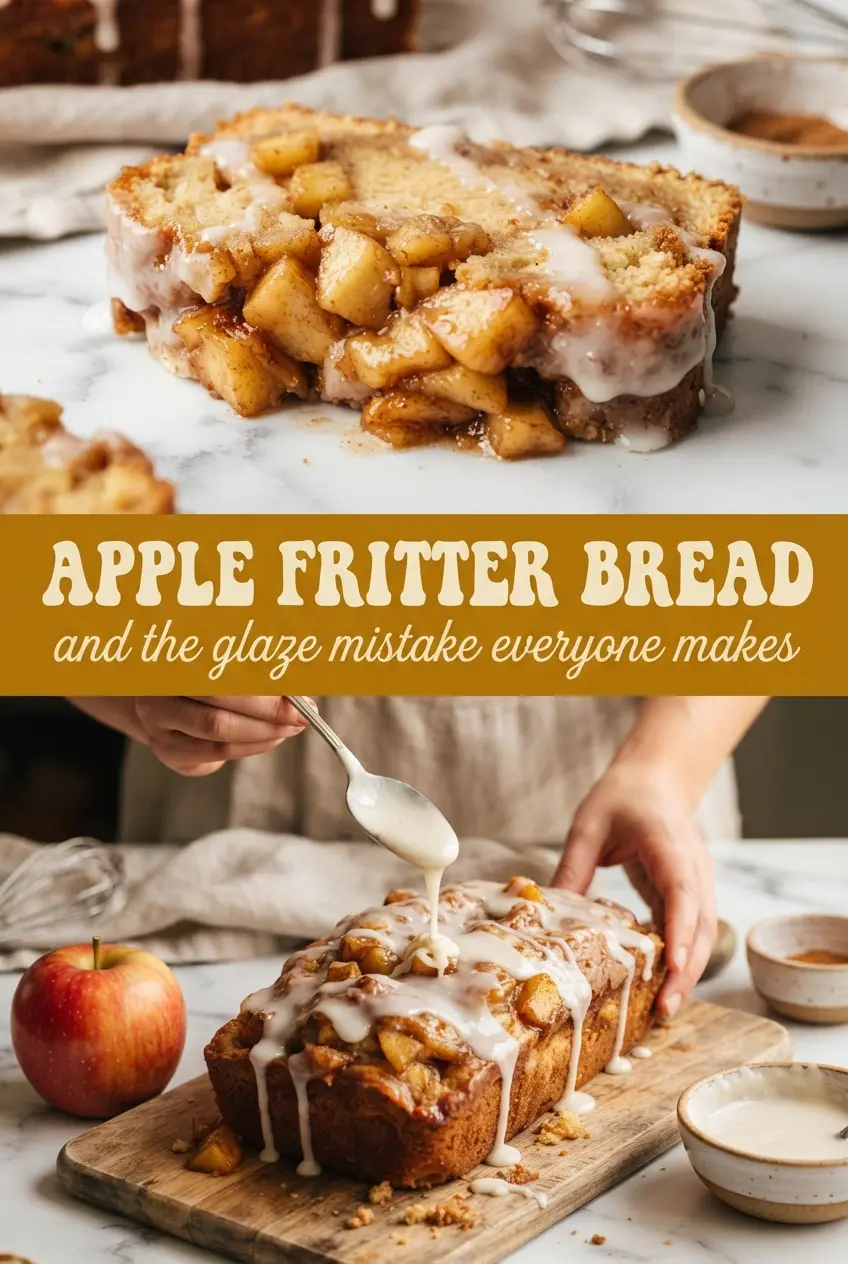
- Powdered sugar and milk — The glaze should be thin enough to drizzle but thick enough to sit on top. Add the milk a teaspoon at a time if needed; a loose glaze runs off the loaf instead of setting in that shiny finish.
Building the Batter and Layers Without Crushing the Crumb
Creaming the Base
Beat the softened butter and brown sugar until the mixture looks pale and a little fluffy. That air matters because it gives the loaf lift before the baking powder starts working. Add the eggs one at a time so the batter stays smooth; if it looks curdled, keep mixing and it will come back together once the dry ingredients go in.
Bringing in the Dry Ingredients
Add the flour, baking powder, salt, and cinnamon with the milk, mixing only until the batter disappears. Stop as soon as you stop seeing dry flour. Overmixing at this stage makes the loaf tight, and a tight loaf is the fastest route to a gummy center around the apples.
Folding in the Apples
Fold the diced apples in by hand so they stay intact. A gentle fold keeps the batter from deflating and keeps the fruit evenly distributed. If the apples are dripping wet after dicing, pat them dry first; extra surface moisture can make the batter looser than it should be.
Layering the Cinnamon Sugar Ribbons
Spread part of the batter into the pan, add some of the cinnamon sugar, then repeat with the remaining batter and ribbon mixture. This creates streaks instead of one sugary layer sinking to the bottom. The goal is to see distinct swirls when you cut the loaf, not a solid crust of sugar at the base.
Baking Until the Center Sets
Bake until the top is deep golden and a tester comes out with moist crumbs, not wet batter. The loaf should feel set in the middle when you gently press the top, but it shouldn’t be hard. If the top browns too quickly, tent it loosely with foil so the center finishes without drying out the edges.
Cooling and Glazing
Let the bread cool completely before you drizzle on the glaze. Warm bread melts the sugar right into the crumb, and that’s the one mistake that turns this from glossy to dull. A cooled loaf holds the glaze on top, where it sets into that thin crackly finish.
How to Adapt This Loaf When You Need a Different Pan, Flour, or Finish
Gluten-Free Version
Use a 1:1 gluten-free baking flour with xanthan gum already added. The loaf will still be tender, but it may need a few extra minutes in the oven because gluten-free batters hold moisture differently.
Dairy-Free Swap
Use a plant-based butter stick and an unsweetened non-dairy milk. The texture stays close to the original, though the flavor will lose a little of the buttery bakery note that makes the loaf taste so rich.
Apple Swaps That Still Work
Honeycrisp, Granny Smith, and Braeburn all hold up well. Use a tart apple if you want more contrast against the sweet glaze, or a sweeter apple if you want the loaf to lean dessert-like.
Storage and Reheating
- Refrigerator: Store for up to 4 days in an airtight container. The crumb stays moist, but the glaze softens a little after the first day.
- Freezer: Freeze the ungla zed loaf tightly wrapped for up to 2 months. Thaw it at room temperature, then glaze after it’s fully thawed so the finish stays neat.
- Reheating: Warm slices briefly in the microwave or in a low oven. Too much heat makes the glaze melt off and can dry out the edges before the center warms through.
Answers to the Questions Worth Asking
Spiced Apple Fritter Bread
Ingredients
Equipment
Method
- Heat the oven to 350°F and grease a loaf pan.
- Cream the softened butter and brown sugar, beat in the eggs, then mix in the all-purpose flour, baking powder, salt, cinnamon, and milk until a thick batter forms.
- Fold in the diced apples until evenly distributed.
- Mix the ribbon ingredients (brown sugar and cinnamon) together, then layer strips through the batter in the pan.
- Bake at 350°F for 55 minutes, until the loaf is set and a tester comes out clean.
- Cool the loaf completely before glazing.
- Whisk the glaze ingredients (powdered sugar and milk) and drizzle over the cooled loaf to coat the top.