
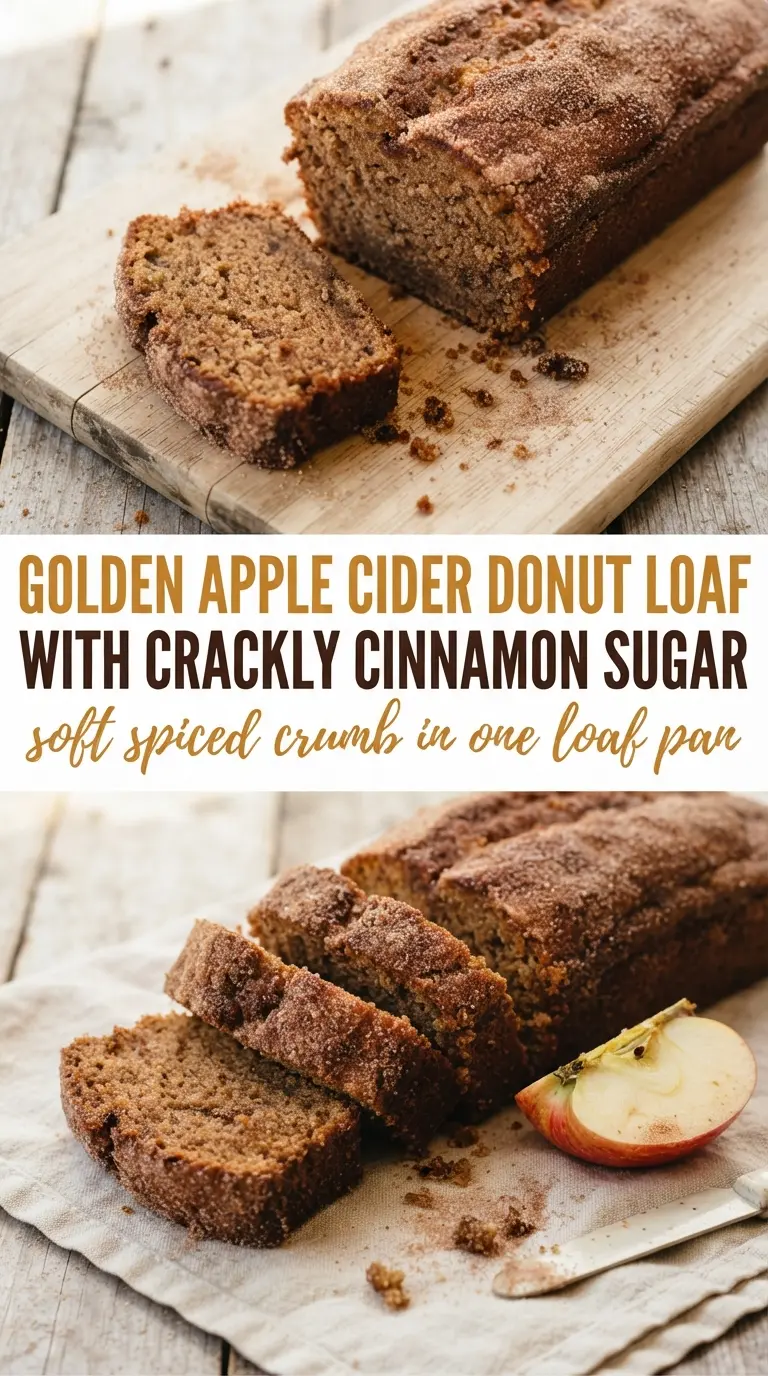
Spiced Apple Cider Donut Loaf bakes up with a tender, plush crumb and that unmistakable cinnamon-sugar finish that cracks just a little when you slice into it. The apple flavor runs deeper than a standard quick bread because the cider gets reduced first, which concentrates it into something warm, tangy, and worth noticing in every bite. The coating on top gives you the donut-shop feeling without frying a thing.
That reduced cider is the difference here. If you skip that step and pour in straight cider, the loaf tastes flatter and more diluted, and you lose the concentrated apple note that makes this recipe stand out. The buttermilk keeps the crumb soft and gives the baking soda something to react with, while the melted butter makes the loaf rich without turning it heavy.
Below, you’ll find the exact point where the cider should be reduced, how to keep the loaf tender instead of dense, and the trick for getting the cinnamon sugar to cling in a proper crust instead of dissolving into the top.
The cider reduction made all the difference and the cinnamon sugar stayed crunchy on top even the next day. I sliced it warm and it had that real apple cider donut taste without being greasy at all.
Save this Spiced Apple Cider Donut Loaf for a soft, cider-kissed crumb and crackly cinnamon sugar topping that tastes like a bakery donut in loaf form.
The Reason the Apple Flavor Tastes Deep Instead of Watery
The biggest mistake with cider breads is using the liquid straight from the carton and expecting it to carry the whole loaf. Apple cider has good flavor, but it is mostly water, and water doesn’t bake down into anything memorable. Reducing it to half a cup concentrates the apple note and gives the batter a more rounded, almost caramelized edge after baking.
The other place this loaf goes wrong is overmixing. Once the flour goes in, the batter should look thick and a little rough, not smooth and glossy. Stir it just until the dry streaks disappear. If you beat it until it looks perfectly even, the loaf turns tight instead of tender.
- Reduced apple cider — This is the flavor anchor. Let it simmer until it measures 1/2 cup, then cool it before adding it to the batter so it doesn’t melt the butter or scramble the eggs.
- Buttermilk — It brings tang and softness, and its acidity helps the baking soda do its job. If you don’t have buttermilk, use 1/2 cup whole milk mixed with 1 1/2 teaspoons lemon juice or vinegar and let it sit for 5 minutes.
- Brown sugar — It adds moisture and a deeper sweetness than white sugar alone. Light or dark brown sugar both work; dark brown sugar gives a slightly stronger molasses note.
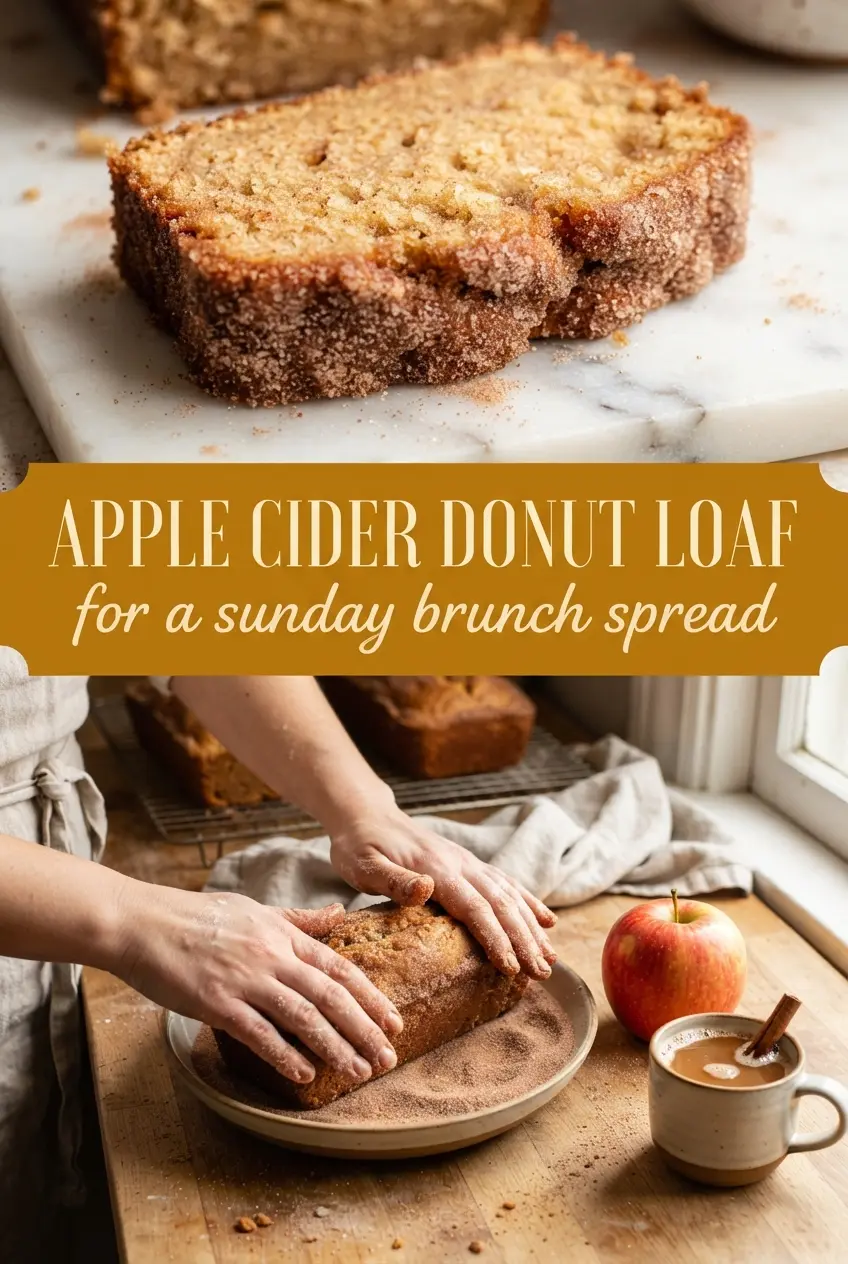
- Cinnamon sugar coating — The melted butter brushed on the warm loaf is what helps the sugar stick. If the loaf cools completely before coating, the topping won’t cling as well and you’ll lose that donut-shop finish.
Building the Batter Without Losing the Tender Crumb
- Flour, baking powder, baking soda, salt, and spices — Whisk these together first so the leaveners and spices distribute evenly. That keeps the loaf from baking with little pockets of baking soda or a clump of cinnamon in one slice.
- Melted butter — Butter gives the loaf richness and helps it stay soft after cooling. Melted butter also mixes cleanly with the sugars, but it should be warm, not hot, when it hits the eggs and buttermilk.
- Eggs — They give structure and help the loaf rise evenly. Room-temperature eggs blend more smoothly into the batter, which lowers the chance of streaks or curdling.
- Cinnamon and nutmeg — Cinnamon carries the main warm-spice flavor, while nutmeg gives the crumb a bakery-style depth. Freshly grated nutmeg is excellent here, but a jarred ground version still does the job well.
The 20 Minutes That Matter Most
Reducing the Cider
Pour the cider into a small saucepan and simmer it until it drops to about half a cup. You want small, steady bubbles and steam, not a hard boil that spits sugar onto the stove. The color should deepen a little and the liquid will smell much more concentrated when it’s ready. Cool it fully before it goes into the batter; warm cider can thin the mixture and throw off the texture.
Mixing the Wet and Dry Ingredients
Whisk the dry ingredients in one bowl and the butter, brown sugar, eggs, buttermilk, and cooled cider in another. The batter may look slightly separated at first, and that’s fine. Once the dry ingredients go in, stir gently until the flour disappears. Stop there. A smooth, overworked batter bakes up dense, especially in a loaf pan where the batter has nowhere to spread out.
Baking and Coating the Loaf
Bake until the top is set, deeply golden, and a tester comes out with a few moist crumbs, not wet batter. If the top browns too fast before the center is done, tent it loosely with foil for the last part of baking. Let the loaf cool for about 10 minutes, then brush it with melted butter while it’s still warm enough to catch the sugar. Roll it in the cinnamon sugar while the coating is fresh; that’s what gives you the crackly, donut-like shell.
What to Change When You Want a Different Version
Dairy-Free Version
Use a plant-based butter in both the batter and the coating, and swap the buttermilk for unsweetened almond milk or oat milk mixed with 1 1/2 teaspoons lemon juice. The crumb will still be soft, though the flavor loses a little of the tang that buttermilk brings.
Gluten-Free Loaf
Replace the all-purpose flour with a 1:1 gluten-free baking blend that includes xanthan gum. The loaf will be a little more delicate, so let it cool fully before slicing or it can crumble at the edges.
Extra-Spiced Brunch Loaf
Add 1/4 teaspoon cloves or allspice if you want a stronger bakery-style spice note. Keep the amount small; too much and the apple cider gets buried.
Storage and Reheating
- Refrigerator: Store covered for up to 4 days. The cinnamon sugar softens a bit after day one, but the loaf stays moist.
- Freezer: Freeze slices tightly wrapped for up to 2 months. Freeze before adding the sugar coating for the best texture, then rewarm and coat after thawing if you want the topping to stay crisp.
- Reheating: Warm slices in a 300°F oven for 8 to 10 minutes or microwave briefly. Don’t overheat it, or the crumb will dry out and the sugar coating can melt into the top.
Answers to the Questions Worth Asking
Spiced Apple Cider Donut Loaf
Ingredients
Equipment
Method
- Simmer apple cider for 15 to 20 minutes until reduced to 1/2 cup, then cool.
- Heat the oven to 350°F and grease a loaf pan, then set aside.
- Whisk the all-purpose flour, baking powder, baking soda, cinnamon, nutmeg, and salt.
- Whisk the melted butter, brown sugar, eggs, buttermilk, and reduced cider, then fold into the dry ingredients.
- Bake for 50 to 55 minutes, until a toothpick comes out with only a few moist crumbs.
- Cool for 10 minutes.
- Brush the loaf with melted butter and roll in the cinnamon sugar.