
The panko is the first thing to turn golden, but the real sign this casserole is coming together is the sauce bubbling around the edges while the center sets. I bake this Southern Lobster Mac and Cheese until the cheddar top is bronzed and the lobster is tucked through every scoop, not piled in one corner.
The pasta goes into the oven a minute shy of al dente, which gives it room to finish in the cheese sauce instead of turning soft and swollen. I also take the saucepan off the heat before adding the cheeses; they melt into the thickened milk smoothly without being cooked too hard. Sharp cheddar brings the familiar bite, Monterey Jack keeps the sauce mellow, and the lobster makes each serving feel like a proper main dish.

Kitchen Note
Take the saucepan off the heat before you whisk in the cheddar and Monterey Jack. The residual warmth melts both cheeses without pushing the sauce into a grainy, oily state.
Save this Southern Lobster Mac and Cheese for the nights when you want a golden panko top, a creamy cheddar sauce, and lobster in every scoop.
Why the Macaroni Needs to Be Slightly Underdone Before It Bakes
Macaroni that tastes perfectly tender straight out of the pot is already too far along for this casserole. It still has 20 to 25 minutes in the oven, surrounded by a sauce that the pasta will continue to absorb. Starting it one minute short of al dente leaves enough structure for the elbows to finish cooking without collapsing into a soft, heavy layer.
That little bit of restraint matters even more in a dish with lobster. The pasta and sauce need time together in the oven, but the cooked lobster shouldn’t be subjected to extra baking while you wait for overcooked macaroni to soften. Drain the elbows as soon as they reach that just-firm stage, then combine them with the sauce and lobster so everything finishes at the same pace.
The sauce should look slightly looser than you want the finished casserole to be. It thickens as it bakes and settles during its brief rest, while the cheddar on top and the panko form a crisp cap. A sauce that already feels stiff in the saucepan won’t have much room to move around the pasta in the oven.
What the Lobster, Two Cheeses, and Panko Each Bring
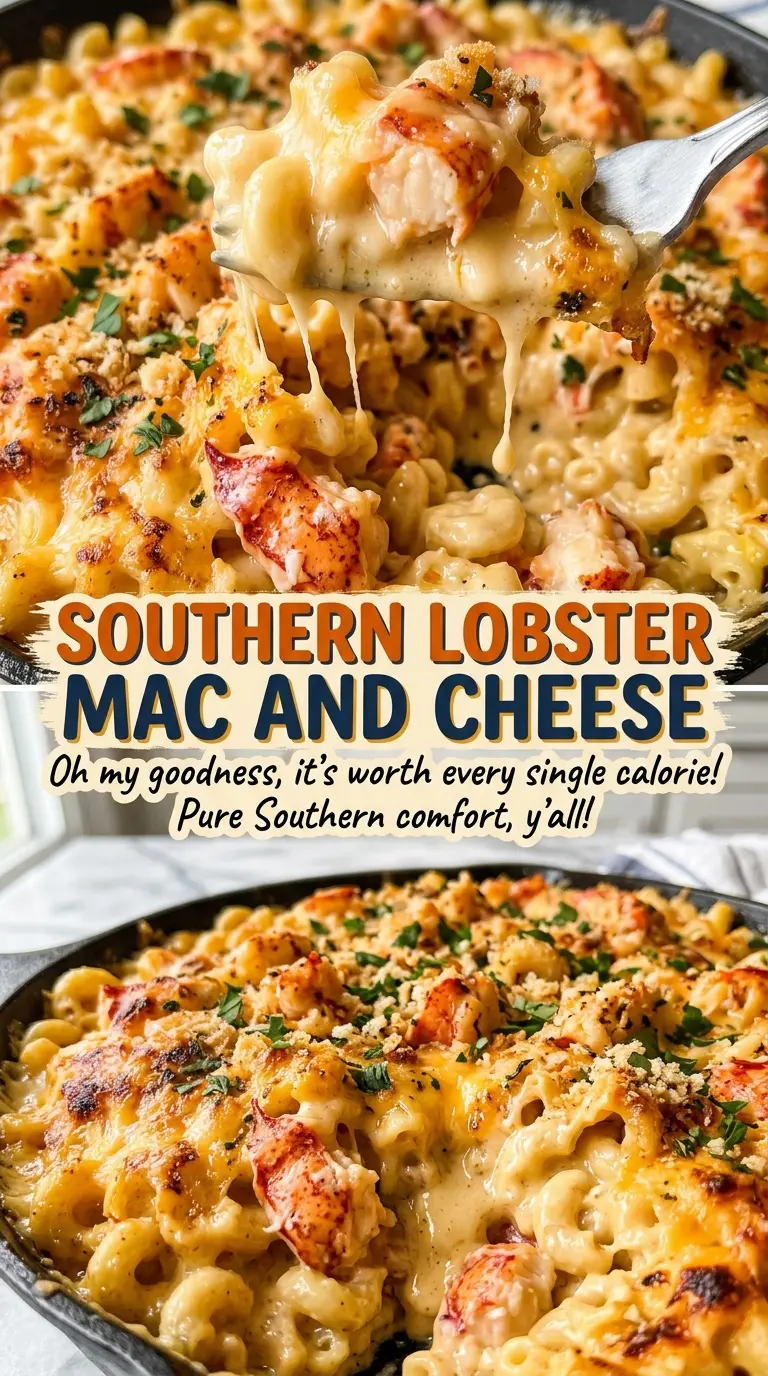
- Cooked lobster meat — Use cooked meat and chop it roughly so you get distinct pieces throughout the casserole. Lobster has a sweet, delicate taste that stands out against the cheeses; there isn’t a direct swap that gives the same result. Avoid tiny, finely minced pieces, which disappear into the macaroni.
- Sharp cheddar — Its tang gives the sauce the recognizable mac-and-cheese flavor, and the reserved portion creates the cheesy layer under the breadcrumbs. Choose a sharp cheddar you enjoy eating on its own. A milder cheese would make the whole dish less pronounced.
- Monterey Jack — Jack melts into a smooth, mild sauce alongside the sharper cheddar, keeping the overall flavor balanced rather than one-note. The two cheeses do different jobs here, so changing the blend changes both taste and texture.
- Whole milk, butter, and flour — Together they form the creamy base. The flour cooks briefly in melted butter before the milk goes in, which helps thicken the sauce without leaving a raw-flour taste. Whole milk gives the sauce body; using a thinner milk can leave it less rich.
- Elbow macaroni — The curves hold onto sauce and make the portions easy to serve. Cook it just shy of tender before it goes into the baking dish; the oven is part of its cooking time, not just a way to brown the top.
- Panko and olive oil — Panko gives the topping a light, crisp texture, while the oil helps the crumbs toast in the oven. Stir them together before scattering them over the cheese so the topping browns more evenly.
- Dry mustard, paprika, and black pepper — These season the cheese sauce without competing with the lobster. The dry mustard gives the cheddar a little lift, while paprika and pepper add gentle warmth.
Building the Sauce and Getting the Topping Golden
Stop the macaroni before it turns fully tender
Heat the oven to 350°F and grease a 9×13-inch baking dish. Bring the water to a boil in a 6-quart pot, add the kosher salt and elbow macaroni, and cook it until one minute short of al dente according to the package directions. Drain the pasta and return it to the pot; don’t leave it sitting in the cooking water, where it will keep softening.
Have the cooked lobster roughly chopped and ready to fold in. Since the lobster is already cooked, it doesn’t need a separate cooking stage in this casserole. Keeping the pasta firm at this point gives it the best chance of holding its shape through the bake.
Whisk a sauce that coats the spoon
Melt the butter in a 3-quart saucepan over medium heat, whisk in the flour, and cook the mixture for 1 to 2 minutes. Add the milk gradually while whisking, then cook for 5 to 7 minutes, stirring often. The sauce is ready when it thickens enough to coat a spoon; if it still looks thin, give it a little more time rather than rushing to add the cheese.
Stir in the dry mustard, paprika, and black pepper, then take the pan off the heat. Whisk in the cheddar and Monterey Jack until the cheese has melted into the sauce. The sauce should look smooth and creamy, not stringy or oily.
Layer the cheddar and panko before baking
Add the lobster and cheese sauce to the macaroni and stir until the elbows are coated. Spread the mixture in the prepared baking dish. In a small bowl, stir the panko with the olive oil, then sprinkle the reserved cheddar over the macaroni and scatter the oiled crumbs evenly across the top.
Bake for 20 to 25 minutes, until the topping is golden, the sauce bubbles at the edges, and the center reaches 165°F on an instant-read thermometer. If the edges are bubbling but the middle hasn’t reached temperature, give it more time in the oven. Let the casserole rest for 10 minutes before serving so the sauce settles and portions hold together.
Three Practical Ways to Adapt the Lobster Mac
Make the lobster pieces more distinct
Keep the cooked lobster in larger rough pieces when you chop it, then fold it through the macaroni gently. The portions will have more noticeable lobster bites, while smaller rough pieces spread the lobster flavor more evenly through each serving.
Make a gluten-free version
Replace the elbow macaroni with an equal weight of gluten-free elbow pasta, use a 1:1 gluten-free flour blend in place of the all-purpose flour, and choose gluten-free panko. Cook the pasta according to its package and stop it one minute short of al dente; gluten-free pasta can soften quickly, so check it promptly.
Skip the breadcrumb topping
Leave off the panko and olive oil, and finish with the reserved cheddar alone. The top will be softer and more cheese-forward rather than crisp, but the sauce and lobster underneath stay the same.
Storage and Reheating
- Refrigerator: Keep leftovers covered in the refrigerator for 3 to 4 days. The sauce will thicken and the pasta will soften as it sits.
- Freezer: Freeze cooled portions in an airtight freezer-safe container for up to 2 months. The pasta may be softer after thawing, and the panko topping won’t stay as crisp.
- Reheating: Reheat individual portions in the microwave or warm a covered baking dish in the oven until hot throughout. Avoid heating uncovered for a long stretch, which can dry out the exposed pasta and topping.
Questions That Come Up With Lobster Mac and Cheese
Southern Lobster Mac and Cheese
Ingredients
Equipment
Method
- Heat the oven to 350°F.
- Grease a 9x13-inch baking dish.
- Bring the water to a boil in a 6-quart pot.
- Add the salt and macaroni, and cook until 1 minute short of al dente according to the package directions.
- Drain the macaroni and return it to the pot.
- Melt the butter in a 3-quart saucepan over medium heat.
- Whisk in the flour and cook for 1 to 2 minutes.
- Gradually whisk in the milk and cook, stirring often, for 5 to 7 minutes, until the sauce thickens enough to coat a spoon.
- Stir in the dry mustard, paprika, and black pepper.
- Remove the pan from the heat.
- Whisk in 2 cups of the cheddar and all of the Monterey Jack until melted.
- Add the lobster and cheese sauce to the macaroni and stir to coat.
- Spread the mixture in the prepared baking dish.
- Stir the panko with the olive oil in a small bowl.
- Sprinkle the reserved cheddar over the macaroni.
- Scatter the panko mixture evenly on top.
- Bake for 20 to 25 minutes, until the top is golden, the sauce bubbles at the edges, and the center reaches 165°F on an instant-read thermometer.
- Let the mac and cheese rest for 10 minutes before serving.