
Fork-tender beef, soft potatoes, and carrots soaking up a rich savory broth turn this slow cooker pot roast into the kind of dinner that disappears fast and leaves the crockpot scraped clean. The roast comes out deeply seasoned, the vegetables hold their shape without turning mushy, and the juices finish everything with the kind of comfort that tastes like time well spent.
The trick is starting with chuck roast, not a leaner cut. Chuck has enough marbling and connective tissue to soften into something spoon-tender over a long cook. Layering the vegetables underneath keeps them out of the driest heat zone, and a little Worcestershire sauce gives the broth the backbone it needs without turning the whole pot into gravy.
Below, I’ve included the one step that keeps the beef from tasting flat, the ingredient swaps that still give you a satisfying result, and what to do if your vegetables finish sooner than the roast. Once you’ve made it this way, the method starts to feel less like a guess and more like muscle memory.
The roast was fall-apart tender and the potatoes soaked up the broth without getting mushy. I seared it first like suggested and the flavor was miles better than my usual slow cooker version.
Save this slow cooker pot roast for the kind of dinner where you want fork-tender beef, buttery vegetables, and zero last-minute scrambling.
The Reason This Pot Roast Stays Tender Instead of Drying Out
Pot roast goes wrong when the cut is too lean, the liquid is too shallow, or the cook stops too early. Chuck roast fixes the first problem because it has enough connective tissue to turn silky over time. The slow cooker handles the second and third problems by holding a steady low heat long enough for the meat fibers to relax instead of seize up.
The vegetables matter here too. Potatoes and carrots go in the bottom because they can take the longest exposure to heat without falling apart. If you pile them on top, they sit out of the broth and can end up oddly firm while the roast does all the work underneath.
- Chuck roast — This is the cut that earns its keep. It has enough fat and collagen to become tender, and a lean roast won’t give you the same softness no matter how long it cooks.
- Beef broth — Use a broth you’d actually drink. A thin, bland broth leaves the whole pot flat, while a decent one gives the cooking liquid enough depth to taste like dinner instead of water with seasoning.
- Worcestershire sauce — This adds the savory edge the broth alone can’t carry. There isn’t a perfect substitute, but soy sauce plus a splash of vinegar will get you close in a pinch.
- Thyme — Dried thyme works well here because it holds up over the long cook. If you use fresh thyme, add a little more since some of the perfume cooks off during the day.
- Potatoes — Waxy or all-purpose potatoes hold their shape better than russets. Russets will soften and break down, which is fine if you want a thicker, stew-like pot.
Building the Crockpot in the Right Order
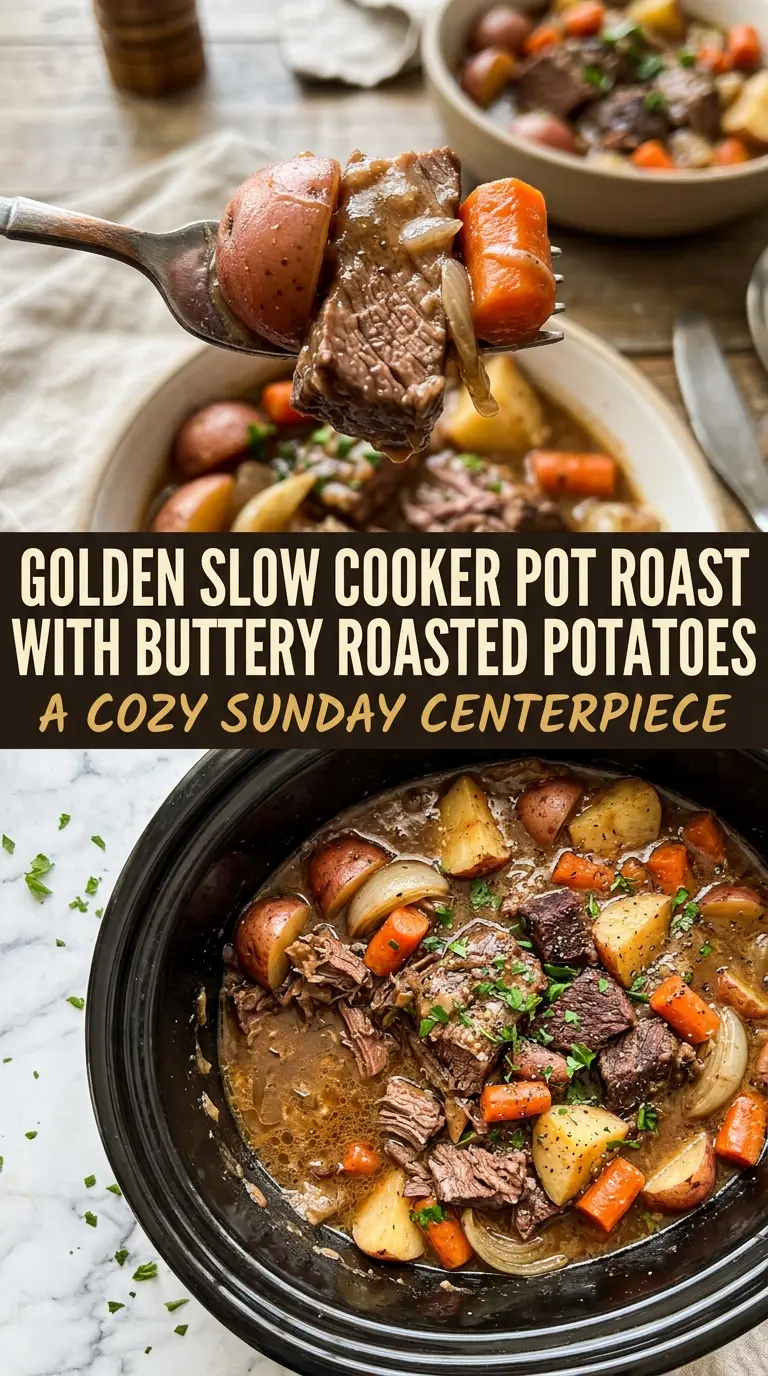
Beef chuck roast — This is the cut that works because it starts tough. That toughness is what lets it become tender after hours of low heat. If you swap in a lean roast, expect slices instead of shreddable meat.
Broth and Worcestershire — These build the cooking liquid, but they’re also seasoning the meat from the outside in. The broth should come up around the vegetables, not drown the roast. Too much liquid won’t ruin the dish, but it dilutes the flavor you worked for.
Potatoes and carrots — Cut them into even, hearty pieces so they cook at the same pace. Small pieces turn soft before the beef is ready. Larger chunks hold up better and give you that satisfying, spoonable texture at the end.
Onion — Onion melts into the broth and sharpens it just enough to keep the pot roast from tasting one-dimensional. Yellow onion is the best everyday choice here.
Tip for better flavor — If you have time, sear the roast in a hot skillet before it goes into the crockpot. That browned crust brings in a deeper, roasted flavor that the slow cooker alone can’t build.
Cooking the Roast Until It Gives Up Easy
Seasoning the Beef Well
Salt and pepper the roast generously on all sides before it goes into the slow cooker. A roast this large needs more seasoning than people usually think, because the long cook tempers the salt by the time dinner is ready. If the meat tastes flat at the end, it usually started that way.
Setting Up the Crockpot
Spread the potatoes, carrots, and onion across the bottom of the crockpot, then set the roast on top. That keeps the beef from sitting in direct contact with the hottest surface and lets the vegetables catch the drippings as they cook. Pour the broth and Worcestershire over everything, then scatter the thyme across the top so the herbs infuse the liquid evenly.
Cooking Low and Slow
Cover the pot and cook until the beef breaks apart with a fork and the vegetables are tender at the center. Low for 8 to 9 hours gives the most reliable texture. High for 5 to 6 hours works when you’re short on time, but the meat usually tastes a little less silky. If the beef is still tight and springy, it needs more time, not more heat.
Finishing Before Serving
Lift the roast out and let it rest for a few minutes before slicing or shredding. That short pause keeps the juices from running all over the cutting board. Spoon the vegetables and broth into the serving dish while the meat rests, then return the beef on top so it stays hot and glossy.
What to Change When You Need This Roast to Fit the Night
Dairy-Free and Naturally Gluten-Free
This version already fits both, as long as your Worcestershire sauce is gluten-free. That makes it an easy dinner for mixed tables without changing the texture or the cooking time.
If You Want a Thicker Gravy
After the roast comes out, transfer the liquid to a saucepan and simmer it until it tightens up a bit. If you want it thicker still, whisk in a small cornstarch slurry at the end. Don’t add starch directly to the crockpot early or it can turn the broth gluey.
For a More Root-Vegetable Forward Pot Roast
Swap half the potatoes for parsnips or turnips if you want a sharper, earthier finish. They hold up well in the long cook and make the dish taste a little less like classic Sunday roast and a little more rustic.
Storage and Reheating
- Refrigerator: Store leftovers in an airtight container for up to 4 days. The broth helps keep the beef from drying out, and the flavor usually deepens overnight.
- Freezer: This freezes well, especially the beef and broth. Freeze in portions for up to 3 months; the potatoes soften a bit after thawing, but the roast itself holds up nicely.
- Reheating: Warm gently on the stove or in the microwave with a splash of broth. High heat is the mistake that turns leftover pot roast stringy, so reheat it just until hot.
Answers to the Questions Worth Asking
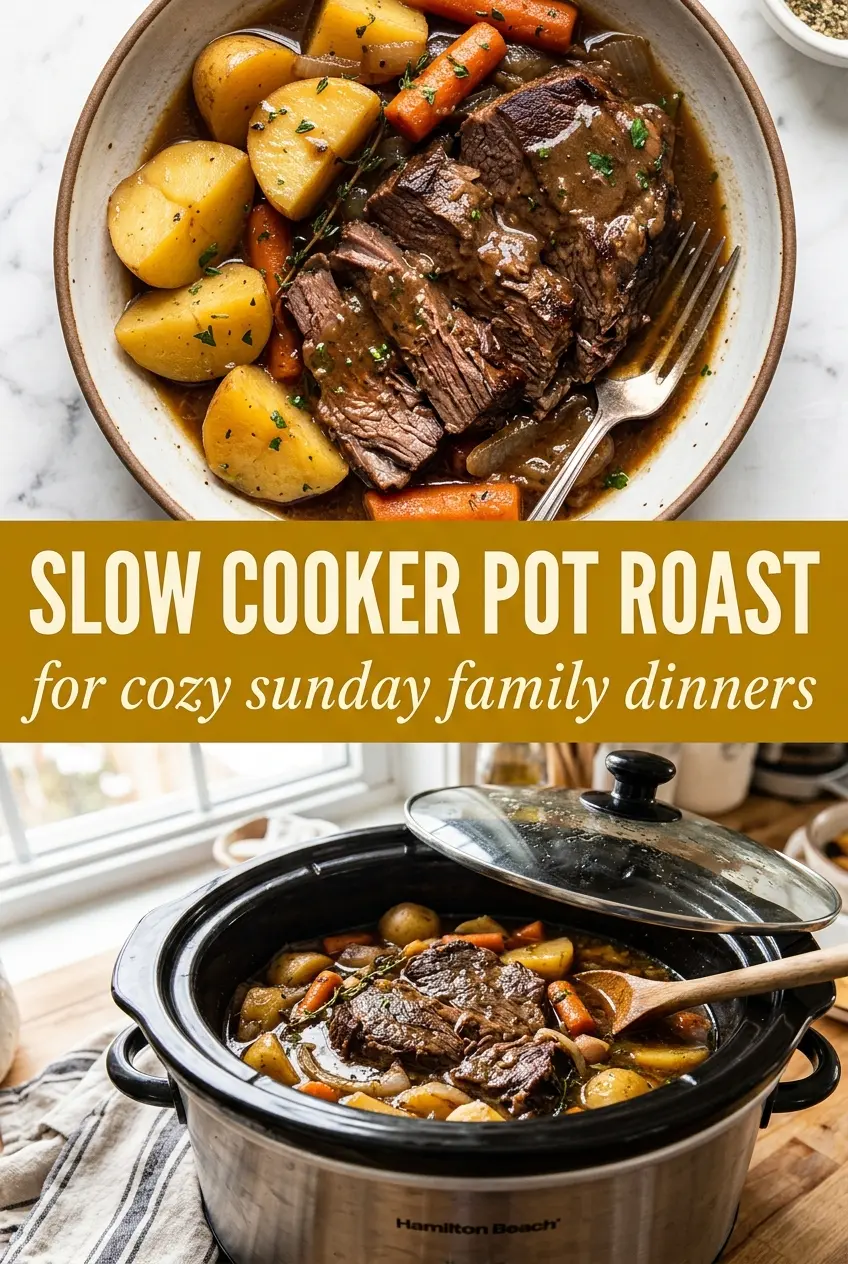
Slow Cooker Pot Roast
Ingredients
Equipment
Method
- Season the beef chuck roast generously with salt and pepper, making sure the surface is evenly coated.
- Place the potatoes, carrots, and onion in the bottom of the crockpot in an even layer.
- Set the seasoned roast on top of the vegetables so it sits above the base layer.
- Pour in the beef broth and Worcestershire sauce, then sprinkle thyme over the top of the roast.
- Cover and cook on LOW for 8-9 hours, or HIGH for 5-6 hours, until the beef is fork-tender and the vegetables are soft.
- Shred or slice the beef and serve with the vegetables and pan juices, spooning the broth over the meat.