
Golden chicken thighs with sticky maple Dijon glaze hit the table with crisp skin, caramelized edges, and vegetables that pick up every bit of the pan sauce. The best part is that the chicken roasts right alongside the carrots and Brussels sprouts, so the glaze has time to thicken and cling while the vegetables soften at the edges instead of turning soggy.
This version works because the chicken goes in dry and the pan stays roomy. Patting the thighs dry before they hit the oven gives the skin a head start, and cutting the vegetables to a similar size keeps the carrots from staying hard while the sprouts overcook. The maple and Dijon do different jobs here: the maple brings color and a sticky finish, while the mustard cuts through the sweetness so the dish tastes balanced instead of heavy.
Below, I’ll walk through the small details that keep the skin crisp, the glaze from burning, and the vegetables tender at the same time. There’s also a simple way to adjust the pan for what you’ve got on hand without losing the parts that make this dinner work.
The glaze turned sticky and glossy in the oven, and the Brussels sprouts soaked up the flavor instead of getting mushy. I used the basting trick halfway through and the chicken skin came out crisp, not soft.
Save this Sheet Pan Maple Dijon Chicken for the nights when you want a sticky glaze, crisp chicken skin, and one pan to clean up.
The Reason the Glaze Sticks Instead of Sliding Off
The biggest mistake with maple mustard chicken is treating the glaze like a sauce that can sit in the oven forever. Maple syrup burns faster than most people expect, and if the pan is crowded, the vegetables steam before they ever caramelize. The fix is a hot oven, a single layer, and a light hand with the glaze at the start so it can concentrate instead of scorch.
Chicken thighs are the right cut here because they stay juicy long enough for the glaze to brown properly. Breasts can work, but they cook faster and give you less margin for error. Thighs also handle the higher heat better, which means you get crisp skin and deeply browned edges without drying out the meat underneath.
- Bone-in chicken thighs — The bone slows down the cook just enough for the skin to render and crisp before the meat dries out. Boneless thighs work in a pinch, but they’ll roast faster and won’t give you quite the same deep, juicy result.
- Maple syrup — This is what gives the glaze its color and that sticky finish on the chicken and vegetables. Use real maple syrup, not pancake syrup, or the glaze turns thinner and sweeter without the same caramel notes.
- Dijon mustard — Dijon brings sharpness and helps emulsify the glaze so it clings instead of separating. Grainy mustard can work, but it’ll taste a little rougher and less polished.
- Brussels sprouts and carrots — These hold up to the roast and catch the glaze in the cut edges and crevices. If you swap the vegetables, choose sturdy ones that can survive 35 to 40 minutes at high heat.
Building the Pan So Everything Finishes at the Same Time
Whisking the Glaze
Start by mixing the maple syrup, Dijon, garlic, thyme, salt, and pepper until smooth and glossy. The garlic should be evenly dispersed so it doesn’t burn in little clumps on the pan. If the mixture looks loose, that’s fine; it will thicken as it roasts and reduces.
Setting Up the Sheet Pan
Spread the chicken and vegetables in a single layer with a little breathing room between pieces. If the pan is packed, the vegetables release moisture and steam instead of browning. That’s the difference between a glossy roasted dinner and a tray of soft, pale vegetables.
Roasting and Basting
Roast at 425°F until the chicken is deeply golden and the carrots are tender when pierced with a knife. Baste once halfway through so the glaze has another chance to lacquer the chicken without drowning the skin. If the glaze starts to darken too fast near the end, let the pan finish uncovered and watch the edges closely during the last few minutes.
Resting Before Serving
Give the chicken about 5 minutes on the pan after it comes out of the oven. That short rest keeps the juices in the meat instead of running out onto the tray the second you cut in. The glaze will settle and thicken a little more as it cools, which helps it cling when you serve.
Three Ways to Adjust This Without Losing the Point
Dairy-Free and Naturally Gluten-Free
This recipe already fits both of those needs as written, which is part of why it’s such an easy weeknight option. Just check your Dijon if you’re being strict about gluten, since some brands use additives you may want to avoid. The final dish stays just as sticky and rich without any dairy at all.
Swap in Sweet Potatoes or Broccoli
Sweet potatoes work in place of carrots if you cut them small enough to finish in the same window. Broccoli is trickier because it cooks faster, so add it during the last 15 to 20 minutes or it’ll turn too soft. The goal is to keep the vegetables sturdy enough to hold the glaze without collapsing.
Use Boneless Thighs for Faster Cooking
Boneless thighs shave off some time, but they brown less dramatically and need a closer eye so they don’t overcook. Start checking them early and pull them when the juices run clear and the thickest part reaches temperature. You’ll lose a little of the crisp-skin payoff, but you gain speed.
Storage and Reheating
- Refrigerator: Store leftovers in an airtight container for up to 4 days. The skin softens, but the flavor stays excellent.
- Freezer: The chicken freezes well, though the vegetables will turn softer after thawing. Freeze in portions for up to 2 months, then thaw overnight in the refrigerator.
- Reheating: Reheat in a 350°F oven until hot, uncovered if you want the chicken skin to dry back out a little. The common mistake is microwaving it until the glaze gets watery and the skin goes rubbery.
Questions I Get Asked About This Recipe
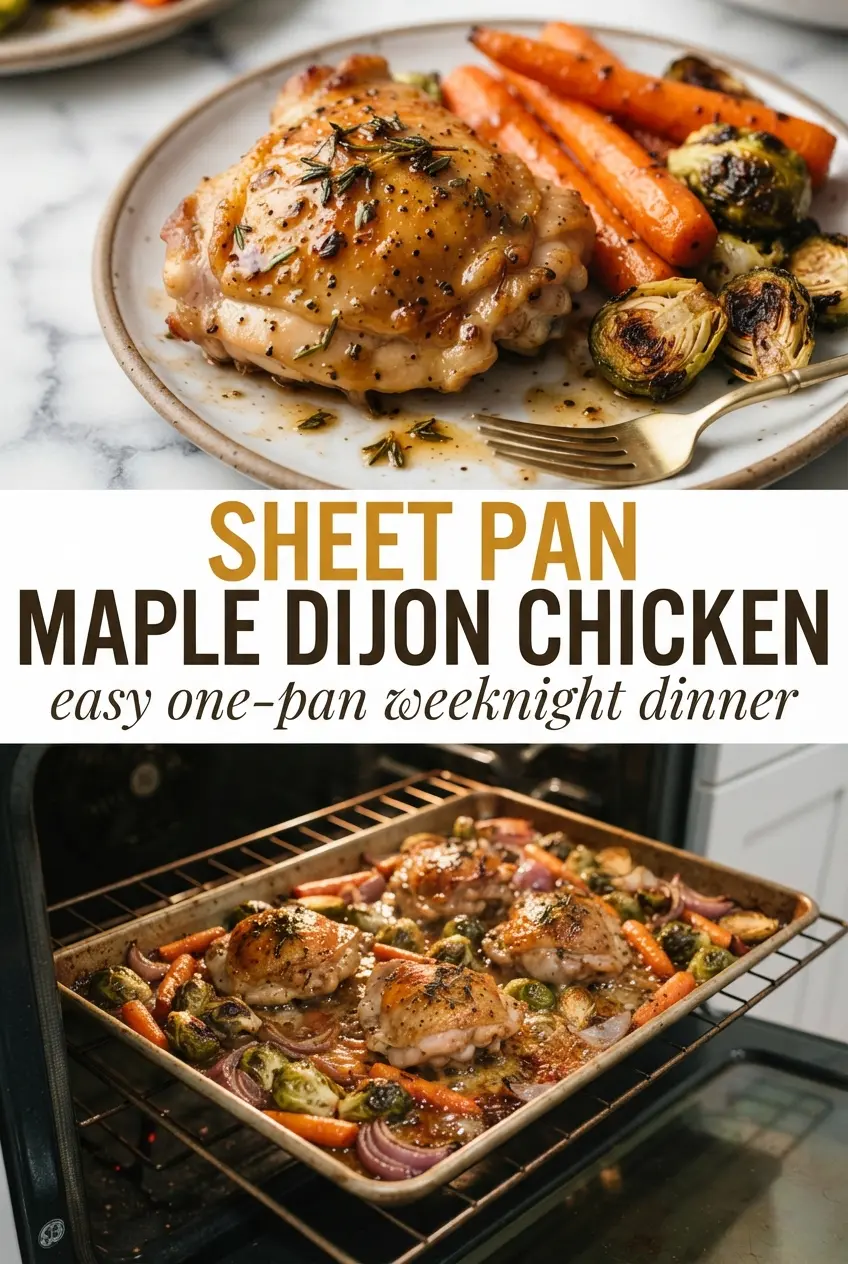
Sheet Pan Maple Dijon Chicken
Ingredients
Equipment
Method
- Whisk together maple syrup, Dijon mustard, garlic, thyme, salt, and pepper until smooth and glossy, making sure the garlic is evenly distributed.
- Arrange chicken thighs, carrots, and Brussels sprouts on a large sheet pan in a single layer so the vegetables roast alongside the chicken.
- Drizzle everything with olive oil, then brush the maple Dijon glaze over the chicken and vegetables, coating the surfaces evenly.
- Roast at 425°F for 35-40 minutes, basting once halfway through, until the chicken is golden and cooked through and the vegetables are browned at the edges.
- Let rest 5 minutes before serving so the juices settle and the chicken stays juicy.