
Golden, juicy chicken with a molten pocket of mozzarella and sweet roasted red peppers earns its place on the dinner rotation fast. The outside turns deeply browned in the pan, then the oven finishes the chicken gently enough to keep the meat tender while the filling stays tucked inside instead of leaking out. Every slice looks impressive, but the real win is how balanced it eats: savory chicken, creamy cheese, bright pepper, and spinach that softens just enough to blend in.
What makes this version work is the order of operations. The filling goes in cold, the pockets stay deep but not cut through, and the stuffed breasts get a quick sear before baking. That sear does more than add color; it helps seal the surface and gives you those flavorful browned bits in the pan. The roasted red peppers bring sweetness and moisture, while the spinach cuts the richness so the mozzarella doesn’t feel heavy.
Below, you’ll find the little details that keep the filling inside, the chicken juicy, and the cheese from escaping into the skillet. There’s also a few smart swaps if you want to change the cheese, lighten it up, or stretch it into a larger meal.
The chicken stayed juicy and the mozzarella melted into the peppers without turning watery. I seared it in my cast iron first, and the crust was gorgeous while the filling stayed put.
Save this roasted red pepper spinach and mozzarella stuffed chicken for a night when you want a crisp crust, a juicy center, and a cheesy filling that stays right where it belongs.
The Pocket Has to Be Deep Enough to Hold the Filling, Not So Deep It Splits
Stuffed chicken fails for one of two reasons: the pocket is too shallow and the filling falls out, or the cut goes so far through the breast that the whole thing opens up in the pan. The sweet spot is a deep horizontal pocket with a solid border left on three sides. That gives the cheese and vegetables somewhere to melt without turning the chicken into a loose flap.
The other issue is moisture. Roasted red peppers carry some liquid, and spinach releases more as it heats. If you pile that filling in without chopping it and pressing off any excess moisture, the inside turns watery and the cheese can slide out instead of settling into a tight melt. A compact filling is what keeps the slices neat when you cut into the chicken.
What Each Ingredient Is Actually Doing in This Dish

- Chicken breasts — Use boneless, skinless breasts that are similar in size so they cook at the same pace. If one is much thicker than the others, pound the thick end lightly before cutting the pocket so the finished chicken doesn’t have one dry edge and one undercooked center.
- Roasted red peppers — These bring sweetness and a little silkiness that fresh peppers won’t mimic. Jarred peppers are fine here, but drain them well and pat them dry so the filling doesn’t get soggy.
- Spinach — Fresh spinach wilts down quickly and keeps the filling from feeling heavy. If you use frozen spinach, thaw it completely and squeeze it nearly dry or it will leak water into the cheese.
- Mozzarella — Mozzarella gives you the stretch and creaminess this dish depends on. Low-moisture shredded mozzarella works best because fresh mozzarella releases too much liquid as it melts.
- Garlic and Italian seasoning — Garlic sharpens the filling, and Italian seasoning carries the herb note through the whole dish. If your seasoning blend is salt-heavy, go lighter on the salt outside until after the sear.
- Olive oil, paprika, and red pepper flakes — The oil helps the chicken brown in the skillet, while paprika deepens the color and adds a mild smoky edge. Red pepper flakes are optional, but even a small pinch keeps the filling from tasting flat against all that cheese.
The Sear, the Bake, and the Rest That Keep the Chicken Juicy
Mix the Filling First
Stir the chopped roasted red peppers, spinach, mozzarella, and minced garlic together before you touch the chicken. That gives you a filling that is evenly distributed, so every bite tastes balanced instead of landing on one pocket of cheese and one pocket of vegetables. If the mixture looks wet, let it sit for a minute, then spoon off any liquid that gathers at the bottom.
Cut the Pocket Carefully
Slice each chicken breast horizontally from the thicker side, stopping before you cut all the way through. The opening should be large enough to tuck in the filling but still hold its shape when you move the breast to the skillet. If the chicken tears, the filling leaks during searing, which is the fastest way to lose both cheese and juices.
Sear Until the Surface Releases
Cook the stuffed chicken in a hot oven-safe skillet for 2 to 3 minutes per side. You’re looking for a deep golden crust, not a pale blush of color. If the chicken sticks when you try to move it, it needs another 30 seconds; once it browns, it releases more cleanly.
Finish in the Oven, Then Let It Sit
Transfer the skillet to the oven and bake until the thickest part reaches 165°F. Pulling it too early leaves the center underdone, while leaving it in too long dries out the breast meat and pushes the filling out the sides. Rest the chicken for 5 minutes before slicing so the juices settle and the cheese firms just enough to stay inside the pocket.
What to Change When You Want a Different Version
Dairy-Free Version
Use a meltable dairy-free mozzarella-style cheese and keep the filling tightly packed. You won’t get the same stretch, but you will still get a creamy center if you use a brand that softens well instead of one that just dries out in the oven.
Gluten-Free and Naturally Low-Carb
This recipe is already gluten-free and low in carbohydrates as written, as long as your seasoning blend and roasted peppers don’t contain added fillers or sugar. It’s one of those mains that doesn’t need any extra changes to fit either style.
Turn It Into a Chicken Cutlet Style Filling
If you prefer thinner chicken, pound the breasts flatter and spoon a smaller amount of filling inside before rolling and securing with toothpicks. The result cooks faster and slices more neatly, but you lose a little of the dramatic stuffed look.
Storage and Reheating
- Refrigerator: Store leftovers in an airtight container for up to 3 days. The chicken stays moist, but the cheese firms up once chilled.
- Freezer: It freezes, but the texture of the spinach and cheese gets softer after thawing. Wrap tightly and freeze for up to 2 months for best quality.
- Reheating: Warm in a 325°F oven, covered loosely with foil, until heated through. The biggest mistake is blasting it in the microwave, which turns the chicken rubbery and pushes the filling out of the pocket.
Questions I Get Asked About This Recipe
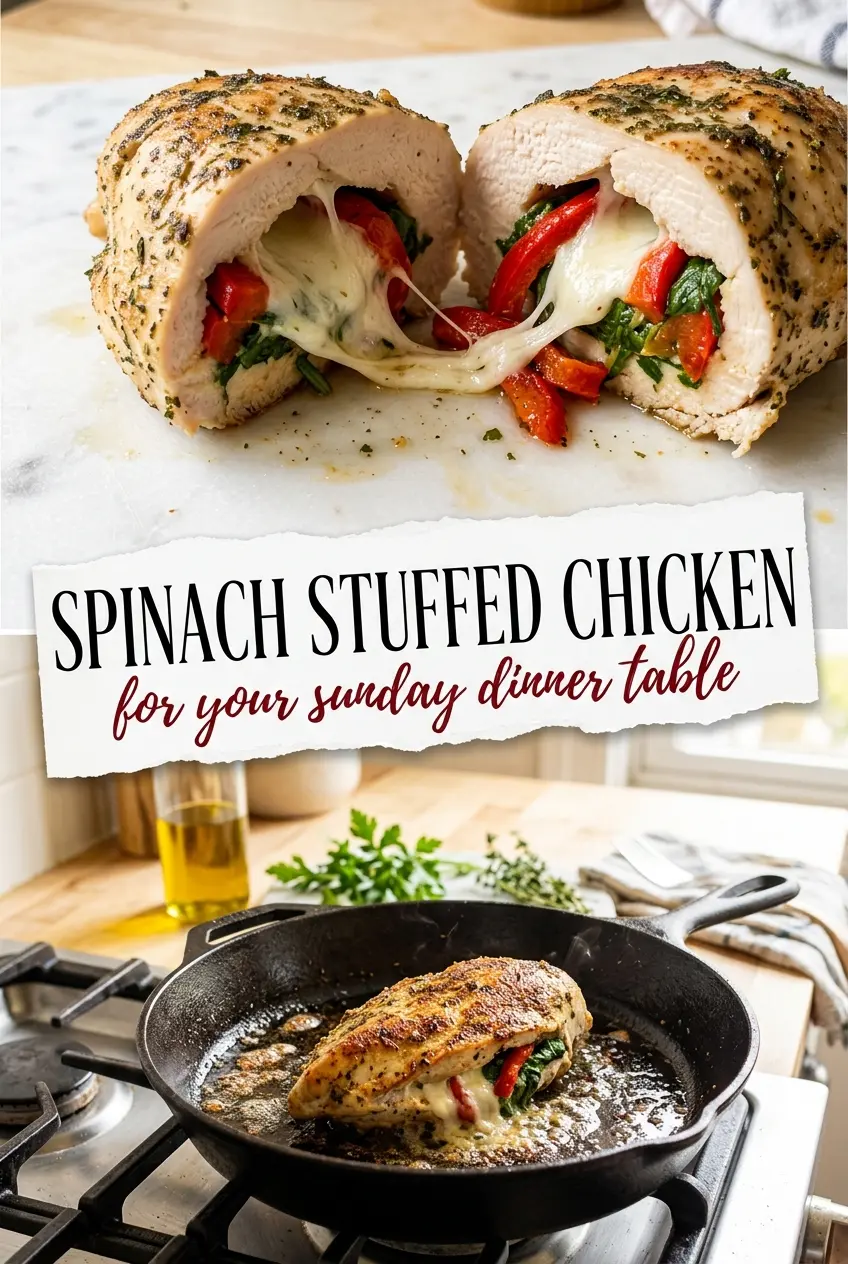
Roasted Red Pepper Spinach And Mozzarella Stuffed Chicken
Ingredients
Equipment
Method
- Preheat the oven to 375°F and set out an oven-safe skillet for searing.
- Slice each chicken breast horizontally to create a deep pocket without cutting all the way through.
- In a bowl, mix the roasted red peppers, spinach, mozzarella, and minced garlic.
- Stuff each chicken breast with the filling and secure with toothpicks.
- Rub the outside with olive oil, then season with Italian seasoning, salt, pepper, red pepper flakes, and paprika.
- Sear each stuffed breast 2 to 3 minutes per side in an oven-safe skillet until golden.
- Transfer the skillet to the oven and bake 20 to 25 minutes, until the internal temperature reaches 165°F.
- Rest the chicken 5 minutes before serving to let the juices settle.