
Golden delicata squash brings a sweet, nutty edge that turns a simple salad into something people actually remember. The rings roast up with caramelized borders and a tender center, then get set over peppery arugula with crunchy pumpkin seeds and tangy goat cheese. It eats like a side dish, but it has enough texture and contrast to hold its own on the table.
Delicata is the squash worth choosing when you want all the payoff with less fuss. The skin stays tender after roasting, so you don’t have to peel it, and that saves time without sacrificing texture. A quick maple vinaigrette pulls the whole dish together: just enough sweetness to echo the squash, enough acid to keep it bright, and no heavy dressing weighing down the greens.
Below you’ll find the small details that matter most here — how to get those edges deeply caramelized, how to keep the salad from going limp, and the simple swaps that still keep the balance right.
The squash got those caramelized edges and stayed tender in the middle, and the maple vinaigrette kept the arugula from tasting flat. I served it with roast chicken and my husband went back for the last spoonful of goat cheese and seeds.
Save this roasted delicata squash salad for the nights when you want caramelized squash, crisp greens, and a maple vinaigrette that ties everything together.
The Reason Delicata Stays Sweet Instead of Turning Watery
Delicata squash can go wrong in one of two ways: it either softens before it browns, or it browns before the centers turn tender. The fix is simple. Give the rings space on the pan and roast them hot enough that the surface can caramelize before the flesh collapses. When the pieces are crowded, they steam. When they have room, the edges darken and the natural sugars come forward.
The other mistake is slicing too thick. Delicata has a thinner profile than butternut, so you don’t need big wedges to get good texture. Rings around 1/2 inch thick cook evenly, and the seeds can stay in if you want the little roasted pockets in the center. If they start looking pale and dry instead of bronzed, keep roasting. You’re waiting for color, not just softness.
What the Maple, Vinegar, and Pumpkin Seeds Are Really Doing
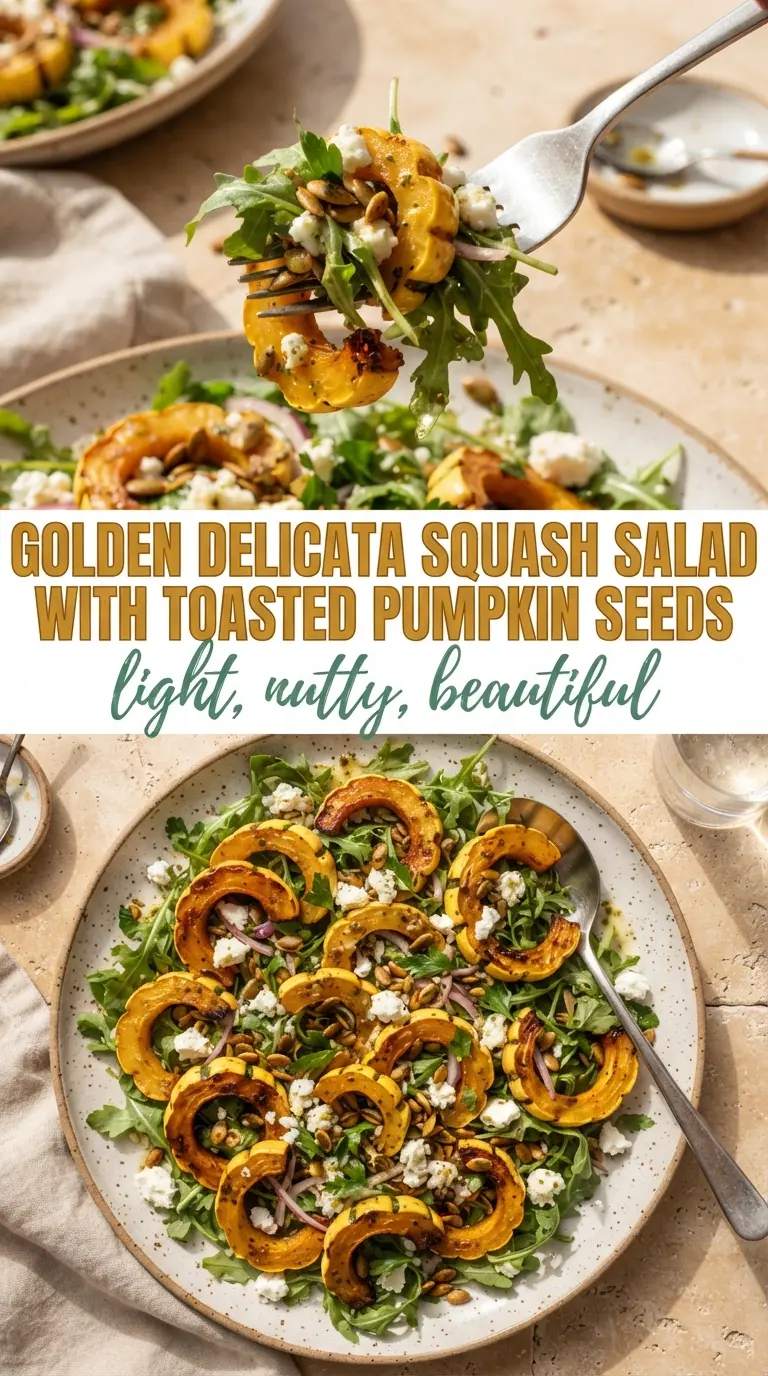
- Delicata squash — This is the ingredient that makes the salad feel substantial. Its skin is thin enough to eat, and that matters because peeling would strip away time without improving the result. Choose squash that feel firm and heavy for their size, then slice clean rings so they roast at the same pace.
- Maple syrup — A little maple in the vinaigrette mirrors the sweetness that comes out of the squash in the oven. Honey works in a pinch, but it reads a little more floral and less woodsy. Keep the amount modest or the dressing will start tasting like dessert instead of salad.
- Apple cider vinegar — This keeps the dish from leaning too soft and sweet. It cuts through the squash and goat cheese, and it wakes up the arugula. Lemon juice can work if that’s what you have, but it gives a sharper, brighter finish than vinegar.
- Pumpkin seeds — These bring the crunch that the roasted squash can’t. Toasting them in a dry skillet takes a couple of minutes and makes a big difference; raw seeds taste flat next to the other ingredients. If you’re short on time, you can use them straight from the bag, but the salad won’t have the same nutty edge.
- Goat cheese — The tangy crumble balances the sweetness and gives each bite a creamy hit. Feta is the easiest swap if you don’t have goat cheese, though it’s saltier and a little firmer. Use whichever one you like, but keep the amount light enough that it doesn’t bury the squash.
The 20 Minutes That Matter Most
Roasting the Squash Until It Caramelizes
Toss the squash rings with olive oil, salt, and pepper, then spread them in a single layer on a hot sheet pan. If they overlap, the edges won’t brown cleanly. Roast at 425°F until the undersides are deep gold and the centers yield when pierced with a fork, flipping once halfway through. You’re looking for browned ridges and a little stickiness on the pan, not dry, pale squash.
Mixing the Vinaigrette Without Losing the Balance
Whisk the maple syrup, apple cider vinegar, and olive oil until the dressing looks glossy and lightly thickened. If it tastes flat, it usually needs more acid, not more syrup. The dressing should be bright enough to cut through the goat cheese and sweet enough to echo the squash. Shake or whisk again right before using, since oil and vinegar separate fast.
Assembling the Salad at the Last Minute
Put the arugula on the platter first, then add the squash while it’s still warm. Warm squash softens the greens just enough without turning them soggy, but if it sits dressed too long, the leaves wilt fast. Scatter the pumpkin seeds and goat cheese over the top after the squash goes down, then drizzle the vinaigrette right before serving so the textures stay distinct.
What to Change When You Need a Different Version
Dairy-Free Version That Still Feels Complete
Skip the goat cheese and add sliced avocado or a handful of chopped toasted walnuts instead. You lose the tangy creaminess, so the dressing needs to carry more of that bright edge. Add a little extra vinegar and a pinch more salt to keep the salad from tasting one-note.
Make It Heartier for a Main Dish
Add cooked farro, quinoa, or lentils under the arugula so the warm squash has something sturdy to sit on. Farro gives the best chew, while lentils keep the dish more tender and earthy. Keep the dressing slightly generous if you go this route, since the grains will soak up some of it.
Swap the Greens Without Losing the Contrast
Arugula gives peppery bite, but baby kale or mixed greens also work. Baby kale stands up well to the warm squash, though it needs a little more dressing and a gentler hand so it doesn’t taste tough. Spinach is milder and softer, which makes the salad sweeter overall.
Storage and Reheating
- Refrigerator: Store the squash, greens, seeds, and cheese separately for up to 3 days. Once dressed, the arugula softens quickly.
- Freezer: Don’t freeze the assembled salad. Roasted squash can be frozen on its own, but the greens and cheese won’t recover well after thawing.
- Reheating: Warm the squash in a 350°F oven for a few minutes or in a skillet over medium heat. Don’t microwave it if you want to keep the edges from going limp.
Answers to the Questions Worth Asking
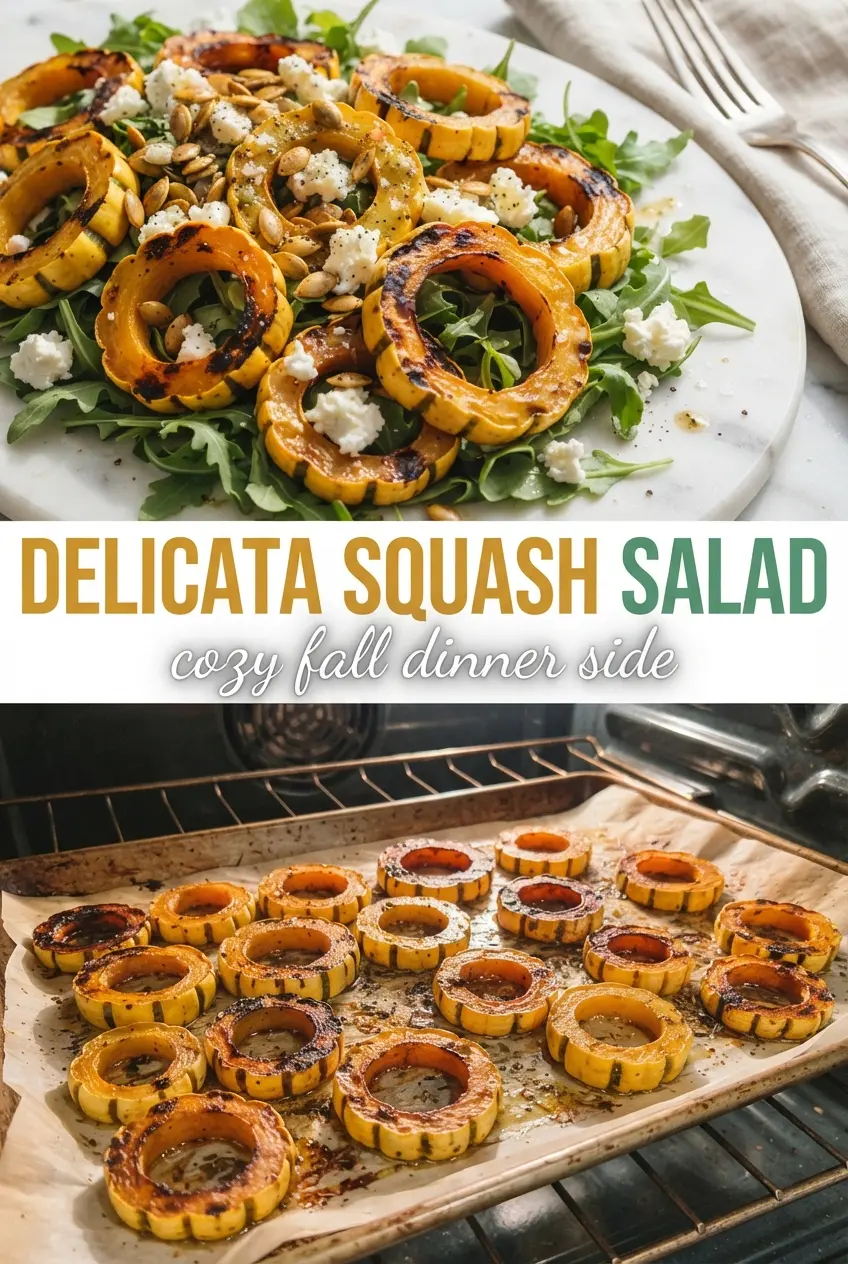
Roasted Delicata Squash Salad
Ingredients
Equipment
Method
- Toss delicata squash rings with olive oil, salt, and pepper until evenly coated, with the rings lying in a single layer on the pan.
- Roast at 425°F for 20-25 minutes, flipping halfway, until golden and caramelized at the edges, then let cool slightly so the rings stay tender.
- Whisk together maple syrup, apple cider vinegar, and olive oil until smooth and glossy for a pourable dressing.
- Arrange arugula on a platter and top with the roasted delicata squash.
- Scatter toasted pumpkin seeds and crumbled goat cheese over the top so the toppings stay visible and evenly distributed.
- Drizzle with the maple vinaigrette just before serving so the arugula remains crisp.