
Roasted acorn squash turns silky at the edges and deeply caramelized where it touches the pan, which gives the filling a sweet, savory backdrop instead of a flat one-note vegetable bowl. Packed with quinoa, dried cranberries, toasted almonds, and lemony parsley, each half eats like a complete meal: tender squash, chewy grains, a little crunch, and bright freshness in every forkful.
The trick is roasting the squash cut-side down first. That keeps the cut surface in contact with the hot pan, so it browns instead of steaming. The quinoa filling stays simple on purpose. It doesn’t need extra sauce when the squash itself brings sweetness and the lemon juice keeps everything lively. Toasting the almonds before they go in matters too; raw nuts taste dull next to roasted squash, while toasted nuts bring the kind of depth that makes the whole dish taste finished.
Below, you’ll find the timing that keeps the squash tender without collapsing, plus a few smart swaps if you want to adjust the filling for what you’ve got on hand.
The squash got perfectly tender without turning mushy, and the quinoa filling held together beautifully with the lemon and parsley. I also loved the toasted almonds on top — they stayed crunchy even after the second bake.
Save this quinoa stuffed acorn squash for a dinner that feels hearty, bright, and just a little special without extra work.
The Reason the Squash Needs to Roast Cut-Side Down First
Acorn squash can go wrong in two ways: it can stay tough in the center, or it can soften so much that it falls apart when you try to fill it. Roasting cut-side down solves both problems at once. The flat cut surface hits the pan directly, which gives you better browning and traps enough steam underneath to finish the flesh without drying it out.
The second detail that matters is the timing after stuffing. You are not trying to cook the filling from raw. Everything in the quinoa mixture is already cooked or tender, so the final bake is just there to warm the filling and help the flavors settle together. If you leave the squash in too long at this stage, the edges turn slack and the filling loses its texture.
- The squash should be fork-tender at the thickest part, but still hold its shape when you lift it from the pan.
- If your squash is small, check it a few minutes early; smaller halves roast faster than you think.
- If you see pale, dry flesh after the first roast, the oven was too cool or the squash was turned too soon.
What Each Ingredient Is Actually Doing in This Dish
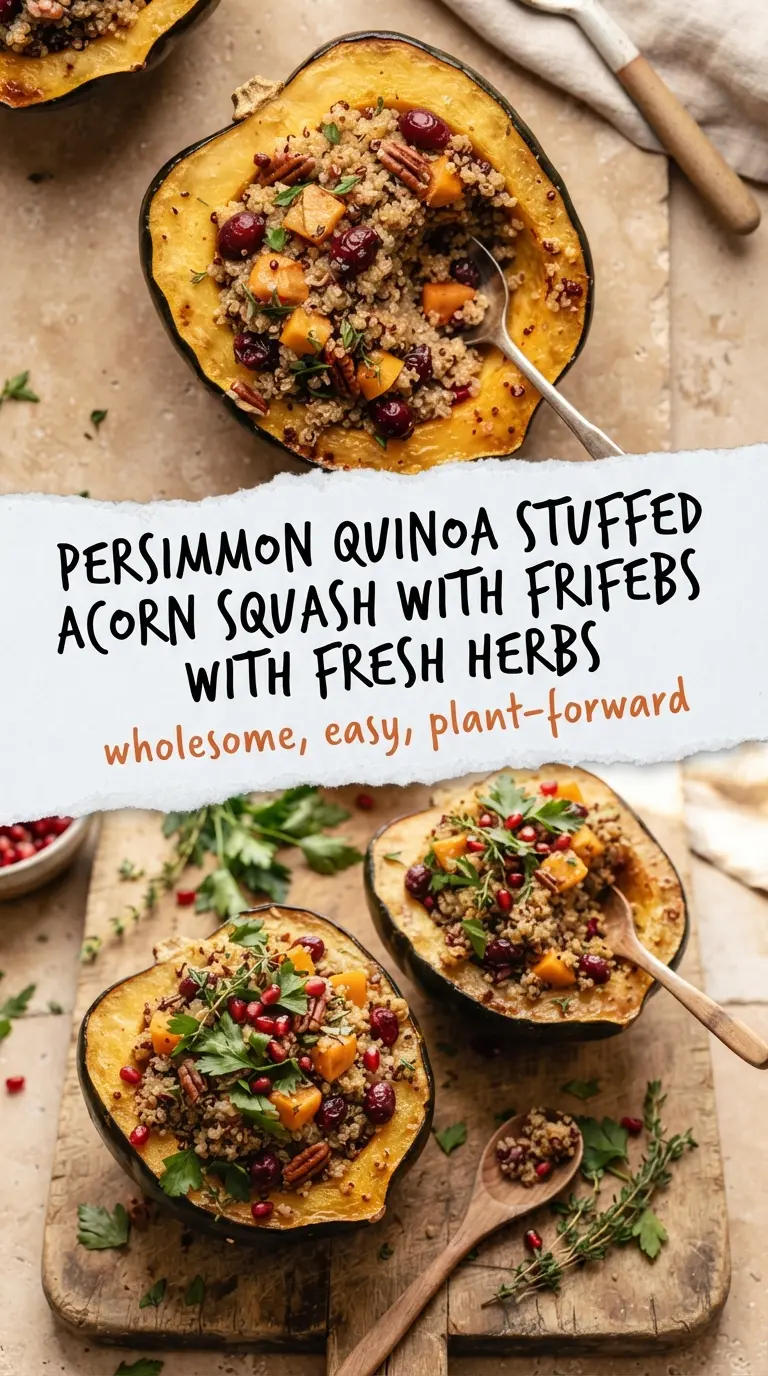
The acorn squash is the anchor. It brings sweetness, structure, and that soft roasted texture that makes the whole meal feel complete. Olive oil helps the cut sides caramelize and keeps the squash from tasting dry. Use a decent olive oil here; you don’t need the most expensive bottle, but you do want enough flavor to support the vegetables.
Quinoa gives the filling its bulk and protein, but it also does something quieter: it catches the lemon juice and the squash juices so every bite tastes seasoned instead of scattered. Dried cranberries add sharp sweetness and a little chew. If you swap in raisins or chopped dried cherries, the result will still work, but the flavor shifts warmer or darker depending on the fruit.
Toasted almonds matter more than they look like they should. They keep the filling from feeling soft all the way through and give you a clean, nutty finish. Parsley and lemon juice brighten the dish at the end, which is important because both squash and quinoa can lean heavy if they don’t get that lift.
- Acorn squash — Choose squash that feel heavy for their size. That usually means denser flesh and fewer dry spots.
- Quinoa — Cook it until the grains are fluffy and the little germ ring has popped. Under-cooked quinoa tastes chalky and won’t absorb the seasonings well.
- Dried cranberries — They bring balance. If yours are very dry, soak them in warm water for 5 minutes and drain before mixing.
- Almonds — Toast them in a dry skillet until fragrant and just a shade darker. That quick step changes the whole filling.
- Lemon juice and parsley — Add these at the end so they stay fresh and sharp instead of muted.
Roasting, Filling, and Finishing Without Losing the Texture
Starting the Squash on the Pan
Brush the cut sides with olive oil, season them well, and place them cut-side down on a baking sheet. That direct contact with the pan is what gives you the browned edges and deep flavor. If your squash wobble, trim a thin slice from the rounded back so they sit flat and roast evenly. Pull them when the flesh gives easily to a fork but still feels intact, not collapsing.
Cooking the Quinoa So It Stays Fluffy
Cook the quinoa according to the package directions and then let it sit for a few minutes before fluffing. You want dry, separate grains, not a wet mass that turns pasty when mixed with the fruit and nuts. If the quinoa looks damp after cooking, spread it on a plate for a minute so excess steam can escape. That small step keeps the filling light instead of gummy.
Building the Filling
Sauté the red onion in the remaining olive oil until it’s softened and translucent, not browned. Browned onion changes the flavor in a way that can fight the lemon and cranberries. Stir the onion into the quinoa with the cranberries, almonds, parsley, and lemon juice. Taste it before stuffing; if it tastes flat, it needs salt more than anything else.
Stuffing and Warming Through
Flip the roasted squash halves cut-side up and pile the filling generously into the centers. A little overflow is fine and looks generous on the plate. Return them to the oven just long enough to warm the filling through and let the flavors knit together. If you bake them too long here, the squash can collapse and the almonds lose their crunch.
How to Adapt This for Different Tables and Different Pantries
Make it vegan and naturally gluten-free
This recipe already lands in both camps as written, which is part of why it works so well. Just check that your quinoa and dried cranberries are certified gluten-free if that matters for your kitchen. The texture stays hearty without any dairy or animal products because the squash and almonds carry the richness.
Swap the nuts without losing the crunch
Pecans, walnuts, or pepitas all work here. Pecans lean sweeter, walnuts taste a little earthier, and pepitas give you a cleaner, more savory finish. Keep the same amount and toast them first so the filling still has that crisp edge against the soft squash.
Turn it into a fuller main dish
Stir in cooked lentils, chickpeas, or crumbled feta if you want a bigger, more filling dinner. Lentils keep the same cozy, grain-and-vegetable feel. Feta adds salt and a creamy bite, but use a lighter hand with the lemon if you go that route or the filling can taste sharp instead of balanced.
Use a different winter squash
Delicata works if you want smaller portions and edible skin, while butternut halves give you a larger serving with a slightly sweeter, denser result. Watch the roasting time closely, because thickness changes the bake. The filling stays the same; only the tenderness window changes.
Storage and Reheating
- Refrigerator: Store leftovers in an airtight container for up to 4 days. The squash softens a bit, but the flavor gets even more developed by the next day.
- Freezer: The filling freezes better than the stuffed squash halves. If you want to freeze it, separate the quinoa mixture and the roasted squash, then thaw overnight before reheating.
- Reheating: Warm in a 350°F oven until hot through, about 15-20 minutes. Microwaving works in a pinch, but it makes the squash wetter and softens the almonds, which is the fastest way to lose the best texture.
Questions I Get Asked About This Recipe
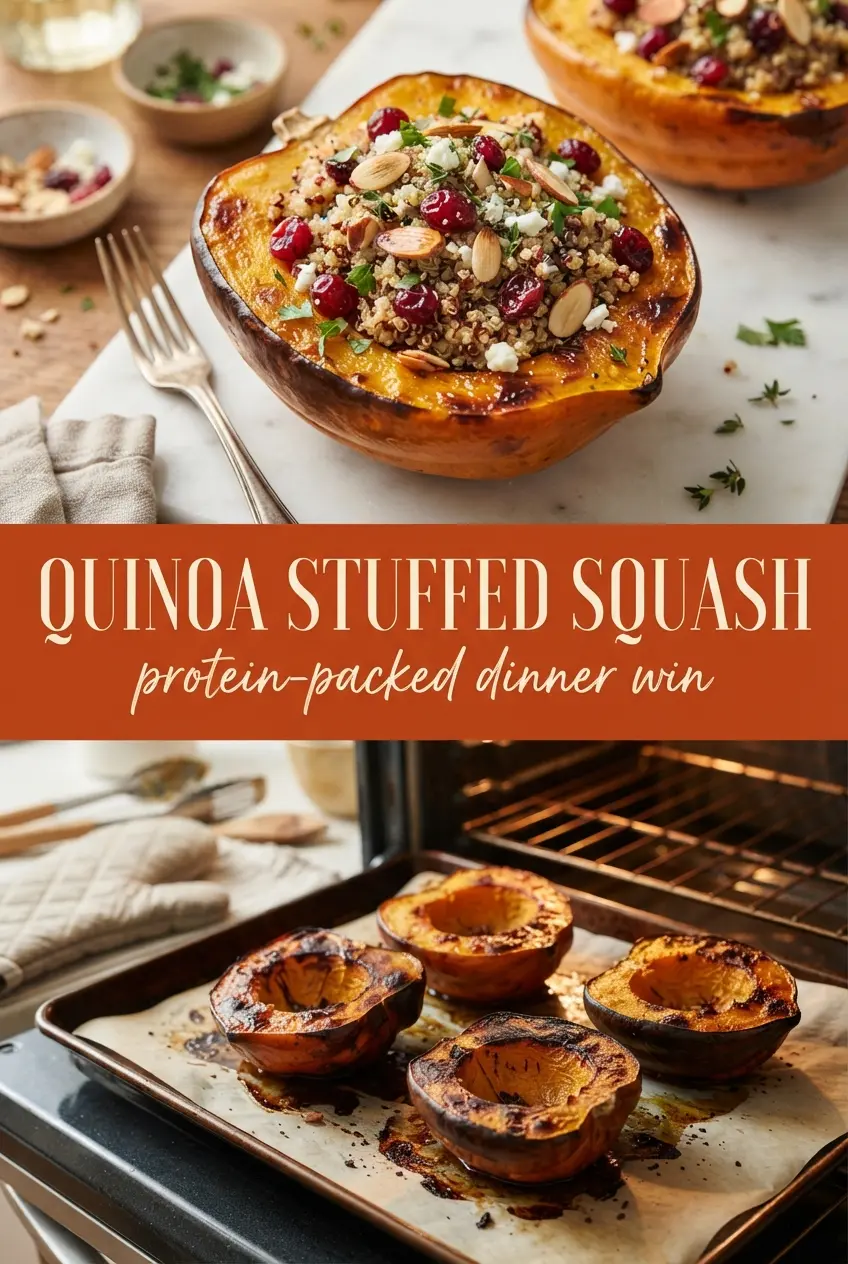
Quinoa Stuffed Acorn Squash
Ingredients
Equipment
Method
- Brush the cut sides of the acorn squash with 2 tbsp olive oil and season with salt and pepper.
- Place squash halves cut-side down on a sheet pan and roast at 400°F for 25-30 minutes until fork-tender.
- Cook quinoa according to package directions until tender.
- Heat the remaining olive oil in a skillet and sauté the red onion until softened.
- Stir cooked quinoa, dried cranberries, toasted almonds, sautéed onion, fresh parsley, and lemon juice together.
- Flip the roasted squash halves and fill generously with the quinoa mixture.
- Return to the oven and bake at 400°F for 5-10 minutes to warm through before serving.