
Roasted acorn squash turns tender and lightly caramelized at the edges, and once it’s filled with fluffy quinoa, chickpeas, and sweet roasted pepper, the whole dish eats like a full meal instead of a side. The contrast is what makes it work: soft squash, nutty grains, creamy chickpeas, and a bright herb pesto that wakes everything up at the end.
The trick here is roasting the squash cut side up so the flesh softens without collapsing into mush, while the chickpeas and pepper pick up a little color on the same pan. That keeps the filling simple and gives every component its own texture. The pesto goes on after baking, not before, so the basil stays fresh and the lemon keeps it lively instead of dulled by heat.
Below, I’ll show you the part that matters most if your squash usually comes out watery or underdone, plus a few easy swaps that keep this meal sturdy, colorful, and satisfying.
The squash came out tender but still held its shape, and the pesto on top kept the filling from tasting heavy. I loved that the chickpeas roasted right on the pan and got those crisp little edges.
Quinoa Stuffed Acorn Squash keeps its texture, and the herb pesto makes the whole dish taste fresh instead of heavy.
The Squash Needs Space to Roast, Not Steam
If the squash halves are crowded on the pan, they trap moisture and turn soft in a bland, watery way. Give them room and roast them cut side up so the heat can do two things at once: tenderize the flesh and dry the surface just enough for a little caramelization on the edges. That small detail is what keeps the finished squash from tasting flat.
The chickpeas and bell pepper are there for more than color. They roast alongside the squash, which means they pick up the same savory depth and save you from dirtying another pan. If your chickpeas are still wet when they hit the tray, pat them dry first; extra moisture is the fastest way to keep them pale instead of toasty.
What Each Ingredient Is Actually Doing in This Dish
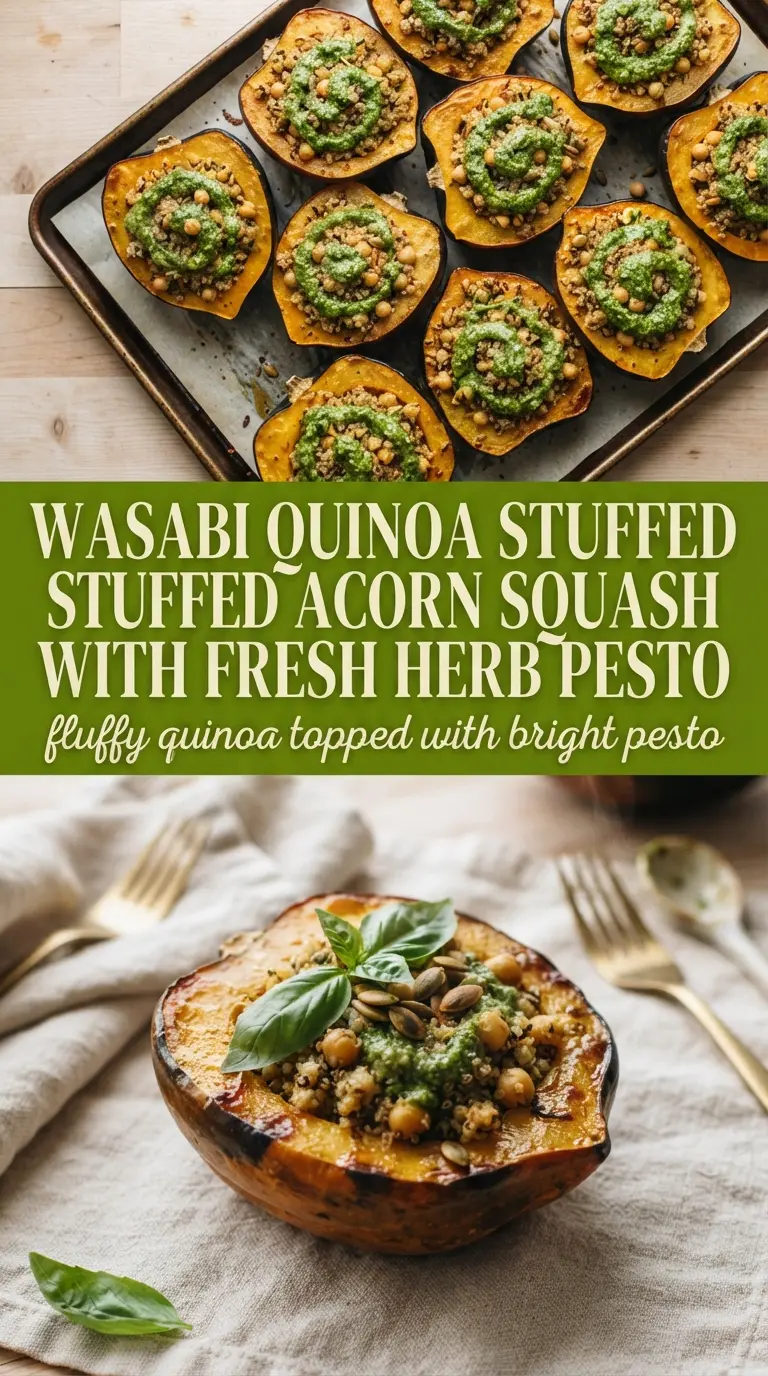
- Acorn squash — This is the base and the bowl, so choose squash that feels heavy for its size with firm skin and no soft spots. Halved squash holds the filling better than pre-cubed squash, and the natural ridges make serving easier. If you need a substitute, delicata squash works well, though the portions will be smaller.
- Quinoa — Cooked quinoa gives the filling body without making it dense. It also absorbs the pesto and roasted vegetable juices without turning mushy, which is why it works better here than rice. If you cook it fresh, let it steam off for a few minutes first so the filling doesn’t get wet.
- Chickpeas — They add protein and a creamy, firm bite that keeps the filling satisfying. Canned chickpeas are perfect here as long as they’re drained well; if you have the time, drying them after rinsing helps them roast better. White beans can step in, but they’ll be softer and less nutty.
- Fresh basil and parsley — These herbs make the pesto taste bright and green instead of heavy. Basil brings sweetness, while parsley keeps it clean and sharp. If you swap the parsley for more basil, the pesto will be richer and less herbal; if you skip fresh herbs, the topping loses the whole point.
- Parmesan and lemon juice — Parmesan adds salt and a little body to the pesto, while lemon juice keeps it from tasting dull against the sweet squash. The lemon matters more than people expect, because roasted vegetables need something acidic at the finish. For a dairy-free version, use nutritional yeast and a bit more olive oil, though the pesto will be less savory and less thick.
The 30 Minutes That Set the Whole Dish
Roasting the Squash Cut Side Up
Set the squash halves cut side up on the sheet pan and roast them until the flesh yields easily when pressed with a fork but still holds its shape. If they’re taken out too early, the filling won’t feel integrated; if they go too far, the walls collapse and the squash turns watery. The edges should look lightly bronzed, not burnt.
Giving the Chickpeas and Pepper Time to Color
Roast the chickpeas and diced pepper right on the same pan so they can pick up those browned spots around the squash. Stir or shift them once halfway through if your oven has hot spots, because chickpeas brown in patches and can go from pale to dry fast. You’re looking for a little crispness on the outside and tender centers, not crunchy beans.
Filling and Finishing With Pesto
Mix the quinoa with the roasted vegetables while everything is still warm so the flavors combine cleanly. Fill each squash half generously, then spoon the pesto over the top just before serving. If you blend the pesto too far ahead, press plastic wrap directly on the surface or the basil will darken; fresh pesto should taste bright and grassy, not muted.
How to Adapt This for a Different Table
Make It Dairy-Free
Swap the Parmesan for nutritional yeast and add a pinch more salt. You’ll keep the savory edge and most of the body, though the pesto will be a little lighter and less creamy. A spoonful of extra olive oil helps round it out.
Make It Gluten-Free Without Thinking About It
This dish is naturally gluten-free as written, so the main job is checking that your Parmesan and chickpeas are plain and unseasoned. The texture stays the same, which is part of why this recipe is so useful for mixed-diet dinners.
Turn It Into a Bigger Main
Add another can of chickpeas or serve each squash half over a bed of greens or farro for a more substantial plate. The pesto carries the extra volume well, and the extra grain helps catch any roasted vegetable juices. This is the best move when you’re feeding people with big appetites.
Storage and Reheating
- Refrigerator: Store leftovers for up to 4 days. The squash softens a little more in the fridge, but the filling stays pleasant.
- Freezer: The filled squash can be frozen, but the texture of the squash will turn softer after thawing. Freeze in airtight containers if you want the least loss, then thaw in the fridge overnight.
- Reheating: Warm in a 350°F oven until heated through, about 15 to 20 minutes. The microwave works in a pinch, but it can make the squash watery and the pesto dull, so add any extra pesto after reheating.
Answers to the Questions Worth Asking
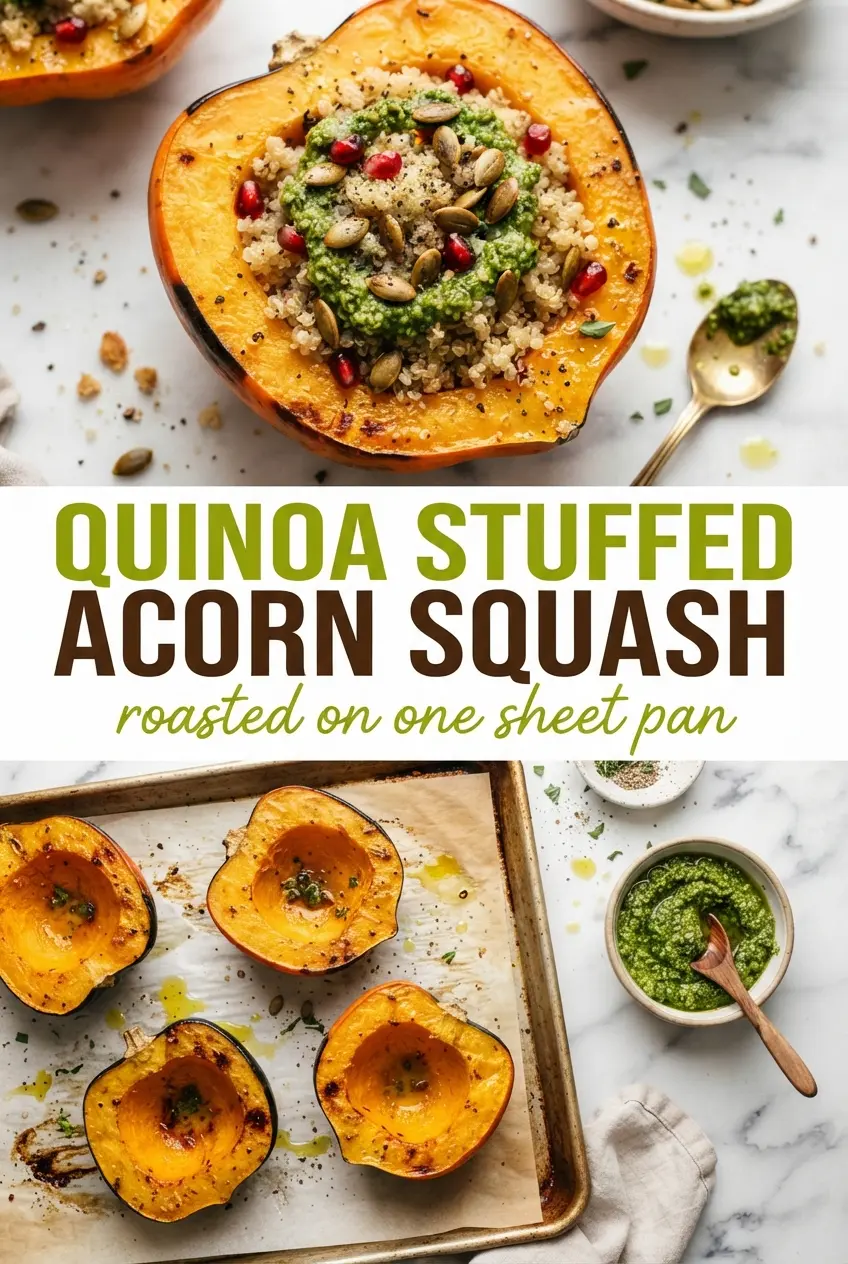
Quinoa Stuffed Acorn Squash
Ingredients
Equipment
Method
- Heat the oven to 400°F and place the squash cut side up on a sheet pan with the olive oil, leaving space between halves for airflow. The squash should look lightly glossy from the oil.
- Add the chickpeas and diced pepper to the pan and roast for 30 minutes, until the squash edges are tender and the chickpeas look slightly browned. Halfway through, you can lightly shuffle the chickpeas and pepper so they roast evenly.
- Mix the cooked quinoa with the roasted vegetables, then divide the filling among the squash halves. Press gently so the filling sits firmly in the cavities.
- Blend the pesto ingredients until smooth, scraping down the sides as needed. The pesto should be thick but spoonable with visible herb flecks.
- Spoon the pesto over the filled squash and serve. Finish with a fresh, bright green top and warm filling that holds its shape when scooped.