
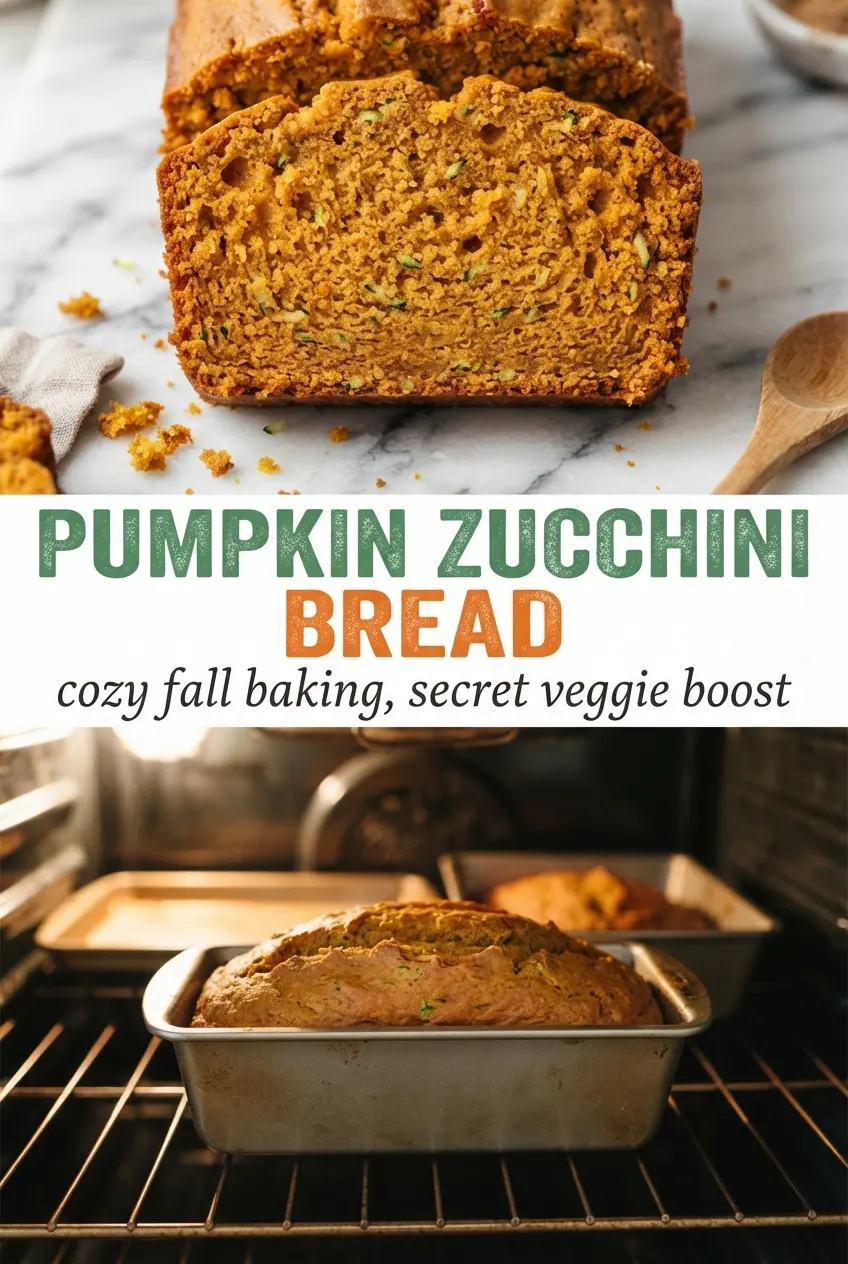
Warm pumpkin zucchini bread bakes up with a tender crumb, a gently spiced aroma, and the kind of moisture that keeps each slice soft for days. The pumpkin brings that deep, cozy flavor and the zucchini disappears into the batter, leaving behind tenderness without any vegetable taste. What you get is a loaf that slices cleanly, stays plush, and tastes even better the next day.
The trick is keeping the zucchini dry enough to protect the crumb. Grate it finely, then squeeze out the excess moisture before it goes into the bowl. Pumpkin puree adds body, oil keeps the texture soft, and the eggs hold everything together without making the loaf heavy. The batter should look thick and a little lumpy, not whipped smooth.
Below you’ll find the one step that matters most for avoiding a gummy center, plus a few ways to adapt the loaf if you want to change the spice level or make it work with what you have on hand.
The loaf came out so moist and the zucchini completely disappeared. I squeezed it dry like you said, and the center set perfectly without turning dense or wet.
Save this pumpkin zucchini bread for the days when you want a soft, spiced loaf that stays moist for days and uses up extra zucchini.
The Reason This Loaf Stays Soft Instead of Gummy
Pumpkin zucchini bread can go wrong in one of two ways: it turns dry from too much flour, or it turns heavy and wet from too much moisture in the zucchini. This version avoids both by using pumpkin puree for body and carefully draining the zucchini so it adds tenderness without flooding the batter. That balance matters more than extra spice or mix-ins.
The other thing that helps is not overmixing once the flour goes in. As soon as the dry streaks disappear, stop stirring. Overworked batter tightens up in the oven, and with pumpkin-based loaves that usually means a dense middle and a cracked top that never quite finishes setting.
- Pumpkin puree — Use plain pumpkin puree, not pumpkin pie filling. Pie filling is already sweetened and spiced, which throws off the balance and can make the loaf bake up too soft in the center.
- Zucchini — Grate it fine and squeeze it hard in a clean towel or your hands. The zucchini should feel damp, not dripping, before it goes into the bowl.
- Pumpkin pie spice — This gives the loaf its warm backbone. If you only have cinnamon, use it, but the finished bread will taste flatter and less layered.
- Vegetable oil — Oil keeps the crumb tender for days. Butter will work, but the loaf won’t stay as soft once it cools.
What Each Bowl Is Doing Before the Batter Comes Together

Flour, baking soda, salt, and pumpkin pie spice get whisked together first so the leavening and spice disperse evenly. If the baking soda clumps, you’ll get uneven rise and little bitter pockets. Whisking the dry ingredients for a full few seconds keeps the loaf from baking up with tunnels.
In the wet bowl, the pumpkin puree, zucchini, sugar, oil, and eggs create the structure and moisture. Sugar does more than sweeten here; it helps the crumb stay plush. The eggs bind the batter, while the oil gives it that soft, sliceable texture even after refrigeration.
- All-purpose flour — Standard flour gives the loaf enough structure without making it tough. A gluten-free blend can work if it includes xanthan gum, but the crumb will be a little more fragile.
- Brown sugar substitute — This recipe uses granulated sugar, which keeps the flavor clean and lets the pumpkin lead. If you swap in brown sugar, expect a deeper, molasses-like taste and a slightly moister crumb.
- Eggs — Two large eggs are enough to bind the batter without making it custardy. Room temperature eggs blend more evenly, but cold eggs won’t ruin the loaf.
The Part That Matters: Mixing, Pan Prep, and Bake Time
Dry Ingredients First
Whisk the flour, baking soda, salt, and pumpkin pie spice in a separate bowl until the color looks uniform. This isn’t busywork. It keeps the baking soda from hitting one pocket of batter all at once, which is how loaves end up domed but underbaked in the center.
Wet Ingredients Until Just Smooth
Stir the pumpkin puree, grated zucchini, sugar, oil, and eggs together until the mixture looks glossy and cohesive. The zucchini will make the batter look speckled and a little textured, which is exactly what you want. If the batter starts looking foamy or airy, it’s been beaten harder than it needs to be.
Fold, Don’t Beat
Add the dry mixture to the wet bowl and fold only until the flour disappears. A few streaks are better than a fully worked batter. The moment it turns smooth, the gluten starts tightening, and that is what gives you a chewy loaf instead of a tender one.
Bake Until the Center Springs Back
Pour the batter into a greased loaf pan and bake at 350°F for 55 to 60 minutes. The top should look set with a deep golden-brown color, and a toothpick inserted into the center should come out clean or with a few moist crumbs. If the top browns too quickly, lay a loose piece of foil over it for the last 15 minutes so the middle can finish without burning the crust.
How to Adapt This Loaf Without Losing the Texture
Make It Dairy-Free Without Changing Anything Else
This loaf is already dairy-free as written, which is one reason it stays so straightforward. Keep the oil-based batter as-is and you get a moist crumb that doesn’t rely on butter or milk. The texture stays soft for days, even after chilling.
Make It Sweeter or More Dessert-Like
Add a handful of chocolate chips or chopped toasted pecans after the batter comes together. Chips make the loaf richer and softer in the middle, while nuts add texture and a little contrast to the tender crumb. Don’t overdo the add-ins or the loaf can sink in the center.
Use What You Have if Your Zucchini Is Extra Wet
If the zucchini looks watery after grating, squeeze it a second time before measuring. Too much leftover moisture is the most common reason the middle bakes up gummy. You want the zucchini to disappear into the batter, not thin it out.
Storage and Reheating
- Refrigerator: Store slices in an airtight container for up to 5 days. The loaf stays moist, but the crumb firms up a little when chilled.
- Freezer: This loaf freezes well for up to 3 months. Wrap individual slices tightly, then place them in a freezer bag so you can thaw only what you need.
- Reheating: Warm a slice in the microwave for 10 to 15 seconds or in a 300°F oven until just heated through. Don’t blast it too long or the edges dry out before the center softens.
Answers to the Questions Worth Asking
Pumpkin Zucchini Bread
Ingredients
Equipment
Method
- Preheat the oven to 350°F and position a rack in the center; grease a loaf pan. Whisk together all-purpose flour, baking soda, salt, and pumpkin pie spice until evenly combined.
- In a separate bowl, whisk pumpkin puree, grated and squeezed-dry zucchini, granulated sugar, vegetable oil, and eggs until smooth and no streaks remain.
- Fold the dry ingredients into the wet ingredients until just combined, stopping as soon as no dry flour is visible to avoid a tough loaf.
- Pour the batter into the greased loaf pan and smooth the top. Bake at 350°F for 55-60 minutes until a toothpick inserted in the center comes out clean.
- Cool the loaf in the pan for about 10 minutes, then turn it out to cool more before slicing so the crumb sets.