
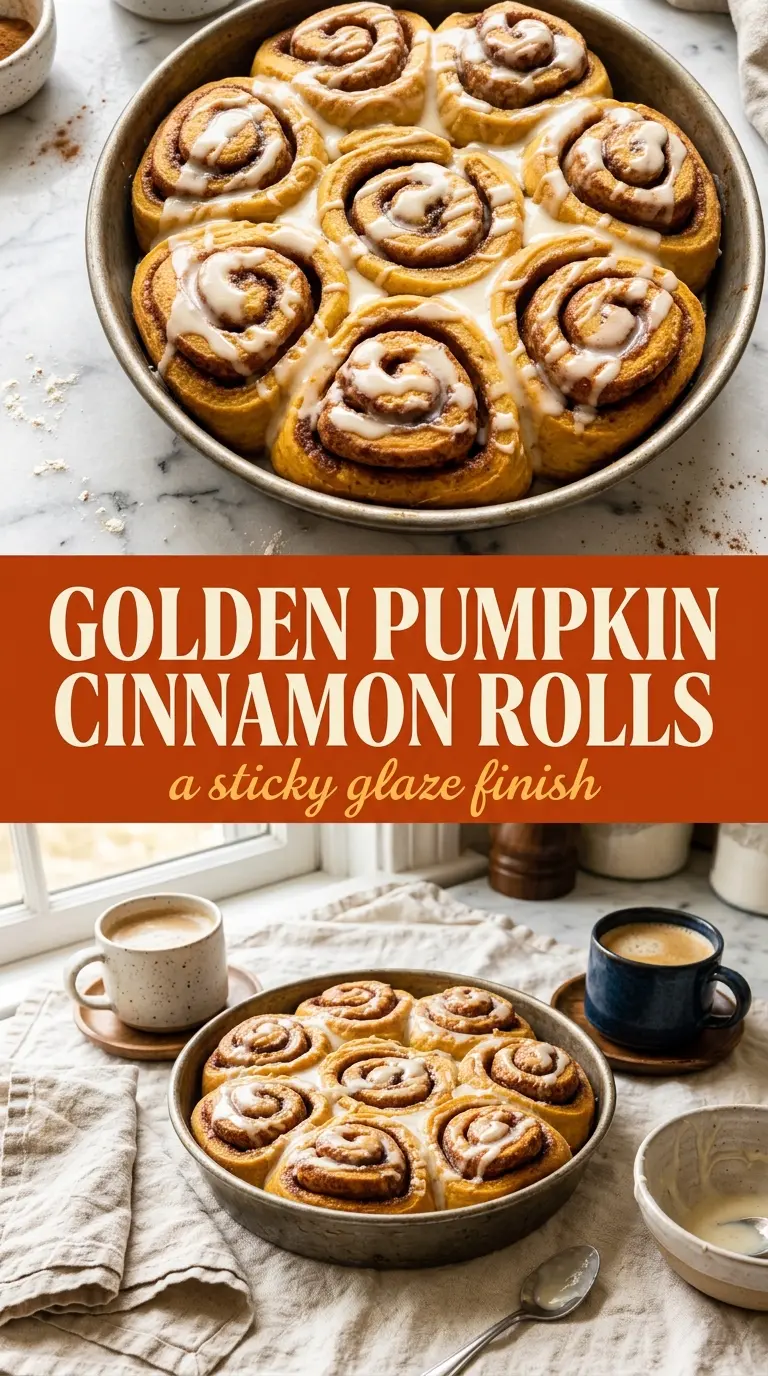
Pumpkin cinnamon rolls bake up soft, plush, and gently spiced, with tender spirals of brown sugar and cinnamon tucked inside a dough that stays moist without turning heavy. The pumpkin doesn’t shout; it gives the rolls a warm color, a subtle sweetness, and that extra pillow-soft crumb that makes you reach for a second one before the glaze has even set.
What makes this version work is the balance in the dough. Pumpkin puree adds moisture, but the milk, eggs, and flour keep the structure strong enough to roll cleanly and rise into tall, bakery-style swirls. The filling uses softened butter instead of melted butter, which keeps it from running out of the log while the rolls proof and bake. A little cloves in the brown sugar mixture goes a long way, giving the rolls that unmistakable pumpkin-spice depth without muddying the cinnamon.
Below, I’ll walk through the small details that matter most: how warm the milk should be, how to tell when the dough has risen enough, and what to do if your filling starts slipping as you roll.
The dough rose beautifully and baked up so soft. I loved that the pumpkin flavor came through without making the rolls dense, and the glaze soaked into the swirls just enough.
Pumpkin cinnamon rolls with soft swirls and sticky glaze are worth pinning for the next brunch when you want something cozy and homemade.
The Part That Keeps Pumpkin Rolls Soft Instead of Heavy
Pumpkin can make yeast dough tricky if you treat it like a neutral add-in. It brings moisture, but it also brings weight, and that means the dough needs enough structure to rise without collapsing into a dense loaf-like texture. The goal here is a dough that feels supple and a little tacky, not stiff and dry. If it starts out too dry, the rolls bake up bready instead of tender.
The other common mistake is rushing the rise. Pumpkin dough usually needs a little patience because the puree cools the mixture down and the sugar slows the yeast just enough that a warm, draft-free spot matters. When the dough has doubled, it should look airy and puffy, not tight. That extra rise is what gives you those tall, soft layers in the finished rolls.
What Each Ingredient Is Actually Doing in This Dish
- Pumpkin puree — Use plain pumpkin puree, not pumpkin pie filling. Pie filling is already sweetened and spiced, which throws off both the dough and the filling.
- Active dry yeast — This gives the rolls their lift. If your yeast is old, the dough may crawl instead of rise, so check the date if it’s been sitting in the pantry a while.
- Brown sugar — This belongs in the filling because it melts into a caramel-like layer as the rolls bake. Light brown sugar works fine, but dark brown sugar gives a deeper molasses note.
- Softened butter for the filling — Spreadable butter keeps the sugar mixture anchored to the dough. Melted butter looks convenient, but it leaks and pools, which makes slicing and baking messier.
Building the Dough So the Rolls Slice Cleanly
Warming the base without killing the yeast
Warm the milk and melted butter just until they feel comfortably warm, not hot. If the mixture is steaming or feels hot on your finger, let it cool before adding the yeast. Hot liquid is the fastest way to flatten the rise before it starts. Stir in the pumpkin, sugar, and salt first so the yeast goes into a smooth, evenly mixed base.
Mixing in enough flour without drying it out
Add the flour gradually and stop when the dough turns smooth and elastic. Pumpkin dough should be soft, but it shouldn’t cling in sticky ropes to everything it touches. If you add too much flour, the rolls lose that pillowy texture. Knead until the dough springs back slowly when pressed and pulls cleanly from the bowl.
Rolling, filling, and slicing the spirals
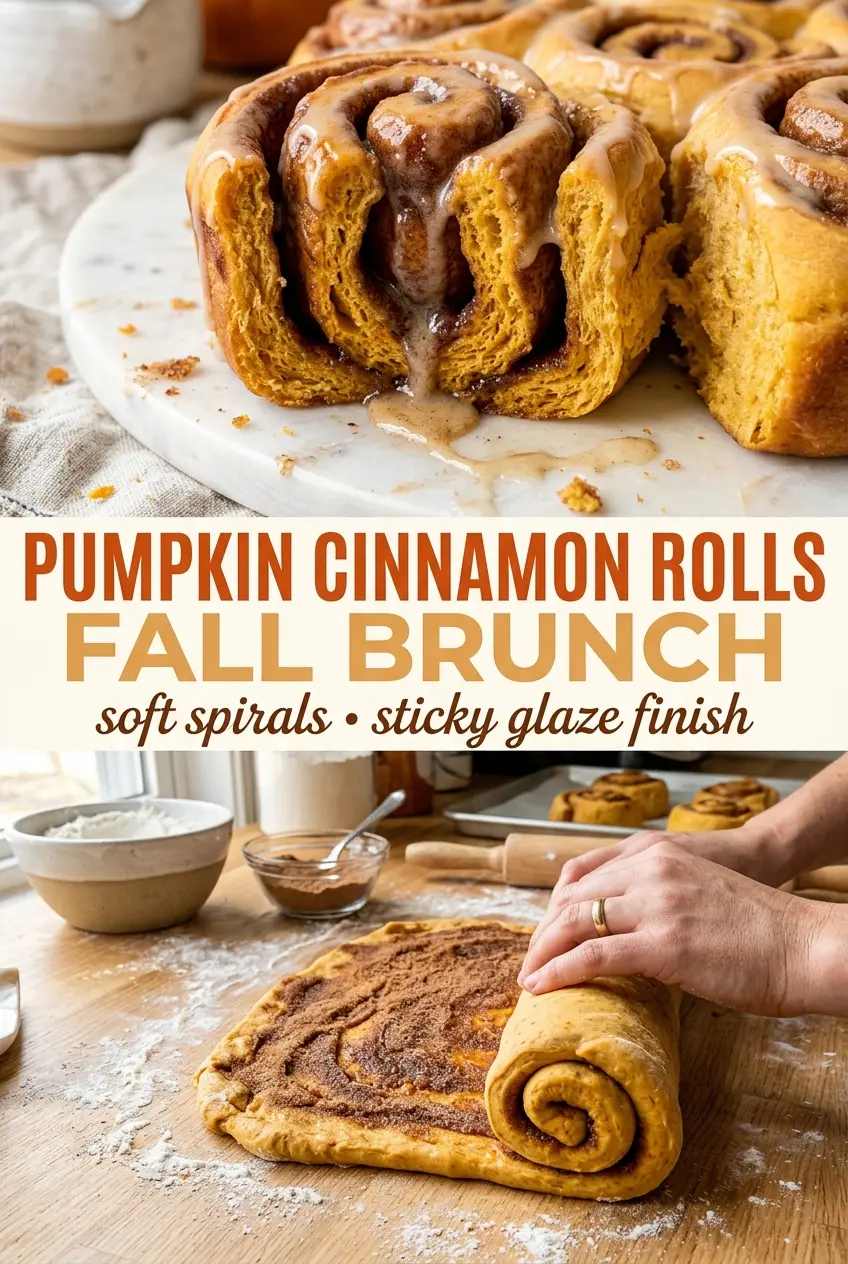
Roll the dough into a neat rectangle so the filling spreads evenly from edge to edge. A thin, even layer of softened butter helps the sugar mixture stay in place while you roll. When you shape the log, keep it tight enough to hold its form but not so tight that the filling squeezes out the end. Use a sharp knife or unflavored dental floss to slice clean rounds without squashing the spiral.
Proofing until the rolls look puffy, not cramped
Set the cut rolls in the pan with a little space between them, then let them rise until they’re nearly doubled and touching lightly at the sides. That second rise is what creates the fluffy, tear-apart center. If you bake them too soon, the middle stays tight and doughy. If you let them go too far, they can collapse in the oven and bake up flat.
Make Them Maple-Glazed
Swap part of the milk in the glaze for pure maple syrup, then whisk until smooth and pourable. The glaze turns a little deeper and less sugary, which fits the pumpkin filling nicely. Keep the ratio modest so the glaze still drizzles instead of setting up too thick.
Dairy-Free Pumpkin Cinnamon Rolls
Use a plant-based milk and a neutral dairy-free butter substitute in both the dough and filling. The rolls will still bake soft, though the filling may taste a little less rich than with real butter. Choose an unsweetened non-dairy milk so the glaze doesn’t become oddly sweet.
Make Them Ahead for Brunch
Assemble the rolls in the pan, cover them tightly, and refrigerate overnight after the shaping step. In the morning, let them sit at room temperature until puffy before baking. Cold dough won’t rise properly in the oven, so this rest is the difference between a good make-ahead pan and a dense one.
Storage and Reheating
- Refrigerator: Store covered for up to 4 days. The rolls stay soft, though the glaze may soak in and disappear a bit by day two.
- Freezer: Freeze baked rolls without glaze for up to 2 months. Wrap them well so they don’t pick up freezer odors, then thaw before warming and glazing.
- Reheating: Warm individual rolls in the microwave for 20 to 30 seconds or cover a pan and heat in a 300F oven until just warmed through. If you overheat them, the crumb dries out fast and the sugar filling gets sticky in the wrong way.
Answers to the Questions Worth Asking
Pumpkin Cinnamon Rolls
Ingredients
Equipment
Method
- Warm the milk and melted butter together until just warm, then stir in the pumpkin puree, sugar, and salt. Stop when the mixture looks smooth and warm to the touch.
- Add the beaten eggs and yeast, then gradually mix in the flour and knead until a smooth, elastic dough forms. The dough should feel springy and not sticky.
- Cover and let the dough rise in a warm spot for about 1 hour, until doubled. It should puff up noticeably and look airy.
- Punch down the dough and roll into a 12x16-inch rectangle. Aim for even thickness so the rolls bake uniformly.
- Mix the brown sugar, cinnamon, and cloves, then spread the softened butter over the dough and sprinkle with the sugar mixture. Cover the surface evenly all the way to the edges.
- Roll the dough into a tight log, pinch the seam closed, and slice into 12 rolls. Keep the log tight so the spirals stay defined.
- Place the rolls in a greased baking dish, cover, and let rise until nearly doubled, about 1 to 1 1/2 hours. They should rise slowly and look fuller but still retain their shape.
- Preheat the oven to 350F and bake for 25-30 minutes until golden. Look for browned tops and a set center.
- Whisk the powdered sugar and milk together and drizzle over the warm rolls before serving. Glaze should run slightly and set into a light sheen.