
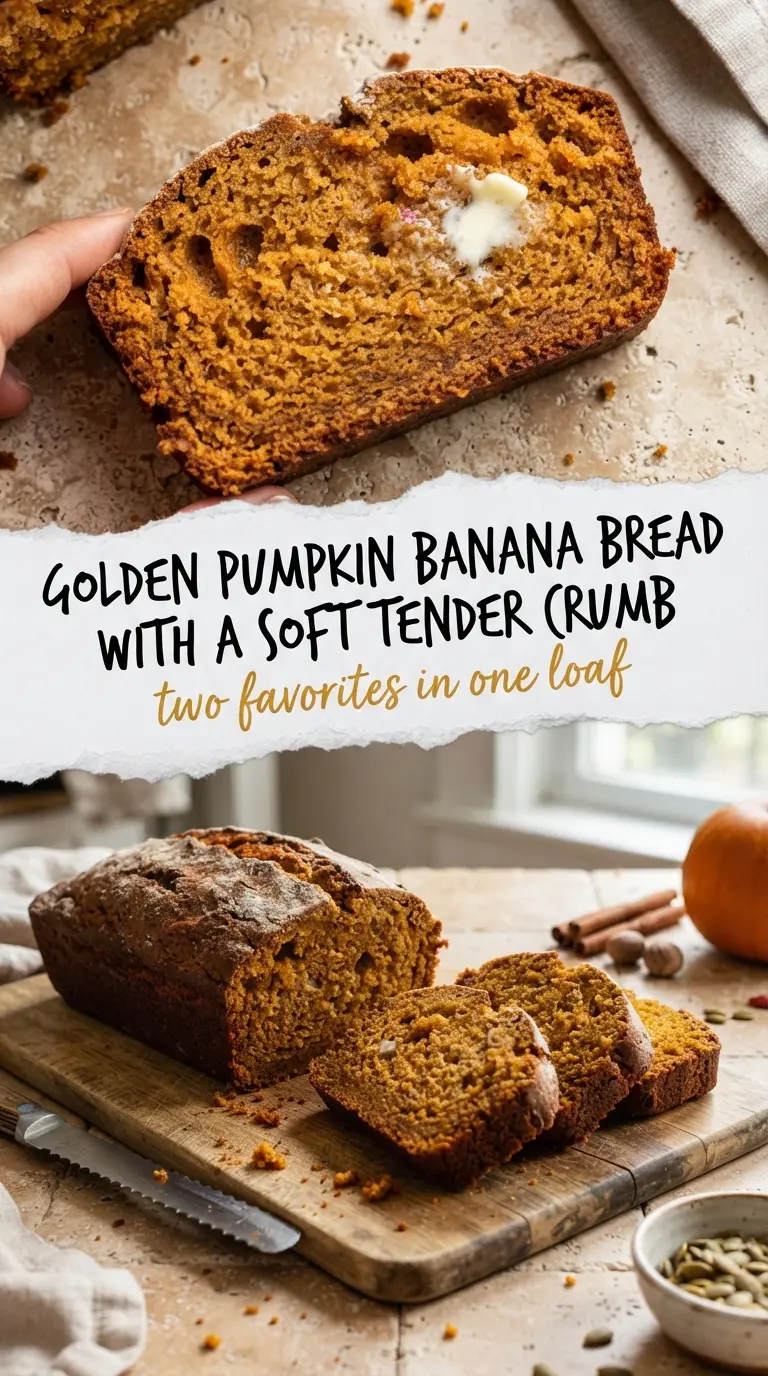
Pumpkin banana bread bakes up with a soft, plush crumb and a deep caramelized top that slices cleanly once it cools. The banana keeps it sweet and tender, while the pumpkin adds moisture and that unmistakable warm spice backbone. It’s the kind of loaf that disappears one slice at a time from the counter until there’s just a heel left for whoever gets there first.
What makes this version work is the balance. Banana brings natural sweetness and body, but pumpkin puree keeps the crumb from tasting heavy or one-note. The batter also leans on oil instead of butter, which gives the loaf a softer texture that stays fresh longer. That matters here, because overworking quick bread batter is the fastest way to end up with something tight and rubbery instead of tender and sliceable.
Below, I’ll show you the small details that keep the loaf moist without turning gummy, plus the easiest way to tell when it’s done in the center. If you’ve ever had banana bread that tasted good on day one but dried out by day two, this one fixes that.
The loaf stayed soft for three days and the pumpkin flavor came through without making it heavy. I loved that the banana kept it sweet enough that I didn’t need extra sugar on top.
Save this pumpkin banana bread for the days when ripe bananas need a cozy, spiced upgrade.
The Real Reason This Loaf Stays Soft Instead of Dense
Quick bread sounds forgiving, but pumpkin banana bread can turn gummy fast if you treat it like cake batter and beat it into submission. The dry ingredients need only a brief fold into the wet bowl. Once the flour disappears, stop. A few streaks are better than a tough loaf, because the batter keeps hydrating as it sits in the oven.
The other trap is excess moisture. Banana and pumpkin both bring a lot of it, which is great for tenderness but dangerous if the batter gets overmixed or underbaked. The loaf needs enough time for the center to set fully, but the top should already be a deep golden brown before you start checking. If the toothpick comes out with wet batter, give it more time; if it comes out with a few moist crumbs, you’re in the sweet spot.
- The banana adds sweetness and structure, but it should be mashed well enough that no large chunks stay behind.
- Pumpkin puree keeps the crumb soft for days, but it must be plain puree, not pumpkin pie filling.
- Vegetable oil gives a lighter, longer-lasting texture than butter in this kind of loaf.
- Eggs hold everything together and help the center bake through without sinking.
What Each Ingredient Is Actually Doing in This Loaf
- All-purpose flour — This gives the loaf enough structure to hold the moisture from the fruit and pumpkin without collapsing. Bread flour makes it chewier than you want here, and cake flour can make it fragile.
- Baking soda — It reacts with the natural acidity in the bananas and helps the loaf rise. If it’s old, the bread will bake up flat and dense, so check that it still fizzes a little when mixed with vinegar or hot water in a test if you’re unsure.
- Pumpkin puree — This adds moisture, color, and that earthy pumpkin note that ties the loaf together. Drain watery puree if it looks loose in the can; too much extra liquid makes the center sink.
- Very ripe bananas — Spotted bananas matter here because they’re sweeter and mash smoothly into the batter. Underripe bananas taste starchy and keep the loaf from tasting rounded.
- Vegetable oil — Oil keeps the crumb tender even after the loaf cools. Melted coconut oil works too, but it adds flavor and firms up more once chilled.
- Eggs — They give the loaf lift and help it slice neatly after cooling. Room temperature eggs mix in more evenly, but cold eggs still work if that’s what you have.
- Pumpkin pie spice — This is the shortcut that makes the flavor read as pumpkin bread instead of plain banana bread. If you only have cinnamon, use it, but the loaf will taste flatter and less layered.
Building the Batter Without Beating the Life Out of It
Mix the dry ingredients first
Whisk the flour, baking soda, salt, and pumpkin pie spice together until the color looks even all the way through. That keeps the spice from clumping in one bite and the leavening from landing unevenly in the loaf. If you skip this step and dump everything in at once, you can get pockets that bake up oddly or taste harsh.
Whisk the wet ingredients until smooth
Combine the pumpkin puree, mashed banana, sugar, oil, eggs, and vanilla until the batter looks thick and glossy, with the banana mostly broken down. A few small banana flecks are fine. Big chunks leave wet pockets in the finished loaf, and that’s where quick breads go soggy in the middle.
Fold, don’t stir
Add the dry ingredients to the wet bowl and fold just until the flour disappears. The batter should look thick and a little lumpy, not silky and overworked. If you stir until it’s perfectly smooth, the gluten tightens and the loaf bakes up compact instead of tender.
Bake until the center is set
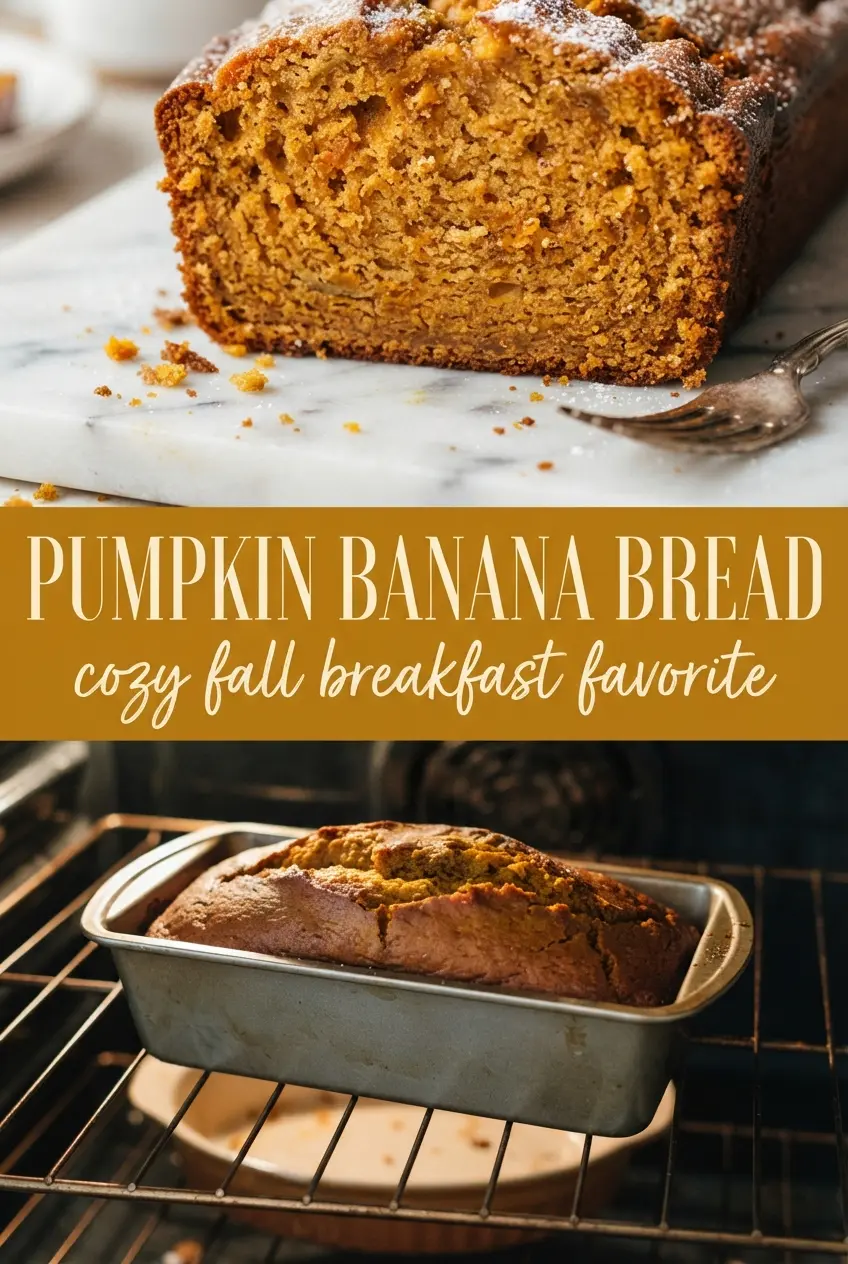
Scrape the batter into a greased loaf pan and bake at 350°F until the top is browned and a toothpick in the center comes out clean or with a few moist crumbs. The loaf should feel set when you press the center lightly. If it still jiggles like raw batter, it needs more time even if the top looks finished.
Let it cool before slicing
Cool the loaf in the pan for 10 minutes, then move it to a wire rack. That short rest helps the sides release without tearing, and the crumb finishes setting as it cools. If you cut it too soon, the steam escapes too fast and the slices can turn gummy.
Three Ways to Adjust This Loaf Without Losing the Texture
Make it dairy-free without changing the crumb
This loaf is already naturally dairy-free as written, which is part of why the texture stays soft for days. Keep the oil-based batter exactly as is and you won’t lose any tenderness or rise.
Swap in whole wheat flour for a heartier loaf
Use half whole wheat flour and half all-purpose flour if you want a more rustic texture. A full swap makes the loaf heavier and drier, so the partial version gives you nuttier flavor without sacrificing the tender center.
Turn it into muffins instead of a loaf
Divide the batter into lined muffin cups and bake until the tops spring back and a tester comes out clean. Muffins bake faster and freeze better, but you lose the long, even sliceable crumb that makes the loaf so satisfying.
Add nuts or chocolate without weighing down the batter
Fold in chopped pecans or dark chocolate at the very end so the batter stays light. Go light on the add-ins; too much extra weight pulls the center down and makes the loaf bake unevenly.
Storage and Reheating
- Refrigerator: Store tightly wrapped for up to 5 days. The crumb stays moist, though the texture firms slightly once chilled.
- Freezer: Freeze the whole loaf or individual slices, wrapped well and sealed in a bag, for up to 3 months. Thaw at room temperature so the outside doesn’t dry out before the center is ready.
- Reheating: Warm slices in a toaster oven or low oven until just heated through. Microwaving too long makes the banana bread rubbery, so use short bursts if that’s the only option.
Answers to the Questions Worth Asking
Pumpkin Banana Bread
Ingredients
Equipment
Method
- Whisk together all-purpose flour, baking soda, salt, and pumpkin pie spice in a bowl until evenly combined and no spice clumps remain.
- Whisk together pumpkin puree, mashed ripe banana, granulated sugar, vegetable oil, large eggs, and vanilla extract in a second bowl until smooth and glossy.
- Fold the dry ingredients into the wet ingredients until just combined, stopping as soon as no dry streaks remain to avoid a dense loaf.
- Pour the batter into a greased loaf pan and smooth the top so the loaf bakes evenly.
- Bake at 350°F for 55-60 minutes until a toothpick inserted into the center comes out clean or with only a few moist crumbs.
- Cool in the pan for 10 minutes before transferring to a wire rack so the crumb sets and slices cleanly.